Refine search
Actions for selected content:
26077 results in Abstract analysis
PEM series 2 volume 64 issue 4 Cover and Back matter
-
- Journal:
- Proceedings of the Edinburgh Mathematical Society / Volume 64 / Issue 4 / November 2021
- Published online by Cambridge University Press:
- 09 December 2021, pp. b1-b2
-
- Article
-
- You have access
- Export citation
PEM series 2 volume 64 issue 4 Cover and Front matter
-
- Journal:
- Proceedings of the Edinburgh Mathematical Society / Volume 64 / Issue 4 / November 2021
- Published online by Cambridge University Press:
- 09 December 2021, pp. f1-f2
-
- Article
-
- You have access
- Export citation
GMJ volume 64 issue 1 Cover and Back matter
-
- Journal:
- Glasgow Mathematical Journal / Volume 64 / Issue 1 / January 2022
- Published online by Cambridge University Press:
- 07 December 2021, pp. b1-b2
-
- Article
-
- You have access
- Export citation
Exact solutions and critical behaviour for a linear growth-diffusion equation on a time-dependent domain
- Part of
-
- Journal:
- Proceedings of the Edinburgh Mathematical Society / Volume 65 / Issue 1 / February 2022
- Published online by Cambridge University Press:
- 07 December 2021, pp. 53-79
-
- Article
-
- You have access
- Open access
- HTML
- Export citation
GMJ volume 64 issue 1 Cover and Front matter
-
- Journal:
- Glasgow Mathematical Journal / Volume 64 / Issue 1 / January 2022
- Published online by Cambridge University Press:
- 07 December 2021, pp. f1-f2
-
- Article
-
- You have access
- Export citation
Some embeddings between symmetric R. thompson groups
- Part of
-
- Journal:
- Proceedings of the Edinburgh Mathematical Society / Volume 65 / Issue 1 / February 2022
- Published online by Cambridge University Press:
- 07 December 2021, pp. 1-18
-
- Article
- Export citation
-
Let $m\leqslant n\in \mathbb {N}$
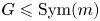
 , and $G\leqslant \operatorname {Sym}(m)$
 and $H\leqslant \operatorname {Sym}(n)$
 . In this article, we find conditions enabling embeddings between the symmetric R. Thompson groups ${V_m(G)}$
 and ${V_n(H)}$
 . When $n\equiv 1 \mod (m-1)$
 , and under some other technical conditions, we find an embedding of ${V_n(H)}$
 into ${V_m(G)}$
 via topological conjugation. With the same modular condition, we also generalize a purely algebraic construction of Birget from 2019 to find a group $H\leqslant \operatorname {Sym}(n)$
 and an embedding of ${V_m(G)}$
 into ${V_n(H)}$
 .
.


MOMENTS AND HYBRID SUBCONVEXITY FOR SYMMETRIC-SQUARE L-FUNCTIONS
- Part of
-
- Journal:
- Journal of the Institute of Mathematics of Jussieu / Volume 22 / Issue 5 / September 2023
- Published online by Cambridge University Press:
- 06 December 2021, pp. 2029-2073
- Print publication:
- September 2023
-
- Article
- Export citation
-
We establish sharp bounds for the second moment of symmetric-square L-functions attached to Hecke Maass cusp forms $u_j$ with spectral parameter $t_j$, where the second moment is a sum over $t_j$ in a short interval. At the central point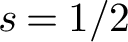 $s=1/2$ of the L-function, our interval is smaller than previous known results. More specifically, for $\left \lvert t_j\right \rvert $ of size T, our interval is of size $T^{1/5}$, whereas the previous best was $T^{1/3}$, from work of Lam. A little higher up on the critical line, our second moment yields a subconvexity bound for the symmetric-square L-function. More specifically, we get subconvexity at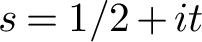 $s=1/2+it$ provided $\left \lvert t_j\right \rvert ^{6/7+\delta }\le \lvert t\rvert \le (2-\delta )\left \lvert t_j\right \rvert $ for any fixed $\delta>0$. Since $\lvert t\rvert $ can be taken significantly smaller than $\left \lvert t_j\right \rvert $, this may be viewed as an approximation to the notorious subconvexity problem for the symmetric-square L-function in the spectral aspect at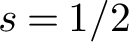 $s=1/2$.


Simple dynamics in non-monotone Kolmogorov systems
-
- Journal:
- Proceedings of the Royal Society of Edinburgh. Section A: Mathematics / Volume 153 / Issue 2 / April 2023
- Published online by Cambridge University Press:
- 02 December 2021, pp. 369-384
- Print publication:
- April 2023
-
- Article
-
- You have access
- Open access
- HTML
- Export citation
Abelian actions on compact nonorientable Riemann surfaces
- Part of
-
- Journal:
- Glasgow Mathematical Journal / Volume 64 / Issue 3 / September 2022
- Published online by Cambridge University Press:
- 02 December 2021, pp. 634-648
-
- Article
- Export citation
-
Given an integer $g>2$, we state necessary and sufficient conditions for a finite Abelian group to act as a group of automorphisms of some compact nonorientable Riemann surface of genus g. This result provides a new method to obtain the symmetric cross-cap number of Abelian groups. We also compute the least symmetric cross-cap number of Abelian groups of a given order and solve the maximum order problem for Abelian groups acting on nonorientable Riemann surfaces.

Decay of weak solutions to Vlasov equation coupled with a shear thickening fluid
- Part of
-
- Journal:
- Proceedings of the Royal Society of Edinburgh. Section A: Mathematics / Volume 153 / Issue 1 / February 2023
- Published online by Cambridge University Press:
- 02 December 2021, pp. 167-176
- Print publication:
- February 2023
-
- Article
- Export citation
-
We show that the energy norm of weak solutions to Vlasov equation coupled with a shear thickening fluid on the whole space has a decay rate the energy norm $E(t) \leq {C}/{(1+t)^{\alpha }}, \forall t \geq 0$
 for $\alpha \in (0,3/2)$
 .
.

Variational characterizations of weighted Hardy spaces and weighted $BMO$
 spaces
- Part of
-
- Journal:
- Proceedings of the Royal Society of Edinburgh. Section A: Mathematics / Volume 152 / Issue 6 / December 2022
- Published online by Cambridge University Press:
- 01 December 2021, pp. 1613-1632
- Print publication:
- December 2022
-
- Article
- Export citation
-
This paper obtains new characterizations of weighted Hardy spaces and certain weighted $BMO$
 type spaces via the boundedness of variation operators associated with approximate identities and their commutators, respectively.


RETRACTED - Compact reduction in Lipschitz-free spaces
- Part of
-
- Journal:
- Proceedings of the Royal Society of Edinburgh. Section A: Mathematics / Volume 151 / Issue 6 / December 2021
- Published online by Cambridge University Press:
- 08 December 2021, pp. 1683-1699
- Print publication:
- December 2021
-
- Article
- Export citation
-
We prove a general principle satisfied by weakly precompact sets of Lipschitz-free spaces. By this principle, certain infinite dimensional phenomena in Lipschitz-free spaces over general metric spaces may be reduced to the same phenomena in free spaces over their compact subsets. As easy consequences we derive several new and some known results. The main new results are: $\mathcal {F}(X)$ is weakly sequentially complete for every superreflexive Banach space $X$, and $\mathcal {F}(M)$ has the Schur property and the approximation property for every scattered complete metric space $M$.
$M$.


A few remarks on Pimsner–Popa bases and regular subfactors of depth 2
- Part of
-
- Journal:
- Glasgow Mathematical Journal / Volume 64 / Issue 3 / September 2022
- Published online by Cambridge University Press:
- 01 December 2021, pp. 586-602
-
- Article
- Export citation
-
We prove that a finite index regular inclusion of $II_1$-factors with commutative first relative commutant is always a crossed product subfactor with respect to a minimal action of a biconnected weak Kac algebra. Prior to this, we prove that every finite index inclusion of $II_1$-factors which is of depth 2 and has simple first relative commutant (respectively, is regular and has commutative or simple first relative commutant) admits a two-sided Pimsner–Popa basis (respectively, a unitary orthonormal basis).


PRM volume 151 issue 6 Cover and Front matter
-
- Journal:
- Proceedings of the Royal Society of Edinburgh. Section A: Mathematics / Volume 151 / Issue 6 / December 2021
- Published online by Cambridge University Press:
- 08 December 2021, pp. f1-f2
- Print publication:
- December 2021
-
- Article
-
- You have access
- Export citation
PRM volume 151 issue 6 Cover and Back matter
-
- Journal:
- Proceedings of the Royal Society of Edinburgh. Section A: Mathematics / Volume 151 / Issue 6 / December 2021
- Published online by Cambridge University Press:
- 08 December 2021, pp. b1-b2
- Print publication:
- December 2021
-
- Article
-
- You have access
- Export citation
Inverse scattering transforms for non-local reverse-space matrix non-linear Schrödinger equations
- Part of
-
- Journal:
- European Journal of Applied Mathematics / Volume 33 / Issue 6 / December 2022
- Published online by Cambridge University Press:
- 01 December 2021, pp. 1062-1082
-
- Article
-
- You have access
- HTML
- Export citation
Partial regularity for minimizers of discontinuous quasiconvex integrals with general growth
- Part of
-
- Journal:
- Proceedings of the Royal Society of Edinburgh. Section A: Mathematics / Volume 152 / Issue 5 / October 2022
- Published online by Cambridge University Press:
- 01 December 2021, pp. 1191-1232
- Print publication:
- October 2022
-
- Article
-
- You have access
- Open access
- HTML
- Export citation
-
We prove the partial Hölder continuity for minimizers of quasiconvex functionals
where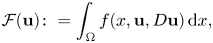 \begin{equation*} \mathcal{F}({\bf u}) \colon =\int_{\Omega} f(x,{\bf u},D{\bf u})\,\textrm{d} x, \end{equation*} $f$ satisfies a uniform VMO condition with respect to the $x$-variable and is continuous with respect to ${\bf u}$. The growth condition with respect to the gradient variable is assumed a general one.


TWISTED DOUBLING INTEGRALS FOR BRYLINSKI–DELIGNE EXTENSIONS OF CLASSICAL GROUPS
- Part of
-
- Journal:
- Journal of the Institute of Mathematics of Jussieu / Volume 22 / Issue 4 / July 2023
- Published online by Cambridge University Press:
- 01 December 2021, pp. 1931-1985
- Print publication:
- July 2023
-
- Article
- Export citation
Non-bifurcation of critical periods from semi-hyperbolic polycycles of quadratic centres
- Part of
-
- Journal:
- Proceedings of the Royal Society of Edinburgh. Section A: Mathematics / Volume 153 / Issue 1 / February 2023
- Published online by Cambridge University Press:
- 01 December 2021, pp. 104-114
- Print publication:
- February 2023
-
- Article
- Export citation
-
In this paper we consider the unfolding of saddle-node
\[ X= \frac{1}{xU_a(x,y)}\Big(x(x^{\mu}-\varepsilon)\partial_x-V_a(x)y\partial_y\Big), \]parametrized by $(\varepsilon,\,a)$
 with $\varepsilon \approx 0$
 and $a$
 in an open subset $A$
 of $ {\mathbb {R}}^{\alpha },$
 and we study the Dulac time $\mathcal {T}(s;\varepsilon,\,a)$
 of one of its hyperbolic sectors. We prove (theorem 1.1) that the derivative $\partial _s\mathcal {T}(s;\varepsilon,\,a)$
 tends to $-\infty$
 as $(s,\,\varepsilon )\to (0^{+},\,0)$
 uniformly on compact subsets of $A.$
 This result is addressed to study the bifurcation of critical periods in the Loud's family of quadratic centres. In this regard we show (theorem 1.2) that no bifurcation occurs from certain semi-hyperbolic polycycles.


Compact reduction in Lipschitz-free spaces - RETRACTION
-
- Journal:
- Proceedings of the Royal Society of Edinburgh. Section A: Mathematics / Volume 151 / Issue 6 / December 2021
- Published online by Cambridge University Press:
- 01 February 2022, p. 2082
- Print publication:
- December 2021
-
- Article
-
- You have access
- Export citation
