Refine search
Actions for selected content:
26077 results in Abstract analysis
Principal bundles on two-dimensional CW-complexes with disconnected structure group
- Part of
-
- Journal:
- Glasgow Mathematical Journal / Volume 64 / Issue 3 / September 2022
- Published online by Cambridge University Press:
- 06 January 2022, pp. 675-690
-
- Article
- Export citation
-
Given any topological group G, the topological classification of principal G-bundles over a finite CW-complex X is long known to be given by the set of free homotopy classes of maps from X to the corresponding classifying space BG. This classical result has been long-used to provide such classification in terms of explicit characteristic classes. However, even when X has dimension 2, there is a case in which such explicit classification has not been explicitly considered. This is the case where G is a Lie group, whose group of components acts nontrivially on its fundamental group $\pi_1G$. Here, we deal with this case and obtain the classification, in terms of characteristic classes, of principal G-bundles over a finite CW-complex of dimension 2, with G is a Lie group such that $\pi_0G$ is abelian.


Hausdorff dimension of the set of almost convergent sequences
- Part of
-
- Journal:
- Glasgow Mathematical Journal / Volume 64 / Issue 3 / September 2022
- Published online by Cambridge University Press:
- 06 January 2022, pp. 691-697
-
- Article
- Export citation
Independent sets of a given size and structure in the hypercube
- Part of
-
- Journal:
- Combinatorics, Probability and Computing / Volume 31 / Issue 4 / July 2022
- Published online by Cambridge University Press:
- 06 January 2022, pp. 702-720
-
- Article
- Export citation
-
We determine the asymptotics of the number of independent sets of size $\lfloor \beta 2^{d-1} \rfloor$ in the discrete hypercube $Q_d = \{0,1\}^d$ for any fixed $\beta \in (0,1)$ as $d \to \infty$, extending a result of Galvin for $\beta \in (1-1/\sqrt{2},1)$. Moreover, we prove a multivariate local central limit theorem for structural features of independent sets in $Q_d$ drawn according to the hard-core model at any fixed fugacity $\lambda>0$. In proving these results we develop several general tools for performing combinatorial enumeration using polymer models and the cluster expansion from statistical physics along with local central limit theorems.


JMJ volume 21 Issue 1 Cover and Front matter
-
- Journal:
- Journal of the Institute of Mathematics of Jussieu / Volume 21 / Issue 1 / January 2022
- Published online by Cambridge University Press:
- 18 January 2022, pp. f1-f2
- Print publication:
- January 2022
-
- Article
-
- You have access
- Export citation
JMJ volume 21 Issue 1 Cover and Back matter
-
- Journal:
- Journal of the Institute of Mathematics of Jussieu / Volume 21 / Issue 1 / January 2022
- Published online by Cambridge University Press:
- 18 January 2022, pp. b1-b2
- Print publication:
- January 2022
-
- Article
-
- You have access
- Export citation
Some generating functions and inequalities for the andrews–stanley partition functions
- Part of
-
- Journal:
- Proceedings of the Edinburgh Mathematical Society / Volume 65 / Issue 1 / February 2022
- Published online by Cambridge University Press:
- 27 December 2021, pp. 120-135
-
- Article
- Export citation
-
Let $\mathcal {O}(\pi )$
 denote the number of odd parts in an integer partition $\pi$
 . In 2005, Stanley introduced a new statistic $\operatorname {srank}(\pi )=\mathcal {O}(\pi )-\mathcal {O}(\pi ')$
 , where $\pi '$
 is the conjugate of $\pi$
 . Let $p(r,\,m;n)$
 denote the number of partitions of $n$
 with srank congruent to $r$
 modulo $m$
 . Generating function identities, congruences and inequalities for $p(0,\,4;n)$
 and $p(2,\,4;n)$
 were then established by a number of mathematicians, including Stanley, Andrews, Swisher, Berkovich and Garvan. Motivated by these works, we deduce some generating functions and inequalities for $p(r,\,m;n)$
 with $m=16$
 and $24$
 . These results are refinements of some inequalities due to Swisher.


Commutator length of powers in free products of groups
- Part of
-
- Journal:
- Proceedings of the Edinburgh Mathematical Society / Volume 65 / Issue 1 / February 2022
- Published online by Cambridge University Press:
- 27 December 2021, pp. 102-119
-
- Article
- Export citation
-
Given groups $A$
 and $B$
 , what is the minimal commutator length of the 2020th (for instance) power of an element $g\in A*B$
 not conjugate to elements of the free factors? The exhaustive answer to this question is still unknown, but we can give an almost answer: this minimum is one of two numbers (simply depending on $A$
 and $B$
 ). Other similar problems are also considered.


Macroscopic limit of a kinetic model describing the switch in T cell migration modes via binary interactions
- Part of
-
- Journal:
- European Journal of Applied Mathematics / Volume 34 / Issue 1 / February 2023
- Published online by Cambridge University Press:
- 23 December 2021, pp. 1-27
-
- Article
-
- You have access
- HTML
- Export citation
Periodic solutions for one-dimensional nonlinear nonlocal problem with drift including singular nonlinearities
- Part of
-
- Journal:
- Proceedings of the Royal Society of Edinburgh. Section A: Mathematics / Volume 153 / Issue 1 / February 2023
- Published online by Cambridge University Press:
- 23 December 2021, pp. 229-261
- Print publication:
- February 2023
-
- Article
- Export citation
-
In this paper, we prove existence results of a one-dimensional periodic solution to equations with the fractional Laplacian of order $s\in (1/2,1)$
 , singular nonlinearity and gradient term under various situations, including nonlocal contra-part of classical Lienard vector equations, as well other nonlocal versions of classical results know only in the context of second-order ODE. Our proofs are based on degree theory and Perron's method, so before that we need to establish a variety of priori estimates under different assumptions on the nonlinearities appearing in the equations. Besides, we obtain also multiplicity results in a regime where a priori bounds are lost and bifurcation from infinity occurs.

A FREENESS CRITERION WITHOUT PATCHING FOR MODULES OVER LOCAL RINGS
- Part of
-
- Journal:
- Journal of the Institute of Mathematics of Jussieu / Volume 22 / Issue 5 / September 2023
- Published online by Cambridge University Press:
- 20 December 2021, pp. 2117-2129
- Print publication:
- September 2023
-
- Article
-
- You have access
- Open access
- HTML
- Export citation
-
It is proved that if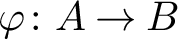 $\varphi \colon A\to B$ is a local homomorphism of commutative noetherian local rings, a nonzero finitely generated B-module N whose flat dimension over A is at most $\operatorname {edim} A - \operatorname {edim} B$ is free over B and $\varphi $ is a special type of complete intersection. This result is motivated by a ‘patching method’ developed by Taylor and Wiles and a conjecture of de Smit, proved by the first author, dealing with the special case when N is flat over A.

Series expansion of Leray–Trudinger inequality
- Part of
-
- Journal:
- Proceedings of the Royal Society of Edinburgh. Section A: Mathematics / Volume 153 / Issue 1 / February 2023
- Published online by Cambridge University Press:
- 20 December 2021, pp. 262-274
- Print publication:
- February 2023
-
- Article
- Export citation
-
In this paper, we establish an infinite series expansion of Leray–Trudinger inequality, which is closely related with Hardy inequality and Moser Trudinger inequality. Our result extends early results obtained by Mallick and Tintarev [A. Mallick and C. Tintarev. An improved Leray-Trudinger inequality. Commun. Contemp. Math. 20 (2018), 17501034. OP 21] to the case with many logs. It should be pointed out that our result is about series expansion of Hardy inequality under the case $p=n$
 , which case is not considered by Gkikas and Psaradakis in [K. T. Gkikas and G. Psaradakis. Optimal non-homogeneous improvements for the series expansion of Hardy's inequality. Commun. Contemp. Math. doi:10.1142/S0219199721500310]. However, we can't obtain the optimal form by our method.

Index estimates for closed minimal submanifolds of the sphere
- Part of
-
- Journal:
- Proceedings of the Royal Society of Edinburgh. Section A: Mathematics / Volume 152 / Issue 3 / June 2022
- Published online by Cambridge University Press:
- 17 December 2021, pp. 802-816
- Print publication:
- June 2022
-
- Article
- Export citation
-
In this paper we are interested in comparing the spectra of two elliptic operators acting on a closed minimal submanifold of the Euclidean unit sphere. Using an approach introduced by Savo in [A Savo. Index Bounds for Minimal Hypersurfaces of the Sphere. Indiana Univ. Math. J. 59 (2010), 823-837.], we are able to compare the eigenvalues of the stability operator acting on sections of the normal bundle and the Hodge Laplacian operator acting on $1$
 -forms. As a byproduct of the technique and under a suitable hypothesis on the Ricci curvature of the submanifold we obtain that its first Betti's number is bounded from above by a multiple of the Morse index, which provide evidence for a well-known conjecture of Schoen and Marques & Neves in the setting of higher codimension.

Optimal Hardy-weights for the (p, A)-Laplacian with a potential term
- Part of
-
- Journal:
- Proceedings of the Royal Society of Edinburgh. Section A: Mathematics / Volume 153 / Issue 1 / February 2023
- Published online by Cambridge University Press:
- 17 December 2021, pp. 289-306
- Print publication:
- February 2023
-
- Article
-
- You have access
- Open access
- HTML
- Export citation
-
We construct new optimal $L^{p}$ Hardy-type inequalities for elliptic Schrödinger-type operators with a potential term.

Frontmatter
-
- Book:
- Noncommutative Function-Theoretic Operator Theory and Applications
- Published online:
- 09 December 2021
- Print publication:
- 16 December 2021, pp i-iv
-
- Chapter
- Export citation
2 - Formal Reproducing Kernel Hilbert Spaces
-
- Book:
- Noncommutative Function-Theoretic Operator Theory and Applications
- Published online:
- 09 December 2021
- Print publication:
- 16 December 2021, pp 26-41
-
- Chapter
- Export citation
Contents
-
- Book:
- Noncommutative Function-Theoretic Operator Theory and Applications
- Published online:
- 09 December 2021
- Print publication:
- 16 December 2021, pp v-viii
-
- Chapter
- Export citation
9 - Weighted Hardy–Fock Spaces Built from a Regular Formal Power Series
-
- Book:
- Noncommutative Function-Theoretic Operator Theory and Applications
- Published online:
- 09 December 2021
- Print publication:
- 16 December 2021, pp 315-414
-
- Chapter
- Export citation
Acknowledgments
-
- Book:
- Noncommutative Function-Theoretic Operator Theory and Applications
- Published online:
- 09 December 2021
- Print publication:
- 16 December 2021, pp x-x
-
- Chapter
- Export citation
Inverse nodal problems on quantum tree graphs
- Part of
-
- Journal:
- Proceedings of the Royal Society of Edinburgh. Section A: Mathematics / Volume 153 / Issue 1 / February 2023
- Published online by Cambridge University Press:
- 16 December 2021, pp. 275-288
- Print publication:
- February 2023
-
- Article
- Export citation
4 - Stein Relations and Observability Range Spaces
-
- Book:
- Noncommutative Function-Theoretic Operator Theory and Applications
- Published online:
- 09 December 2021
- Print publication:
- 16 December 2021, pp 103-179
-
- Chapter
- Export citation
