Refine search
Actions for selected content:
26077 results in Abstract analysis
The Frucht property in the quantum group setting
- Part of
-
- Journal:
- Glasgow Mathematical Journal / Volume 64 / Issue 3 / September 2022
- Published online by Cambridge University Press:
- 29 November 2021, pp. 603-633
-
- Article
- Export citation
A blurred view of Van der Waerden type theorems
- Part of
-
- Journal:
- Combinatorics, Probability and Computing / Volume 31 / Issue 4 / July 2022
- Published online by Cambridge University Press:
- 26 November 2021, pp. 684-701
-
- Article
- Export citation
-
Let $\mathrm{AP}_k=\{a,a+d,\ldots,a+(k-1)d\}$ be an arithmetic progression. For $\varepsilon>0$ we call a set $\mathrm{AP}_k(\varepsilon)=\{x_0,\ldots,x_{k-1}\}$ an $\varepsilon$-approximate arithmetic progression if for some a and d, $|x_i-(a+id)|<\varepsilon d$ holds for all $i\in\{0,1\ldots,k-1\}$. Complementing earlier results of Dumitrescu (2011, J. Comput. Geom. 2(1) 16–29), in this paper we study numerical aspects of Van der Waerden, Szemerédi and Furstenberg–Katznelson like results in which arithmetic progressions and their higher dimensional extensions are replaced by their $\varepsilon$-approximation.


On a backward problem for nonlinear time fractional wave equations
- Part of
-
- Journal:
- Proceedings of the Royal Society of Edinburgh. Section A: Mathematics / Volume 152 / Issue 6 / December 2022
- Published online by Cambridge University Press:
- 24 November 2021, pp. 1589-1612
- Print publication:
- December 2022
-
- Article
- Export citation
Crystal flex bases and the RUM spectrum
- Part of
-
- Journal:
- Proceedings of the Edinburgh Mathematical Society / Volume 64 / Issue 4 / November 2021
- Published online by Cambridge University Press:
- 24 November 2021, pp. 735-761
-
- Article
- Export citation
-
A theory of infinite spanning sets and bases is developed for the first-order flex space of an infinite bar-joint framework, together with space group symmetric versions for a crystallographic bar-joint framework ${{\mathcal {C}}}$
 . The existence of a crystal flex basis for ${{\mathcal {C}}}$
 is shown to be closely related to the spectral analysis of the rigid unit mode (RUM) spectrum of ${{\mathcal {C}}}$
 and an associated geometric flex spectrum. Additionally, infinite spanning sets and bases are computed for a range of fundamental crystallographic bar-joint frameworks, including the honeycomb (graphene) framework, the octahedron (perovskite) framework and the 2D and 3D kagome frameworks.


On non-separated zero sequences of solutions of a linear differential equation – ERRATUM
-
- Journal:
- Proceedings of the Edinburgh Mathematical Society / Volume 64 / Issue 4 / November 2021
- Published online by Cambridge University Press:
- 24 November 2021, p. 1037
-
- Article
-
- You have access
- HTML
- Export citation
On free subalgebras of varieties
- Part of
-
- Journal:
- Proceedings of the Edinburgh Mathematical Society / Volume 65 / Issue 1 / February 2022
- Published online by Cambridge University Press:
- 22 November 2021, pp. 89-101
-
- Article
- Export citation
Brittle fracture in linearly elastic plates
- Part of
-
- Journal:
- Proceedings of the Royal Society of Edinburgh. Section A: Mathematics / Volume 153 / Issue 1 / February 2023
- Published online by Cambridge University Press:
- 19 November 2021, pp. 68-103
- Print publication:
- February 2023
-
- Article
- Export citation
-
In this work we derive by $\Gamma$
 -convergence techniques a model for brittle fracture linearly elastic plates. Precisely, we start from a brittle linearly elastic thin film with positive thickness $\rho$
 and study the limit as $\rho$
 tends to $0$
 . The analysis is performed with no a priori restrictions on the admissible displacements and on the geometry of the fracture set. The limit model is characterized by a Kirchhoff-Love type of structure.


A criterion for normality of analytic mappings
- Part of
-
- Journal:
- Proceedings of the Edinburgh Mathematical Society / Volume 65 / Issue 1 / February 2022
- Published online by Cambridge University Press:
- 19 November 2021, pp. 80-88
-
- Article
- Export citation
-
In this paper, we give a generalization and improvement of the Pavlović result on the characterization of continuously differentiable functions in the Bloch space on the unit ball in $\mathbb {R}^{m}$
 . Then, we derive a Holland–Walsh type theorem for analytic normal mappings on the unit disk.

A weight-homogenous condition to the real Jacobian conjecture in $ {\mathbb {R}}^{2}$

- Part of
-
- Journal:
- Proceedings of the Edinburgh Mathematical Society / Volume 64 / Issue 4 / November 2021
- Published online by Cambridge University Press:
- 19 November 2021, pp. 1028-1036
-
- Article
- Export citation
-
It is known that a polynomial local diffeomorphism $(f,\, g): {\mathbb {R}}^{2} \to {\mathbb {R}}^{2}$
 is a global diffeomorphism provided the higher homogeneous terms of $f f_x+g g_x$
 and $f f_y+g g_y$
 do not have real linear factors in common. Here, we give a weight-homogeneous framework of this result. Our approach uses qualitative theory of differential equations. In our reasoning, we obtain a result on polynomial Hamiltonian vector fields in the plane, generalization of a known fact.


Large deviation principles of 2D stochastic Navier–Stokes equations with Lévy noises
- Part of
-
- Journal:
- Proceedings of the Royal Society of Edinburgh. Section A: Mathematics / Volume 153 / Issue 1 / February 2023
- Published online by Cambridge University Press:
- 18 November 2021, pp. 19-67
- Print publication:
- February 2023
-
- Article
- Export citation
On the commuting probability for subgroups of a finite group
- Part of
-
- Journal:
- Proceedings of the Royal Society of Edinburgh. Section A: Mathematics / Volume 152 / Issue 6 / December 2022
- Published online by Cambridge University Press:
- 18 November 2021, pp. 1551-1564
- Print publication:
- December 2022
-
- Article
-
- You have access
- Open access
- HTML
- Export citation
-
Let $K$ be a subgroup of a finite group $G$. The probability that an element of $G$ commutes with an element of $K$ is denoted by $Pr(K,G)$. Assume that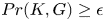 $Pr(K,G)\geq \epsilon$ for some fixed $\epsilon >0$. We show that there is a normal subgroup $T\leq G$ and a subgroup $B\leq K$ such that the indices $[G:T]$ and $[K:B]$ and the order of the commutator subgroup $[T,B]$ are $\epsilon$-bounded. This extends the well-known theorem, due to P. M. Neumann, that covers the case where $K=G$. We deduce a number of corollaries of this result. A typical application is that if $K$ is the generalized Fitting subgroup $F^{*}(G)$ then $G$ has a class-2-nilpotent normal subgroup $R$ such that both the index $[G:R]$ and the order of the commutator subgroup $[R,R]$ are $\epsilon$-bounded. In the same spirit we consider the cases where $K$ is a term of the lower central series of $G$, or a Sylow subgroup, etc.


On the energy equality for very weak solutions to 3D MHD equations
-
- Journal:
- Proceedings of the Royal Society of Edinburgh. Section A: Mathematics / Volume 152 / Issue 6 / December 2022
- Published online by Cambridge University Press:
- 18 November 2021, pp. 1565-1588
- Print publication:
- December 2022
-
- Article
- Export citation
-
In this paper, we consider the energy equality of the 3D Cauchy problem for the magneto-hydrodynamics (MHD) equations. We show that if a very weak solution of MHD equations belongs to $L^{4}(0,\,T;L^{4}(\mathbb {R}^{3}))$
 , then it is actually in the Leray–Hopf class and therefore must satisfy the energy equality in the time interval $[0,\,T]$
 .
.

Existence and regularity of time-dependent pullback attractors for the non-autonomous nonclassical diffusion equations
- Part of
-
- Journal:
- Proceedings of the Royal Society of Edinburgh. Section A: Mathematics / Volume 152 / Issue 6 / December 2022
- Published online by Cambridge University Press:
- 18 November 2021, pp. 1533-1550
- Print publication:
- December 2022
-
- Article
- Export citation
-
In this paper, we prove the existence and regularity of pullback attractors for non-autonomous nonclassical diffusion equations with nonlocal diffusion when the nonlinear term satisfies critical exponential growth and the external force term $h \in L_{l o c}^{2}(\mathbb {R} ; H^{-1}(\Omega )).$ Under some appropriate assumptions, we establish the existence and uniqueness of the weak solution in the time-dependent space $\mathcal {H}_{t}(\Omega )$ and the existence and regularity of the pullback attractors.

Dyadic John–Nirenberg space
- Part of
-
- Journal:
- Proceedings of the Royal Society of Edinburgh. Section A: Mathematics / Volume 153 / Issue 1 / February 2023
- Published online by Cambridge University Press:
- 17 November 2021, pp. 1-18
- Print publication:
- February 2023
-
- Article
- Export citation
GEOMETRIC WEIGHT-SHIFTING OPERATORS ON HILBERT MODULAR FORMS IN CHARACTERISTIC p
- Part of
-
- Journal:
- Journal of the Institute of Mathematics of Jussieu / Volume 22 / Issue 4 / July 2023
- Published online by Cambridge University Press:
- 15 November 2021, pp. 1871-1930
- Print publication:
- July 2023
-
- Article
-
- You have access
- Open access
- HTML
- Export citation
-
We carry out a thorough study of weight-shifting operators on Hilbert modular forms in characteristic p, generalising the author’s prior work with Sasaki to the case where p is ramified in the totally real field. In particular, we use the partial Hasse invariants and Kodaira–Spencer filtrations defined by Reduzzi and Xiao to improve on Andreatta and Goren’s construction of partial $\Theta $-operators, obtaining ones whose effect on weights is optimal from the point of view of geometric Serre weight conjectures. Furthermore, we describe the kernels of partial $\Theta $-operators in terms of images of geometrically constructed partial Frobenius operators. Finally, we apply our results to prove a partial positivity result for minimal weights of mod p Hilbert modular forms.


ON FUNDAMENTAL FOURIER COEFFICIENTS OF SIEGEL CUSP FORMS OF DEGREE 2
- Part of
-
- Journal:
- Journal of the Institute of Mathematics of Jussieu / Volume 22 / Issue 4 / July 2023
- Published online by Cambridge University Press:
- 12 November 2021, pp. 1819-1869
- Print publication:
- July 2023
-
- Article
-
- You have access
- Open access
- HTML
- Export citation
-
Let F be a Siegel cusp form of degree $2$, even weight $k \ge 2$, and odd square-free level N. We undertake a detailed study of the analytic properties of Fourier coefficients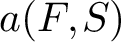 $a(F,S)$ of F at fundamental matrices S (i.e., with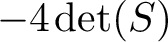 $-4\det (S)$ equal to a fundamental discriminant). We prove that as S varies along the equivalence classes of fundamental matrices with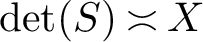 $\det (S) \asymp X$, the sequence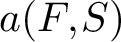 $a(F,S)$ has at least $X^{1-\varepsilon }$ sign changes and takes at least $X^{1-\varepsilon }$ ‘large values’. Furthermore, assuming the generalized Riemann hypothesis as well as the refined Gan–Gross–Prasad conjecture, we prove the bound $\lvert a(F,S)\rvert \ll _{F, \varepsilon } \frac {\det (S)^{\frac {k}2 - \frac {1}{2}}}{ \left (\log \lvert \det (S)\rvert \right )^{\frac 18 - \varepsilon }}$ for fundamental matrices S.


ON THE CHOW THEORY OF PROJECTIVIZATIONS
- Part of
-
- Journal:
- Journal of the Institute of Mathematics of Jussieu / Volume 22 / Issue 3 / May 2023
- Published online by Cambridge University Press:
- 11 November 2021, pp. 1465-1508
- Print publication:
- May 2023
-
- Article
-
- You have access
- Open access
- HTML
- Export citation
-
In this paper, we prove a decomposition result for the Chow groups of projectivizations of coherent sheaves of homological dimension $\le 1$. In this process, we establish the decomposition of Chow groups for the cases of the Cayley trick and standard flips. Moreover, we apply these results to study the Chow groups of symmetric powers of curves, nested Hilbert schemes of surfaces, and the varieties resolving Voisin maps for cubic fourfolds.

Linear PDE with constant coefficients
- Part of
-
- Journal:
- Glasgow Mathematical Journal / Volume 65 / Issue S1 / May 2023
- Published online by Cambridge University Press:
- 10 November 2021, pp. S2-S27
-
- Article
-
- You have access
- Open access
- HTML
- Export citation
THE TOM DIECK SPLITTING THEOREM IN EQUIVARIANT MOTIVIC HOMOTOPY THEORY
- Part of
-
- Journal:
- Journal of the Institute of Mathematics of Jussieu / Volume 22 / Issue 3 / May 2023
- Published online by Cambridge University Press:
- 10 November 2021, pp. 1181-1250
- Print publication:
- May 2023
-
- Article
- Export citation
TRUNCATED AFFINE SPRINGER FIBERS AND ARTHUR’S WEIGHTED ORBITAL INTEGRALS
- Part of
-
- Journal:
- Journal of the Institute of Mathematics of Jussieu / Volume 22 / Issue 4 / July 2023
- Published online by Cambridge University Press:
- 10 November 2021, pp. 1757-1818
- Print publication:
- July 2023
-
- Article
- Export citation
-
We explain an algorithm to calculate Arthur’s weighted orbital integral in terms of the number of rational points on the fundamental domain of the associated affine Springer fiber. The strategy is to count the number of rational points of the truncated affine Springer fibers in two ways: by the Arthur–Kottwitz reduction and by the Harder–Narasimhan reduction. A comparison of results obtained from these two approaches gives recurrence relations between the number of rational points on the fundamental domains of the affine Springer fibers and Arthur’s weighted orbital integrals. As an example, we calculate Arthur’s weighted orbital integrals for the groups ${\textrm {GL}}_{2}$ and ${\textrm {GL}}_{3}$.


