Refine search
Actions for selected content:
26076 results in Abstract analysis
Spectral projections correlation structure for short-to-long range dependent processes
- Part of
-
- Journal:
- European Journal of Applied Mathematics / Volume 32 / Issue 1 / February 2021
- Published online by Cambridge University Press:
- 31 January 2020, pp. 1-31
-
- Article
- Export citation
-
Let X = (Xt)t≥0 be a stochastic process issued from $x \in \mathbb{R}$ that admits a marginal stationary measure v, i.e. vPt f = vf for all t ≥ 0, where $\textbf{P}_t\,f(x)= \mathbb{E}_x[f(\textbf{X}_t)]$. In this paper, we introduce the (resp. biorthogonal) spectral projections correlation functions which are expressed in terms of projections.” Also, update first published online date, if available. into the eigenspaces of Pt (resp. and of its adjoint in the weighted Hilbert space L2 (v)). We obtain closed-form expressions involving eigenvalues, the condition number and/or the angle between the projections in the following different situations: when X = X with X = (Xt)t ≥ 0 being a Markov process, X is the subordination of X in the sense of Bochner, and X is a non-Markovian process which is obtained by time-changing X with an inverse of a subordinator. It turns out that these spectral projections correlation functions have different expressions with respect to these classes of processes which enables to identify substantial and deep properties about their dynamics. This interesting fact can be used to design original statistical tests to make inferences, for example, about the path properties of the process (presence of jumps), distance from symmetry (self-adjoint or non-self-adjoint) and short-to-long-range dependence. To reveal the usefulness of our results, we apply them to a class of non-self-adjoint Markov semigroups studied in Patie and Savov (to appear, Mem. Amer. Math. Soc., 179p), and then time-change by subordinators and their inverses.

Dehn filling Dehn twists
- Part of
-
- Journal:
- Proceedings of the Royal Society of Edinburgh. Section A: Mathematics / Volume 151 / Issue 1 / February 2021
- Published online by Cambridge University Press:
- 30 January 2020, pp. 28-51
- Print publication:
- February 2021
-
- Article
- Export citation
-
Let $\Sigma _{g,p}$ be the genus–g oriented surface with p punctures, with either g > 0 or p > 3. We show that $MCG(\Sigma _{g,p})/DT$ is acylindrically hyperbolic where DT is the normal subgroup of the mapping class group $MCG(\Sigma _{g,p})$ generated by $K^{th}$ powers of Dehn twists about curves in $\Sigma _{g,p}$ for suitable K.
Moreover, we show that in low complexity $MCG(\Sigma _{g,p})/DT$ is in fact hyperbolic. In particular, for 3g − 3 + p ⩽ 2, we show that the mapping class group $MCG(\Sigma _{g,p})$ is fully residually non-elementary hyperbolic and admits an affine isometric action with unbounded orbits on some $L^q$ space. Moreover, if every hyperbolic group is residually finite, then every convex-cocompact subgroup of $MCG(\Sigma _{g,p})$ is separable.
The aforementioned results follow from general theorems about composite rotating families, in the sense of [13], that come from a collection of subgroups of vertex stabilizers for the action of a group G on a hyperbolic graph X. We give conditions ensuring that the graph X/N is again hyperbolic and various properties of the action of G on X persist for the action of G/N on X/N.


Regularity for solutions of fully nonlinear elliptic equations with nonhomogeneous degeneracy
- Part of
-
- Journal:
- Proceedings of the Royal Society of Edinburgh. Section A: Mathematics / Volume 151 / Issue 1 / February 2021
- Published online by Cambridge University Press:
- 29 January 2020, pp. 110-132
- Print publication:
- February 2021
-
- Article
- Export citation
Bilinear identities involving the k-plane transform and Fourier extension operators
- Part of
-
- Journal:
- Proceedings of the Royal Society of Edinburgh. Section A: Mathematics / Volume 150 / Issue 6 / December 2020
- Published online by Cambridge University Press:
- 27 January 2020, pp. 3349-3377
- Print publication:
- December 2020
-
- Article
- Export citation
LARGE FIELDS IN DIFFERENTIAL GALOIS THEORY
- Part of
-
- Journal:
- Journal of the Institute of Mathematics of Jussieu / Volume 20 / Issue 6 / November 2021
- Published online by Cambridge University Press:
- 27 January 2020, pp. 1931-1946
- Print publication:
- November 2021
-
- Article
- Export citation
-
We solve the inverse differential Galois problem over differential fields with a large field of constants of infinite transcendence degree over $\mathbb{Q}$. More generally, we show that over such a field, every split differential embedding problem can be solved. In particular, we solve the inverse differential Galois problem and all split differential embedding problems over $\mathbb{Q}_{p}(x)$.


Least energy solution for a scalar field equation with a singular nonlinearity
-
- Journal:
- Proceedings of the Royal Society of Edinburgh. Section A: Mathematics / Volume 151 / Issue 1 / February 2021
- Published online by Cambridge University Press:
- 24 January 2020, pp. 93-109
- Print publication:
- February 2021
-
- Article
- Export citation
-
We are concerned with a nonnegative solution to the scalar field equation
A classical existence result by Berestycki and Lions [3] considers only the case when f is continuous. In this paper, we are interested in the existence of a solution when f is singular. For a singular nonlinearity f, Gazzola, Serrin and Tang [8] proved an existence result when $$\Delta u + f(u) = 0{\rm in }{\open R}^N,\quad \mathop {\lim }\limits_{|x|\to \infty } u(x) = 0.$$ $f \in L^1_{loc}(\mathbb {R}) \cap \mathrm {Lip}_{loc}(0,\infty )$ with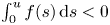 $\int _0^u f(s)\,{\rm d}s < 0$ for small $u>0.$ Since they use a shooting argument for their proof, they require the property that $f \in \mathrm {Lip}_{loc}(0,\infty ).$ In this paper, using a purely variational method, we extend the previous existence results for $f \in L^1_{loc}(\mathbb {R}) \cap C(0,\infty )$. We show that a solution obtained through minimization has the least energy among all radially symmetric weak solutions. Moreover, we describe a general condition under which a least energy solution has compact support.

Bounding the maximal size of independent generating sets of finite groups
- Part of
-
- Journal:
- Proceedings of the Royal Society of Edinburgh. Section A: Mathematics / Volume 151 / Issue 1 / February 2021
- Published online by Cambridge University Press:
- 24 January 2020, pp. 133-150
- Print publication:
- February 2021
-
- Article
-
- You have access
- Open access
- Export citation
-
Denote by m(G) the largest size of a minimal generating set of a finite group G. We estimate m(G) in terms of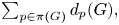 $\sum _{p\in \pi (G)}d_p(G),$ where we are denoting by dp(G) the minimal number of generators of a Sylow p-subgroup of G and by π(G) the set of prime numbers dividing the order of G.
PEM series 2 volume 63 issue 1 Cover and Front matter
-
- Journal:
- Proceedings of the Edinburgh Mathematical Society / Volume 63 / Issue 1 / February 2020
- Published online by Cambridge University Press:
- 23 January 2020, pp. f1-f2
-
- Article
-
- You have access
- Export citation
PEM series 2 volume 63 issue 1 Cover and Back matter
-
- Journal:
- Proceedings of the Edinburgh Mathematical Society / Volume 63 / Issue 1 / February 2020
- Published online by Cambridge University Press:
- 23 January 2020, pp. b1-b2
-
- Article
-
- You have access
- Export citation
COMPARISON OF LOCAL RELATIVE CHARACTERS AND THE ICHINO–IKEDA CONJECTURE FOR UNITARY GROUPS
- Part of
-
- Journal:
- Journal of the Institute of Mathematics of Jussieu / Volume 20 / Issue 6 / November 2021
- Published online by Cambridge University Press:
- 22 January 2020, pp. 1803-1854
- Print publication:
- November 2021
-
- Article
- Export citation
BREUIL–KISIN–FARGUES MODULES WITH COMPLEX MULTIPLICATION
- Part of
-
- Journal:
- Journal of the Institute of Mathematics of Jussieu / Volume 20 / Issue 6 / November 2021
- Published online by Cambridge University Press:
- 21 January 2020, pp. 1855-1904
- Print publication:
- November 2021
-
- Article
- Export citation
-
We prove that the category of (rigidified) Breuil–Kisin–Fargues modules up to isogeny is Tannakian. We then introduce and classify Breuil–Kisin–Fargues modules with complex multiplication mimicking the classical theory for rational Hodge structures. In particular, we compute an avatar of a ‘ $p$-adic Serre group’.

Uniqueness and multiplicity of positive solutions for a diffusive predator–prey model in the heterogeneous environment
- Part of
-
- Journal:
- Proceedings of the Royal Society of Edinburgh. Section A: Mathematics / Volume 150 / Issue 6 / December 2020
- Published online by Cambridge University Press:
- 20 January 2020, pp. 3321-3348
- Print publication:
- December 2020
-
- Article
- Export citation
-
This is the second part of our study on the spatially heterogeneous predator–prey model where the interaction is governed by a Crowley–Martin type functional response. In part I, we have proved that when the predator competition is strong (i.e. k is large), the model has at most one positive steady-state solution for any $\mu \in \mathbb {R}$, moreover it is globally asymptotically stable for any $\mu >0$. This part is denoted to study the effect of saturation. Our result shows that the large saturation coefficient (i.e. large m) can not only lead to the uniqueness of positive solutions, but also lead to the multiplicity of positive solutions, moreover the stability of the corresponding positive solutions is also completely obtained. This work can be regarded as a supplement of Ref. [10].


References
-
- Book:
- Wigner-Type Theorems for Hilbert Grassmannians
- Published online:
- 06 January 2020
- Print publication:
- 16 January 2020, pp 141-144
-
- Chapter
- Export citation
5 - Compatibility Relation
-
- Book:
- Wigner-Type Theorems for Hilbert Grassmannians
- Published online:
- 06 January 2020
- Print publication:
- 16 January 2020, pp 102-124
-
- Chapter
- Export citation
4 - Wigner’s Theorem and Its Generalizations
-
- Book:
- Wigner-Type Theorems for Hilbert Grassmannians
- Published online:
- 06 January 2020
- Print publication:
- 16 January 2020, pp 68-101
-
- Chapter
- Export citation
1 - Two Lattices
-
- Book:
- Wigner-Type Theorems for Hilbert Grassmannians
- Published online:
- 06 January 2020
- Print publication:
- 16 January 2020, pp 4-21
-
- Chapter
- Export citation
Contents
-
- Book:
- Wigner-Type Theorems for Hilbert Grassmannians
- Published online:
- 06 January 2020
- Print publication:
- 16 January 2020, pp v-vi
-
- Chapter
- Export citation
Index
-
- Book:
- Wigner-Type Theorems for Hilbert Grassmannians
- Published online:
- 06 January 2020
- Print publication:
- 16 January 2020, pp 145-145
-
- Chapter
- Export citation
6 - Applications
-
- Book:
- Wigner-Type Theorems for Hilbert Grassmannians
- Published online:
- 06 January 2020
- Print publication:
- 16 January 2020, pp 125-140
-
- Chapter
- Export citation
3 - Lattices of Closed Subspaces
-
- Book:
- Wigner-Type Theorems for Hilbert Grassmannians
- Published online:
- 06 January 2020
- Print publication:
- 16 January 2020, pp 53-67
-
- Chapter
-
- You have access
- Export citation
