Refine search
Actions for selected content:
26076 results in Abstract analysis
On the L∞-maximization of the solution of Poisson's equation: Brezis–Gallouet–Wainger type inequalities and applications
- Part of
-
- Journal:
- Proceedings of the Royal Society of Edinburgh. Section A: Mathematics / Volume 151 / Issue 1 / February 2021
- Published online by Cambridge University Press:
- 20 February 2020, pp. 79-92
- Print publication:
- February 2021
-
- Article
- Export citation
-
For the solution of the Poisson problem with an L∞ right hand side
we derive an optimal estimate of the form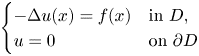 \begin{cases} -\Delta u(x) = f (x) & {\rm in}\ D, \\ u=0 & {\rm on}\ \partial D \end{cases}where σD is a modulus of continuity defined in the interval [0, |D|] and depends only on the domain D. The inequality is optimal for any domain D and for any values of
 \|u\|_\infty\leq \|f\|_\infty \sigma_D(\|f\|_1/\|f\|_\infty), $\|f\|_1$ and $\|f\|_\infty .$ We also show thatwhere B is a ball and |B| = |D|. Using this optimality property of σD, we derive Brezis–Galloute–Wainger type inequalities on the L∞ norm of u in terms of the L1 and L∞ norms of f. As an application we derive L∞ − L1 estimates on the k-th Laplace eigenfunction of the domain D.
 \sigma_D(t)\leq\sigma_B(t),\text{ for }t\in[0,|D|],


Percolation on an infinitely generated group
- Part of
-
- Journal:
- Combinatorics, Probability and Computing / Volume 29 / Issue 4 / July 2020
- Published online by Cambridge University Press:
- 20 February 2020, pp. 587-615
-
- Article
- Export citation
THE $q$-SCHUR ALGEBRAS AND $q$-SCHUR DUALITIES OF FINITE TYPE
- Part of
-
- Journal:
- Journal of the Institute of Mathematics of Jussieu / Volume 21 / Issue 1 / January 2022
- Published online by Cambridge University Press:
- 19 February 2020, pp. 129-160
- Print publication:
- January 2022
-
- Article
- Export citation
-
We formulate a $q$-Schur algebra associated with an arbitrary $W$-invariant finite set $X_{\text{f}}$ of integral weights for a complex simple Lie algebra with Weyl group $W$. We establish a $q$-Schur duality between the $q$-Schur algebra and Hecke algebra associated with $W$. We then realize geometrically the $q$-Schur algebra and duality and construct a canonical basis for the $q$-Schur algebra with positivity. With suitable choices of $X_{\text{f}}$ in classical types, we recover the $q$-Schur algebras in the literature. Our $q$-Schur algebras are closely related to the category ${\mathcal{O}}$, where the type $G_{2}$ is studied in detail.


GENERALIZED FINITE POLYLOGARITHMS
- Part of
-
- Journal:
- Glasgow Mathematical Journal / Volume 63 / Issue 1 / January 2021
- Published online by Cambridge University Press:
- 19 February 2020, pp. 66-80
-
- Article
-
- You have access
- Export citation
-
We introduce a generalization ${\rm{\pounds}}_d^{(\alpha)}(X)$ of the finite polylogarithms ${\rm{\pounds}}_d^{(0)}(X) = {{\rm{\pounds}}_d}(X) = \sum\nolimits_{k = 1}^{p - 1} {X^k}/{k^d}$, in characteristic p, which depends on a parameter α. The special case ${\rm{\pounds}}_1^{(\alpha)}(X)$ was previously investigated by the authors as the inverse, in an appropriate sense, of a parametrized generalization of the truncated exponential which is instrumental in a grading switching technique for nonassociative algebras. Here, we extend such generalization to ${\rm{\pounds}}_d^{(\alpha)}(X)$ in a natural manner and study some properties satisfied by those polynomials. In particular, we find how the polynomials ${\rm{\pounds}}_d^{(\alpha)}(X)$ are related to the powers of ${\rm{\pounds}}_1^{(\alpha)}(X)$ and derive some consequences.


Analysis of non-reversible Markov chains via similarity orbits
- Part of
-
- Journal:
- Combinatorics, Probability and Computing / Volume 29 / Issue 4 / July 2020
- Published online by Cambridge University Press:
- 18 February 2020, pp. 508-536
-
- Article
- Export citation
THE INTEGRAL HODGE CONJECTURE FOR 3-FOLDS OF KODAIRA DIMENSION ZERO
- Part of
-
- Journal:
- Journal of the Institute of Mathematics of Jussieu / Volume 20 / Issue 5 / September 2021
- Published online by Cambridge University Press:
- 18 February 2020, pp. 1697-1717
- Print publication:
- September 2021
-
- Article
- Export citation
-
We prove the integral Hodge conjecture for all 3-folds $X$ of Kodaira dimension zero with $H^{0}(X,K_{X})$ not zero. This generalizes earlier results of Voisin and Grabowski. The assumption is sharp, in view of counterexamples by Benoist and Ottem. We also prove similar results on the integral Tate conjecture. For example, the integral Tate conjecture holds for abelian 3-folds in any characteristic.


Turán numbers of theta graphs
- Part of
-
- Journal:
- Combinatorics, Probability and Computing / Volume 29 / Issue 4 / July 2020
- Published online by Cambridge University Press:
- 13 February 2020, pp. 495-507
-
- Article
- Export citation
-
The theta graph ${\Theta _{\ell ,t}}$ consists of two vertices joined by t vertex-disjoint paths, each of length $\ell $. For fixed odd $\ell $ and large t, we show that the largest graph not containing ${\Theta _{\ell ,t}}$ has at most ${c_\ell }{t^{1 - 1/\ell }}{n^{1 + 1/\ell }}$ edges and that this is tight apart from the value of ${c_\ell }$.



Tensor Products of C*-Algebras and Operator Spaces
- The Connes–Kirchberg Problem
-
- Published online:
- 10 February 2020
- Print publication:
- 27 February 2020
Lyapunov exponents for expansive homeomorphisms
- Part of
-
- Journal:
- Proceedings of the Edinburgh Mathematical Society / Volume 63 / Issue 2 / May 2020
- Published online by Cambridge University Press:
- 10 February 2020, pp. 413-425
-
- Article
- Export citation
ON A PROBLEM OF TALAGRAND CONCERNING SEPARATELY CONTINUOUS FUNCTIONS
- Part of
-
- Journal:
- Journal of the Institute of Mathematics of Jussieu / Volume 20 / Issue 5 / September 2021
- Published online by Cambridge University Press:
- 06 February 2020, pp. 1719-1728
- Print publication:
- September 2021
-
- Article
- Export citation
-
We construct a separately continuous function $e:E\times K\rightarrow \{0,1\}$ on the product of a Baire space $E$ and a compact space $K$ such that no restriction of $e$ to any non-meagre Borel set in $E\times K$ is continuous. The function $e$ has no points of joint continuity, and, hence, it provides a negative solution of Talagrand’s problem in Talagrand [Espaces de Baire et espaces de Namioka, Math. Ann. 270 (1985), 159–164].


A stochastic-statistical residential burglary model with independent Poisson clocks
- Part of
-
- Journal:
- European Journal of Applied Mathematics / Volume 32 / Issue 1 / February 2021
- Published online by Cambridge University Press:
- 05 February 2020, pp. 32-58
-
- Article
-
- You have access
- Open access
- Export citation
On subgraphs of C2k-free graphs and a problem of Kühn and Osthus
- Part of
-
- Journal:
- Combinatorics, Probability and Computing / Volume 29 / Issue 3 / May 2020
- Published online by Cambridge University Press:
- 04 February 2020, pp. 436-454
-
- Article
- Export citation
-
Let c denote the largest constant such that every C6-free graph G contains a bipartite and C4-free subgraph having a fraction c of edges of G. Győri, Kensell and Tompkins showed that 3/8 ⩽ c ⩽ 2/5. We prove that c = 38. More generally, we show that for any ε > 0, and any integer k ⩾ 2, there is a C2k-free graph $G'$ which does not contain a bipartite subgraph of girth greater than 2k with more than a fraction of the edges of
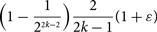 $$\Bigl(1-\frac{1}{2^{2k-2}}\Bigr)\frac{2}{2k-1}(1+\varepsilon)$$ $G'$. There also exists a C2k-free graph $G''$ which does not contain a bipartite and C4-free subgraph with more than a fraction of the edges of
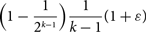 $$\Bigl(1-\frac{1}{2^{k-1}}\Bigr)\frac{1}{k-1}(1+\varepsilon)$$ $G''$.
One of our proofs uses the following statement, which we prove using probabilistic ideas, generalizing a theorem of Erdős. For any ε > 0, and any integers a, b, k ⩾ 2, there exists an a-uniform hypergraph H of girth greater than k which does not contain any b-colourable subhypergraph with more than a fraction
of the hyperedges of H. We also prove further generalizations of this theorem.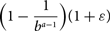 $$\Bigl(1-\frac{1}{b^{a-1}}\Bigr)(1+\varepsilon)$$
In addition, we give a new and very short proof of a result of Kühn and Osthus, which states that every bipartite C2k-free graph G contains a C4-free subgraph with at least a fraction 1/(k−1) of the edges of G. We also answer a question of Kühn and Osthus about C2k-free graphs obtained by pasting together C2l’s (with k >l ⩾ 3).


Nonlinear fractional Laplacian problems with nonlocal ‘gradient terms’
- Part of
-
- Journal:
- Proceedings of the Royal Society of Edinburgh. Section A: Mathematics / Volume 150 / Issue 5 / October 2020
- Published online by Cambridge University Press:
- 04 February 2020, pp. 2682-2718
- Print publication:
- October 2020
-
- Article
- Export citation
-
Let $\Omega \subset \mathbb{R}^{N} $, N ≽ 2, be a smooth bounded domain. For s ∈ (1/2, 1), we consider a problem of the formwhere λ > 0 is a real parameter, f belongs to a suitable Lebesgue space,
 $$\left\{\begin{array}{@{}ll} (-\Delta)^s u= \mu(x)\, \mathbb{D}_s^{2}(u) + \lambda f(x), & {\rm in}\,\Omega, \\ u= 0, & {\rm in}\,\mathbb{R}^{N} \setminus \Omega,\end{array}\right.$$ $\mu \in L^{\infty}$ and $\mathbb {D}_s^2$ is a nonlocal ‘gradient square’ term given byDepending on the real parameter λ > 0, we derive existence and non-existence results. The proof of our existence result relies on sharp Calderón–Zygmund type regularity results for the fractional Poisson equation with low integrability data. We also obtain existence results for related problems involving different nonlocal diffusion terms.
 $$\mathbb{D}_s^2 (u) = \frac{a_{N,s}}{2} \int_{\mathbb{R}^{N}} \frac{|u(x)-u(y)|^2}{|x-y|^{N+2s}}\,{\rm d}y.$$


GAPS BETWEEN CONSECUTIVE UNTWISTING NUMBERS
- Part of
-
- Journal:
- Glasgow Mathematical Journal / Volume 63 / Issue 1 / January 2021
- Published online by Cambridge University Press:
- 03 February 2020, pp. 59-65
-
- Article
-
- You have access
- Export citation
A note on the Brown–Erdős–Sós conjecture in groups
- Part of
-
- Journal:
- Combinatorics, Probability and Computing / Volume 29 / Issue 4 / July 2020
- Published online by Cambridge University Press:
- 03 February 2020, pp. 633-640
-
- Article
- Export citation
-
We show that a dense subset of a sufficiently large group multiplication table contains either a large part of the addition table of the integers modulo some k, or the entire multiplication table of a certain large abelian group, as a subgrid. As a consequence, we show that triples systems coming from a finite group contain configurations with t triples spanning $ O(\sqrt t )$ vertices, which is the best possible up to the implied constant. We confirm that for all t we can find a collection of t triples spanning at most t + 3 vertices, resolving the Brown–Erdős–Sós conjecture in this context. The proof applies well-known arithmetic results including the multidimensional versions of Szemerédi’s theorem and the density Hales–Jewett theorem.
This result was discovered simultaneously and independently by Nenadov, Sudakov and Tyomkyn [5], and a weaker result avoiding the arithmetic machinery was obtained independently by Wong [11].

Maximal functions associated with families of homogeneous curves: Lp bounds for P ≤ 2
- Part of
-
- Journal:
- Proceedings of the Edinburgh Mathematical Society / Volume 63 / Issue 2 / May 2020
- Published online by Cambridge University Press:
- 03 February 2020, pp. 398-412
-
- Article
- Export citation
Hypergeometric rational approximations to ζ(4)
- Part of
-
- Journal:
- Proceedings of the Edinburgh Mathematical Society / Volume 63 / Issue 2 / May 2020
- Published online by Cambridge University Press:
- 03 February 2020, pp. 374-397
-
- Article
-
- You have access
- Open access
- Export citation
PRM volume 150 issue 1 Cover and Back matter
-
- Journal:
- Proceedings of the Royal Society of Edinburgh. Section A: Mathematics / Volume 150 / Issue 1 / February 2020
- Published online by Cambridge University Press:
- 14 February 2020, pp. b1-b2
- Print publication:
- February 2020
-
- Article
-
- You have access
- Export citation
PRM volume 150 issue 1 Cover and Front matter
-
- Journal:
- Proceedings of the Royal Society of Edinburgh. Section A: Mathematics / Volume 150 / Issue 1 / February 2020
- Published online by Cambridge University Press:
- 14 February 2020, pp. f1-f2
- Print publication:
- February 2020
-
- Article
-
- You have access
- Export citation
QUADRATIC DIFFERENTIAL EQUATIONS: PARTIAL GELFAND–SHILOV SMOOTHING EFFECT AND NULL-CONTROLLABILITY
- Part of
-
- Journal:
- Journal of the Institute of Mathematics of Jussieu / Volume 20 / Issue 6 / November 2021
- Published online by Cambridge University Press:
- 31 January 2020, pp. 1749-1801
- Print publication:
- November 2021
-
- Article
- Export citation
