Refine listing
Actions for selected content:
105 results in 32Sxx
THE INTEGRAL IDENTITY CONJECTURE IN MOTIVIC HOMOTOPY THEORY
- Part of
-
- Journal:
- Journal of the Institute of Mathematics of Jussieu / Volume 25 / Issue 3 / May 2026
- Published online by Cambridge University Press:
- 05 June 2026, pp. 1675-1724
- Print publication:
- May 2026
-
- Article
-
- You have access
- Open access
- HTML
- Export citation
-
The integral identity conjecture of Kontsevich and Soibelman plays an important role in proving the existence of motivic Donaldson-Thomas invariants for three-dimensional noncommutative Calabi-Yau manifolds. There are a number of different formulations of this conjecture in different contexts, and accordingly, there are corresponding solutions to them. The methods devoted to solving this conjecture are diverse, ranging from $\ell $-adic cohomology of rigid analytic varieties to Hrushovski-Kazhdan motivic integration and motivic Fubini theorem for tropicalization maps,... In [Ivo24], Ivorra deduces a functorial version of the integral identity in the motivic stable homotopy categories of schemes, from the Braden hyperbolic localization theorem. This functorial version concerns Ayoub’s nearby cycles functor associated with a $\mathbb {G}_m$-equivariant function $f \colon \mathbb {V}(\mathcal {E}) \longrightarrow \mathbb {A}^1$ on a vector bundle $\mathbb {V}(\mathcal {E})$ over a field of characteristic zero. In the present work, we follow the functorial approach from [Ivo24] and extend the scope of the original conjecture by Kontsevich and Soibelman by studying more generally the case of $\mathbb {G}_m$-equivariant functions on algebraic S-spaces with a $\tau $-locally linearizable action of $\mathbb {G}_m$ over a noetherian base scheme S.


Log canonical thresholds of high multiplicity reduced plane curves
- Part of
-
- Journal:
- Glasgow Mathematical Journal , First View
- Published online by Cambridge University Press:
- 17 April 2026, pp. 1-13
-
- Article
-
- You have access
- Open access
- HTML
- Export citation
-
We compute log canonical thresholds of reduced plane curves of degree $d$ at points of multiplicity $d-1$. As a consequence, we describe all possible values of log canonical threshold that are less than $2/(d-1)$ for reduced plane curves of degree $d$. In addition, we compute log canonical thresholds for all reduced plane curves of degree less than 6.


Equivariant sheaves for classical groups acting on Grassmannians
- Part of
-
- Journal:
- Canadian Journal of Mathematics , First View
- Published online by Cambridge University Press:
- 24 March 2026, pp. 1-37
-
- Article
- Export citation
-
Let V be a finite-dimensional complex vector space. Assume that V is a direct sum of subspaces each of which is equipped with a nondegenerate symmetric or skew-symmetric bilinear form. In this article, we introduce a stratification of the Grassmannian $\text {Gr}_k(V)$ related to the action of the appropriate product of orthogonal and symplectic groups, and we study the topology of this stratification. The main results involve sheaves with coefficients in a field of characteristic other than $2$. We prove that there are “enough” parity sheaves, and that the hypercohomology of each parity sheaf also satisfies a parity-vanishing property. This situation arises in the following context: let x be a nilpotent element in the Lie algebra of either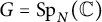 $G = \text {Sp}_N(\mathbb {C})$ or $G = \text {SO}_N(\mathbb {C})$, and let $V = \ker x \subset \mathbb {C}^N$. Our stratification of $\text {Gr}_k(V)$ is preserved by the centralizer $G^x$, and we expect our results to have applications in Springer theory for classical groups.


Addition–deletion of a smooth conic for free curves
- Part of
-
- Journal:
- Nagoya Mathematical Journal / Volume 261 / 2026
- Published online by Cambridge University Press:
- 02 March 2026, e20
-
- Article
-
- You have access
- Open access
- HTML
- Export citation
A characterization of quasi-homogeneity in terms of liftable vector fields
- Part of
-
- Journal:
- Proceedings of the Royal Society of Edinburgh. Section A: Mathematics , First View
- Published online by Cambridge University Press:
- 16 February 2026, pp. 1-28
-
- Article
-
- You have access
- Open access
- HTML
- Export citation
Double points and image of reflection maps
- Part of
-
- Journal:
- Proceedings of the Royal Society of Edinburgh. Section A: Mathematics , First View
- Published online by Cambridge University Press:
- 11 December 2025, pp. 1-45
-
- Article
- Export citation
-
A reflection mapping is a singular holomorphic mapping obtained by restricting the quotient mapping of a complex reflection group. We study the analytic structure of double point spaces of reflection mappings. In the case where the image is a hypersurface, we obtain explicit equations for the double point space and for the image as well. In the case of surfaces in ${\mathbb C}^3$, this gives a very efficient method to compute the Milnor number and delta invariant of the double point curve.

A new hierarchy for complex plane curves
- Part of
-
- Journal:
- Canadian Mathematical Bulletin , First View
- Published online by Cambridge University Press:
- 12 November 2025, pp. 1-25
-
- Article
- Export citation
-
We define the type of a plane curve as the initial degree of the corresponding Bourbaki ideal. Then, we show that this invariant behaves well with respect to the union of curves. Curves of type $0$ are precisely the free curves, while curves of type $1$ are the plus-one generated curves. In this article, we first show that line arrangements and conic-line arrangements can exhibit all the theoretically possible types. In the second part, we study the properties of the curves of type $2$ and construct families of line arrangements and conic-line arrangements of this type.


Complex hyperbolic 2-orbifolds with isolated singularities
- Part of
-
- Journal:
- Glasgow Mathematical Journal , First View
- Published online by Cambridge University Press:
- 24 October 2025, pp. 1-10
-
- Article
-
- You have access
- Open access
- HTML
- Export citation
-
For each prime $p$, this paper constructs compact complex hyperbolic $2$-manifolds with an isometric action of $\mathbb{Z} / p \mathbb{Z}$ that is not free and has only isolated fixed points. The case $p = 2$ is special, and finding general examples for $p=2$ is related to whether or not complex hyperbolic lattices are conjugacy separable on torsion.


Hodge theory of abelian covers of algebraic varieties
- Part of
-
- Journal:
- Forum of Mathematics, Sigma / Volume 13 / 2025
- Published online by Cambridge University Press:
- 29 September 2025, e159
-
- Article
-
- You have access
- Open access
- HTML
- Export citation
-
Motivated by classical Alexander invariants of affine hypersurface complements, we endow certain finite dimensional quotients of the homology of abelian covers of complex algebraic varieties with a canonical and functorial mixed Hodge structure (MHS). More precisely, we focus on covers which arise algebraically in the following way: if U is a smooth connected complex algebraic variety and G is a complex semiabelian variety, the pullback of the exponential map by an algebraic morphism $f:U\to G$ yields a covering space $\pi :U^f\to U$ whose group of deck transformations is $\pi _1(G)$. The new MHSs are compatible with Deligne’s MHS on the homology of U through the covering map $\pi $ and satisfy a direct sum decomposition as MHSs into generalized eigenspaces by the action of deck transformations. This provides a vast generalization of the previous results regarding univariable Alexander modules by Geske, Maxim, Wang and the authors in [16, 17]. Lastly, we reduce the problem of whether the first Betti number of the Milnor fiber of a central hyperplane arrangement complement is combinatorial to a question about the Hodge filtration of certain MHSs defined in this paper, providing evidence that the new structures contain interesting information.


Hyperpolygonal arrangements
- Part of
-
- Journal:
- Glasgow Mathematical Journal / Volume 68 / Issue 1 / January 2026
- Published online by Cambridge University Press:
- 14 July 2025, pp. 134-146
-
- Article
-
- You have access
- Open access
- HTML
- Export citation
-
In [5], a particular family of real hyperplane arrangements stemming from hyperpolygonal spaces associated with certain quiver varieties was introduced which we thus call hyperpolygonal arrangements ${\mathscr H}_n$. In this note, we study these arrangements and investigate their properties systematically. Remarkably, the arrangements ${\mathscr H}_n$ discriminate between essentially all local properties of arrangements. In addition, we show that hyperpolygonal arrangements are projectively unique and combinatorially formal.
We note that the arrangement ${\mathscr H}_5$ is the famous counterexample of Edelman and Reiner [17] of Orlik’s conjecture that the restriction of a free arrangement is again free.


Inversion of Adjunction for the minimal exponent
- Part of
-
- Journal:
- Forum of Mathematics, Sigma / Volume 13 / 2025
- Published online by Cambridge University Press:
- 22 May 2025, e92
-
- Article
-
- You have access
- Open access
- HTML
- Export citation
A flower theorem in dimension two
- Part of
-
- Journal:
- Ergodic Theory and Dynamical Systems / Volume 45 / Issue 10 / October 2025
- Published online by Cambridge University Press:
- 08 May 2025, pp. 3223-3254
- Print publication:
- October 2025
-
- Article
-
- You have access
- Open access
- HTML
- Export citation
Bernstein–Sato polynomials of locally quasi-homogeneous divisors in $\mathbb{C}^{3}$
- Part of
-
- Journal:
- Compositio Mathematica / Volume 161 / Issue 4 / April 2025
- Published online by Cambridge University Press:
- 20 August 2025, pp. 859-915
- Print publication:
- April 2025
-
- Article
- Export citation
-
We consider the Bernstein–Sato polynomial of a locally quasi-homogeneous polynomial $f \in R = \mathbb{C}[x_{1}, x_{2}, x_{3}]$. We construct, in the analytic category, a complex of $\mathscr{D}_{X}[s]$-modules that can be used to compute the $\mathscr{D}_{X}[s]$-dual of $\mathscr{D}_{X}[s] f^{s-1}$ as the middle term of a short exact sequence where the outer terms are well understood. This extends a result by Narváez Macarro where a freeness assumption was required. We derive many results about the zeros of the Bernstein–Sato polynomial. First, we prove each nonvanishing degree of the zeroth local cohomology of the Milnor algebra $H_{\mathfrak{m}}^{0} (R / (\partial f))$ contributes a root to the Bernstein–Sato polynomial, generalizing a result of M. Saito (where the argument cannot weaken homogeneity to quasi-homogeneity). Second, we prove the zeros of the Bernstein–Sato polynomial admit a partial symmetry about $-1$, extending a result of Narváez Macarro that again required freeness. We give applications to very small roots, the twisted logarithmic comparison theorem, and more precise statements when f is additionally assumed to be homogeneous. Finally, when f defines a hyperplane arrangement in $\mathbb{C}^{3}$ we give a complete formula for the zeros of the Bernstein–Sato polynomial of f. We show all zeros except the candidate root $-2 + (2 / \deg(f))$ are (easily) combinatorially given; we give many equivalent characterizations of when the only noncombinatorial candidate root $-2 + (2/ \deg(f))$ is in fact a zero of the Bernstein–Sato polynomial. One equivalent condition is the nonvanishing of $H_{\mathfrak{m}}^{0}( R / (\partial f))_{\deg(f) - 1}$.


A new generic vanishing theorem on homogeneous varieties and the positivity conjecture for triple intersections of Schubert cells
- Part of
-
- Journal:
- Compositio Mathematica / Volume 161 / Issue 1 / January 2025
- Published online by Cambridge University Press:
- 10 March 2025, pp. 1-12
- Print publication:
- January 2025
-
- Article
- Export citation
-
In this paper we prove a new generic vanishing theorem for $X$ a complete homogeneous variety with respect to an action of a connected algebraic group. Let $A, B_0\subset X$ be locally closed affine subvarieties, and assume that $B_0$ is smooth and pure dimensional. Let ${\mathcal {P}}$ be a perverse sheaf on $A$ and let $B=g B_0$ be a generic translate of $B_0$. Then our theorem implies $(-1)^{\operatorname {codim} B}\chi (A\cap B, {\mathcal {P}}|_{A\cap B})\geq 0$. As an application, we prove in full generality a positivity conjecture about the signed Euler characteristic of generic triple intersections of Schubert cells. Such Euler characteristics are known to be the structure constants for the multiplication of the Segre–Schwartz–MacPherson classes of these Schubert cells.


On the gluing of germs of complex analytic spaces, Betti numbers, and their structure
- Part of
-
- Journal:
- Canadian Mathematical Bulletin / Volume 68 / Issue 2 / June 2025
- Published online by Cambridge University Press:
- 20 December 2024, pp. 582-597
- Print publication:
- June 2025
-
- Article
- Export citation
Hyperplane Arrangements Satisfy (Un)Twisted Logarithmic Comparison Theorems, Applications to $\mathscr {D}_{X}$-modules
- Part of
-
- Journal:
- Forum of Mathematics, Pi / Volume 12 / 2024
- Published online by Cambridge University Press:
- 06 November 2024, e19
-
- Article
-
- You have access
- Open access
- HTML
- Export citation
-
For a reduced hyperplane arrangement, we prove the analytic Twisted Logarithmic Comparison Theorem, subject to mild combinatorial arithmetic conditions on the weights defining the twist. This gives a quasi-isomorphism between the twisted logarithmic de Rham complex and the twisted meromorphic de Rham complex. The latter computes the cohomology of the arrangement’s complement with coefficients from the corresponding rank one local system. We also prove the algebraic variant (when the arrangement is central), and the analytic and algebraic (untwisted) Logarithmic Comparison Theorems. The last item positively resolves an old conjecture of Terao. We also prove that: Every nontrivial rank one local system on the complement can be computed via these Twisted Logarithmic Comparison Theorems; these computations are explicit finite-dimensional linear algebra. Finally, we give some $\mathscr {D}_{X}$-module applications: For example, we give a sharp restriction on the codimension one components of the multivariate Bernstein–Sato ideal attached to an arbitrary factorization of an arrangement. The bound corresponds to (and, in the univariate case, gives an independent proof of) M. Saito’s result that the roots of the Bernstein–Sato polynomial of a non-smooth, central, reduced arrangement live in $(-2 + 1/d, 0).$


On the embedded Nash problem
- Part of
-
- Journal:
- Forum of Mathematics, Pi / Volume 12 / 2024
- Published online by Cambridge University Press:
- 16 October 2024, e15
-
- Article
-
- You have access
- Open access
- HTML
- Export citation
Strict positivity of Kähler–Einstein currents
- Part of
-
- Journal:
- Forum of Mathematics, Sigma / Volume 12 / 2024
- Published online by Cambridge University Press:
- 27 May 2024, e68
-
- Article
-
- You have access
- Open access
- HTML
- Export citation
-
Kähler–Einstein currents, also known as singular Kähler–Einstein metrics, have been introduced and constructed a little over a decade ago. These currents live on mildly singular compact Kähler spaces X and their two defining properties are the following: They are genuine Kähler–Einstein metrics on $X_{\mathrm {reg}}$, and they admit local bounded potentials near the singularities of X. In this note, we show that these currents dominate a Kähler form near the singular locus, when either X admits a global smoothing, or when X has isolated smoothable singularities. Our results apply to klt pairs and allow us to show that if X is any compact Kähler space of dimension three with log terminal singularities, then any singular Kähler–Einstein metric of nonpositive curvature dominates a Kähler form.

Deformations of Calabi–Yau varieties with k-liminal singularities
- Part of
-
- Journal:
- Forum of Mathematics, Sigma / Volume 12 / 2024
- Published online by Cambridge University Press:
- 10 May 2024, e59
-
- Article
-
- You have access
- Open access
- HTML
- Export citation
-
The goal of this paper is to describe certain nonlinear topological obstructions for the existence of first-order smoothings of mildly singular Calabi–Yau varieties of dimension at least $4$. For nodal Calabi–Yau threefolds, a necessary and sufficient linear topological condition for the existence of a first-order smoothing was first given in [Fri86]. Subsequently, Rollenske–Thomas [RT09] generalized this picture to nodal Calabi–Yau varieties of odd dimension by finding a necessary nonlinear topological condition for the existence of a first-order smoothing. In a complementary direction, in [FL22a], the linear necessary and sufficient conditions of [Fri86] were extended to Calabi–Yau varieties in every dimension with $1$-liminal singularities (which are exactly the ordinary double points in dimension $3$ but not in higher dimensions). In this paper, we give a common formulation of all of these previous results by establishing analogues of the nonlinear topological conditions of [RT09] for Calabi–Yau varieties with weighted homogeneous k-liminal hypersurface singularities, a broad class of singularities that includes ordinary double points in odd dimensions.


Thinness of some hypergeometric groups in $\mathrm{Sp}(6)$
- Part of
-
- Journal:
- Glasgow Mathematical Journal / Volume 66 / Issue 3 / September 2024
- Published online by Cambridge University Press:
- 02 May 2024, pp. 571-581
-
- Article
- Export citation
-
We show the thinness of $7$ of the $40$ hypergeometric groups having a maximally unipotent monodromy in $\mathrm{Sp}(6)$.


