Refine listing
Actions for selected content:
42 results in 22Fxx
Non-divergence of reductive group action on homogeneous spaces
- Part of
-
- Journal:
- Ergodic Theory and Dynamical Systems , First View
- Published online by Cambridge University Press:
- 20 February 2026, pp. 1-36
-
- Article
- Export citation
-
Let $X=G/\Gamma $ be the quotient of a semisimple Lie group G by its non-cocompact arithmetic lattice. Let H be a reductive algebraic subgroup of G acting on X. We give several equivalent algebraic conditions on H for the existence of a fixed compact set in X intersecting every H-orbit. This generalizes previous results concerning certain special reductive group action on X in this setting. When G is of real rank one, $\Gamma $ is a non-cocompact lattice of G, and $H<G$ is an algebraic group, we also obtain an algebraic condition on H which is equivalent to the return of every H-orbit to a single compact set in X. This complements our results in the case of an arithmetic lattice.


Dynamical ideals and the axiom of choice
- Part of
-
- Journal:
- Canadian Journal of Mathematics , First View
- Published online by Cambridge University Press:
- 09 February 2026, pp. 1-24
-
- Article
- Export citation
Positivity and representations of surface groups
- Part of
-
- Journal:
- Forum of Mathematics, Pi / Volume 14 / 2026
- Published online by Cambridge University Press:
- 09 February 2026, e6
-
- Article
-
- You have access
- Open access
- HTML
- Export citation
-
In [24, 26] Guichard and Wienhard introduced the notion of $\Theta $-positivity, a generalization of Lusztig’s total positivity to real Lie groups that are not necessarily split.
Based on this notion, we introduce in this paper $\Theta $-positive representations of surface groups. We prove that $\Theta $-positive representations of closed surface groups are $\Theta $-Anosov. This implies that $\Theta $-positive representations are discrete and faithful and that the set of $\Theta $-positive representations is open in the representation variety.
We further establish important properties on limits of $\Theta $-positive representations, proving that the set of $\Theta $-positive representations is closed in the set of representations containing a $\Theta $-proximal element. This is used in [3] to prove the closedness of the set of $\Theta $-positive representations.


CONTINUITY OF MEASURABLE COCYCLES
- Part of
-
- Journal:
- The Journal of Symbolic Logic , First View
- Published online by Cambridge University Press:
- 27 November 2025, pp. 1-10
-
- Article
-
- You have access
- Open access
- HTML
- Export citation
-
Suppose $G\curvearrowright X$ is a Polish group action, H is a Polish group, and $G\times X\mathop {\overset {\psi }\longrightarrow } H$ is a cocycle that is continuous in the second variable. If $\psi $ is either Baire measurable or is $\lambda \times \mu $-measurable with respect to a Haar measure $\lambda $ on G and a fully supported $\sigma $-finite Borel measure $\mu $ on X, then $\psi $ is jointly continuous.


Invariant divisors and equivariant line bundles
- Part of
-
- Journal:
- Forum of Mathematics, Sigma / Volume 13 / 2025
- Published online by Cambridge University Press:
- 03 April 2025, e68
-
- Article
-
- You have access
- Open access
- HTML
- Export citation
-
Scalar relative invariants play an important role in the theory of group actions on a manifold as their zero sets are invariant hypersurfaces. Relative invariants are central in many applications, where they often are treated locally since an invariant hypersurface may not be a locus of a single function. Our aim is to establish a global theory of relative invariants.
For a Lie algebra ${\mathfrak g}$ of holomorphic vector fields on a complex manifold M, any holomorphic ${\mathfrak g}$-invariant hypersurface is given in terms of a ${\mathfrak g}$-invariant divisor. This generalizes the classical notion of scalar relative ${\mathfrak g}$-invariant. Any ${\mathfrak g}$-invariant divisor gives rise to a ${\mathfrak g}$-equivariant line bundle, and a large part of this paper is therefore devoted to the investigation of the group $\mathrm {Pic}_{\mathfrak g}(M)$ of ${\mathfrak g}$-equivariant line bundles. We give a cohomological description of $\mathrm {Pic}_{\mathfrak g}(M)$ in terms of a double complex interpolating the Chevalley-Eilenberg complex for ${\mathfrak g}$ with the Čech complex of the sheaf of holomorphic functions on M.
We also obtain results about polynomial divisors on affine bundles and jet bundles. This has applications to the theory of differential invariants. Those were actively studied in relation to invariant differential equations, but the description of multipliers (or weights) of relative differential invariants was an open problem. We derive a characterization of them with our general theory. Examples, including projective geometry of curves and second-order ODEs, not only illustrate the developed machinery but also give another approach and rigorously justify some classical computations. At the end, we briefly discuss generalizations of this theory.


Every locally compact group is the outer automorphism group of a II1 factor
- Part of
-
- Journal:
- Proceedings of the Royal Society of Edinburgh. Section A: Mathematics , First View
- Published online by Cambridge University Press:
- 28 March 2025, pp. 1-12
-
- Article
- Export citation
-
We prove that every locally compact second countable group G arises as the outer automorphism group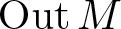 $\operatorname{Out} M$ of a II1 factor, which was so far only known for totally disconnected groups, compact groups, and a few isolated examples. We obtain this result by proving that every locally compact second countable group is a centralizer group, a class of Polish groups that arise naturally in ergodic theory and that may all be realized as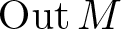 $\operatorname{Out} M$.
Reversibility and transitivity of semigroup actions on homogeneous spaces
- Part of
-
- Journal:
- Canadian Journal of Mathematics / Volume 78 / Issue 2 / April 2026
- Published online by Cambridge University Press:
- 24 February 2025, pp. 355-374
- Print publication:
- April 2026
-
- Article
- Export citation
-
This paper studies reversibility and transitivity of semigroups acting on homogeneous spaces. Properties of the reversor set of a subsemigroup acting on homogeneous spaces are presented. Let G be a topological group and L a subgroup of G. Assume that S is a subsemigroup of G with nonempty interior. It is presented a study of the reversibility of the S-action on $G/L$ in terms of the actions of S and L on homogeneous spaces of G. The results relate the reversibility and the transitivity of S in $G/L$ with the minimality of the action of L on homogeneous spaces of G. In addition, sufficient conditions for S to be right reversible in G if S is reversible in $G/L$ are presented.


On Riemannian and Ricci curvatures of homogeneous Finsler manifolds
- Part of
-
- Journal:
- Canadian Mathematical Bulletin / Volume 68 / Issue 1 / March 2025
- Published online by Cambridge University Press:
- 25 November 2024, pp. 73-90
- Print publication:
- March 2025
-
- Article
- Export citation
The weak Ramsey property and extreme amenability
- Part of
-
- Journal:
- Forum of Mathematics, Sigma / Volume 12 / 2024
- Published online by Cambridge University Press:
- 11 November 2024, e96
-
- Article
-
- You have access
- Open access
- HTML
- Export citation
Structural, point-free, non-Hausdorff topological realization of Borel groupoid actions
- Part of
-
- Journal:
- Forum of Mathematics, Sigma / Volume 12 / 2024
- Published online by Cambridge University Press:
- 14 March 2024, e35
-
- Article
-
- You have access
- Open access
- HTML
- Export citation
On denseness of horospheres in higher rank homogeneous spaces
- Part of
-
- Journal:
- Ergodic Theory and Dynamical Systems / Volume 44 / Issue 11 / November 2024
- Published online by Cambridge University Press:
- 19 February 2024, pp. 3272-3289
- Print publication:
- November 2024
-
- Article
-
- You have access
- Open access
- HTML
- Export citation
-
Let $ G $ be a connected semisimple real algebraic group and $\Gamma <G$ be a Zariski dense discrete subgroup. Let N denote a maximal horospherical subgroup of G, and $P=MAN$ the minimal parabolic subgroup which is the normalizer of N. Let $\mathcal E$ denote the unique P-minimal subset of $\Gamma \backslash G$ and let $\mathcal E_0$ be a $P^\circ $-minimal subset. We consider a notion of a horospherical limit point in the Furstenberg boundary $ G/P $ and show that the following are equivalent for any $[g]\in \mathcal E_0$:
 (1) $gP\in G/P$ is a horospherical limit point;
(2) $[g]NM$ is dense in $\mathcal E$;
(3) $[g]N$ is dense in $\mathcal E_0$.
The equivalence of items (1) and (2) is due to Dal’bo in the rank one case. We also show that unlike convex cocompact groups of rank one Lie groups, the $NM$-minimality of $\mathcal E$ does not hold in a general Anosov homogeneous space.


HIGHER MOMENT FORMULAE AND LIMITING DISTRIBUTIONS OF LATTICE POINTS
- Part of
-
- Journal:
- Journal of the Institute of Mathematics of Jussieu / Volume 23 / Issue 5 / September 2024
- Published online by Cambridge University Press:
- 28 November 2023, pp. 2081-2125
- Print publication:
- September 2024
-
- Article
- Export citation
-
We establish higher moment formulae for Siegel transforms on the space of affine unimodular lattices as well as on certain congruence quotients of $\mathrm {SL}_d({\mathbb {R}})$. As applications, we prove functional central limit theorems for lattice point counting for affine and congruence lattices using the method of moments.

Pointwise convergence in nilmanifolds along smooth functions of polynomial growth
- Part of
-
- Journal:
- Ergodic Theory and Dynamical Systems / Volume 44 / Issue 7 / July 2024
- Published online by Cambridge University Press:
- 25 September 2023, pp. 1963-2008
- Print publication:
- July 2024
-
- Article
- Export citation
-
We study the equidistribution of orbits of the form $b_1^{a_1(n)}\cdots b_k^{a_k(n)}\Gamma $ in a nilmanifold X, where the sequences $a_i(n)$ arise from smooth functions of polynomial growth belonging to a Hardy field. We show that under certain assumptions on the growth rates of the functions $a_1,\ldots ,a_k$, these orbits are equidistributed on some subnilmanifold of the space X. As an application of these results and in combination with the Host–Kra structure theorem for measure-preserving systems, as well as some recent seminorm estimates of the author for ergodic averages concerning Hardy field functions, we deduce a norm convergence result for multiple ergodic averages. Our method mainly relies on an equidistribution result of Green and Tao on finite segments of polynomial orbits on a nilmanifold [The quantitative behaviour of polynomial orbits on nilmanifolds. Ann. of Math. (2) 175 (2012), 465–540].


Expanding measures: Random walks and rigidity on homogeneous spaces
- Part of
-
- Journal:
- Forum of Mathematics, Sigma / Volume 11 / 2023
- Published online by Cambridge University Press:
- 04 July 2023, e59
-
- Article
-
- You have access
- Open access
- HTML
- Export citation
-
Let G be a real Lie group, $\Lambda <G$ a lattice and $H\leqslant G$ a connected semisimple subgroup without compact factors and with finite center. We define the notion of H-expanding measures $\mu $ on H and, applying recent work of Eskin–Lindenstrauss, prove that $\mu $-stationary probability measures on $G/\Lambda $ are homogeneous. Transferring a construction by Benoist–Quint and drawing on ideas of Eskin–Mirzakhani–Mohammadi, we construct Lyapunov/Margulis functions to show that H-expanding random walks on $G/\Lambda $ satisfy a recurrence condition and that homogeneous subspaces are repelling. Combined with a countability result, this allows us to prove equidistribution of trajectories in $G/\Lambda $ for H-expanding random walks and to obtain orbit closure descriptions. Finally, elaborating on an idea of Simmons–Weiss, we deduce Birkhoff genericity of a class of measures with respect to some diagonal flows and extend their applications to Diophantine approximation on similarity fractals to a nonconformal and weighted setting.


On the spectral theory of groups of automorphisms of S-adic nilmanifolds
- Part of
-
- Journal:
- Ergodic Theory and Dynamical Systems / Volume 44 / Issue 3 / March 2024
- Published online by Cambridge University Press:
- 29 May 2023, pp. 705-726
- Print publication:
- March 2024
-
- Article
-
- You have access
- Open access
- HTML
- Export citation
-
Let $S=\{p_1, \ldots , p_r,\infty \}$ for prime integers $p_1, \ldots , p_r.$ Let X be an S-adic compact nilmanifold, equipped with the unique translation-invariant probability measure $\mu .$ We characterize the countable groups $\Gamma $ of automorphisms of X for which the Koopman representation $\kappa $ on $L^2(X,\mu )$ has a spectral gap. More specifically, let Y be the maximal quotient solenoid of X (thus, Y is a finite-dimensional, connected, compact abelian group). We show that $\kappa $ does not have a spectral gap if and only if there exists a $\Gamma $-invariant proper subsolenoid of Y on which $\Gamma $ acts as a virtually abelian group,


A factor of i.i.d. with uniform marginals and infinite clusters spanned by equal labels
- Part of
-
- Journal:
- Ergodic Theory and Dynamical Systems / Volume 43 / Issue 11 / November 2023
- Published online by Cambridge University Press:
- 22 December 2022, pp. 3707-3725
- Print publication:
- November 2023
-
- Article
- Export citation
-
We give an example of an FIID vertex-labeling of ${\mathbb T}_3$ whose marginals are uniform on $[0,1]$, and if we delete the edges between those vertices whose labels are different, then some of the remaining clusters are infinite. We also show that no such process can be finitary.


How robustly can you predict the future?
- Part of
-
- Journal:
- Canadian Journal of Mathematics / Volume 75 / Issue 5 / October 2023
- Published online by Cambridge University Press:
- 07 September 2022, pp. 1493-1515
- Print publication:
- October 2023
-
- Article
-
- You have access
- Open access
- HTML
- Export citation
-
Hardin and Taylor proved that any function on the reals—even a nowhere continuous one—can be correctly predicted, based solely on its past behavior, at almost every point in time. They showed that one could even arrange for the predictors to be robust with respect to simple time shifts, and asked whether they could be robust with respect to other, more complicated time distortions. This question was partially answered by Bajpai and Velleman, who provided upper and lower frontiers (in the subgroup lattice of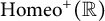 $\mathrm{Homeo}^+(\mathbb {R})$) on how robust a predictor can possibly be. We improve both frontiers, some of which reduce ultimately to consequences of Hölder’s Theorem (that every Archimedean group is abelian).
TEMPERED HOMOGENEOUS SPACES IV
- Part of
-
- Journal:
- Journal of the Institute of Mathematics of Jussieu / Volume 22 / Issue 6 / November 2023
- Published online by Cambridge University Press:
- 07 June 2022, pp. 2879-2906
- Print publication:
- November 2023
-
- Article
- Export citation
-
Let G be a complex semisimple Lie group and H a complex closed connected subgroup. Let
 and
and  be their Lie algebras. We prove that the regular representation of G in $L^2(G/H)$ is tempered if and only if the orthogonal of
  in
in  contains regular elements by showing simultaneously the equivalence to other striking conditions, such as
  has a solvable limit algebra.


CAYLEY–ABELS GRAPHS AND INVARIANTS OF TOTALLY DISCONNECTED, LOCALLY COMPACT GROUPS
- Part of
-
- Journal:
- Journal of the Australian Mathematical Society / Volume 114 / Issue 2 / April 2023
- Published online by Cambridge University Press:
- 13 April 2022, pp. 145-177
-
- Article
- Export citation
-
A connected, locally finite graph $\Gamma $ is a Cayley–Abels graph for a totally disconnected, locally compact group G if G acts vertex-transitively on $\Gamma $ with compact, open vertex stabilizers. Define the minimal degree of G as the minimal degree of a Cayley–Abels graph of G. We relate the minimal degree in various ways to the modular function, the scale function and the structure of compact open subgroups. As an application, we prove that if $T_{d}$ denotes the d-regular tree, then the minimal degree of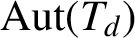 $\mathrm{Aut}(T_{d})$ is d for all $d\geq 2$.


Weak amenability of free products of hyperbolic and amenable groups
- Part of
-
- Journal:
- Glasgow Mathematical Journal / Volume 64 / Issue 3 / September 2022
- Published online by Cambridge University Press:
- 06 January 2022, pp. 698-701
-
- Article
- Export citation
-
We show that if G is an amenable group and H is a hyperbolic group, then the free product $G\ast H$ is weakly amenable. A key ingredient in the proof is the fact that $G\ast H$ is orbit equivalent to $\mathbb{Z}\ast H$.


