Refine search
Actions for selected content:
238502 results in Physics and Astronomy
15 - The Two Methods of Representing Stress in a Three-Dimensional Body
- from Part II - Concepts from Maxwell’s Articles on Structural Mechanics
-
-
- Book:
- The Geometry of Equilibrium
- Published online:
- 03 May 2025
- Print publication:
- 22 May 2025, pp 185-198
-
- Chapter
- Export citation
Index
-
- Book:
- The International Atlas of Mars Exploration
- Published online:
- 13 June 2025
- Print publication:
- 22 May 2025, pp 611-612
-
- Chapter
- Export citation
1867: On the Application of the Theory of Reciprocal Polar Figures to the Construction of Diagrams of Forces
- from Part III - Annotated Original Articles by Maxwell on Structural Mechanics
-
- Book:
- The Geometry of Equilibrium
- Published online:
- 03 May 2025
- Print publication:
- 22 May 2025, pp 231-234
-
- Chapter
- Export citation
10 - Maxwell’s Load Path Theorem
- from Part II - Concepts from Maxwell’s Articles on Structural Mechanics
-
-
- Book:
- The Geometry of Equilibrium
- Published online:
- 03 May 2025
- Print publication:
- 22 May 2025, pp 115-124
-
- Chapter
- Export citation
Epigraph
-
- Book:
- The International Atlas of Mars Exploration
- Published online:
- 13 June 2025
- Print publication:
- 22 May 2025, pp v-vi
-
- Chapter
- Export citation
11 - Projections of Polyhedra
- from Part II - Concepts from Maxwell’s Articles on Structural Mechanics
-
-
- Book:
- The Geometry of Equilibrium
- Published online:
- 03 May 2025
- Print publication:
- 22 May 2025, pp 125-144
-
- Chapter
- Export citation
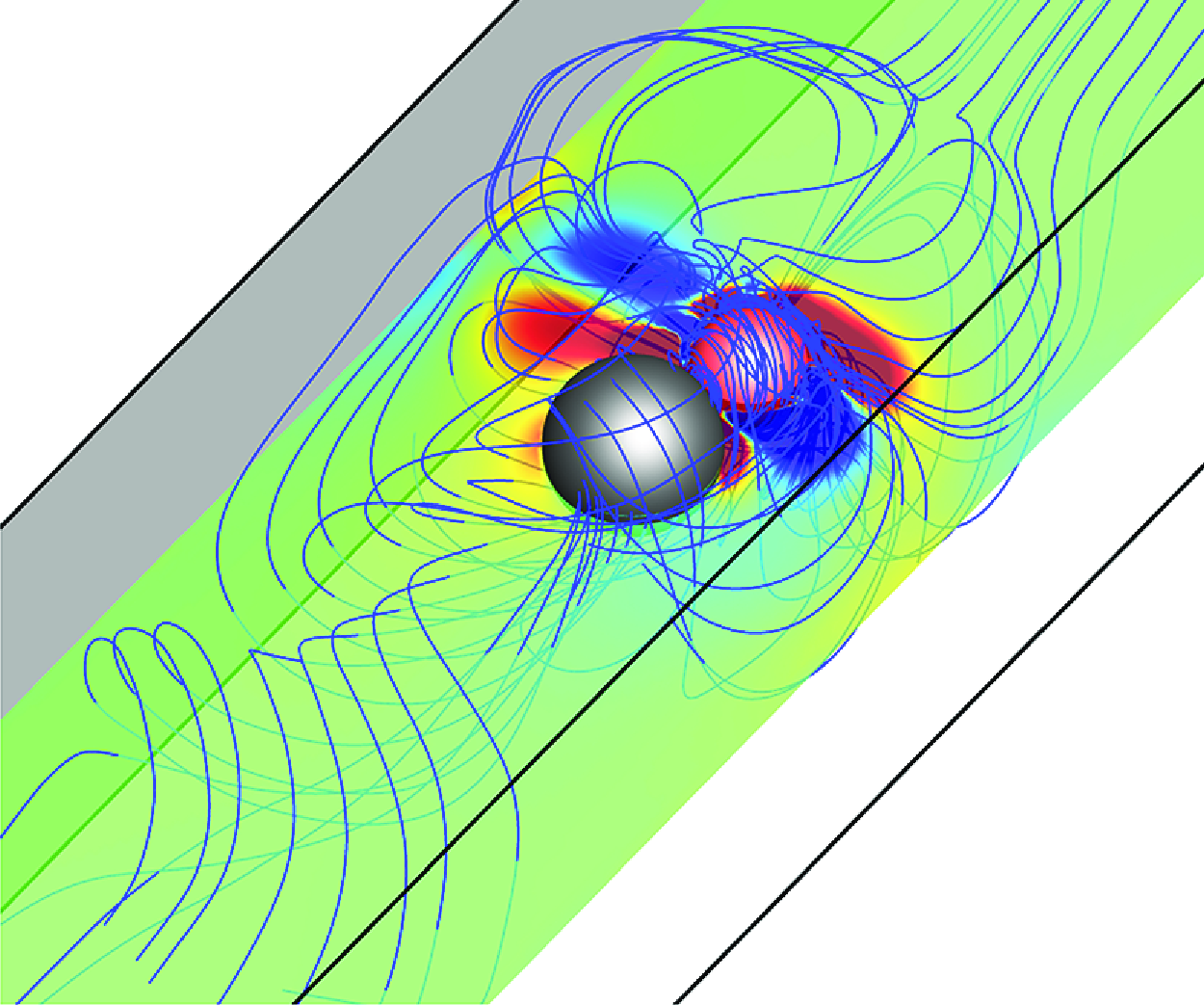
Cargo carrying by a spring connected chiral micro-swimmer in a square channel
-
- Journal:
- Journal of Fluid Mechanics / Volume 1011 / 25 May 2025
- Published online by Cambridge University Press:
- 22 May 2025, A50
-
- Article
- Export citation
8 - Rules on Counting, Mechanisms, and States of Self-Stress
- from Part II - Concepts from Maxwell’s Articles on Structural Mechanics
-
-
- Book:
- The Geometry of Equilibrium
- Published online:
- 03 May 2025
- Print publication:
- 22 May 2025, pp 93-106
-
- Chapter
- Export citation
1868: On Reciprocal Diagrams in Space, and their relation to Airy’s Function of Stress
- from Part III - Annotated Original Articles by Maxwell on Structural Mechanics
-
- Book:
- The Geometry of Equilibrium
- Published online:
- 03 May 2025
- Print publication:
- 22 May 2025, pp 235-238
-
- Chapter
- Export citation
A far-infrared search for planet nine using AKARI all-sky survey
-
- Journal:
- Publications of the Astronomical Society of Australia / Volume 42 / 2025
- Published online by Cambridge University Press:
- 22 May 2025, e061
-
- Article
-
- You have access
- Open access
- HTML
- Export citation
-
An unusual orbital element clustering of Kuiper belt objects (KBOs) has been observed. The most promising dynamic solution is the presence of a giant planet in the outer Solar system, Planet Nine. However, due to its extreme distance, intensive searches in optical have not been successful. We aim to find Planet Nine in the far-infrared, where it has the peak of the black body radiation, using the most sensitive all-sky far-infrared survey to date, AKARI. In contrast to optical searches, where the energy of reflected sunlight decreases by $d^{4}$, thermal radiation in the infrared decreases with the square of the heliocentric distance $d^{2}$. We search for moving objects in the AKARI Single Scan Detection List. We select sources from a promising region suggested by an N-body simulation from Millholland and Laughlin 2017: $30^{\circ}\lt$ R.A. $\lt50^{\circ}$ and $-20^{\circ}\lt$ Dec. $\lt20^{\circ}$. Known sources are excluded by cross-matching AKARI sources with 9 optical and infrared catalogues. Furthermore, we select sources with small background strength to avoid sources in the cirrus. Since Planet Nine is stationary in a timescale of hours but moves on a monthly scale, our primary strategy is to select slowly moving objects that are stationary in 24 h but not in six months, using multiple single scans by AKARI. The selected slowly moving AKARI sources are scrutinised for potential contamination from cosmic rays. Our analysis reveals two possible Planet Nine candidates whose positions and flux are within the theoretical prediction ranges. These candidates warrant further investigation through follow-up observations to confirm the existence and properties of Planet Nine.


2. - Phobos and Deimos
-
- Book:
- The International Atlas of Mars Exploration
- Published online:
- 13 June 2025
- Print publication:
- 22 May 2025, pp 576-585
-
- Chapter
- Export citation
14 - Vector-Based Form and Force Diagrams in Three Dimensions
- from Part II - Concepts from Maxwell’s Articles on Structural Mechanics
-
-
- Book:
- The Geometry of Equilibrium
- Published online:
- 03 May 2025
- Print publication:
- 22 May 2025, pp 179-184
-
- Chapter
- Export citation
References
-
- Book:
- The Geometry of Equilibrium
- Published online:
- 03 May 2025
- Print publication:
- 22 May 2025, pp 293-302
-
- Chapter
- Export citation
1876: On Bow’s method of drawing diagrams in graphical statics, with illustrations from Peaucellier’s linkage
- from Part III - Annotated Original Articles by Maxwell on Structural Mechanics
-
- Book:
- The Geometry of Equilibrium
- Published online:
- 03 May 2025
- Print publication:
- 22 May 2025, pp 287-292
-
- Chapter
- Export citation
Preface
-
- Book:
- The Geometry of Equilibrium
- Published online:
- 03 May 2025
- Print publication:
- 22 May 2025, pp xi-xii
-
- Chapter
- Export citation
Cross-correlating the EMU Pilot Survey 1 with CMB lensing: Constraints on cosmology and galaxy bias with harmonic-space power spectra
-
- Journal:
- Publications of the Astronomical Society of Australia / Volume 42 / 2025
- Published online by Cambridge University Press:
- 21 May 2025, e062
-
- Article
-
- You have access
- Open access
- HTML
- Export citation
-
We measured the harmonic-space power spectrum of Galaxy clustering auto-correlation from the Evolutionary Map of the Universe Pilot Survey 1 data (EMU PS1) and its cross-correlation with the lensing convergence map of cosmic microwave background (CMB) from Planck Public Release 4 at the linear scale range from $\ell=2$ to 500. We applied two flux density cuts at $0.18$ and $0.4$ mJy on the radio galaxies observed at 944MHz and considered two source detection algorithms. We found the auto-correlation measurements from the two algorithms at the 0.18 mJy cut to deviate for $\ell\gtrsim250$ due to the different criteria assumed on the source detection and decided to ignore data above this scale. We report a cross-correlation detection of EMU PS1 with CMB lensing at $\sim$5.5 $\sigma$, irrespective of flux density cut. In our theoretical modelling we considered the SKADS and T-RECS redshift distribution simulation models that yield consistent results, a linear and a non-linear matter power spectrum, and two linear galaxy bias models. That is a constant redshift-independent galaxy bias $b(z)=b_g$ and a constant amplitude galaxy bias $b(z)=b_g/D(z)$. By fixing a cosmology model and considering a non-linear matter power spectrum with SKADS, we measured a constant galaxy bias at $0.18$ mJy ( $0.4$ mJy) with $b_g=2.32^{+0.41}_{-0.33}$ ( $2.18^{+0.17}_{-0.25}$) and a constant amplitude bias with $b_g=1.72^{+0.31}_{-0.21}$ ( $1.78^{+0.22}_{-0.15}$). When $\sigma_8$ is a free parameter for the same models at $0.18$ mJy ( $0.4$ mJy) with the constant model we found $\sigma_8=0.68^{+0.16}_{-0.14}$ ( $0.82\pm0.10$), while with the constant amplitude model we measured $\sigma_8=0.61^{+0.18}_{-0.20}$ ( $0.78^{+0.11}_{-0.09}$), respectively. Our results agree at $1\sigma$ with the measurements from Planck CMB and the weak lensing surveys and also show the potential of cosmology studies with future radio continuum survey data.


Three-dimensional simulations of accretion disks in pre-CE systems
-
- Journal:
- Publications of the Astronomical Society of Australia / Volume 42 / 2025
- Published online by Cambridge University Press:
- 21 May 2025, e076
-
- Article
-
- You have access
- Open access
- HTML
- Export citation
-
Before a binary system enters into a common envelope (CE) phase, accretion from the primary star onto the companion star through Roche Lobe overflow (RLOF) will lead to the formation of an accretion disk, which may generate jets. Accretion before and during the CE may alter the outcome of the interaction. Previous studies have considered different aspects of this physical mechanism. Here we study the properties of an accretion disk formed via 3D hydrodynamic simulations of the RLOF mass transfer between a 7 M $_{\odot}$, red supergiant star and a 1.4 M $_{\odot}$, neutron star companion. We simulate only the volume around the companion for improved resolution. We use a 1D implicit mesa simulation of the evolution of the system during 30 000 yr between the on-set of the RLOF and the CE to guide the binary parameters and the mass-transfer rate, while we simulate only 21 yr of the last part of the RLOF in 3D using an ideal gas quasi-isothermal equation of state. We expect that a pre-CE disk under these parameters will have a mass of $\sim 5\times 10^{-3}$ M $_{\odot}$ and a radius of $\sim40\ R_\odot$ with a scale height of $\sim 5\ R$ $_{\odot}$. The temperature profile of the disk is shallower than that predicted by the formalism of Shakura and Sunyaev, but more reasonable cooling physics would need to be included. We stress test these results with respect to a number of physical and numerical parameters, as well as simulation choices, and we expect them to be reasonable within a factor of a few for the mass and 15% for the radius. We also contextualise our results within those presented in the literature, in particular with respect to the dimensionality of simulations and the adiabatic index. We discuss the measured accretion rate in the context of the Shakura and Sunyaev formalism and debate the viscous mechanisms at play, finishing with a list of prospects for future work.


WALLABY pilot survey: Spatially resolved gas scaling relations within the stellar discs of nearby galaxies
-
- Journal:
- Publications of the Astronomical Society of Australia / Volume 42 / 2025
- Published online by Cambridge University Press:
- 21 May 2025, e046
-
- Article
-
- You have access
- Open access
- HTML
- Export citation
-
The scatter in global atomic hydrogen (Hi) scaling relations is partly attributed to differences in how Hi and stellar properties are measured, with Hi reservoirs typically extending beyond the inner regions of galaxies where star formation occurs. Using pilot observations from the Widefield ASKAP L-band Legacy All-sky Blind Survey (WALLABY), we present the first measurements of Hi mass enclosed within the stellar-dominated regions of galaxies for a statistical sample of 995 local gas-rich systems, investigating the factors driving its variation. We examine how global Hi scaling relations change when measurements are restricted to $R_{\text{25}}$ and $R_{\text{24}}$ – the isophotal radii at 25 and 24 mag arcsec $^{-2}$ in the i-band – and explore how the fraction of Hi mass and Hi surface density within these radii correlate with other galaxy properties. On average, 68% of the total Hi mass is enclosed within $R_{\text{25}}$ and 54% within $R_{\text{24}}$, though significant variation exists between galaxies, ranging from $\sim$20% to 100%. The fraction of Hi mass within $R_{\text{25}}$ shows a mild correlation with stellar properties, with galaxies of higher stellar mass, greater stellar surface density, or redder colours enclosing a larger fraction of their Hi reservoirs. These correlations do not significantly strengthen when considering $R_{\text{24}}$. Conversely, global Hi surface densities show no significant correlation with stellar mass or stellar surface density, but trends start emerging when these are measured within the inner regions of galaxies. The strongest correlation is observed with optical colour, with bluer galaxies having higher average Hi surface densities within $R_{\text{25}}$. This trend of the average Hi surface density with optical colour strengthens when we restrict from $R_{\text{25}}$ to $R_{\text{24}}$, suggesting a closer connection between inner Hi reservoirs and star formation. This study underscores the value of (at least marginally) resolved Hi surveys of statistical samples for advancing our understanding of the gas-star formation cycle in galaxies.


Eulerian and Lagrangian electron energisation during magnetic reconnection
-
- Journal:
- Journal of Plasma Physics / Volume 91 / Issue 3 / June 2025
- Published online by Cambridge University Press:
- 21 May 2025, E90
-
- Article
-
- You have access
- Open access
- HTML
- Export citation
Modelling the impact of circumbinary disk accretion on post-AGB binary evolution and surface chemistry
-
- Journal:
- Publications of the Astronomical Society of Australia / Volume 42 / 2025
- Published online by Cambridge University Press:
- 21 May 2025, e075
-
- Article
-
- You have access
- Open access
- HTML
- Export citation
-
Post-asymptotic giant branch (post-AGB) binaries are surrounded by dusty circumbinary disks and exhibit unexpected orbital properties resulting from poorly understood binary interaction processes. Re-accreted gas from the circumbinary disk alters the photospheric chemistry of the post-AGB star, producing a characteristic underabundance of refractory elements that correlates with condensation temperature – a phenomenon known as chemical depletion. This work investigates how re-accretion from a disk drives chemical depletion, and the impact accreted matter has on post-AGB evolution. We used the MESA code to evolve 0.55 and 0.60 M $_{\odot}$ post-AGB stars with the accretion of refractory element-depleted gas from a circumbinary disk. Our study adopts observationally-constrained initial accretion rates and disk masses to reproduce the chemical depletion patterns of six well-studied post-AGB binary stars: EP Lyr, HP Lyr, IRAS 17038-4815, IRAS 09144-4933, HD 131356, and SX Cen. We find high accretion rates ( $\gt 10^{-7}$ M $_{\odot}\,\mathrm{yr}^{-1}$) and large disk masses ( $\gtrsim10^{-2}$ M $_{\odot}$) necessary to reproduce observed depletion, particularly in higher-mass, hotter post-AGB stars ( $T_{\textrm{eff}}\gtrsim$ 6 000 K). A slower evolution (lower core mass) is required to reproduce cooler ( $T_{\textrm{eff}}\lesssim$ 5 000 K) depleted post-AGB stars. Rapid accretion significantly impacts post-AGB evolution, stalling stars at cooler effective temperatures and extending post-AGB lifetimes by factors of around 3 to 10. Despite this, extended post-AGB timescales remain within or below the planetary nebula visibility timescale, suggesting accretion cannot account for the observed lack of ionised PNe in post-AGB binaries. Our findings constrain accretion-flow parameters and advance our understanding of disk-binary interactions in post-AGB systems.


