Refine search
Actions for selected content:
238502 results in Physics and Astronomy
On the Aldous-Caputo Spectral Gap Conjecture for Hypergraphs
- Part of
-
- Journal:
- Mathematical Proceedings of the Cambridge Philosophical Society / Volume 179 / Issue 2 / September 2025
- Published online by Cambridge University Press:
- 21 May 2025, pp. 259-298
- Print publication:
- September 2025
-
- Article
- Export citation
-
In their celebrated paper [CLR10], Caputo, Liggett and Richthammer proved Aldous’ conjecture and showed that for an arbitrary finite graph, the spectral gap of the interchange process is equal to the spectral gap of the underlying random walk. A crucial ingredient in the proof was the Octopus Inequality — a certain inequality of operators in the group ring $\mathbb{R}\left[{\mathrm{Sym}}_{n}\right]$ of the symmetric group. Here we generalise the Octopus Inequality and apply it to generalising the Caputo–Liggett–Richthammer Theorem to certain hypergraphs, proving some cases of a conjecture of Caputo.

A geometric description of the Reidemeister–Turaev torsion for abelian representations on 3-manifolds
- Part of
-
- Journal:
- Mathematical Proceedings of the Cambridge Philosophical Society / Volume 179 / Issue 2 / September 2025
- Published online by Cambridge University Press:
- 21 May 2025, pp. 233-258
- Print publication:
- September 2025
-
- Article
- Export citation
-
Let M be a closed oriented 3-manifold equipped with an Euler structure e and an acyclic representation of its fundamental group. We define a twisted self-linking homology class of the diagonal of the two-point configuration space of M with respect to e. This twisted self-linking homology class appears as an obstruction in the Chern–Simons perturbation theory. When the representation is the maximal free abelian representation $\rho_0$, we prove that our self-linking class is a properly defined “logarithmic derivative” of the Reidemeister–Turaev torsion of $(M,\rho_0,e)$ equipped with the given Euler structure.


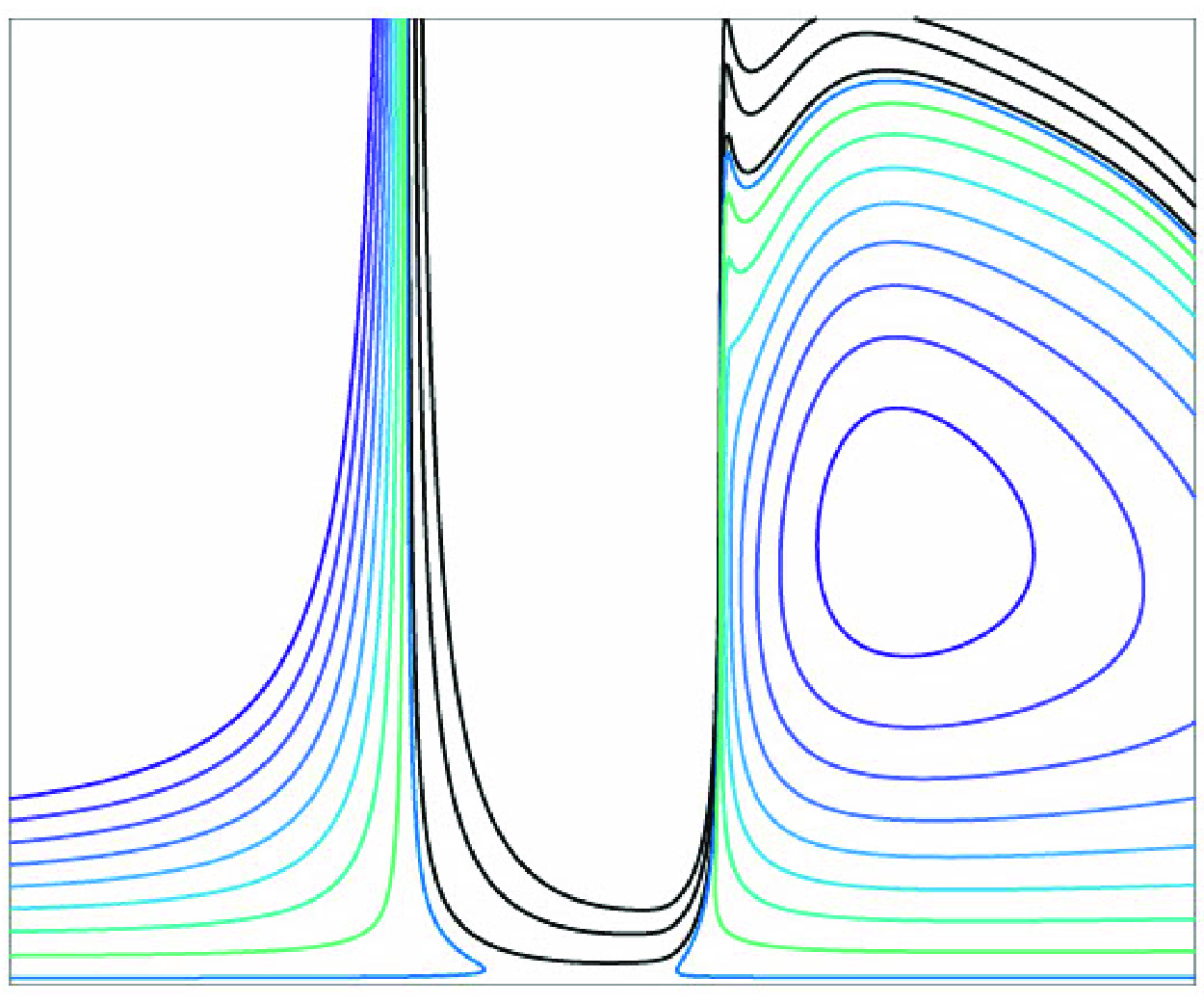
Singularity in the boundary layer on an upstream-sliding wall
-
- Journal:
- Journal of Fluid Mechanics / Volume 1011 / 25 May 2025
- Published online by Cambridge University Press:
- 21 May 2025, A49
-
- Article
-
- You have access
- Open access
- HTML
- Export citation
Energetic bounds on gyrokinetic instabilities. Part 5. Contrasting optimal and normal modes over the geometric landscape
-
- Journal:
- Journal of Plasma Physics / Volume 91 / Issue 3 / June 2025
- Published online by Cambridge University Press:
- 21 May 2025, E79
-
- Article
-
- You have access
- Open access
- HTML
- Export citation
On the convergence of bootstrap current to the Shaing–Callen limit in stellarators
- Part of
-
- Journal:
- Journal of Plasma Physics / Volume 91 / Issue 3 / June 2025
- Published online by Cambridge University Press:
- 20 May 2025, E77
-
- Article
-
- You have access
- Open access
- HTML
- Export citation
-
The bootstrap current in stellarators can be presented as a sum of a collisionless value given by the Shaing–Callen asymptotic formula and an off-set current, which non-trivially depends on plasma collisionality and radial electric field. Using NEO-2 modeling, analytical estimates and semi-analytical studies with the help of a propagator method, it is shown that the off-set current in the $1/\nu$ regime does not converge with decreasing collisionality $\nu _\ast$ but rather shows oscillations over $\log \nu _\ast$ with an amplitude of the order of the bootstrap current in an equivalent tokamak. The convergence to the Shaing–Callen limit appears in regimes with significant orbit precession, in particular, due to a finite radial electric field, where the off-set current decreases as $\nu _\ast ^{3/5}$. The off-set current strongly increases in case of nearly aligned magnetic field maxima on the field line where it diverges as $\nu _\ast ^{-1/2}$ in the $1/\nu$ regime and saturates due to the precession at a level exceeding the equivalent tokamak value by ${v_E^\ast }^{-1/2}$, where $v_E^\ast$ is the perpendicular Mach number. The latter off-set, however, can be minimized by further aligning the local magnetic field maxima and by fulfilling an extra integral condition of “equivalent ripples” for the magnetic field. A criterion for the accuracy of this alignment and of ripple equivalence is derived. In addition, the possibility of the bootstrap effect at the magnetic axis caused by the above off-set is also discussed.


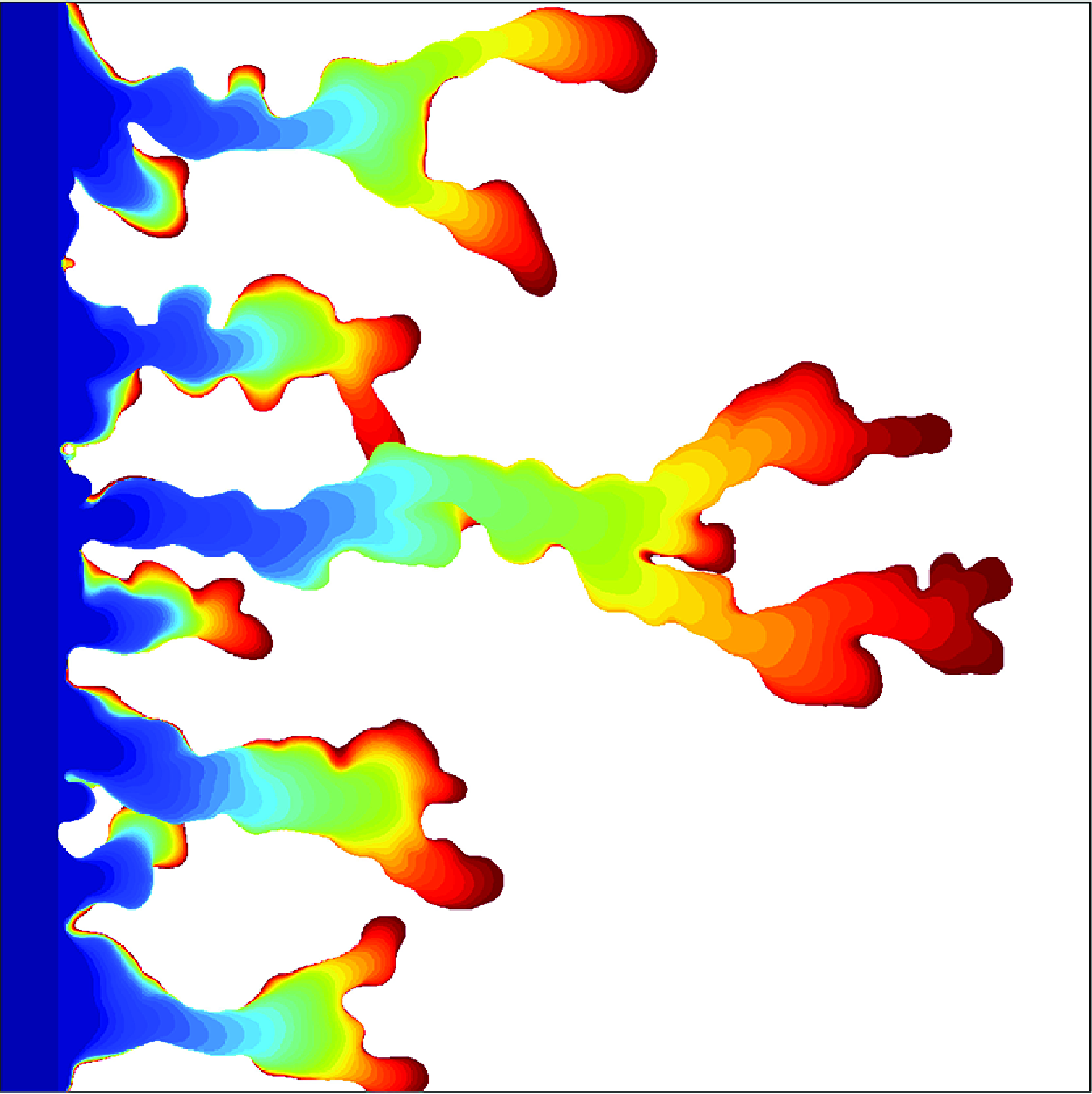
A two-dimensional depth-integrated model for immiscible two-phase flow in open rough fractures
-
- Journal:
- Journal of Fluid Mechanics / Volume 1011 / 25 May 2025
- Published online by Cambridge University Press:
- 20 May 2025, A43
-
- Article
-
- You have access
- Open access
- HTML
- Export citation
-
Immiscible two-phase flows in geological fractures are relevant to various industrial applications, including subsurface fluid storage and hydrocarbon exploitation. Direct numerical simulations (DNS) of first-principle equations, which resolve three-dimensional (3-D) fluid–fluid interfaces, can address all types of flow regimes but are computationally intensive. To retain most of their advantages while reducing the computational cost, we propose a novel two-dimensional (2-D) model based on integrating the 3-D first-principle equations over the local fracture aperture, assuming the lubrication approximation and a parabolic out-of-plane velocity profile, and relying on the volume-of-fluid method for fluid–fluid interface capturing. Such existing models have, so far, been restricted to single-phase permanent flow in rough fractures and two-phase flow in 2-D porous media. Wall friction and out-of-plane capillary pressure are incorporated as additional terms in the 2-D momentum equation. The model then relies on a geometric description reduced to the fracture’s aperture field and mean topography field. Implemented in OpenFOAM, it is validated against 3-D DNS results for viscous fingering in a Hele-Shaw cell, and applied to a realistic synthetic rough fracture geometry over a wide range of capillary numbers ( $Ca$). We then analyse to which extent, under which conditions and why this depth-integrated 2-D model, with a tenfold reduction in computational cost, provides convincing results compared with 3-D DNS predictions. We find that it performs surprisingly well over nearly the entire range of $Ca$ for which 3-D DNS models are relevant, in particular because it properly accounts for the out-of-plane capillary forces and wall friction.


On Thompson groups for Ważewski dendrites
- Part of
-
- Journal:
- Mathematical Proceedings of the Cambridge Philosophical Society / Volume 179 / Issue 1 / July 2025
- Published online by Cambridge University Press:
- 19 May 2025, pp. 189-231
- Print publication:
- July 2025
-
- Article
-
- You have access
- Open access
- HTML
- Export citation
-
We study a family of Thompson-like groups built as rearrangement groups of fractals introduced by Belk and Forrest in 2019, each acting on a Ważewski dendrite. Each of these is a finitely generated group that is dense in the full group of homeomorphisms of the dendrite (studied by Monod and Duchesne in 2019) and has infinite-index finitely generated simple commutator subgroup, with a single possible exception. More properties are discussed, including finite subgroups, the conjugacy problem, invariable generation and existence of free subgroups. We discuss many possible generalisations, among which we find the Airplane rearrangement group $T_A$. Despite close connections with Thompson’s group F, dendrite rearrangement groups seem to share many features with Thompson’s group V.


The influence of free-stream turbulence on the fluctuating loads experienced by a cylinder exposed to a turbulent cross-flow
-
- Journal:
- Journal of Fluid Mechanics / Volume 1011 / 25 May 2025
- Published online by Cambridge University Press:
- 19 May 2025, A47
-
- Article
-
- You have access
- Open access
- HTML
- Export citation
-
The impact of several ‘flavours’ of free-stream turbulence (FST) on the structural response of a cantilever cylinder, subjected to a turbulent cross-flow is investigated. At high enough Reynolds numbers, the cylinder generates a spectrally rich turbulent wake that contributes significantly to the experienced loads. The presence of FST introduces additional complexity through two primary mechanisms: directly, by imposing a fluctuating velocity field on the cylinder’s surface, and indirectly, by altering the vortex shedding dynamics, modifying the experienced loads. We employ concurrent temporally resolved particle image velocimetry and distributed strain measurements using Rayleigh backscattering fibre optic sensors to instrument the surrounding velocity field and the structural strain respectively. By using various turbulence-generating grids, and manipulating their distance to the cylinder, we assess a broad FST parameter space allowing us to explore individually the influence of the transverse integral length scale ( $\mathcal{L}_{13}/D$) and turbulence intensity of the FST on the developing load dynamics. The FST enhances the magnitude of the loads acting on the cylinder. This results from a decreased vortex formation length, increased coherence of regular vortex shedding, and energy associated with this flow structure in the near wake. The cylinder’s structural response is driven mainly by the vortex shedding dynamics, and its modification induced by the presence of FST, i.e. the indirect effect outweighs the direct effect. From the explored FST parameter space, turbulence intensity was seen to be the main driver of enhanced loading conditions, presenting a positive correlation with the fluctuating loads magnitude at the root.

Reduced modelling of scrape-off losses of runaway electrons during tokamak disruptions
-
- Journal:
- Journal of Plasma Physics / Volume 91 / Issue 3 / June 2025
- Published online by Cambridge University Press:
- 19 May 2025, E78
-
- Article
-
- You have access
- Open access
- HTML
- Export citation
-
Accurate modelling of runaway electron generation and losses during tokamak disruptions is crucial for the development of reactor-scale tokamak devices. In this paper, we present a reduced model for runaway electron losses due to flux surface scrape-off caused by the vertical motion of the plasma. The model is made compatible with computationally inexpensive one-dimensional models averaging over a fixed flux-surface geometry, by formulating it as a loss term outside an estimated time-varying minor radius of the last closed flux surface. We then implement this model in the disruption modelling tool DREAM and demonstrate its impact on selected scenarios relevant for ITER. Our results indicate that scrape-off losses may be crucial for making complete runaway avoidance possible even in a $15\,\rm MA$ DT H-mode ITER scenario. The results are however sensitive to the details of the runaway electron generation and phenomena affecting the current density profile, such as the current profile relaxation at the beginning of the disruption.

Lower hybrid current drive for an intense monochromatic applied field
-
- Journal:
- Journal of Plasma Physics / Volume 91 / Issue 3 / June 2025
- Published online by Cambridge University Press:
- 19 May 2025, E75
-
- Article
-
- You have access
- Open access
- HTML
- Export citation

Confinement-induced spreading and fingering of suspensions
-
- Journal:
- Journal of Fluid Mechanics / Volume 1011 / 25 May 2025
- Published online by Cambridge University Press:
- 19 May 2025, A48
-
- Article
-
- You have access
- Open access
- HTML
- Export citation
High-order magnetic near-axis expansion: ill-posedness and regularisation
-
- Journal:
- Journal of Plasma Physics / Volume 91 / Issue 3 / June 2025
- Published online by Cambridge University Press:
- 19 May 2025, E73
-
- Article
-
- You have access
- Open access
- HTML
- Export citation

Turbulent/non-turbulent interface in polymer-laden jets
-
- Journal:
- Journal of Fluid Mechanics / Volume 1010 / 10 May 2025
- Published online by Cambridge University Press:
- 19 May 2025, A25
-
- Article
- Export citation
-
We present an experimental study on the effects of polymer additives on the turbulent/non-turbulent interface (TNTI) in a fully developed round water jet. The Reynolds number based on the jet diameter is fixed at $Re=7075$. The Weissenberg number $Wi$ ranges from 24 to 86. We employ time-resolved simultaneous particle image velocimetry and laser-induced fluorescence measurements to investigate the local entrainment and engulfment process along the TNTI in two regimes: entrainment transition and enhancement regimes. In polymer-laden jets, the TNTI fluctuates more intermittently in the radial direction and more ambient fluid can be engulfed into the turbulent region due to the augmented large scale motion. Though the contribution of engulfment to the total flux increases with $Wi$, engulfment is still not the major contribution to the entrainment in polymer-laden jets. We further show that the local entrainment velocity is increased in both regimes compared with the pure water jet, due to two contributions: polymer elastic stress and the more intermittent character of the TNTI. In the entrainment transition regime, we observe smaller fractal dimension and shorter length of TNTI compared with the Newtonian case, consistent with previous numerical simulations (Abreu et al. J. Fluid Mech. vol. 934, 2022, A36); whereas those in the enhancement regime remain largely unchanged. The difference between the two regimes results from the fact that the jet flow decays in the streamwise direction. In the entrainment transition regime, turbulence intensity is strong enough to significantly stretch the polymers, resulting in a smoother TNTI in the inertial range. However, in the entrainment enhancement regime, the polymer’s feedback is not strong enough to alter the fractal dimension due to the low elasticity. The above mentioned differences of entrainment velocity and TNTI in the entrainment reduction/transition and enhancement regimes also explain the reduced and enhanced spreading rate of the viscoelastic jet observed in previous numerical simulations and experiments (Guimarães et al. J. Fluid Mech. 2020,vol. 899, A11; Peng et al. Phys. Fluids, 2023, vol. 35, 045110).


The Chowla conjecture and Landau–Siegel zeroes
- Part of
-
- Journal:
- Mathematical Proceedings of the Cambridge Philosophical Society / Volume 179 / Issue 1 / July 2025
- Published online by Cambridge University Press:
- 19 May 2025, pp. 167-187
- Print publication:
- July 2025
-
- Article
-
- You have access
- Open access
- HTML
- Export citation
-
Let $k{\geqslant} 2$ be an integer and let $\lambda$ be the Liouville function. Given k non-negative distinct integers $h_1,\ldots,h_k$, the Chowla conjecture claims that $\sum_{n{\leqslant} x}\lambda(n+h_1)\cdots \lambda(n+h_k)=o(x)$. An unconditional answer to this conjecture is yet to be found, and in this paper, we take a conditional approach. More precisely, we establish a non-trivial bound for the sums $\sum_{n{\leqslant} x}\lambda(n+h_1)\cdots \lambda(n+h_k)$ under the existence of a Landau–Siegel zero for x in an interval that depends on the modulus of the character whose Dirichlet series corresponds to the Landau–Siegel zero. Our work constitutes an improvement over the previous related results of Germán and Kátai, Chinis and Tao and Teräväinen.


Fast particle trajectories and integrability in quasiaxisymmetric and quasihelical stellarators
-
- Journal:
- Journal of Plasma Physics / Volume 91 / Issue 3 / June 2025
- Published online by Cambridge University Press:
- 19 May 2025, E74
-
- Article
-
- You have access
- Open access
- HTML
- Export citation
-
Even if the magnetic field in a stellarator is integrable, phase-space integrability for energetic particle guiding-center trajectories is not guaranteed. Both trapped and passing particle trajectories can experience convective losses, caused by wide phase-space island formation, and diffusive losses, caused by phase-space island overlap. By locating trajectories that are closed in the angle coordinate but not necessarily closed in the radial coordinate, we can quantify the magnitude of the perturbation that results in island formation. We characterize island width and island overlap in quasihelical (QH) and quasiaxisymmetric (QA) equilibria with finite plasma pressure $\beta$ for both trapped and passing energetic particles. For trapped particles in QH, low-shear toroidal precession frequency profiles near zero result in wide island formation. While QA transit frequencies do not cross through the zero resonance, we observe that island overlap is more likely since higher shear results in the crossing of more low-order resonances.

Annihilating class groups in p-elementary abelian extensions
- Part of
-
- Journal:
- Mathematical Proceedings of the Cambridge Philosophical Society / Volume 179 / Issue 1 / July 2025
- Published online by Cambridge University Press:
- 19 May 2025, pp. 145-166
- Print publication:
- July 2025
-
- Article
-
- You have access
- Open access
- HTML
- Export citation
-
We derive new cases of conjectures of Rubin and of Burns–Kurihara–Sano concerning derivatives of Dirichlet L-series at $s = 0$ in p-elementary abelian extensions of number fields for arbitrary prime numbers p. In naturally arising examples of such extensions one therefore obtains annihilators of class groups from S-truncated Dirichlet L-series for ‘large-enough’ sets of places S.

Characterization and stability of helical density snake structures in Madison Symmetric Torus tokamak plasmas
-
- Journal:
- Journal of Plasma Physics / Volume 91 / Issue 3 / June 2025
- Published online by Cambridge University Press:
- 16 May 2025, E72
-
- Article
-
- You have access
- Open access
- HTML
- Export citation
-
Steady, helical perturbations known as ‘density snakes’ with poloidal and toroidal mode numbers $m=1$, $n=1$ have been studied in several tokamak experiments. These three-dimensional, helical states are interesting due to their stability and persistence, including their coexistence with the sawtooth cycle. Presented here are studies of density snakes in tokamak plasmas in the Madison Symmetric Torus (MST) device. They are diagnosed using an 11-chord interferometer, internal and edge magnetic coils and impurity ion spectroscopy. Compared with observations in other tokamak plasmas, snakes in MST form with relatively high resistivity and low edge safety factor, $ q(a) \geqslant 2.2$, which moves the $q=1$ resonant surface outward in radius and probably forms a large magnetic island. As a result, the density perturbation associated with the snake is larger, the structure occupies a broader span of minor radius and the snakes are somewhat less stable. The helical structure and distribution of snake events are characterized, including whether they are best described as ideal or resistive kink modes. Finally, an analysis of their perturbation or destruction during sawtooth crashes is given.


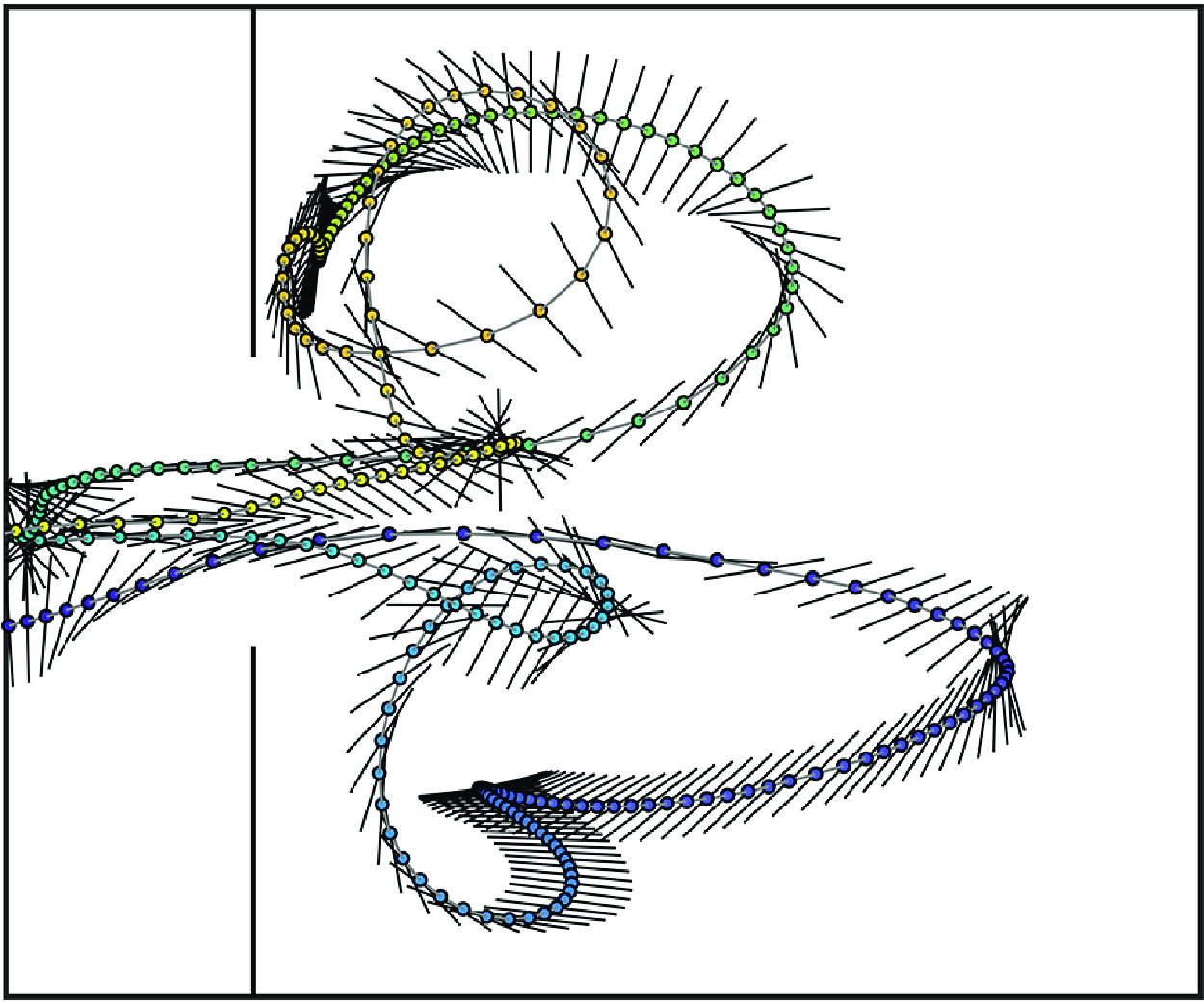
Rigid fibre transport in a periodic non-homogeneous geophysical turbulent flow
-
- Journal:
- Journal of Fluid Mechanics / Volume 1011 / 25 May 2025
- Published online by Cambridge University Press:
- 16 May 2025, A5
-
- Article
-
- You have access
- Open access
- HTML
- Export citation
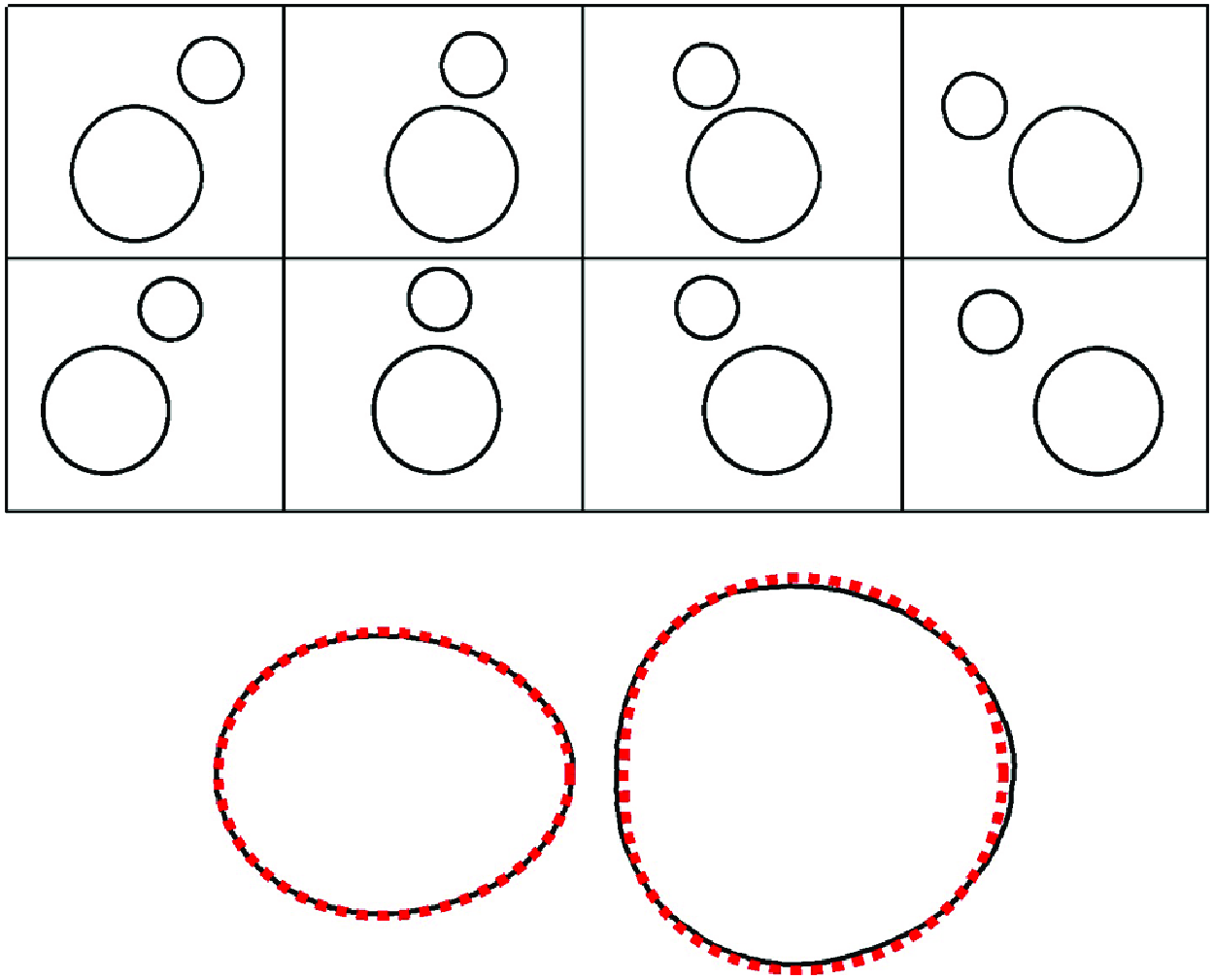
Bubble racing in a Hele-Shaw cell
-
- Journal:
- Journal of Fluid Mechanics / Volume 1010 / 10 May 2025
- Published online by Cambridge University Press:
- 16 May 2025, A19
-
- Article
-
- You have access
- Open access
- HTML
- Export citation

Large eddy simulations of wall-bounded turbulence based on interscale energy transfer among resolved scales
-
- Journal:
- Journal of Fluid Mechanics / Volume 1010 / 10 May 2025
- Published online by Cambridge University Press:
- 16 May 2025, A22
-
- Article
- Export citation
