To save content items to your account,
please confirm that you agree to abide by our usage policies.
If this is the first time you use this feature, you will be asked to authorise Cambridge Core to connect with your account.
Find out more about saving content to .
To save content items to your Kindle, first ensure no-reply@cambridge.org
is added to your Approved Personal Document E-mail List under your Personal Document Settings
on the Manage Your Content and Devices page of your Amazon account. Then enter the ‘name’ part
of your Kindle email address below.
Find out more about saving to your Kindle.
Note you can select to save to either the @free.kindle.com or @kindle.com variations.
‘@free.kindle.com’ emails are free but can only be saved to your device when it is connected to wi-fi.
‘@kindle.com’ emails can be delivered even when you are not connected to wi-fi, but note that service fees apply.
Multiple herbicide classes–resistant (MHCR) kochia poses a serious concern for producers in the Central Great Plains, including western Kansas. Greenhouse and field experiments were conducted at Kansas State University Research and Extension Centers near Hays and Garden City, KS, to evaluate pyridate-based postemergence herbicide mixtures for controlling MHCR kochia. One previously confirmed MHCR population (resistant to atrazine, glyphosate, dicamba, and fluroxypyr) and a susceptible (SUS) kochia population were tested in a greenhouse study. The kochia population at Hays field site was resistant to atrazine, dicamba, and glyphosate, whereas the kochia population at the Garden City site was resistant to atrazine and glyphosate. Colby’s analysis revealed synergistic interactions when pyridate was mixed with atrazine, dicamba, dichlorprop-p, fluroxypyr, glyphosate, or halauxifen/fluroxypyr and resulted in ≥94% control and shoot dry-biomass reduction of MHCR kochia in a greenhouse study. Similarly, synergistic interactions were observed for MHCR kochia control in fallow field studies at both sites when pyridate was mixed with glyphosate or atrazine. Kochia control was increased from 26% to 90% with the application of glyphosate + pyridate and from 28% to 95% with atrazine + pyridate at both sites as compared to separate applications of glyphosate or atrazine. This is the first report for such a strong synergistic effect for both glyphosate and atrazine mixtures with pyridate on a weed resistant to both. All other pyridate-based herbicide mixtures showed an additive interaction and resulted in better control of MHCR kochia (87% to 100%) as compared to their individual applications (23% to 92%) across both sites except 2,4-D. These results suggest that pyridate can play a crucial role in various postemergence herbicide mixtures for effective control of MHCR kochia.
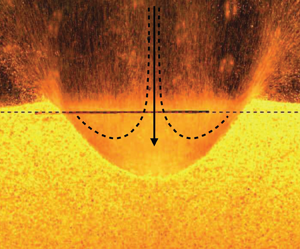
Craters form as the lander's exhaust interacts with the planetary surfaces. Understanding this phenomenon is imperative to ensuring safe landings. We investigate the crater morphology, where a turbulent air jet impinges on granular surfaces. To reveal the fundamental aspect of this phenomenon, systematic experiments are performed with various air-jet velocities, nozzle positions and grain properties. The resultant crater morphology is characterized by an aspect ratio. We find a universal scaling law in which the aspect ratio is scaled by a dimensionless variable consisting of the air velocity at the nozzle, the speed of sound in air, the nozzle diameter, the nozzle-tip distance from the surface, the grain diameter, the density of the grains and the density of air. The obtained scaling reveals the cross-over of the length scales governing the crater aspect ratio, providing a useful guideline for ensuring safe landings. Moreover, we report a novel drop-shaped sub-surface cratering phenomenon.
This study examined associations between pregnancy and infant birth outcomes with child telomere length at age 17 years; and investigated if there are sex differences between pregnancy complications and telomere length. We utilised the population-based prospective Raine cohort study in Western Australia, Australia. 2900 pregnant women were recruited at 16–20 weeks’ gestation (Gen 1), and their children (Gen 2) were followed up over several years. Generalised linear models were used to examine relationships between pregnancy or birth outcomes (gestational diabetes, pre-eclampsia, preterm birth, low birth weight, macrosomia), and as a composite, with telomere length, measured via a DNA sample from blood at 17 years of age. Analyses were adjusted for a range of confounders. Among the 1202 included children, there were no differences in child telomere length for any of the individual maternal or birth weight pregnancy outcomes nor were there any significant interactions between each of the complications (individual or composite) and the sex of the child. However, females born from any of the 5 adverse outcomes had shorter telomeres (estimated mean (SE) = -0.159 (0.061), p = 0.010) than females born in the absence of these complications. Specifically, females born from a pre-eclamptic pregnancy had shorter telomeres than females not born from a pre-eclamptic pregnancy (estimated mean (SE) = -0.166 (0.072), p = 0.022). No relationships were observed in males. Further longitudinal studies are needed to understand mediating factors that are important in predicting offspring telomere length and the necessity to investigate females and males independently.
A prelaunch survey of broadleaf weeds was conducted to predict the weed management efficacy of a novel genetically engineered sugar beet with resistance traits for glyphosate, dicamba, and glufosinate. We targeted problematic broadleaf weed species prevalent in sugar beet fields, including kochia, common lambsquarters, Palmer amaranth, and redroot pigweed in Colorado, Nebraska, and Wyoming. The results revealed that a significant percentage of kochia populations in Colorado, Nebraska, and Wyoming exhibited resistance to glyphosate (94%, 98%, and 75%, respectively) and dicamba (30%, 42%, and 17%, respectively). Palmer amaranth populations had resistance frequencies for glyphosate and dicamba of 80% and 20% in Colorado and 20% and 3% in Nebraska, respectively. No resistance to the tested herbicides was identified in common lambsquarters or redroot pigweed. Glufosinate resistance was not identified for any species. Kochia and Palmer amaranth populations from Colorado and Nebraska exhibited glyphosate resistance primarily through 5-enolpyruvylshikimate-3-phosphate synthase (EPSPS) gene amplification. However, one glyphosate-resistant kochia population from Wyoming lacked EPSPS gene amplification, indicating the presence of an alternative resistance mechanism. We identified the previously characterized IAA16 G73N substitution in a dicamba-resistant kochia population from Nebraska. However, dicamba-resistant kochia populations from Colorado did not possess this substitution, suggesting an alternative, yet-to-be-determined resistance mechanism. The widespread prevalence of glyphosate and dicamba resistance, coupled with the emergence of novel resistance mechanisms, poses a significant challenge to the long-term efficacy of this novel genetically engineered sugar beet technology. These findings underscore the urgent need for integrated weed management strategies that diversify effective herbicide sites-of-action and incorporate alternative weed management practices within cropping systems.
Field experiments were conducted at Clayton and Rocky Mount, NC, during summer 2020 to determine the growth and fecundity of Palmer amaranth plants that survived glufosinate with and without grass competition in cotton. Glufosinate (590 g ai ha−1) was applied to Palmer amaranth early postemergence (5 cm tall), mid-postemergence (7 to 10 cm tall), and late postemergence (>10 cm tall) and at orthogonal combinations of those timings. Nontreated Palmer amaranth was grown in weedy, weed-free in-crop (WFIC) and weed-free fallow (WFNC) conditions for comparisons. Palmer amaranth control decreased as larger plants were treated; no plants survived the sequential glufosinate applications in both experiments. The apical and circumferential growth of Palmer amaranth surviving glufosinate treatments was reduced by more than 44% compared to the WFIC and WFNC Palmer amaranth in both experiments. The biomass of Palmer amaranth plants surviving glufosinate was reduced by more than 62% when compared with the WFIC and WFNC in all experiments. The fecundity of Palmer amaranth surviving glufosinate treatments was reduced by more than 73% compared to WFNC Palmer amaranth in all experiments. Remarkably, the plants that survived glufosinate were fecund as WFIC plants only in the Grass Competition experiment. The results prove that despite decreased vegetative growth of Palmer amaranth surviving glufosinate treatment, plants remain fecund and can be fecund as nontreated plants in cotton. These results suggest that a glufosinate-treated grass weed may not have a significant interspecific competition effect on Palmer amaranth that survives glufosinate. Glufosinate should be applied to 5 to 7 cm Palmer amaranth to cease vegetative and reproductive capacities.
Schizophrenia spectrum disorders are brain diseases that are developmental dementias (dementia praecox). Their pathology begins in utero with psychosis most commonly becoming evident in adolescence and early adulthood. It is estimated they afflict the U.S. population at a prevalence rate of approximately 0.8%. Genetic studies indicate that these brain diseases are about 80% determined by genes and about 20% determined by environmental risk factors. Inheritance is polygenic with some 270 gene loci having been identified as contributing to the risk for schizophrenia. Interestingly, many of the identified gene loci and gene polymorphisms are involved in brain formation and maturation. The identified genetic and epigenetic risks give rise to a brain in which neuroblasts migrate abnormally, assume abnormal locations and orientations, and are vulnerable to excessive neuronal and synaptic loss, resulting in overt psychotic illness. The illness trajectory of schizophrenia then is one of loss of brain mass related to the number of active psychotic exacerbations and the duration of untreated illness. In this context, molecules such as dopamine, glutamate, and serotonin play critical roles with respect to positive, negative, and cognitive domains of illness. Acutely, antipsychotics ameliorate active psychotic illness, especially positive signs and symptoms. The long-term effects of antipsychotic medications have been debated; however, the bulk of imaging data suggest that antipsychotics slow but do not reverse the illness trajectory of schizophrenia. Long-acting injectable antipsychotics (LAI) appear superior in this regard. Clozapine remains the “gold standard” in managing treatment-resistant schizophrenia.
Müller Ice Cap sits on Umingmat Nunaat (Axel Heiberg Island), Nunavut, Canada, ~ 80°N. Its high latitude and elevation suggest it experiences relatively little melt and preserves an undisturbed paleoclimate record. Here, we present a suite of field measurements, complemented by remote sensing, that constrain the ice thickness, accumulation rate, temperature, ice-flow velocity, and surface-elevation change of Müller Ice Cap. These measurements show that some areas near the top of the ice cap are more than 600 m thick, have nearly stable surface elevation, and flow slowly, making them good candidates for an ice core. The current mean annual surface temperature is −19.6 °C, which combined with modeling of the temperature profile indicates that the ice is frozen to the bed. Modeling of the depth-age scale indicates that Pleistocene ice is likely to exist with measurable resolution (300–1000 yr m−1) 20–90 m from the bed, assuming that Müller Ice Cap survived the Holocene Climatic Optimum with substantial ice thickness (~400 m or more). These conditions suggest that an undisturbed Holocene climate record could likely be recovered from Müller Ice Cap. We suggest 91.795°W, 79.874°N as the most promising drill site.
As we face a future of rising global temperatures, and associated extreme weather events, distressing emotional responses are understandable. Climate scientists comprise a unique group, in that they must regularly confront the reality, and consequences, of climate change. In this paper, we explore how the principles of compassion-focused therapy (CFT) might be applied to comprehend the responses of climate scientists to climate change; by doing so, we aim to gain a deeper understanding of these responses in order to consider fruitful avenues for providing support and investigating this area further. We consider how flows of compassion, and blocks to compassion, might play a role in climate scientists’ experiences. Additionally, we conceptualise a role for compassion towards the wider world and humanity more broadly. Finally, by applying the CFT Three Systems model to current understanding of climate scientists’ emotional experiences, we seek to proffer a potential conceptualisation of them.
Key learning aims
(1) To formulate the emotional experiences of climate scientists from a compassion-focused therapy perspective.
(2) To explore how blocks to flows of compassions serve to negatively impact and/or maintain difficult emotional experiences of climate scientists.
(3) To consider ways in which the field of psychological therapy can support climate scientists through a difficult emotional journey, and how future research might explore this further.
Rice producers battle herbicide-resistant weeds worldwide while producing rice for ≥50% of the world’s population. Oxyfluorfen can provide rice producers with an alternative site of action for barnyardgrass control, as there are no documented cases of grass weeds being resistant to the herbicide in the mid-southern United States. Oxyfluorfen is anticipated to be labeled in the Roxy Rice Production System and may be sold as a clomazone/oxyfluorfen premixture; hence, experiments were conducted in 2021 and 2022 to evaluate preemergence-applied clomazone/oxyfluorfen ratios compared to clomazone alone on silt loam and clay soils. All ratios of the herbicides caused less than 7% injury to rice in two of four site-years on silt loam soils, whereas, in the two other site-years, the mixtures caused 10% to 40% rice injury at all observation timings. All combinations of the two herbicides provided at least 73% barnyardgrass control 5 wk after rice emergence (WAE) in three of the four site-years on silt loam soils. In at least two of four site-years at 1 and 3 WAE, barnyardgrass control was improved when oxyfluorfen was added to clomazone compared to clomazone alone. On clay soil, barnyardgrass control in both site-years was ≥77% at 5 WAE for all clomazone and oxyfluorfen ratios. Injury to rice ranged from 13% to 30% for all treatments containing clomazone and oxyfluorfen in one of two site-years on clay soil at all observation timings. At 7 WAE, contrasts indicated that the 1:3 ratio of clomazone to oxyfluorfen provided greater barnyardgrass control than the 1:1.5 and 1:2 ratios in one of two site-years. Based on these findings, oxyfluorfen would improve the consistency of barnyardgrass control over clomazone alone in some instances. However, there is an increased risk of injury to rice with the addition of oxyfluorfen.
Oxyfluorfen is a herbicide that inhibits protoporphyrinogen IX oxidase and has shown significant potential in its ability to control barnyardgrass. Oxyfluorfen is categorized as a Group 14 herbicide by the Herbicide Resistance Action Committee (HRAC)/Weed Science Society of America (WSSA). Despite its current lack of labeling for use on rice in the mid-southern United States due to its potential to cause crop injury, the introduction of a trait in rice that confers resistance to oxyfluorfen could provide producers with an effective alternative site of action for weed control. Field experiments were conducted during the 2021 and 2022 growing seasons near Stuttgart, AR, and near Lonoke, AR, to determine the optimum rates of clomazone (280 or 336 g ha−1) and oxyfluorfen (673 or 840 g ha−1) to use in sequential preemergence (PRE) and postemergence (POST) applications on a silt loam soil and to assess the efficacy of oxyfluorfen when combined with clomazone and quinclorac applied PRE, followed by oxyfluorfen applied POST. No differences in barnyardgrass control were observed among treatments 14 d after emergence in 3 site years, as all control was ≥90%. By 35 d after the POST application, barnyardgrass control was ≥94% for all herbicide treatments in all site years. All herbicide treatments resulted in lower barnyardgrass seed production than a nontreated control in 2021. Contrasts revealed that oxyfluorfen applied PRE on a silt loam soil resulted in barnyardgrass control that was similar to that of clomazone or quinclorac applied alone at 14 d after emergence. Although oxyfluorfen combined with clomazone or quinclorac did not increase barnyardgrass control, an additional site of action for control of this weed could help reduce the evolution of resistance. Mixing oxyfluorfen with clomazone in a dry-seeded rice production system in the mid-southern United States would effectively control barnyardgrass and reduce the risk for resistance to both herbicides, further highlighting the potential of oxyfluorfen in rice production.
The impact of the coronavirus disease 2019 (COVID-19) on hepatocellular carcinoma (HCC) care is unclear. This study reports on HCC patterns during the COVID-19 pandemic in the Netherlands.
Methods
Patients diagnosed with HCC between 2017 and 2020 were identified from the Netherlands Cancer Registration. Monthly incidence rates were compared between 2020 and 2017–2019. Patient, tumor, process, and treatment characteristics and survival were compared between 2020 and 2017–2019, and between COVID-high (April and May 2020) and COVID-low (June and July 2020) months.
Results
The incidence of HCC was lower in May 2020 (IRR 0.56, P = 0.001) and higher in June 2020 (IRR 1.32, P = 0.05) compared to the same months in 2017–2019. In 2017–2019, 2134 patients presented with HCC, compared to 660 in 2020. Time-to-treatment was shorter in 2020 (median 60 vs. 70 days, P < 0.001). The percentage of patients undergoing any treatment did not differ, yet if treatment was not performed this was more commonly due to comorbidity in 2020 (52 vs. 39%, P < 0.001). No other differences were found in patient, tumor, process and treatment characteristics and survival between COVID-high and COVID-low months.
Conclusions
This study demonstrated no impact of the COVID-19 pandemic on HCC patients, despite a decrease in HCC diagnoses.
We evaluated one of the first secure large language models approved for protected health information, for identifying central line-associated bloodstream infections (CLABSIs) using real clinical notes. Despite no pretraining, the model demonstrated rapid assessment and high sensitivity for CLABSI identification. Performance would improve with access to more patient data.
Annual bluegrass (Poa annua L.) populations in turfgrass have evolved resistance to several herbicides in the United States, but there has been no confirmed resistance from an agricultural field. Recently, glyphosate failed to control a P. annua population found in a field in a soybean [Glycine max (L.) Merr.] and rice (Oryza sativa L.) rotation in Poinsett County, AR. The present study focused on determining the sensitivity of a putatively resistant accession (R1) to glyphosate compared with two susceptible accessions (S1 and S2). The experiments included a dose–response study, 5-enolpyruvylshikimate-3-phosphate synthase (EPSPS) gene copy number and expression analysis, and assessment of mutations in EPSPS. Based on the dose–response analysis, R1 required 1,038 g ae ha−1 of glyphosate to cause 50% biomass reduction, whereas S1 and S2 only required 148.2 and 145.5 g ae ha−1, respectively. The resistance index (RI) was approximately 7-fold relative to the susceptible accessions. Real-time polymerase chain reaction data revealed at least a 15-fold increase in the EPSPS copy number in R1, along with a higher gene expression. No mutations in EPSPS were found. Gene duplication was identified as the main mechanism conferring resistance in R1. The research presented here reports the first incidence of glyphosate resistance in P. annua from an agronomic field crop situation in the United States.
Palmer amaranth is a troublesome weed species displaying the ability to adapt and evolve resistance to multiple herbicide modes of action, and additional weed suppression tactics are needed. Growing interest in the use of cover crops (CCs) has led to questions regarding the most appropriate forms of CC management prior to cash crop planting in order to maximize weed suppression benefits. Experiments were conducted between 2021 to 2023 to test 1) cover crop termination timing (i.e., green or brown); 2) CC biomass amount; and 3) CC termination method (i.e., rolled or left standing) on Palmer amaranth suppression. Treatments included “planting brown” (cereal rye terminated 2 wk before soybean planting), “planting green” (cereal rye terminated at soybean planting), and a no-CC (winter fallow) check. Palmer amaranth emergence was evaluated at 4 and 6 wk after soybean planting, and yield was calculated at harvest. Palmer amaranth emergence was reduced when a CC was planted compared with the no-CC check, and more suppression was observed as CC biomass increased. This decrease in emergence is potentially due to a decrease in light reaching the soil surface and physical suppression as CC biomass increased. Yield, however, was unaffected by any CC management practice, indicating that growers can tailor CC termination practices for weed suppression. This information will provide better recommendations for farmers interested in using CCs for weed suppression. Overall, the importance of CC biomass accumulation to achieve weed suppression is highlighted in our findings. Additionally, we add to the growing body of documentation that soybean yield may be variable from year to year as a result of CC presence.
Two separate field experiments were conducted during the 2021 to 2022 and 2022 to 2023 growing seasons at Kansas State University Agricultural Research Center near Hays, KS, to understand the emergence dynamics of glyphosate-resistant (GR) kochia [Bassia scoparia (L.) A. J. Scott] as influenced by fall- and spring-planted cover crops (CC) and residual herbicide. Study sites were under winter wheat (Triticum aestivum L.)–sorghum [Sorghum bicolor (L.) Moench]–fallow rotation with a natural seedbank of GR B. scoparia. In Experiment 1, fall-planted CC mixture (triticale/winter peas/radish/canola) was planted after wheat harvest and terminated at triticale [×Triticosecale Wittm. ex A. Camus [Secale × Triticum] heading stage (next spring before sorghum planting). In Experiment 2, spring-planted CC mixture (oats/barley/spring peas) was planted in sorghum stubbles and terminated at oats (Avena sativa L.) heading stage. Four treatments were established in each experiment: (1) nontreated control (no CC and no herbicide), (2) chemical fallow (no CC but glyphosate + acetochlor/atrazine or flumioxazin/pyroxasulfone + dicamba were used to control weeds), (3) CC terminated with glyphosate, and (4) CC terminated with glyphosate plus residual herbicide (acetochlor/atrazine for fall-planted CC and flumioxazin/pyroxasulfone for spring-planted CC). Results indicated that fall-planted CC delayed GR B. scoparia emergence by 3 to 5 wk, whereas spring-planted CC delayed emergence by 0 to 2 wk compared with nontreated control. Fall-planted CC terminated with glyphosate plus acetochlor/atrazine reduced the cumulative emergence of GR B. scoparia by 90% to 95% compared with nontreated control across both years. Similarly, spring-planted CC terminated with glyphosate plus flumioxazin/pyroxasulfone reduced the cumulative emergence of GR B. scoparia by 83% to 90% compared with nontreated control. These results suggest that fall- or spring-planted CC in combination with residual herbicide at termination can be utilized for GR B. scoparia suppression. Results from this study will help in developing prediction models for GR B. scoparia emergence under different CC strategies.
Off-target movement of herbicides is a concern in California rice production, where sensitive crops are often grown nearby. Florpyrauxifen-benzyl and triclopyr are auxin mimics that are commonly used in rice systems. To steward florpyrauxifen-benzyl around the time of its initial registration in the state, research was conducted to compare the onset of foliar symptoms from simulated florpyrauxifen-benzyl and triclopyr drift onto grapevine, peach, and plum. The use rates on rice were 1/200×, 1/100×, 1/33×, and 1/10× of 29.4 g ai ha–1 florpyrauxifen-benzyl; and 1/200×, 1/100×, and 1/33× of 420.3 g ae ha–1 triclopyr. Herbicides were applied on one side of 1- to 2-year-old peach and plum trees and one side of established grapevines in 2020 and 2021. The general symptoms from applications of florpyrauxifen-benzyl and triclopyr were similar and included chlorosis, leaf curling, leaf distortion, leaf malformation, leaf crinkling, and necrosis. The symptoms from herbicides were observed on both sides of the grapevine canopy, whereas florpyrauxifen-benzyl symptoms on peach and plum were mostly observed on the treated side of the tree. Florpyrauxifen-benzyl and triclopyr symptoms were observed 3 d after treatment (DAT) for grapevines and 7 DAT for peach and plum. In all crops, most symptoms persisted through 42 DAT. Some grape clusters showed deformation and dropping of berries. All treated crops gradually recovered during the season regardless of application rates. Because symptoms in peach and plum were relatively minor, this research suggests that application precautions to reduce off-site drift are likely to minimize the occurrence of significant injury. However, grapevines were more sensitive and showed injury symptoms of up to 71% at 14 DAT with a simulated drift rate of 1/10× florpyrauxifen-benzyl. Therefore, extra precautions, such as using drift-management agents and closely monitoring wind speed conditions at the time of florpyrauxifen-benzyl applications may be necessary if vineyards are nearby.
According to the Trivers–Willard hypothesis (TWH), when the mother's condition around conception influences the future reproductive success of male and female offspring differently, the adjustment of offspring sex ratio (SR) to maternal condition will increase the parents’ fitness. The TWH has been tested in several taxa, including humans where socioeconomic status as an index of condition has been widely used. The results are inconsistent, possibly because the preconditions of the TWH are not always met. To investigate the preconditions and prediction of the TWH in the contemporary Hungarian population, we collected data by an online questionnaire on self-perceived childhood living standard, the number of children and the sex of the respondents’ siblings. We found no sex-specific relationship between reproductive success and childhood living standards, thus the precondition of the TWH was not met. We found no relationship between socioeconomic status and offspring SR when data from the whole country was used, but there was a tendency in the predicted direction when we used data from Budapest and considered the SR of only those family members who were born under similar conditions. Similar approaches should be preferred in the future to avoid noise caused by changing status during the reproductive lifespan.
While many medical practitioners value the interactive nature of in-person conferences, results of these interactions are often poorly documented. The objective of this study was to pilot the Delphi method for developing consensus following a national conference and to compare the results between experts who did and did not attend.
Methods:
A 3-round Delphi included experts attending the 2023 Society of Disaster Medicine and Health Preparedness Annual Meeting and experts who were members of the society but did not attend. Conference speakers provided statements related to their presentations. Experts rated the statements on a 1–7 scale for agreement using STAT59 software (STAT59 Services Ltd, Edmonton, Alberta, Canada). Consensus was defined as a standard deviation of ≤ 1.0.
Results:
Seventy-five statements were rated by 27 experts who attended and 10 who did not: 2634 ratings in total. There was no difference in the number of statements reaching consensus in the attending group (26/75) versus that of the nonattending group (27/75) (P = 0.89). However, which statements reached consensus differed between the groups.
Conclusion:
The Delphi method is a viable method to document consensus from a conference. Advantages include the ability to involve large groups of experts, statistical measurement of the degree of consensus, and prioritization of the results.