To save content items to your account,
please confirm that you agree to abide by our usage policies.
If this is the first time you use this feature, you will be asked to authorise Cambridge Core to connect with your account.
Find out more about saving content to .
To save content items to your Kindle, first ensure no-reply@cambridge.org
is added to your Approved Personal Document E-mail List under your Personal Document Settings
on the Manage Your Content and Devices page of your Amazon account. Then enter the ‘name’ part
of your Kindle email address below.
Find out more about saving to your Kindle.
Note you can select to save to either the @free.kindle.com or @kindle.com variations.
‘@free.kindle.com’ emails are free but can only be saved to your device when it is connected to wi-fi.
‘@kindle.com’ emails can be delivered even when you are not connected to wi-fi, but note that service fees apply.
Derek Parfit famously opined that causing a person to exist with a life barely worth living can be wrong, although it is not wrong for that person. This conundrum is known as the nonidentity problem. Parfit also held that persons can, in a morally relevant sense, be caused to exist in the distant future by actions that make the agent a necessary condition for a person’s existence. When these views are combined, which he did, and applied explicitly to persons with a life not worth living, which he did not, an interesting conditional conclusion can be drawn. If every family line eventually produces a person with a life not worth living, and if causing that person to exist cannot be justified by the benefits befalling others in the family line, it is always wrong to have children. Parfit did not draw this antinatalist conclusion, but an analysis of his introduction of the nonidentity problem shows that he could have. Since Parfit’s other views on population ethics continue to be discussed with relative respect, it stands to reason that the antinatalist position should be no exception. Right or wrong, it has its legitimate place in considerations concerning the future of reproduction.
Commercialization of florpyrauxifen-benzyl as Loyant® in 2018 as a synthetic auxin herbicide in rice was followed by soybean injury due to off-target movement of spray applications in the mid-southern United States. Concerns surrounding off-target movement led to the exploration of an alternative application method to help alleviate the issue. Field experiments were conducted in 2020 and 2021 to explore the likelihood of a reduction in soybean injury following applications of florpyrauxifen-benzyl coated on urea in narrow- and wide-row soybean systems and to determine the likelihood of volatilization from this novel application method. Florpyrauxifen-benzyl spray-applied at 0.18 g ai ha−1 caused greater than 60% injury, whereas coating the herbicide on urea at 5.63 g ai ha−1 never exceeded 30% injury in narrow-row soybean. Similarly, florpyrauxifen-benzyl spray-applied at 0.18 g ai ha−1 caused greater than 50% injury, whereas coating the herbicide on urea at 5.63 g ai ha−1 never exceeded 30% injury in wide-row soybean. As soybean injury increased, relative yield decreased in both narrow- and wide-row soybean. Spray-applied florpyrauxifen-benzyl decreased relative soybean groundcover, yield components, and soybean survival rate as the herbicide rate increased, whereas coating the herbicide on urea resulted in little to no decrease in both narrow- and wide-row soybean assessments. No negative impacts on relative yield and yield components of soybean from florpyrauxifen-benzyl coated on urea indicates that even though visible injury may persist, there is a low likelihood of any yield losses associated with the herbicide exposure using this application method. Additionally, coating the florpyrauxifen-benzyl on urea did not increase the likelihood of volatilization under any of the evaluated soil moisture conditions. Overall, applying florpyrauxifen-benzyl coated on urea is likely to be a safer application method and can reduce soybean injury compared to spray-applying the herbicide when favorable off-target movement conditions exist.
Twelve putative-resistant (R) redroot pigweed populations were collected in sunflower and soybean fields located in northeastern Greece, after repeated exposure to the acetolactate synthase (ALS)–inhibiting herbicides imazamox and tribenuron-methyl. Studies were conducted to determine the resistance status to these two ALS-inhibiting herbicides and evaluate alternative postemergence and preemergence herbicides for effective control. Two susceptible (S) populations were also included for comparison. Among the 12 putative-R populations studied in the whole-plant dose–response pot experiments, 11 were characterized as cross-resistant (R) to the imidazolinone imazamox and the sulfonylurea tribenuron-methyl. In contrast, the putative R5 and the two reference populations (S1, S2) populations were found to be susceptible. Sequencing of the ALS gene revealed that a point mutation (TGG to TTG at position 574) was selected in domain B, where in combination with domain A the majority of point mutations conferring resistance have been detected, resulting in an amino acid substitution from tryptophan (Trp) to leucine (Leu) in the 11 R populations. By contrast, all sequenced plants of the three susceptible populations were found with the wild-type allele encoding Trp574. The labeled rate of the postemergence herbicides tembotrione and dicamba provided fair to excellent control of the populations with ALS cross-resistance. In contrast, at this rate the preemergence herbicides S-metolachlor + terbuthylazine, isoxaflutole, aclonifen, metribuzin, and pendimethalin provided excellent control. These findings strongly suggest that 11 redroot pigweed populations have evolved cross-resistance to ALS-inhibiting herbicides, but viable options for chemical control of this weed still exist.
The article examines the key factors influencing women’s electoral success in European Parliament (EP) elections. We present a new conceptual approach and a novel model that simultaneously incorporates trends in party characteristics, institutional and socio-economic factors and cross-country trends in women’s representation. The model provides a comprehensive analysis of the relationships between party-level and Member State-level factors and the election of women to the EP. The study is based on an original dataset of 450 observations on national political parties from all Member States, spanning four European elections from 2004 to 2019.
Our results show that party characteristics such as incumbency rates, party size and ideological orientations (i.e. the party’s position on the GAL-TAN scale or its attitude towards European integration) play a key role in shaping women’s representation. This article provides novel insights into the unique features of Central and Eastern Europe, elucidating divergent patterns of women’s electoral prospects in conservative and progressive parties in Western democracies and Central and Eastern European post-communist EU Member States.
Certainty is a cornerstone of every criminal justice system. In instances where controversy arises as to the application of any law, it is essential for it to be addressed promptly. Contrary to this need for certainty, there is judicial ambiguity regarding the mens rea for the offence of attempted murder in Botswana. There are cases which hold that the mens rea required is a specific intention to kill, and that nothing else suffices. However, some cases hold that an intention to cause grievous harm and recklessness are also sufficient. Unfortunately, the Court of Appeal, the apex court in Botswana, has made decisions that support each of these divergent positions. This article addresses the controversy of the mens rea for attempted murder in Botswana and argues that the Court of Appeal should resolve the issue by specifically overruling some of its previous decisions.
Yellow and knotroot foxtail are two common weed species infesting turfgrass and pastures in the southeastern region of the United States. Yellow and knotroot foxtail share morphological similarities and are frequently misidentified by weed managers, thus leading to confusion in herbicide selection. Greenhouse research was conducted to evaluate the response of yellow and knotroot foxtail to several turfgrass herbicides: pinoxaden (35 and 70 g ai ha−1), sethoxydim (316 and 520 g ai ha−1), thiencarbazone + dicamba + iodosulfuron (230 g ai ha−1), nicosulfuron + rimsulfuron (562.8 g ai ha−1), metribuzin (395 g ha−1), sulfentrazone (330 g ai ha−1), sulfentrazone + imazethapyr (504 g ai ha−1), and imazaquin (550 g ai ha−1). All treatments controlled yellow foxtail >87% with more than 90% reduction of the biomass. By comparison, only sulfentrazone alone controlled knotroot foxtail 90% and completely reduced aboveground biomass. Sethoxydim (520 g ai ha−1), metribuzin, and imazaquin controlled knotroot foxtail >70% at 28 d after application. In a rate response evaluation, nonlinear regression showed that yellow foxtail was approximately 8 times more susceptible to pinoxaden and 2 times more susceptible to sethoxydim than knotroot foxtail based on log (WR50) values, which were 50% reduction in fresh weight. Our research indicates that knotroot foxtail is more difficult to control across a range of herbicides, making differentiation of these two species important before herbicides are applied.
Greenhouse studies were conducted from 2020 to 2021 to evaluate the effect of simulated drift rates of 2,4-D and dicamba on strawberry growth, fruit development, and fruit quality in Raleigh, NC. Treatments included 2,4-D choline and dicamba DGA plus Vapor Grip at 1/2×, 1/20×, and 1/200× of the 1× field rate of 1.09 and 0.8 kg ae ha–1, respectively. Treatments were applied to strawberry at three reproductive stages, including bud, flower, and fruit. Averaged across both herbicides, strawberry canopy size was reduced by the 1/2× rate 18, 25, 30, and 36% at 3, 6, 9, and 11 wk after treatment (WAT). The 1/2× rate of both herbicides caused greater injury to strawberry than the 1/20× or 1/200×, with maximum stunting from 2,4-D and dicamba of 54% and 36%, respectively. Fruit pH and total soluble solid content (SSC) increased due to the 1/2× rate of dicamba compared to the 1/20× and 1/200× rates and the nontreated. Treated fruit (across all herbicides) were larger than fruit developing following herbicide application to flowers or buds but were similar to nontreated fruit.
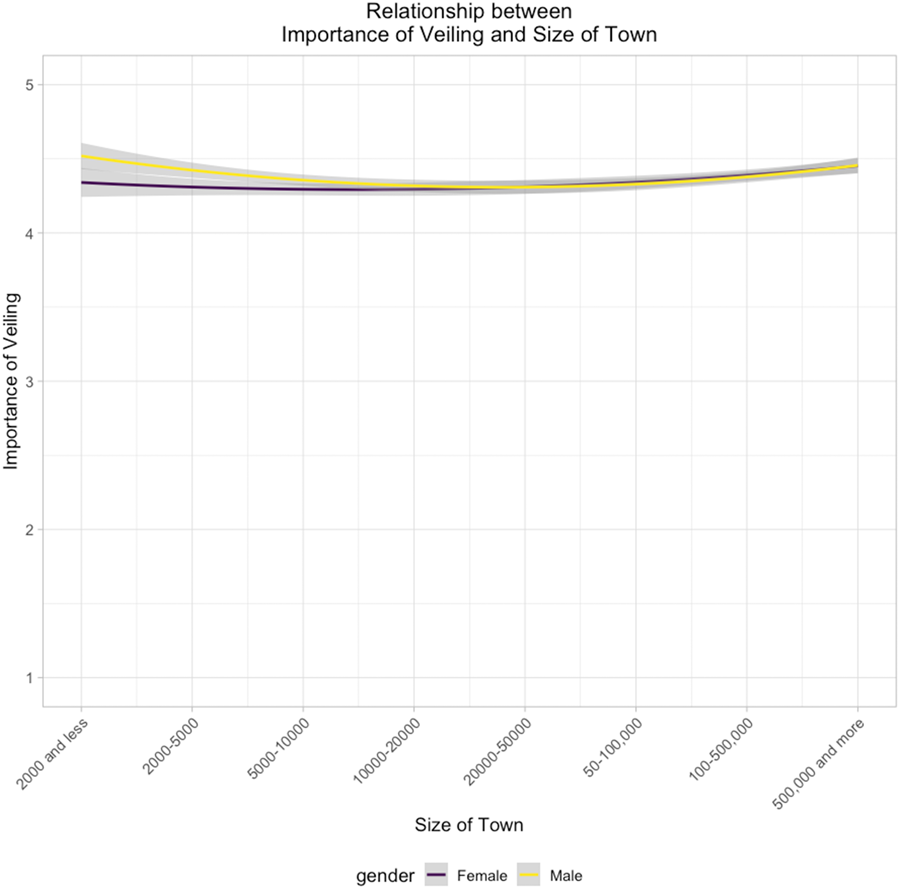
The mate guarding theory of conservative clothing posits that veiling reduces women's physical allure and sexual attractiveness, thereby diminishing men's attraction towards them and deterring potential rivals for a woman's partner. This theory argues that the importance of veiling is influenced by ecological factors in a way that it is of higher importance to control women's sexuality in harsher environments to secure paternal investment. A prediction of this theory is that the importance of veiling should be influenced by community size, where individuals’ reputations, specifically men's, might have different weightings, and their perceived sense of controlling a partner's activity may differ. Using pre-existing data from seven countries encompassing over 9000 individuals, the current study explored the association of town size and importance of veiling for women. Results showed a U-shaped relationship where in small towns and large cities, individuals, specifically men, give more importance to the veiling of women. This finding not only has multiple implications in terms of the effect of community size on male policing behaviours of women and sexual restrictions, but it also might point to a wider relationship regarding the association of community size and moral values.
Forests of urban/suburban areas are being increasingly restored, but before/after-control/impact studies addressing effects on biodiversity in peri-urban forest restorations are virtually lacking. Using a before/after-control/impact (BACI) design, we explored the effects on birds (commonly used as indicators for restoration impacts) of small-scale restoration interventions in 2019 targeting residual forests north of Milan, in the largest Italian conurbation, with trees and shrub planting around existing patches or in formerly cultivated areas. Birds were surveyed in 2018, 2019, and 2021, at 20 intervention and 20 control sites. We evaluated the short-term effects of restoration by analysing changes in avian communities (i.e. richness, richness and abundance of forest specialists, single species’ abundance), considering the effect of year and intervention (i.e. before/during/after intervention). Species richness of breeding birds was largely unaffected by on-going interventions, while it was positively related to concluded restoration. The abundance of five individual species varied according to restoration: on-going interventions had positive effects on two species, Common Blackbird Turdus merula and Hooded Crow Corvus corone cornix, and negative effects on Barn Swallow Hirundo rustica, while concluded restoration positively affected two species, Common Blackbird Turdus merula again, and the forest specialist Marsh Tit Poecile palustris. Even small-scale interventions in peri-urban areas may provide tangible benefits to breeding birds in the short term: peri-urban forest restoration could contribute to biodiversity conservation.
Yield curve extrapolation to unobservable tenors is a key technique for the market-consistent valuation of actuarial liabilities required by Solvency II and forthcoming similar regulations. Since the regulatory method, the Smith–Wilson method, is inconsistent with observable yield curve dynamics, parsimonious parametric models, the Nelson–Siegel model and its extensions, are often used for yield curve extrapolation in risk management. However, it is difficult for the parsimonious parametric models to extrapolate yield curves without excessive volatility because of their limited ability to represent observed yield curves with a limited number of parameters. To extend the representational capabilities, we propose a novel yield curve extrapolation method using machine learning. Using the long short-term memory architecture, we achieve purely data-driven yield curve extrapolation with better generalization performance, stability, and consistency with observed yield curve dynamics than the previous parsimonious parametric models on US and Japanese yield curve data. In addition, our method has model interpretability using the backpropagation algorithm. The findings of this study prove that neural networks, which have recently received considerable attention in mortality forecasting, are useful for yield curve extrapolation, where they have not been used before.
In the year 1900, Otani Kozui, along with three travel companions, ventured on a one-month Arctic cruise, visiting the Norwegian fjords, the North Cape, Spitsbergen (Svalbard) and Iceland. The turn of the 20th century was a formative time for early Arctic tourism, and the aura of exploration was still a part of the northern allure. While Otani and his friends were not the first Japanese to cross the Arctic Circle, they were seen among their contemporaries as holding the record for being the first Japanese to cross the 70th parallel, which became a badge of honour in the exclusive Arctic Circle Society that was established in Japan in the early 1930s. As one of Japan’s most important 20th-century explorers, Otani is well known for having collected and studied Buddhist treasures from across Central Asia and the Silk Road. This paper aims to establish the facts surrounding Otani’s Arctic cruise and the Arctic Circle Society, both of which have gone mostly unnoticed by contemporary scholars. The paper also discusses how Otani’s voyage – which contains elements of tourism, study and competition – should be perceived, both in the context of his legacy and the broader historical developments of the era.
Heat stress from high temperatures has been recognised as a threat to several bird species and one that is likely to increase in severity and frequency as a result of global environmental change. Many seabirds are particularly vulnerable as their adaptations to forage in cold water can make it hard for them to resist heat gain while on land. The African Penguin Spheniscus demersus forages in cool water (10–20°C) but breeds and moults on land where temperatures can exceed 30°C. Little is known about its thermal physiology and when heat stress will occur. Here, we provide the first account of changes in body temperature and behaviour in African Penguins in response to an experimental increase in ambient temperature from 20°C to 35°C. Surprisingly, the highest body temperature observed (39.2°C) was recorded at the start of the study. Presumably, this response in body temperature was due to the stress of transport and handling. Penguins returned to normal body temperature (37.3°C) after 3.5 hours and maintained normothermia for roughly an hour. We then observed the onset of heat storage at an ambient temperature of 29°C, whereafter body temperature increased steadily at a rate of ca.0.2°C per 1°C increase in ambient temperature. Panting commenced at an ambient temperature of 31.4°C, when body temperature was 37.8°C. In addition to panting, penguins changed their posture to facilitate heat dissipation by standing, raising their heads, and extending their flippers. Our results corroborate field observations and support the argument that African Penguins are highly vulnerable to heat stress in the near future as extreme heat events become more severe and frequent due to climate change. Our results also confirm that penguins are sensitive to handling, which elicits a hyperthermic response. Given the general sensitivity of penguins to disturbance, from a conservation perspective, we advise that cautionary measures be implemented at colonies during critical life-history stages.
Ridge B is one of the least studied areas in Antarctica but has been considered to be a potential location for the oldest ice on Earth. Among important parameters for calculating where very old ice may exist, geothermal heat flux (GHF) is critical but poorly understood. Here, GHF is determined by quantifying the transitions between dry and wet basal conditions using a radioglaciological method applied to airborne radio-echo sounding data. GHF is then constrained by a thermodynamic model matched to the transitions. The results show that GHF in Ridge B varies locally and ranges from 48.5 to 65.1 mW m−2, with an average value of 58.0 mW m−2, which is consistent with the current known GHF constrained by subglacial lakes and derived from Vostok ice core temperature measurements. Our work highlights the value of considering local GHF when locating the oldest ice in this potential region or other regions.
Herbicide drift to sensitive crops can result in significant injury, yield loss, and even crop destruction. When pesticide drift is reported to the Georgia Department of Agriculture (GDA), tissue samples are collected and analyzed for residues. Seven field studies were conducted in 2020 and 2021 in cooperation with the GDA to evaluate the effect of (1) time interval between simulated drift event and sampling, (2) low-dose herbicide rates, and (3) the sample collection methods on detecting herbicide residues in cotton (Gossypium hirsutum L.) foliage. Simulated drift rates of 2,4-D, dicamba, and imazapyr were applied to non-tolerant cotton in the 8- to 9-leaf stage with plant samples collected at 7 or 21 d after treatment (DAT). During collection, plant sampling consisted of removing entire plants or removing new growth occurring after the 7-leaf stage. Visual cotton injury from 2,4-D reached 43% to 75% at 0.001 and 0.004 kg ae ha−1, respectively; for dicamba, it was 9% to 41% at 0.003 or 0.014 kg ae ha−1, respectively; and for imazapyr, it was 1% to 74% with 0.004 and 0.03 kg ae ha−1 rates, respectively. Yield loss was observed with both rates of 2,4-D (11% to 51%) and with the high rate of imazapyr (52%); dicamba did not influence yield. Herbicide residues were detected in 88%, 88%, and 69% of samples collected from plants treated with 2,4-D, dicamba, and imazapyr, respectively, at 7 DAT compared with 25%, 16%, and 22% when samples were collected at 21 DAT, highlighting the importance of sampling quickly after a drift event. Although the interval between drift event and sampling, drift rate, and sampling method can all influence residue detection for 2,4-D, dicamba, and imazapyr, the factor with the greatest influence is the amount of time between drift and sample collection.
Años luz. Dir. Manuel Abramovich. Prod. Rei Cine, El Deseo, Bananeira Filmes. Argentina-Spain-Brazil, 2017. 72 minutes. Distributed by Grasshopper Film.
Como el cielo después de llover. Dir. Mercedes Gaviria. Prod. Gentil, Invasión Cine. Colombia-Argentina, 2020. 73 minutes. Distributed by Pragda.
El Father como sí mismo. Dir. Mo Scarpelli. Prod. Ardimages, Rake Films, La Faena Films. Venezuela-Italy-United Kingdom-United States, 2020. 105 minutes. Distributed by Grasshopper Film.
Rodaje. Dir. Samuel Moreno Álvarez. Prod. Monociclo Cine, Trópico Atómico Films. Colombia, 2023. 42 minutes.
This article examines the extent to which or how self-identified great powers resort to military aggression following events that challenge their sense of greatness. It problematises the prevalent notion that great powers and events exist and have effects independently of the narratives that constitute them. The article does this by engaging with Ontological Security Studies, Great Power Narcissism, and the psychology of vulnerable and grandiose narcissism, as well as by analysing Japanese identity narratives in two periods seemingly marked by equally challenging events – the Meiji era (1868–1912) and the post-war period (1950–71). It finds that Japan’s military aggression against China in 1894–5 was enabled by vulnerable narratives of shame and insult, while the decision to wage war with Russia a decade later was facilitated more by grandiose narratives. Despite Japan’s overwhelming defeat in the Second World War and the persistent desire among conservative elites for great power status and identity, however, overall post-war narratives did not feature similarly negative emotions and calls for revenge. Japanese great power aspirations were arguably curtailed in this period through intense narrative contestation, notably progressive counter-narratives featuring more self-reflective expressions of guilt and remorse, and even the self-reflexive desire for a non-great power identity.
Where do values live in thought? A straightforward answer is that we (or our brains) make decisions using explicit value representations which are our values. Recent work applying reinforcement learning to decision-making and planning suggests that, more specifically, we may represent both the instrumental expected value of actions as well as the intrinsic reward of outcomes. In this paper, I argue that identifying value with either of these representations is incomplete. For agents such as humans and other animals, there is another place where reward can be located in thought: the division of the space of possibilities or “state space.”
This essay considers Gregory of Nazianzus’ allusion to ‘divine deceit’, a motif related to the so-called ‘Christus Victor’ theory of atonement. This allusion is curious when we recall that for Gregory, the devil, not God, is the master of deception. When we treat On the Lights (Or. 39) as a literary unit – which commentators have yet to do – we see that Gregory makes several doctrinal affirmations before alluding to what is known as ‘divine deceit’. In this doctrinal discussion, Gregory draws upon the Platonic distinction between the orders of being and becoming as described in the Timaeus. He then alludes to ‘divine deceit’ with respect to the order of ‘becoming’, which bears the possibility of being misapprehended because it is ‘grasped by opinion’. The devil's ‘opinion’ of himself and of Christ, therefore, is suspect. Death – or rather, Christ's vanquishment of it – is the moment of reckoning. Since God alone can defeat death, Christ's putting death to death is the only certain way for the devil to recognise that the ‘Son of Man’ is, after all, the ‘Son of God’. The ‘devil's delusion’, then – not ‘divine deceit’ – best summarises Gregory's understanding of this moment in the history of salvation.