To save content items to your account,
please confirm that you agree to abide by our usage policies.
If this is the first time you use this feature, you will be asked to authorise Cambridge Core to connect with your account.
Find out more about saving content to .
To save content items to your Kindle, first ensure no-reply@cambridge.org
is added to your Approved Personal Document E-mail List under your Personal Document Settings
on the Manage Your Content and Devices page of your Amazon account. Then enter the ‘name’ part
of your Kindle email address below.
Find out more about saving to your Kindle.
Note you can select to save to either the @free.kindle.com or @kindle.com variations.
‘@free.kindle.com’ emails are free but can only be saved to your device when it is connected to wi-fi.
‘@kindle.com’ emails can be delivered even when you are not connected to wi-fi, but note that service fees apply.
Agent-based models (ABMs) are widely used to study how individual interactions shape collective behaviors. Critics argue that ABMs are often too simplistic to capture real-world complexities. We address this by integrating artificial neural networks into ABMs, focusing on enhancing the Hegselmann–Krause (HK) model. By using multilayer perceptrons as agents, we create more realistic ABMs that better reflect actual agents. This approach yields multiple models, as core elements of the HK model can be defined in various ways. We conduct two computational studies to compare these models with each other and with traditional individual-learning paradigms.
Similar to adults with posttraumatic stress disorder, children with early life adversity show bias in memory for negative emotional stimuli. However, it is not well understood how childhood adversity impacts mechanisms underlying emotional memory. N = 56 children (8–14 years, 48% female) reported on adverse experiences including potentially traumatic events and underwent fMRI while attending to emotionally pleasant, neutral, or negative images. Post-scan, participants completed a cued recall test to assess memory for these images. Emotional difference-in-memory (DM) scores were computed by subtracting negative or positive from neutral recall performance. All children showed enhancing effects of emotion on recall, with no effect of trauma load. However, children with less trauma showed a larger emotional DM for both positive and negative stimuli when amygdala or anterior hippocampal activity was higher. In contrast, highly trauma-exposed children demonstrated a lower emotional DM with greater amygdala or hippocampal activity. This suggested that alternative neural mechanisms might support emotional enhancement of encoding in children with greater trauma load. Whole-brain analyses revealed that right fusiform activity during encoding positively correlated with both trauma load and successful later recall of positive images. Therefore, highly trauma-exposed children may use alternative, potentially adaptive neural pathways via the ventral visual stream to encode positive emotional events.
The Dorchester Aqueduct, located to the north-west of Dorchester (Durnovaria) in Dorset, is arguably the most famous and well-examined Roman watercourse in Britain. The aqueduct has been intermittently investigated over the course of the last 100 years, but most extensively during the 1990s. The upper stretches of the aqueduct and its source have, however, eluded archaeologists, with multiple routes and water sources being suggested. A new programme of geophysical and topographic survey, combined with targeted investigation together with a reappraisal of the excavations from the 1990s, has provided additional evidence for the route of the aqueduct, extending its course for a further two kilometres to Notton on the River Frome.
Invasive plant taxa are generally regulated at the species level, without considering infra- or interspecific variation. However, cultivars or hybrids can pose a lower risk of invasion, for example, due to sterility. We evaluate six general approaches to regulating cultivars and hybrids: (1) Globally Guilty by Association; (2) Nationally Guilty by Association; (3) Guilty until Proven Innocent; (4) Negotiated Guilt; (5) Claimed to be Innocent; and (6) Innocent until Proven Guilty. We discuss these approaches in the context of South Africa (which has a typified Negotiated Guilt approach). Following negotiations since 2001 between the South African horticultural industry/green industry and legislators, an unofficial consensus list of “presumed sterile” cultivars and hybrids was produced in 2014 containing 187 entities from 34 taxa. In 2020, this was reduced to 157 entities from 16 taxa. But the evidence supporting the original lists and the subsequent revisions was not published. To address this issue, we developed a generic pro forma (template) for reporting sterility based on observations and/or experiments on: flowering, fruiting, pollen, and seeds; the potential for vegetative propagation; and the potential for genetic changes (including hybridization and reversion to fertility). We recommend that such information be incorporated into risk analyses conducted specifically for infra- and inter specific entities, and only if the risk of a harmful invasion is demonstrated to be acceptably low or can be easily mitigated should such entities be exempted from regulation. This will be time-consuming, but, by setting out the evidence clearly, the approach is transparent and provides a clear route for stakeholders to seek exemptions for entities of importance. In conclusion, although we suspect the simplicity of the Negotiated Guilt approach is desirable to many stakeholders, and is the approach currently adopted in South Africa, we recommend a shift toward the Guilty until Proven Innocent approach.
For any $n<\omega $ we construct an infinite $(n+1)$-generated Heyting algebra whose n-generated subalgebras are of cardinality $\leq m_n$ for some positive integer $m_n$. From this we conclude that for every $n<\omega $ there exists a variety of Heyting algebras which contains an infinite $(n+1)$-generated algebra, but which contains only finite n-generated algebras. For the case $n=2$ this provides a negative answer to a question posed by G. Bezhanishvili and R. Grigolia in [4].
The authors of this book are archaeologists who want to create a field they describe as ‘critical paleoeconomics’. Their quest is promising in several ways. For example, they are not averse to grand narratives and believe modern economic theory can offer insights into various features of ancient economies, including markets, trade, money and debt.
Herbicides that persist in the forest litter and soil following their use for managing invasive plant species may negatively affect restoration efforts as well as minimize reinvasion via their residual phytotoxic activity. This study determined the impact of an herbicide mixture comprising triclopyr, dicamba, picloram, and aminopyralid (TDPA) for the control of dense infestations of a woody invader, Pinus contorta Douglas ex Loudon, on the germination of reinvading P. contorta and three New Zealand native species (Chionochloa rubra Zotov, Nothofagus cliffortiodes (Hook. f.) Oerst., and Leptospermum scoparium J.R. Forst. & G. Forst.) used in restoration. Given the essential role of ectomycorrhizal fungi in facilitating conifer reinvasion, the impact of residual herbicides present in mineral soil on the ectomycorrhizal infection of P. contorta seedling roots was also examined. Germination trials were conducted using intact forest litter–soil cores collected at 27, 112 and 480 d (after herbicide spraying) from sprayed and adjacent unsprayed dense P. contorta infestations. At the same time, mineral soil was also collected for the ectomycorrhizal infection study. Post-spray herbicide residue bound in the litter significantly decreased survival, germination rate, root and shoot growth, and also caused malformation of P. contorta seedlings. Similar results were recorded for native species’ germination; however, overall viability of native seed was poor, resulting in low germination rates. There was no difference in levels of ectomycorrhizal infection rates of P. contorta between treatments. Results indicate residual levels of TDPA herbicide in forest floor litter negatively affect P. contorta reinvasion, native recruitment, and active restoration management. Ectomycorrhizal fungi, however, are unaffected by this herbicide mixture and therefore remain a risk to facilitating reinvasion as residual herbicide declines.
This study aimed to assess the operational efficiency of Sub-District or Tambon Health Promoting Hospitals (THPHs) in Thailand’s Eastern Economic Corridor (EEC) and to propose management guidelines for future improvements.
Background:
The current state of Thailand’s public health demonstrates that government policy has prioritized equal access to public health services in all areas. This increases the need for primary public health services, yet resources are limited and cannot be increased to meet the growing demand. The only effective way to address this issue is to develop the efficiency of public health operations.
Methods:
The sample consisted of 104 THPHs in Chachoengsao, a province in Thailand’s EEC. Data for five input and seven output variables were collected between September 18 and November 15, 2023. An online survey was conducted to gather the required data for fiscal year 2022. Data envelopment analysis was used to measure the efficiency of THPHs.
Findings:
The average efficiency index of the 104 THPHs was 0.9066, with about 60% having an efficiency index of 1.00. When classified by size, it was found that the efficiency levels of the THPHs grew with size, considering that the average efficiency index of the small, medium, and large THPHs was 0.8642, 0.9140, and 0.9417, respectively. The proportion of efficient THPHs also increased with size, at 58.14%, 60.00%, and 66.67%, respectively. Regarding efficiency improvement targets, small THPHs had the highest output targets (28.40%), followed by medium THPHs (15.31%) and large THPHs (9.91%). For the inefficient THPHs, some management guidelines were made to improve their future performances.
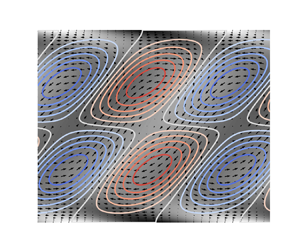
We perform a detailed numerical study of modal and non-modal stability in oblique Couette–Poiseuille profiles, which are among the simplest examples of three-dimensional boundary layers. Through a comparison with the Orr–Sommerfeld operator for the aligned case, we show how an effective wall speed succinctly characterizes modal stability. Large-scale parameter sweeps reveal that the misalignment between the pressure gradient and wall motion is, in general, destabilizing. For flows that are sufficiently oblique, the instability is found to depend exclusively on the direction of wall motion and not on its speed, a conclusion supported, in part, by the perturbation energy budget and the evolution of the critical layers. Closed forms for the critical parameters in this regime are derived using a simple analysis. From a non-modal perspective, pseudoresonance is examined through the resolvent and the $\epsilon$-pseudospectra. An analysis of the unforced initial value problem shows that the maximum energy gain is highly dependent on both the magnitude and direction of the wall velocity. However, the strongest amplification is always achieved for configurations that are only weakly skewed. Finally, the optimal perturbations appear to develop via a lift-up effect enhanced by an Orr-like mechanism, the latter driven by cross-flow shear.
The objective of the study was to compare the potential dietary impact of proposed and final front-of-pack labelling (FOPL) regulations (published in Canada Gazette I (CG1) and Canada Gazette II (CG2), respectively) by examining the difference in the prevalence of foods that would require a ‘High in’ front-of-pack nutrition symbol and nutrient intakes from those foods consumed by Canadian adults.
Design:
Foods in a generic food composition database (n 3676) were categorised according to the details of FOPL regulations in CGI and CGII, and the differences in the proportion of foods were compared. Using nationally representative dietary survey data, potential intakes of nutrients from foods that would display a ‘High in’ nutrition symbol according to CGI and CGII were compared.
Setting:
Canada
Participants:
Canadian adults (≥ 19 years; n 13 495)
Results:
Compared with CGI, less foods would display a ‘High in’ nutrition symbol (Δ = –6 %) according to CGII (saturated fat = –4 %, sugars = –1 %, sodium = –3 %). Similarly, potential intakes of nutrients-of-concern from foods that would display a ‘High in’ nutrition symbol were reduced according to CGII compared with CGI (saturated fat = –21 %, sugars = –2 %, sodium = –6 %). Potential intakes from foods that would display a ‘High in’ nutrition symbol were also reduced for energy and nutrients-to-encourage, including protein, fibre, calcium and vitamin D.
Conclusions:
Changes to FOPL regulations may have blunted their potential to limit intakes of nutrients-of-concern; however, they likely averted potential unintended consequences on intakes of nutrients-to-encourage for Canadians (e.g. calcium and vitamin D). To ensure policy objectives are met, FOPL regulations must be monitored regularly and evaluated over time.
This study examined the efficacy of a probiotic in reducing depressive symptom severity in people with subthreshold depression. In a double-blind, randomised, placebo-controlled trial, a probiotic (1 × 10^9 live cells per strain: Limosilactobacillus fermentum LF16 (DSM26956), Lacticaseibacillus rhamnosus LR06 (DSM21981), Lactiplantibacillus plantarum LP01 (LMG P-21021) and Bifidobacterium longum 04 (DSM23233)) or placebo was taken daily for 12 weeks. Data were collected at baseline, 6 and 12 weeks including psychological symptom severity (Beck Depression Inventory, BDI; Patient Health Questionnaire, PHQ; Hospital Anxiety Depression Scale, HADS; and Depression Anxiety and Stress Scale, DASS). Biomarkers of glycaemia, inflammation (high-sensitivity C-reactive protein, hs-CRP), antioxidant status (total glutathione (GSH)) and stress (cortisol awakening response, CAR) were also measured. Thirty-nine participants (nineteen probiotic; twenty placebo) were enrolled. There were no significant between-group differences in the examined psychological symptom severity scores, despite certain significant within-group changes observed in both groups from baseline to 6 and/or 12 weeks of follow-up. Regarding biomarkers, the probiotic group showed reduced hs-CRP (–1520; 95 % CI –273·7, −2766·2 ng/dl) and CAR (–0·28; 95 % CI −0·05, −0·51 μg/dl) at 12 weeks, but increased total GSH (3·9; 95 % CI 0·1, 7·5 ng/dl) at 6 weeks, compared with the placebo. The current study reported favourable decreases in depressive symptoms in both groups. Although the within-group changes observed in the probiotic group were supported by favourable inflammatory, antioxidant status and stress biomarker changes compared with the placebo, further research is required to shed more light on the role of gut microbiota modulation on emotional regulation.
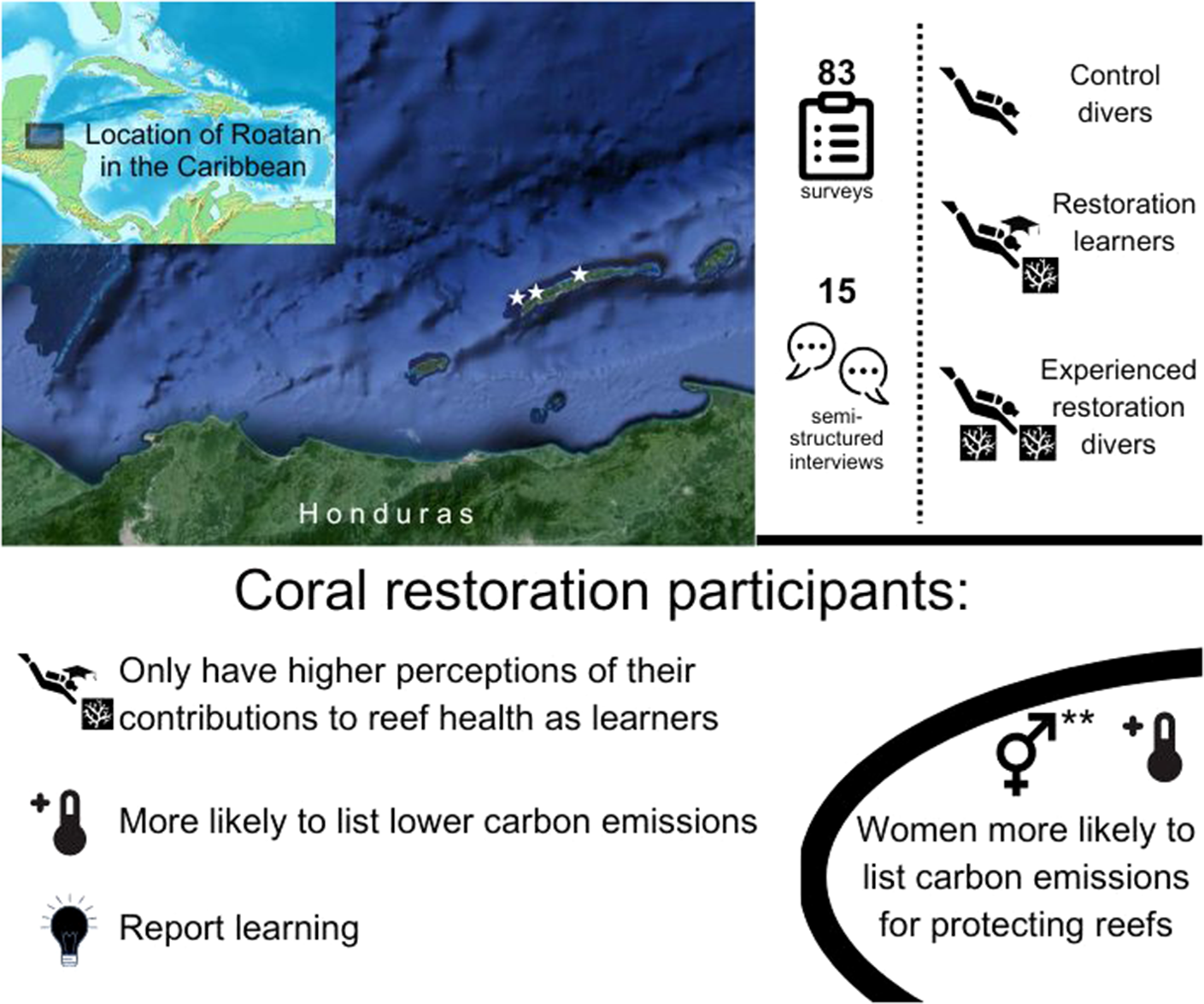
Despite the global expansion of coral restoration initiatives that depend on volunteer divers in supporting these programs, research exploring their motivations, sentiments and knowledge remains scarce. This study employed a mixed-methods analysis of surveys (n = 83) and interviews (n = 15) of a heterogeneous population of coral restoration volunteers and a control group of divers in Roatan, Honduras to explore these aspects. Experienced coral restoration volunteers did not perceive their contributions to coral health protection as being greater than control group non-volunteer divers, despite displaying a deeper understanding of the threats to coral reefs. Notably, both new volunteers prior to training and experienced restoration volunteers were more than twice as likely as control divers to highlight reducing carbon emissions as critical for coral health. While volunteer divers exhibit a strong baseline awareness and concern for coral reef threats, they report that participation in restoration efforts leads to significant learning gains regarding coral conservation. The insights gained from the motivations and learning outcomes of volunteers in coral restoration in Roatan may inform similar initiatives globally, potentially impacting a wide range of volunteer-based ecosystem restoration programs and diver-involved projects, thereby enhancing volunteer engagement and educational outcomes in environmental conservation efforts.
Crested floating heart [Nymphoides cristata (Roxb.) Kuntze] is an invasive aquatic plant in the southeastern United States. For clonal plants like N. cristata, clonal diversity may influence response to control tactics and/or evolutionary potential. However, little is known about the diversity of introduced N. cristata. In this study, we used genotyping by sequencing to quantify N. cristata diversity in the southeastern United States and determine how that diversity is distributed across the invaded range. Our results show that at least three distinct genetic lineages of N. cristata are present in the southeastern United States. Geographic distribution of the lineages varied, with one widespread lineage identified across several states and others only found in a single water body. There is also evidence of extensive asexual reproduction, with invaded water bodies often host to a single genetic lineage. The genetic diversity reported in this study likely results from multiple introductions of N. cristata to the southeastern United States and should be considered by managers when assessing control tactics, such as screening for biocontrol agents or herbicide testing. The extent and distribution of genetic diversity should also be considered by researchers studying the potential for invasive spread of N. cristata within the United States or hybridization with native Nymphoides species.
In the Highlands of Madagascar, where rice is the main staple food, explosive demographic growth has driven the need for the development of upland rice. In that context, a Participatory Plant Breeding (PPB) program conducted by the FOFIFA-Cirad partnership, aims to develop upland rice varieties adapted to farmers’ needs, with superior agronomic performances, and with high grain zinc concentration. In the area, where ferralitic soils with N and P deficiencies prevail, limited fertilizer usage persists due to elevated costs, and upland rice varieties must adapt to these low fertility environments. Thus, this paper aims to identify the adequate selection conditions and methods that allow combining the above-mentioned criteria for selection. So, 56 rice breeding lines, including high-zinc genotypes, were evaluated in field trials with contrasting fertility conditions. A relative selection efficiency analysis demonstrated that selection for yield should be done in moderate fertility environments, while selection for grain zinc concentration could be done across a diverse range of conditions. Through participatory evaluations, we identified that, for this case, grain appreciation was the most important character for deciding whether to select a line, followed by productivity and earliness. We also noted that farmers were more willing to accept a variety if it had higher grain zinc concentration. Finally, we proposed a selection index that combines agronomic, farmers’ and nutritional criteria, with the purpose of selecting lines that fulfill the expectations on these areas. Overall, this paper proposes an adapted methodology for the combination of PPB and biofortification in marginal environments.
Japanese hop (Humulus japonicus Siebold & Zucc.) is an emerging invasive plant that has been observed to invade and spread throughout wetlands. As an annual vine, H. japonicus can smother native vegetation, forming dense stands and reducing biodiversity. At a restored floodplain forest in Joslin, IL, formerly used as an experimental site to test the effectiveness of different reforestation methods, H. japonicus has invaded stands of the previously dominant invasive, reed canarygrass (Phalaris arundinacea L.). We conducted an observational field study to examine the spatiotemporal dynamics of H. japonicus invasion relative to gradients in canopy cover and species composition. Ten transects, with half the transect extending into and half extending beyond H. japonicus patches, were established in October 2022. Seven quadrats per transect were surveyed for vegetation cover and canopy cover in October 2022, June 2023, and October 2023. Transects were evenly split between forested and open areas based on the reforestation treatments. Humulus japonicus cover significantly increased from October 2022 to October 2023, resulting in a slight decrease and replacement of P. arundinacea across the site. Shade reduced H. japonicus cover, indicating its preference for sunlit conditions. Species richness was higher in forested transects compared with open ones, most likely due to the absence of both P. arundinacea and H. japonicus in shaded transects. Along transects, quadrats that had been invaded by H. japonicus differed in species composition from quadrats that had not been invaded in both October 2022 and October 2023. Humulus japonicus cover was much lower in June than October, suggesting that temporal niche partitioning may allow P. arundinacea to persist, and indicating that monitoring for H. japonicus should occur late in the growing season. Both invasive species are shade intolerant, suggesting that planting fast-growing trees should be an effective long-term solution for controlling invasion.
Scholarly activity is a key component of most residency programmes. To establish fundamental research skills and fill gaps within training curricula, we developed an online, asynchronous set of modules called Research 101 to introduce trainees to various topics that are germane to the conduct of research and evaluated its effectiveness in resident research education. Research 101 was utilised by residents at One Brooklyn Health in Brooklyn, NY. Resident knowledge, confidence, and satisfaction were assessed using pre- and post-module surveys with 5-point Likert scaled questions, open-ended text responses, and a multiple-choice quiz. Pre-module survey results indicated that residents were most confident with the Aligning expectations, Introduction to research, and Study design and data analysis basics modules and least confident with the Submitting an Institutional Review Board protocol and Presenting your summer research modules. Post-module survey responses demonstrated increased learning compared to pre-module results for all modules and learning objectives (p < 0.0001). “This module met my needs” was endorsed 91.4% of the time. The median score for the final quiz that consisted of 25 multiple-choice questions was 23. Thematic analysis of open-ended post-module survey responses identified multiple strengths and opportunities for improvement in course content and instructional methods. These data demonstrate that residents benefit from completion of Research 101, as post-module survey scores were significantly higher than pre-module survey scores for all modules and questions, final quiz scores were high, and open-ended responses highlighted opportunities for additional resident learning.
Head and neck squamous cell carcinomas (HNSCCs) are aggressive tumours lacking a standardised timeline for treatment initiation post-diagnosis. Delays beyond 60 days are linked to poorer outcomes and higher recurrence risk.
Methods:
A retrospective review was conducted on patients over 18 with HNSCC treated with (chemo)radiation at a rural tertiary care centre (September 2020–2022). Data on patient demographics, oncologic characteristics, treatment details and delay causes were analysed using SPSS.
Results:
Out of 93 patients, 35.5% experienced treatment initiation delays (TTIs) over 60 days. Median TTI was 73 days for delayed cases, compared to 41.5 days otherwise. No significant differences in demographics or cancer characteristics were observed between groups. The primary reasons for the delay were care coordination (69.7%) and patient factors (18.2%). AJCC cancer stage showed a trend towards longer delays in advanced stages.
Conclusion:
One-third of patients faced delayed TTI, primarily due to care coordination and lack of social support. These findings highlight the need for improved multidisciplinary communication and patient support mechanisms, suggesting potential areas for quality improvement in HNSCC treatment management.
As survey experiments have become increasingly common in political science, some scholars have questioned whether inferences about the real world can be drawn from experiments involving hypothetical, text-based scenarios. In response to this criticism, some researchers recommended using realistic, context-heavy vignettes while others argue that abstract vignettes do not generate substantially different results. We contribute to this debate by evaluating whether incorporating contextually realistic graphics into survey experiment vignettes affects experimental outcomes. We field three original experiments that vary whether respondents are shown a realistic graphic or a plain text description during an international crisis. In our experiments, varying whether respondents are shown realistic graphics or plain text descriptions generally yields little difference in outcomes. Our findings have implications for survey methodology and experiments in political science – researchers may not need to invest the time to develop contextually realistic graphics when designing experiments.
Knotroot foxtail [Setaria parviflora (Poir.) Kerguélen], a perennial Setaria species, is becoming more problematic in forage and grazing systems across the southeastern United States. Setaria parviflora reproduces through the production of rhizomes and seeds, further complicating management strategies. Significant knowledge gaps exist regarding the biology and control of this species. This research aimed to understand the influence of burial depth on S. parviflora propagules and the physiological differences between it and other Setaria spp. Experiments were conducted between October 2019 and February 2021 in Clarke County, GA, to investigate the influence of burial depth (1, 2, 4, 8, and 16 cm) on the emergence and growth of S. parviflora rhizomes and seeds. Zero emergence was estimated at 8.7, 10.8, and 11.2 cm for small rhizomes, large rhizomes, and seeds, respectively. Therefore, producers could implement tillage events to a depth of 11.2 cm or greater to control S. parviflora. A separate study compared S. parviflora, yellow foxtail [Setaria pumila (Poir.) Roem. & Schult.], green foxtail [Setaria viridis (L.) P. Beauv.], and giant foxtail (Setaria faberi Herrm.) plant morphology. Despite similar aboveground appearances, S. pumila and S. parviflora had different total and belowground biomass 2 to 5 mo after emergence, which suggests differences in root formation and perennialization of S. parviflora. The present research determined that burying propagules using tillage could be included in management recommendations concerning S. parviflora; however, it should be complemented with herbicide applications during the growing season to assist in controlling S. parviflora plants produced by seeds.