To save content items to your account,
please confirm that you agree to abide by our usage policies.
If this is the first time you use this feature, you will be asked to authorise Cambridge Core to connect with your account.
Find out more about saving content to .
To save content items to your Kindle, first ensure no-reply@cambridge.org
is added to your Approved Personal Document E-mail List under your Personal Document Settings
on the Manage Your Content and Devices page of your Amazon account. Then enter the ‘name’ part
of your Kindle email address below.
Find out more about saving to your Kindle.
Note you can select to save to either the @free.kindle.com or @kindle.com variations.
‘@free.kindle.com’ emails are free but can only be saved to your device when it is connected to wi-fi.
‘@kindle.com’ emails can be delivered even when you are not connected to wi-fi, but note that service fees apply.
Since limiting judicial independence in Hungary and Poland, the politics of the rule of law crisis have been examined by various scholars discussing conflicts within and between EU and domestic institutions. The rule of law is no longer a purely national affair – it is of high political salience both for the Member States and the EU polity. The question addressed here is: how has the rule of law crisis reshaped the EU’s modes of governance? We argue that to safeguard this common value, the EU is evolving into a regulatory polity (3.0). This development marks a shift from Majone’s EU regulatory state’s focus on regulating markets (1.0) and regulation in core state powers in times of crises (2.0) to regulation on the core values of the polity (3.0). The article shows that in a context of growing dissensus over the rule of law, EU institutional actors have sought to strengthen “rulemaking,” “rule monitoring” and “rule enforcement” through a regulatory approach anchored in a market logic. It also shows that shifting from the traditional regulatory state 1.0 to regulation in core state powers 2.0, the regulatory polity 3.0 strengthens the EU’s institutional capacity to act when the rule of law is under strain through depoliticised “rule monitoring” and politicised “rulemaking“ and “rule enforcement“ as illustrated in the cases of Hungary and Poland discussed in this article.
Enshrining a right to abortion in the constitution – functions and effects of constitutionalisation – the fundamental nature of abortion and its link to core principles of constitutionalism – the instrumental-procedural function of constitutionalisation – limits to protection of abortion rights at the level of the European Court of Human Rights – unpredictability of judicial interpretation of fundamental rights – constitutional design pathways to specify the content and scope of a right to abortion – the potential of the standstill principle
How do electoral manipulation and resulting anti-fraud protests influence political trust in non-democratic contexts? I leverage the plausibly exogenous variation in the timing of a series of original surveys fielded on nationally representative samples in Russia to understand the impact of political shocks – particularly allegations of electoral fraud and post-election protests – on the evolution of trust in political institutions and individuals. This study demonstrates that allegations of excessive, blatant electoral fraud decrease trust in the autocrat. However, trust rebounds following attendant post-election protests. Finally, I examine the conditional impacts of fraud and protest on trust, finding that updating occurs primarily among those with weak political affiliation.
Effective regulation is essential for preventing the establishment of new invasive plants and managing the environmental, social, and economic impacts of those already established. Invasive plants are regulated by jurisdictions at a mix of local, regional, national, and international levels. Enhanced coordination of policy and regulations has been identified as a key strategy for addressing the impacts of invasive species; however, coordination between jurisdictions, and even within jurisdictions, is not always considered. To review regulatory coordination in Australia, we compiled a comprehensive dataset of noxious weeds (defined as invasive plants and potentially invasive plants with controls specified in regulation) in each Australian jurisdiction (i.e., state or territory). We found that jurisdictions on average shared ca. 67% (SD = 15%) of noxious weed listings. Neighboring jurisdictions were not more similar than separated jurisdictions in their noxious weed listings. There were significant differences in the biogeographic native ranges of noxious weeds between jurisdictions, with species native to temperate Asia being most frequently listed overall. The predominant likely entry pathway for noxious weeds in Australia was the ornamental trade. Listings were primarily dedicated to proactive control, prohibiting the cultivation of noxious weeds to avoid their naturalization. There were 415 noxious weeds regulated in a harmonious manner across jurisdictions. However, there were 327 noxious weeds regulated by jurisdictions in a discordant manner, potentially leaving neighboring jurisdictions vulnerable to invasion. We suggest jurisdictions reassess the regulation of these 327 discordant noxious weeds in Australia and utilize a national taxonomic standard to avoid problematic synonyms. Improved cohesion of policies could be achieved through wider adoption of existing regulatory systems and codevelopment of regulations between government and industry.
This study compares tumor control probability (TCP) and normal tissue complication probability (NTCP) across different hypo-fractionated (HypoRT) and conventional breast radiotherapy regimens using radiobiological models.
Materials and methods:
Computed tomography data from 30 patients with left breast-conserving surgery were used to evaluate three HypoRT regimens (39 Gy and 41·6 Gy in 13 fractions, and 40 Gy in 15 fractions) and a conventional regimen (50 Gy in 25 fractions). Dose-volume histograms (DVHs) were extracted for radiobiological calculations using Equivalent Uniform Dose (EUD) and Poisson models for TCP, and EUD and LKB (Lyman-Kutcher-Burman) models for NTCP.
Results:
Conventional treatment achieved significantly higher TCP (95%) than all HypoRT regimens (p < 0·001), with no significant differences between HypoRT regimens (p > 0·05. The 39 Gy/13 fraction regimen showed the lowest lung NTCP (p < 0·05). HypoRT regimens had significantly lower NTCP for the lungs and heart compared to the conventional regimen (p < 0·01). TCP and NTCP values from Poisson and LKB models were higher than those from the EUD model (p < 0·01).
Conclusion:
HypoRT regimens reduced NTCP, with the lowest values in the regime of 39 Gy/13 fractions regimen, though the conventional regimen had higher TCP.
El proceso de retorno del exilio, iniciado después de la caída del poder de Juan Manuel de Rosas en la Confederación Argentina, llevó a una compleja trama de reinserción profesional. Este artículo examina la incorporación de los proscriptos en los cargos asociados a la formación de las instituciones políticas argentinas. Para ello, recurrimos a una base de datos de 891 casos que utilizamos para seguir los recorridos socioprofesionales antes, durante y después de la emigración. En los principales sitios de asilo en Bolivia, Chile y Uruguay, los emigrados integraron las ocupaciones asociadas a la construcción institucional: desde cargos públicos, en el ejército y hasta profesiones liberales como la abogacía y el periodismo. Postulamos el exilio como experiencia fundadora que permitió la adquisición del saber gubernamental necesario para el desarrollo de las instituciones políticas argentinas en la segunda mitad del siglo XIX. Nuestro estudio es un ejemplo de cómo los fenómenos transnacionales jugaron un papel determinante en la formación de los Estados nación contemporáneos.
Epidemiological evidence suggests that a higher intake of sugar during pregnancy is associated with a higher risk of childhood asthma and atopy. However, randomised trial evidence supporting such a link is lacking. This study aimed to examine whether a low glycaemic index (GI) dietary intervention during pregnancy decreases the risk of childhood asthma and eczema. This is a secondary analysis of 514 children from the ROLO trial. Healthy women were randomised to receive an intervention of low GI dietary advice or routine care from early pregnancy. Mothers reported current doctor-diagnosed eczema in their children at 2 years (n 271) and current doctor-diagnosed asthma and eczema in their children at 5 (n 357) and 9–11 years (n 391) of age. Multivariable logistic regression models were used test the effect of the intervention on child outcomes overall and stratified by maternal education. There was a suggestion of a reduction in asthma at 5 years of age in children whose mothers received the low GI dietary intervention during pregnancy compared with usual care (adjusted OR 0·46 (95 % CI 0·19, 1·09); P = 0·08). In stratified adjusted analyses, the intervention was associated with a reduced risk of asthma at 5 years of age in children born to mothers with incomplete tertiary level education but not in those with complete tertiary level education (OR 0·14 (95 % CI 0·02, 0·69); P = 0·010 and OR 1·03 (95 % CI 0·34, 3·13); P = 0·94, respectively). A low GI diet in pregnancy may reduce the risk of developing asthma in childhood, particularly amongst children born to mothers with lower educational attainment.
Labor in the textile and garment industry is at the heart of a series of recent books on South Asia. Together these books document the different scales at which textile and garment work has been structured and restructured over the last century, and its implications for workers, their health as well as collective solidarity. Across the countries of Bangladesh, India, Nepal, and Sri Lanka, the industry developed and declined in vastly different temporalities and rhythms. Yet, as these works reveal, workers have often been confronted with similar challenges brought on by the boom-and-bust cycles of industrial development. In each case, textile and garment workers have been forced to navigate transitions to premature deindustrialization, closure, or national/transnational industrial policy changes. The books center workers and their long “post”-industrial or industrial “afterlives,” as they cope with the dramatic changes in the global manufacturing of textile and garment.
My name is Bethany Yeiser, and I am an individual living with schizophrenia. My schizophrenia has been in full remission since 2008, thanks to treatment with clozapine, the vastly underutilized medication for refractory schizophrenia.
This Article is dedicated to what is arguably one of the most significant tests to which constitutionalism has been subject to in recent times. It examines the theoretical and practical challenges to constitutionalism arising from the profound technological changes under the influence of artificial intelligence (AI) in our emerging algorithmic society. The unprecedented rapid development of AI technology has not only rendered conventional theories of modern constitutionalism obsolete, but it has also created an epistemic gap in constitutional theory. As a result, there is a clear need for a new, compelling constitutional theory that adequately accounts for the scale of technological change by accurately capturing it, engaging with it, and ultimately, responding to it in a conceptually and normatively convincing way.
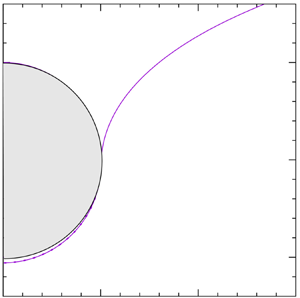
When placed at the surface of a volatile liquid, a sphere of hot dense non-volatile material remains suspended until it cools sufficiently. The duration of this ‘inverse Leidenfrost’ phenomenon depends on the Nusselt number $Nu$ of the sphere, itself determined by flow in the film of vapour separating particle and liquid. It is shown that provided the Nusselt number is large, it can be calculated numerically using only the Laplace relation and the equations governing the thin film; patching to a solution for the outer thick film is not necessary. This method is demonstrated by using it to determine $Nu$ for a sphere sufficiently small that in the governing equations, the acceleration due to gravity is negligible except where multiplied by the density of the sphere. Numerical results giving $Nu$ as a function of a dimensionless measure of sphere weight are supplemented with analysis showing that, when the weight is of the order of the maximum supportable by surface tension alone, the film consists of a spherical bubble cap bounded by its contact rim. The solutions for these regions are coupled: although the apparent contact angle $\chi$ for the cap is determined within the rim, its value depends on the flow rate arriving from the cap as well as on the additional evaporation from the rim. The latter acts to reduce $\chi$ from the value it would otherwise have, thereby reducing the thickness of the entire cap. For the example treated here, the value of $Nu$ is doubled by this mechanism.
Waterborne Escherichia coli (E. coli) represents a pervasive water quality problem across the United States. In Michigan, the presence of E. coli has become problematic for many areas where agricultural run-off and ineffective policies have made these outbreaks endemic. Combining the universe of housing transaction datasets from 2009 to 2017 with the State of Michigan water sampling dataset, we investigate and quantify the negative impacts of E. coli outbreaks on local housing prices. Our difference-in-differences model estimates an overall impact of −8.94% for houses in the treatment group relative to the control group. However, this effect is only short term, as sales prices recover after the outbreak has ended.
Deep brain stimulation (DBS) of the subthalamic nucleus (STN) improves motor outcomes in Parkinson’s disease (PD) but may have adverse long-term effects on specific cognitive domains. The aim of this study was to investigate the association between total electrical energy (TEED) delivered by DBS and postoperative changes in verbal fluency.
Methods
Seventeen PD patients undergoing bilateral STN-DBS were assessed with the Alternate Verbal Fluency Battery (AVFB), which includes phonemic (PVF), semantic (SVF), and alternate verbal fluency (AVF) tests, before surgery (T0) and after 6 (T1) and 12 months (T2). Bilateral TEED and average TEEDM were recorded at T1 and T2. For each AVFB measurement, changes from T0 to T1 (Δ-01) and from T0 to T2 (Δ-02) were calculated.
Results
At T1, PVF (p = 0.007) and SVF scores (p = 0.003) decreased significantly. TEED measures at T1 and T2 were unrelated to Δ-01 and Δ-02 scores, respectively. However, an inverse, marginally significant association was detected between the TEEDM and Δ-01 scores for the AVF (p = 0.041, against an αadjusted = 0.025).
Conclusions
In conclusion, the present reports provide preliminary evidence that TEED may not be responsible or only slightly responsible for the decline in VF performance after STN-DBS in PD.
It is widely agreed that Thucydides’ Melian dialogue presents the Athenian invasion of Melos, and the Athenian justification, in a negative light. Attention tends to focus on the immorality of ‘the rule of the stronger’ that the Athenians present in the dialogue. This essay argues that another feature of the dialogue triggering negative judgements of the Athenians is their criticism of the Melians’ resistance: it is voiced by the Athenians themselves and therefore provokes in readers a ‘speaker-relative’ normative judgement of the Athenians. Philosophers have explored how our normative judgements about statements often depend on the speaker. Because the Athenians have deliberately put the Melians into their perilous situation, and because part of Athenian self-mythology was heroic resistance against overwhelming numbers in the Persian Wars, Athenian criticism of the Melians is hypocritical and applies an asymmetrical ethics to the Athenians and the Melians. Reaction against these features of the dialogue exacerbates the moral abhorrence of the Athenians felt by many readers. Hence I disagree with Bosworth’s view of the dialogue as primarily critical of the Melians. Instead we see Thucydides here condemning not only the Athenian imperial project but also the rhetoric used to defend and sustain it.
We consider the two-dimensional Rayleigh–Bénard convection problem between Navier-slip fixed-temperature boundary conditions, and present a new upper bound for the Nusselt number (${\textit {Nu}}$). The result, based on a localization principle for the Nusselt number and an interpolation bound, exploits the regularity of the flow. On one hand our method yields a shorter proof of the celebrated result of Whitehead & Doering (Phys. Rev. Lett., vol. 106, 2011, 244501) in the case of free-slip boundary conditions. On the other hand, its combination with a new, refined estimate for the pressure gives a substantial improvement of the interpolation bounds in Drivas et al. (Phil. Trans. R. Soc. A, vol. 380, issue 2225, 2022, 20210025) for slippery boundaries. A rich description of the scaling behaviour arises from our result: depending on the magnitude of the Prandtl number (${\textit {Pr}}$) and slip length, our upper bounds indicate five possible scaling laws (where ${\textit {Ra}}$ is the Rayleigh number): ${\textit {Nu}}\sim (L_s^{-1}\,{\textit {Ra}})^{{1}/{3}}$, ${\textit {Nu}}\sim (L_s^{-2/5}\,{\textit {Ra}})^{{5}/{13}}$, ${\textit {Nu}}\sim {\textit {Ra}}^{{5}/{12}}$, ${\textit {Nu}}\sim {\textit {Pr}}^{-1/6}(L_s^{-4/3}\,{\textit {Ra}})^{{1}/{2}}$ and ${\textit {Nu}}\sim {\textit {Pr}}^{-1/6}(L_s^{-1/3}\,{\textit {Ra}})^{{1}/{2}}$.
This systematic review and meta-analysis examined the evidence for a potential relationship between vitamin D status and vitamin D supplementation on immune function biomarkers and prevention of acute respiratory tract infections (ARTI) in dark-skinned individuals.
Design:
Six databases were searched (inception to December 2021) for randomised controlled trials (RCT) and observational studies. A narrative synthesis and random-effects meta-analysis were used to synthesise the findings.
Setting:
Not applicable.
Participants:
Ethnic groups other than white, with or without a white comparator.
Results:
After duplicates were removed, 2077 articles were identified for screening. A total of eighteen studies (n 36 707), including seven RCT and 11 observational studies, met the inclusion criteria, and three RCT (n 5778) provided sufficient data of high enough quality to be included in a meta-analysis. An inverse association between vitamin D status and at least one inflammatory biomarker in black adults was found in three studies, and vitamin D status was inversely associated with ARTI incidence in black and Indigenous groups in two studies. There was no significant effect of vitamin D supplementation on differences in ARTI incidence in ethnic minority groups (OR, 1·40; 95 % CI: 0·70, 2·79; P = 0·34), nor African American (OR, 1·77; 95 % CI: 0·51, 6·19; P = 0·37) or Asian/Pacific (OR, 1·08; 95 % CI: 0·77, 2·68; P = 0·66) subgroups.
Conclusions:
There is a lack of conclusive evidence supporting an association between vitamin D status and immune function or ARTI incidence in dark-skinned individuals. Further RCT in diverse ethnic populations are urgently needed.
Evaluate knowledge and beliefs about dietary nitrate among United Kingdom (UK)-based adults.
Design:
An online questionnaire was administered to evaluate knowledge and beliefs about dietary nitrate. Overall knowledge of dietary nitrate was quantified using a twenty-one-point Nitrate Knowledge Index. Responses were compared between socio-demographic groups.
Setting:
UK.
Participants:
A nationally representative sample of 300 adults.
Results:
Only 19 % of participants had heard of dietary nitrate prior to completing the questionnaire. Most participants (∼70 %) were unsure about the effects of dietary nitrate on health parameters (e.g. blood pressure, cognitive function and cancer risk) or exercise performance. Most participants were unsure of the average population intake (78 %) and acceptable daily intake (83 %) of nitrate. Knowledge of dietary sources of nitrate was generally low, with only ∼30 % of participants correctly identifying foods with higher or lower nitrate contents. Almost none of the participants had deliberately purchased, or avoided purchasing, a food based around its nitrate content. Nitrate Knowledge Index scores were generally low (median (interquartile range (IQR)): 5 (8)), but were significantly higher in individuals who were currently employed v. unemployed (median (IQR): 5 (7) v. 4 (7); P < 0·001), in those with previous nutrition education v. no nutrition education (median (IQR): 6 (7) v. 4 (8); P = 0·012) and in individuals who had heard of nitrate prior to completing the questionnaire v. those who had not (median (IQR): 9 (8) v. 4 (7); P < 0·001).
Conclusions:
This study demonstrates low knowledge around dietary nitrate in UK-based adults. Greater education around dietary nitrate may be valuable to help individuals make more informed decisions about their consumption of this compound.
Digital governance is a public concern, yet under private control. After numerous scandals, all stakeholders in the European Union (EU) agreed to establish a “novel constitution for the internet” that would effectively constrain the power of large platforms. Yet the Digital Services Act (DSA) ultimately legitimized and institutionalized their position as the gatekeepers of the internet. Why? We argue that platforms prevailed thanks to their ability as intermediaries to quietly shape the available policy options. Our “platform power mechanism” combines institutional and ideational sources of business power to show how big tech drew on its entrenched position as an indispensable provider of essential services and promulgated the idea of itself as a responsible and neutral intermediary. We follow the unfolding of platform power through a process-tracing analysis of Google and Meta’s activities with respect to DSA legislation from its announcement (2020) to its adoption (2022). Besides contributing a reconceptualization of the DSA as a regulatory capture, we integrate the notion of platform power into a “regulator–intermediary–target” model and demonstrate how gatekeepers have exploited information asymmetries to share “the public space.” Our analysis thus supplements established approaches that have derived regulators’ deference to platforms from the tacit allegiance of consumers.
Biodesign is emerging as a radical design approach with great potential for the ecological turn, finally endorsed by some first academic courses providing designers with hybrid skills to embrace scientific disciplines. However, the resulting professional figure, the biodesigner, still needs to be better defined in the academic and grey literature, also considering the different and multiple facets that working between design and science may entail. This study presents four case studies of research through design (RTD), addressed by the author as an autoethnographic form of inquiry to clarify the roles a biodesigner could assume, emphasising the differences in methods, tools and workplaces, which inevitably affect the Biodesign outcomes. The author analyses her role as a biodesigner and designer in lab, working in teams and environments requiring different degrees of interdisciplinarity. Far from adopting a speculative approach, the RTDs focus on sustainable Material Design and Biodesign solutions that might be feasible in the short run, aiming to test the designer’s abilities in enriching scientific research and investigating the role and contribution designers can play in scientific contexts of different intensities. The study demonstrates the possibility of a reciprocal knowledge transfer between design and science, highlighting the potential of the designerly way of knowing in bringing innovation to the scientific field.
The diagnosis of central nervous system tumours has been transformed in recent years from a microscopic morphology-based process to one dominated by the identification of somatic genetic alterations in tumour cells. This switch requires implementing radically different methods, for which appropriate training and financial resources must be allocated. The Canadian Association of Neuropathologists (CANP) has followed a process based on the scientific literature and consensus to develop recommendations for molecular testing of tumours of the brain and spinal cord, aiming to balance the need for treatment-determinant accurate diagnosis and the current limitations inherent in the transition to a new paradigm. The Professional Affairs Committee was charged with this task. A draft was discussed during the CANP general assembly, along with presentations from groups who had implemented molecular technologies, as well as others who relied on external laboratories. The Professional Affairs Committee summarised the consensus and submitted their recommendation to the CANP’s Executive Committee. A final report was posted on the CANP website for a month to allow all members to comment. The recommendations below apply to intrinsic tumours of the central nervous system and do not include metastatic disease or tumours impinging upon the nervous system from outside. These recommendations should be considered clinically relevant, as the results have direct consequences on the patient’s treatment, either through the use of targeted therapies or the trial-proven best application of radiation and/or chemotherapy.