To save content items to your account,
please confirm that you agree to abide by our usage policies.
If this is the first time you use this feature, you will be asked to authorise Cambridge Core to connect with your account.
Find out more about saving content to .
To save content items to your Kindle, first ensure no-reply@cambridge.org
is added to your Approved Personal Document E-mail List under your Personal Document Settings
on the Manage Your Content and Devices page of your Amazon account. Then enter the ‘name’ part
of your Kindle email address below.
Find out more about saving to your Kindle.
Note you can select to save to either the @free.kindle.com or @kindle.com variations.
‘@free.kindle.com’ emails are free but can only be saved to your device when it is connected to wi-fi.
‘@kindle.com’ emails can be delivered even when you are not connected to wi-fi, but note that service fees apply.
Using archival data from 106 children with and without DLD who spoke two dialects of English, we examined the independent contributions of vocabulary, morphological ability, phonological short term memory (pSTM), and verbal working memory (WM) to exact sentence recall, ungrammatical repetition, and incorrect tense production. For exact repetitions on simpler sentences, performance of the DLD group was predicted by morphological ability, pSTM and WM, while that of the TD group was predicted by vocabulary and sometimes pSTM. On complex sentences, performance of the DLD group was predicted by morphological ability, and the TD group was predicted by pSTM and WM. For ungrammatical repetitions and incorrect tense, morphological ability was a factor for both groups, with WM also affecting the DLD group for ungrammatical production. Thus, sentence recall taxes multiple resources, with more and different factors being taxed at lower levels of complexity for children with DLD than those without.
Described in the Chinese Communist Party's orthodox historiography as a dark and repressive period and part of the “century of humiliation,” the Republican era has in recent decades undergone a significant reassessment in the People's Republic of China (PRC). In books, newspaper articles, documentaries and dramas, Republican China has sometimes been portrayed as a vibrant society making remarkable progress in modernization in the face of severe external challenges. This article explores the origins of this surprising rehabilitation and examines in detail how the Republican-era economic legacies have been reassessed in the reform era. It finds that while the post-Mao regime continues to use the negative view of China's pre-communist history to maintain its historical legitimacy, it has also been promoting a positive view of aspects of the same period in order to support its post-1978 priorities of modernization and nationalism, a trend that has persisted under Xi Jinping despite his tightened ideological control. The selective revival of Republican legacies, although conducive to the Party's current political objectives, has given rise to revisionist narratives that damage the hegemony of its orthodox historical discourses, on which its legitimacy still relies.
The grief of relatives of patients who died of COVID-19 in an intensive care unit (ICU) has exacted an enormous toll worldwide.
Aims
To determine the prevalence of probable prolonged grief disorder (PGD) at 12 months post-loss and beyond. We also sought to examine circumstances of the death during the COVID-19 pandemic that might pose a heightened risk of PGD, and the associations between probable PGD diagnosis, quality of life and social disconnection.
Method
We conducted an observational, cross-sectional multicentre study of the next of kin of those who died of COVID-19 between March 2020 and December 2021. Participants were recruited from ICUs in South-East London. The Prolonged Grief Disorder Scale (PG-13-R), Quality-of-Life Scale (QOLS) and Oxford Grief-Social Disconnection Scale (OG-SD) were used.
Results
A total of 73 relatives were recruited and assessed, all of them over a year after their loss. Twenty-five (34.2%; 95% CI 23.1–45.4%) relatives of patients who died in the ICU met the criteria for PGD. Those who met the criteria had significantly worse quality of life (QOLS score mean difference 26; 95% CI 17–34; P < 0.001) and endorsed greater social disconnection (OG-SD score means difference 41; 95% CI 27–54; P < 0.001).
Conclusions
The findings suggest that rates of PGD are elevated among relatives of patients who died of COVID-19 in the ICU. This, coupled with worse quality of life and greater social disconnection experienced by those meeting the criteria, suggests the need to attend to the social deprivations and social dysfunctions of this population group.
Voter turnout is a crucial indicator of democratic health, yet forecasting turnout remains an understudied area in political science. This article presents two pioneering models for predicting US presidential election turnout: the national and the state model. The national one, using data from 1868 from 2020, employs lagged turnout as its sole predictor. The state model, covering 1984 to 2020, incorporates demographic and institutional variables to forecast state-level participation. The national predicts 65.3% turnout for 2024, whereas the state model forecasts increased turnout in 41 states compared to 2020. The models’ ability to generate early predictions offers valuable lead time for planning and resource allocation, which has implications for election administrators and political campaigns, as well as for the vibrancy of civic engagement in America.
Using a forecasting model based on economic pessimism and recognizing the difficulties of making such a forecast in such atypical times, the forecasting model predicts a narrow loss for the incumbent presidential party and a loss of 12 seats in the House of Representatives. Even with the unusual nature of politics in the United States over the past decade, this model does a good job of predicting election outcomes. The more pessimistic people are, the worse the incumbent party does in presidential and House elections. Moreover, the power of incumbency shows strongly.
The Hierarchical Taxonomy of Psychopathology (HiTOP) offers a promising framework to identify the neurobiological mechanisms of psychopathology. Many forms of psychopathology are characterized by dysfunctional emotional reactivity. The late positive potential (LPP) is an event-related potential component that provides an index of neurobiological emotional reactivity. Several categorical disorders have demonstrated a similar association with the emotion-modulated LPP. It is possible that higher-order dimensional representations of psychopathology might explain the comparable results. The present study examined the association between HiTOP-consistent pathological personality dimensions across multiple levels of the hierarchy and neurobiological emotional reactivity.
Methods
The sample included 215 18–35-year-old adults (86% female) who were oversampled for psychopathology. Participants completed the emotional interrupt task while electroencephalography was recorded to examine the LPP. Participants also completed the Comprehensive Assessment of Traits relevant to Personality Disorders to assess pathological personality.
Results
At the spectra level, higher negative emotionality was associated with a larger emotion-modulated LPP, while higher detachment was associated with a smaller emotion-modulated LPP. There were no associations between higher-order psychopathology levels and the emotion-modulated LPP. Compared to categorical diagnoses, spectra-level personality pathology dimensions significantly improved the prediction of the emotion-modulated LPP.
Conclusions
The present study indicates that HiTOP spectra levels of negative emotionality and detachment demonstrate unique associations with neurobiological emotional reactivity. The study highlights the utility of examining dimensional and hierarchical, rather than categorical, representations of psychopathology in the attempt to identify the neurobiological origins of psychopathology.
Seeing Like an Activist is a profound—and profoundly political—book. Skillfully distilling complex historical evidence into a vivid narrative and advancing a compelling theoretical argument, Pineda unsettles conventional accounts of the civil rights movement to ask what we can learn about the nature and limits of civil disobedience “by reconsidering the example we already think we know so well” (3). One of the book's key contributions is its analysis of political practices that constituted the “short civil rights movement”—the decade of southern protest bookended by the Montgomery Bus Boycott in 1955–56 and the Selma March in 1965. “The civil rights movement (and its multitude of activists),” Pineda observes, “operates between the lines of theory as an object lesson—a ready-made example that proves the moral purchase of the theory, rather than a live source of novel theoretical insights and political claims” (48). As object lesson, the movement is often recruited to police or criticize forms of protest that are said to fall short of the disciplined nonviolence of the past. This view of history, Pineda contends, enables theorists of civil disobedience like John Rawls to use the example of civil rights activism to affirm the liberal constitutional order. Offering incisive critiques of Rawls, Michael Walzer, and Hugo Bedau, Pineda exposes the unearned ease with which political theories that do not take racial injustice as a central concern or focus on Black theoretical practices have conscripted the civil rights movement in service of their arguments.
Accelerating COVID-19 Treatment Interventions and Vaccines (ACTIV) was initiated by the US government to rapidly develop and test vaccines and therapeutics against COVID-19 in 2020. The ACTIV Therapeutics-Clinical Working Group selected ACTIV trial teams and clinical networks to expeditiously develop and launch master protocols based on therapeutic targets and patient populations. The suite of clinical trials was designed to collectively inform therapeutic care for COVID-19 outpatient, inpatient, and intensive care populations globally. In this report, we highlight challenges, strategies, and solutions around clinical protocol development and regulatory approval to document our experience and propose plans for future similar healthcare emergencies.
Dignity Therapy (DT) is a brief form of psychotherapy that helps people with life-threatening illnesses and their loved ones cope with emotional pain and demoralization. Unfortunately, not everyone has the opportunity to receive DT during their lifetime. Posthumous Dignity Therapy (PDT) was then devised to be administered to bereaved family members. However, PDT has not yet been validated or studied in the specific cultural and linguistic context of Portuguese-Brazilians. This study aims to fill this gap by validating PDT for the Portuguese (Brazilian) context.
Methods
Using Beaton’s methodology, including the processes of translation, synthesis, back-translation, evaluation by an expert committee, and pre-testing, the PDT Schedule of Questions underwent validation and cultural adaptation. The research was conducted in a Palliative Care Unit at a tertiary cancer hospital in Brazil.
Results
The questionnaire was translated, back-translated, and evaluated by the panel of experts, obtaining a Content Validity Index of 0.97. During the pretest phase, it was observed that the participant’s interview method needed to be changed from remote (telephone or videoconference) to in-person. Additionally, it was necessary to modify some terms related to death and dying, as they caused discomfort to the participants. As a result of this process, the PDT was modified, and adapted to the Brazilian cultural and linguistic reality.
Significance of results
This validation study will be significant for future DT research from the caregivers’ perspective and for projects aiming to implement this therapeutic modality in palliative care units, in addition to helping participants remember their loved ones better by providing a tangible legacy document that assists them emotionally and materially in coping with the grieving process.
The Accelerating COVID-19 Therapeutic Interventions and Vaccines (ACTIV) Cross-Trial Statistics Group gathered lessons learned from statisticians responsible for the design and analysis of the 11 ACTIV therapeutic master protocols to inform contemporary trial design as well as preparation for a future pandemic. The ACTIV master protocols were designed to rapidly assess what treatments might save lives, keep people out of the hospital, and help them feel better faster. Study teams initially worked without knowledge of the natural history of disease and thus without key information for design decisions. Moreover, the science of platform trial design was in its infancy. Here, we discuss the statistical design choices made and the adaptations forced by the changing pandemic context. Lessons around critical aspects of trial design are summarized, and recommendations are made for the organization of master protocols in the future.
The United States Government (USG) public-private partnership “Accelerating COVID-19 Treatment Interventions and Vaccines” (ACTIV) was launched to identify safe, effective therapeutics to treat patients with Coronavirus Disease 2019 (COVID-19) and prevent hospitalization, progression of disease, and death. Eleven original master protocols were developed by ACTIV, and thirty-seven therapeutic agents entered evaluation for treatment benefit. Challenges encountered during trial implementation led to innovations enabling initiation and enrollment of over 26,000 participants in the trials. While only two ACTIV trials continue to enroll, the recommendations here reflect information from all the trials as of May 2023. We review clinical trial implementation challenges and corresponding lessons learned to inform future therapeutic clinical trials implemented in response to a public health emergency and the conduct of complex clinical trials during “peacetime,” as well.
While antipsychotic medication reduces the risk of relapse for patients with schizophrenia, high prevalence of adverse effects results in low adherence. Lower doses of antipsychotics have been associated with increased level of function but also with increased risk of relapse. This study presents findings from a specialized deprescribing clinic. In addition, we aim to identify clinical predictors for relapse.
Methods
Patients diagnosed with schizophrenia were referred to the clinic, which offers a six-month guided tapering program. Antipsychotic dose was reduced by 10% every four weeks. Patients were monitored closely for symptom progression or decrease in level of function, with defined cut-offs prompting a pause in or cessation of dose reduction.
Results
After 12 months, the antipsychotic dose was reduced from 404 (±320 mg) to 255 (±236 mg) chlorpromazine equivalent. Of the 88 patients included, 22 (27%) experienced relapse during the six-month tapering period, while 29 (37%) experienced relapse at the 12-month follow-up visit and nine patients were antipsychotic free. Patients who remained stable experienced a slightly increased level of functioning and markedly fewer side effects (p < 0.001). Following relapse, patients were clinically stabilized and showed an improved attitude toward antipsychotic medication. The predictive models were weak.
Conclusions
We show that most patients undergoing guided antipsychotic tapering remained stable after one year and improved in level of function, while most patients who relapsed were quickly stabilized. Our inability to create strong predictive models could be due to limitations in the study design, warranting future studies exploring tapering of antipsychotics in patients with schizophrenia.
This manuscript addresses a critical topic: navigating complexities of conducting clinical trials during a pandemic. Central to this discussion is engaging communities to ensure diverse participation. The manuscript elucidates deliberate strategies employed to recruit minority communities with poor social drivers of health for participation in COVID-19 trials. The paper adopts a descriptive approach, eschewing analysis of data-driven efficacy of these efforts, and instead provides a comprehensive account of strategies utilized. The Accelerate COVID-19 Treatment Interventions and Vaccines (ACTIV) public–private partnership launched early in the COVID-19 pandemic to develop clinical trials to advance SARS-CoV-2 treatments. In this paper, ACTIV investigators share challenges in conducting research during an evolving pandemic and approaches selected to engage communities when traditional strategies were infeasible. Lessons from this experience include importance of community representatives’ involvement early in study design and implementation and integration of well-developed public outreach and communication strategies with trial launch. Centralization and coordination of outreach will allow for efficient use of resources and the sharing of best practices. Insights gleaned from the ACTIV program, as outlined in this paper, shed light on effective strategies for involving communities in treatment trials amidst rapidly evolving public health emergencies. This underscores critical importance of community engagement initiatives well in advance of the pandemic.
Accelerating COVID-19 Therapeutic Interventions and Vaccines (ACTIV) was an extraordinary example of a public-private partnership (PPP) that brought together over thirty organizations and hundreds of individuals to address one of the most pressing global health needs in recent decades. In particular, ACTIV provided a key avenue for testing numerous therapeutics for their potential benefit in treating the SARS-CoV-2 virus or the resulting symptoms of acute COVID-19 infection. Given the speed and scale at which ACTIV designed and implemented master protocols across global networks that it was simultaneously working to create, the PPP can provide valuable lessons for best practices and avoiding pitfalls the next time the world is faced with a global pandemic of a novel pathogen. This report provides a general overview of the ACTIV partnership to set the stage and context for the subsequent articles in this issue that will relay these lessons learned.
Election forecasting in modern democracies faces significant challenges, including increasing survey nonresponse and selection bias. Moreover, there are limitations to the current predictive approaches. Whereas structural models focus solely on macro-level variables (e.g., economic conditions and leader popularity), thereby overlooking the importance of individual-level factors, survey-based aggregation methods often rely on intuitive procedures that lack theoretical foundations. To address these gaps, this article proposes a combined (i.e., both standard and Bayesian) logistic regression approach that leverages voter-level data and incorporates a theory-based specification. By testing these models on recent waves of the American National Election Studies Time Series, this study demonstrates that the proposed approach yields notably accurate predictions of Republican popular support in each election.
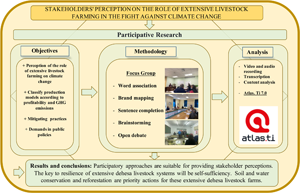
Livestock farming is currently highly questioned and is considered by society to be one of the main precursors of climate change and innumerable environmental impacts. This social concern has marked a trend in public policies in Europe, promoting strategies to reduce greenhouse gas (GHG) emissions by controlling the carbon footprint of agri-food products. However, in certain regions, the perception of the main actors in the sector about the role that livestock farming plays in this fight against climate change and how new political trends point the way toward the sustainability of agrarian systems is still uncertain. In this study, the opinions of stakeholders of the agro-livestock sector on the role that extensive livestock farming plays in the current context of the fight against climate change and the demands for public policies to facilitate the adoption of mitigation practices were examined. A participatory research process through focus groups was used in this qualitative study. Specifically, five sessions were held at the beginning of 2022; the sessions were recorded, transcribed, and anonymized for further analysis. In these sessions, projective techniques were used, such as word association and sentence completion to understand stakeholders' perceptions of the role of extensive livestock farming in climate change. Brand mapping was conducted to determine the opinion on the profitability and GHG emissions of 10 livestock systems typical of the region and of eight quality labelling systems related to sustainability. Brainstorming was carried out to assess available practices for the adaptation of livestock farms and mitigation of climate change. Finally, there was an open debate regarding the demands for public aid for the implementation of mitigation practices. The word association technique identified concepts such as ‘Equilibrium’ in extensive livestock farming and concepts such as ‘Effects’, ‘Action’ and ‘Concern’ in climate change. For the term carbon footprint, the most mentioned concept was ‘ignorance’, and for common agricultural policy, the most mentioned term was ‘injustices’. The results of the brand mapping allowed us to determine the perception of the stakeholders regarding the profitability of the different extensive farm systems and on their GHG emissions, with the most extensive and traditional ones being perceived as the lowest emitters of gases but also the least profitable. For sustainable labels, stakeholders believed that labels contribute to profitability and lower GHG emissions. Strategies to adapt to climate change and reduce the impact of farms were focused on reforestation, grazing, and soil management, adjusting the livestock stocking rate and self-production of food on farms. The best mitigating practices proposed were the maintenance of the extensive livestock farming (4.69), improvement of accesses, livestock routes and roads (4.63), making and applying compost (4.50) and the simplified administrative procedures (5.00). In the prioritization of public aids, three categories were established based on the field of action: social/organizational measures (38 votes), economic measures (44 votes) and environmental measures (22 votes). The aid related to maintaining profitability and improving marketing, followed by aid to reduce bureaucracy and direct aid to extensive livestock farming, were identified as priorities. This study offers a detailed picture of how stakeholders in the agro-livestock sector see the role that extensive livestock farming plays in the fight against climate change. The best farm management practices and priority lines of public support that policy-makers can apply have been identified in this study and emanate directly from those who receive subsidies and make the decisions in their livestock farming to ensure their implementation more successful.
Between fifteen and twenty-five million Americans took to the streets in the summer of 2020 to march, mourn, occupy highways, clash with police, and be together in grief and rage. Municipal and state police forces responded with a national campaign of excessive force. Demonstrators were clubbed, tear gassed, sprayed with chemical agents, kettled and trampled, illegally detained, and mutilated by “less-than-lethal” munitions. Internal police reviews and municipal leaders blamed the violence on insufficient training but the scale and intensity of repression suggest a more profound democratic crisis surrounding the criminalization of dissent.
The extension of organic fertilizers helps improve soil quality and reduces non-point source pollution caused by excessive use of fertilizers, however, whether the application of organic fertilizers (OFA) contributes to an increase in farmers' income is a matter of debate. This paper discussed how the application of soil-testing formulas and outsourcing services that some or all links of agricultural production to professional organizations moderate the income-increasing effect of OFA, and Multinomial Endogenous Switching Regression Model (MESR) is selected to do the empirical test. The results indicate that OFA with soil-testing formula and OFA with outsourcing service can effectively increase farmers' income, in specific, OFA with soil-testing formula increases the net monetary income of wheat growing on per hectare (ha) of land by 2150 Renminbi (RMB), and OFA with outsourcing service increases the net monetary income of wheat growing on per ha of land by 3950 RMB, however, OFA has no effectiveness on increasing farmers' income if neither soil-testing formulas nor outsourcing services is available. The influence mechanism of OFA to improve farmers' income is to increase crop yield, but OFA has no effectiveness on increasing the price of products. A systematic extension services including the extension of organic fertilizers, soil testing formulas and outsourcing services should be formed in the future.