To save content items to your account,
please confirm that you agree to abide by our usage policies.
If this is the first time you use this feature, you will be asked to authorise Cambridge Core to connect with your account.
Find out more about saving content to .
To save content items to your Kindle, first ensure no-reply@cambridge.org
is added to your Approved Personal Document E-mail List under your Personal Document Settings
on the Manage Your Content and Devices page of your Amazon account. Then enter the ‘name’ part
of your Kindle email address below.
Find out more about saving to your Kindle.
Note you can select to save to either the @free.kindle.com or @kindle.com variations.
‘@free.kindle.com’ emails are free but can only be saved to your device when it is connected to wi-fi.
‘@kindle.com’ emails can be delivered even when you are not connected to wi-fi, but note that service fees apply.
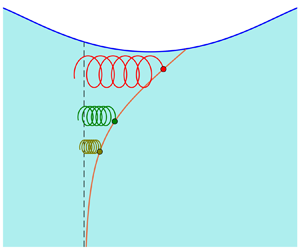
The particle trajectories in irrotational, incompressible and inviscid deep-water surface gravity waves are open, leading to a net drift in the direction of wave propagation commonly referred to as the Stokes drift, which is responsible for catalysing surface wave-induced mixing in the ocean and transporting marine debris. A balance between phase-averaged momentum density, kinetic energy density and vorticity for irrotational, monochromatic and spatially periodic two-dimensional water waves is derived by working directly within the Lagrangian reference frame, which tracks particle trajectories as a function of their labels and time. This balance should be expected as all three of these quantities are conserved following particles in this system. Vorticity in particular is always conserved along particles in two-dimensional inviscid flow, and as such even in its absence it is the value of the vorticity that fundamentally sets the drift, which in the Lagrangian frame is identified as the phase-averaged momentum density of the system. A relationship between the drift and the geometric mean water level of particles is found at the surface, which highlights connections between the geometry and dynamics. Finally, an example of an initially quiescent fluid driven by a wavelike pressure disturbance is considered, showing how the net momentum and energy from the surface pressure disturbance transfer to the wave field, and recognizing the source of the mean Lagrangian drift as the net momentum required to generate an irrotational surface wave by any conservative force.
People with bipolar disorder (BD) often show inaccurate subjective ratings of their objective cognitive function. However, it is unclear what information individuals use to formulate their subjective ratings. This study evaluated whether people with BD are likely using information about their crystallized cognitive abilities (which involve an accumulated store of verbal knowledge and skills and are typically preserved in BD) or their fluid cognitive abilities (which involve the capacity for new learning and information processing in novel situations and are typically impaired in BD) to formulate their subjective cognitive ratings.
Method:
Eighty participants diagnosed with BD and 55 control volunteers were administered cognitive tests assessing crystallized and fluid cognitive abilities. Subjective cognitive functioning was assessed with the Cognitive Failures Questionnaire (CFQ), daily functioning was rated using the Multidimensional Scale of Independent Functioning (MSIF) and the Global Assessment of Functioning Scale (GAF), and quality of life was assessed with the Quality of Life in Bipolar Disorder scale (QoL.BD).
Results:
The BD group exhibited considerably elevated subjective cognitive complaints relative to controls. Among participants with BD, CFQ scores were associated with fluid cognitive abilities including measures of memory and executive function, but not to crystallized abilities. After controlling for objective cognition and depression, higher cognitive complaints predicted poorer psychosocial outcomes.
Conclusions:
Cognitive self-reports in BD may represent a metacognitive difficulty whereby cognitive self-appraisals are distorted by a person’s focus on their cognitive weaknesses rather than strengths. Moreover, negative cognitive self-assessments are associated with poorer daily functioning and diminished quality of life.
Clinical research is critical for healthcare advancement, but participant recruitment remains challenging. Clinical research professionals (CRPs; e.g., clinical research coordinator, research assistant) perform eligibility prescreening, ensuring adherence to study criteria while upholding scientific and ethical standards. This study investigates the key information CRP prioritizes during eligibility prescreening, providing insights to optimize data standardization, and recruitment approaches.
Methods:
We conducted a freelisting survey targeting 150 CRPs from diverse domains (i.e., neurological disorders, rare diseases, and other diseases) where they listed essential information they look for from medical records, participant/caregiver inquiries, and discussions with principal investigators to determine a potential participant’s research eligibility. We calculated the salience scores of listed items using Anthropac, followed by a two-level analytic procedure to classify and thematically categorize the data.
Results:
The majority of participants were female (81%), identified as White (44%) and as non-Hispanic (64.5%). The first-level analysis universally emphasized age, medication list, and medical history across all domains. The second-level analysis illuminated domain-specific approaches in information retrieval: for instance, history of present illness was notably significant in neurological disorders during participant and principal investigator inquiries, while research participation was distinctly salient in potential participant inquiries within the rare disease domain.
Conclusion:
This study unveils the intricacies of eligibility prescreening, with both universal and domain-specific methods observed. Variations in data use across domains suggest the need for tailored prescreening in clinical research. Incorporating these insights into CRP training and refining prescreening tools, combined with an ethical, participant-focused approach, can advance eligibility prescreening practices.
We study the influence of a low-frequency harmonic vibration on the formation of the two-dimensional rolling solitary waves in vertically co-flowing two-layer liquid films. The system consists of two adjacent layers of immiscible fluids with the first layer being sandwiched between a vertical solid plate and the second fluid layer. The solid plate oscillates harmonically in the horizontal direction inducing Faraday waves at the liquid–liquid and liquid–air interfaces. We use a reduced hydrodynamic model derived from the Navier–Stokes equations in the long-wave approximation. Linear stability of the base flow in a flat two-layer film is determined semi-analytically using Floquet theory. We consider sub-millimetre-thick films and focus on the competition between the long-wavelength gravity-driven and finite wavelength Faraday instabilities. In the linear regime, the range of unstable wave vectors associated with the gravity-driven instability broadens at low and shrinks at high vibration frequencies. In nonlinear regimes, we find multiple metastable states characterized by solitary-like travelling waves and short pulsating waves. In particular, we find the range of the vibration parameters at which the system is multistable. In this regime, depending on the initial conditions, the long-time dynamics is dominated either by the fully developed solitary-like waves or by the shorter pulsating Faraday waves.
The ways in which minority street-level bureaucrats construe their identities as state representatives and as representatives of minority clients are known to inform their discretionary behavior toward clients, thereby shaping policy outcomes. While existing studies have examined race and ethnicity as shared identities between minority bureaucrats and clients, the role of “migrant” identity has been overlooked. Focusing on the so-called European migration crisis of 2015–2017, this study addresses this gap. Drawing on qualitative interviews with migrant bureaucrats, it examines how being simultaneously a migrant and a migration policy implementer shapes bureaucratic discretion. This article introduces the notion of “migrant representative” and identifies four profiles of migrant bureaucrats, each corresponding to different degrees of identification with the local migration management system and the migrant clients. In doing so, it contributes to the literature on representative bureaucracy and the debate on the linkage between passive and active representation.
Clostridioides difficile infection (CDI) research relies upon accurate identification of cases when using electronic health record (EHR) data. We developed and validated a multi-component algorithm to identify hospital-associated CDI using EHR data and determined that the tandem of CDI-specific treatment and laboratory testing has 97% accuracy in identifying HA-CDI cases.
Cognitive impairment, anxiety, depression, fatigue, and dependence in instrumental activities of daily living (ADL) are common after stroke; however, little is known about how these outcomes may differ following treatment with endovascular clot retrieval (ECR), intravenous tissue plasminogen activator (t-PA), or conservative management.
Methods:
Patients were recruited after acute treatment and invited to participate in an outcome assessment 90–120 days post-stroke. The assessment included a cognitive test battery and several questionnaires. The COVID-19 pandemic led to significant disruptions in recruitment and data collection, and the t-PA and conservative management groups were combined into a standard medical care (SMC) group.
Results:
Sixty-two participants were included in the study (ECR = 31, SMC = 31). Mean age was 66.5 (20–86) years, and 35 (56.5%) participants were male. Participants treated with ECR had significantly higher National Institutes of Health Stroke Scale scores at presentation and significantly lower education. After adjusting for stroke severity, premorbid intellectual ability, and age, treatment with ECR was associated with significantly better performances on measures of cognitive screening, visual working memory, and verbal learning and memory. Participants treated with ECR also experienced less fatigue and were more likely to achieve independence in basic and instrumental ADLs. Despite this, cognitive impairment and fatigue were still common among participants treated with ECR and anxiety and depression symptoms were experienced similarly by both groups.
Conclusions:
Cognitive impairment and fatigue were less common but still prevalent following treatment with ECR. This has important practical implications for stroke rehabilitation, and routine assessment of cognition, emotion, and fatigue is recommended for all stroke survivors regardless of stroke treatment and functional outcome.
In this study an operational sea ice thickness (SIT) estimation algorithm, based on HH-polarized X-band synthetic aperture radar (SAR) data, background information from the most recent, typically from the previous day, available daily Baltic Sea ice chart and the operational Finnish Meteorological Institute (FMI) thermodynamic ice model, was developed and evaluated. The algorithm was designed to complement the C-band SAR SIT algorithm developed earlier at FMI and applied daily as part of the operational Copernicus Marine Service (CMS). The X-band SIT algorithm was developed by utilizing the sea ice thickness measurements made onboard the Finnish and Swedish ice breakers during two winters seasons: 2021–2022 and 2022–2023. The former season measurements were used for defining the algorithm parameters and the later season for evaluation of the algorithm performance. According to the evaluation metrics the X-band algorithm performance is slightly better than that of the operational CMS C-band SAR SIT algorithm, indicating its suitability for operational use in CMS.
The changing conditions in which sea ice forms and exists are likely to affect the properties of sea ice itself, and potential climate feedbacks need to be identified and understood to improve future projections. Here we perform a set of idealised laboratory experiments that model sea-ice growth under a range of freezing conditions. The results confirm existing theories; sea-ice growth rate is largest for cooler freezing temperatures, fresher ambient salinities and cases with bottom cooling. Our primary metric of interest is the brine fraction (the volume ratio of brine inclusions to the total sea ice), which we quantify and determine its sensitivity with respect to the ambient salinity, freezing temperature and, for the first time, the freezing direction. We find that the brine fraction of our model sea ice is most sensitive to freezing temperature, and increases 2.5% per 1$^\circ$C increase of freezing temperature.
Ben & Jerry's – the famous ice cream brand known for its quirky flavours and social justice ethos – announced in 2021 that it would withdraw its products from Israeli settlements in the Occupied Palestinian Territory (OPT). This announcement sparked controversy, with an impact on the company and its parent, Unilever. While the UN Guiding Principles on Business and Human Rights (2011) (UNGP) have established themselves as the leading international governance framework for the social responsibilities of businesses, their application to conflict-affected areas lacks clarity. Questions remain, including when is a company legally complicit in violations of international humanitarian law (IHL), and when is a corporate exit from an area under military occupation the appropriate and responsible thing to do. This article uses Ben & Jerry's withdrawal from the OPT as the basis for investigating these questions. It finds that while it is unlikely that Ben & Jerry's would be exposed to any legal liability for violating IHL through its product sales in Israeli settlements in the OPT, its withdrawal aligns with its responsibilities under the UNGP as a reasonable and prudent corporate action in response to its activities being linked to enduring and severe IHL violations.
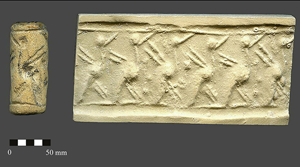
Since the mid-twentieth century, the study of designs on seals has often focused on exotica and elite items. The PLOMAT project investigates visual and material communication outside of elite exchange networks during the Late Bronze Age in western Eurasia. The authors present results from plotting flows of ‘commonplace’ cylinder seals and those classified as ‘Common-Style Mittani’.
Based on the critique of education for sustainable development (ESD) as a socio-political control element of ecological modernisation, we discuss the prefigurative potential of participatory photovoice research in schools in light of social-ecological transformation. We argue that engaging students in prefigurative practices of change in which (sustainable) counter-futures are explored in the (unsustainable) present can help to re-politicise ESD, and we view photovoice as a way to guide this transformative process. Drawing on examples from a participatory research project on the transformation of local food systems in Graz, Austria, we critically explored photovoice as a method of transformative education that creates power-critical spaces of possible futures in which (un)sustainable hegemony and collectively internalised patterns of thought and action can be questioned to envision and negotiate liveable futures for all.
A proposed crystal structure of lifitegrast Form A has been derived using synchrotron X-ray powder diffraction data and optimized using density functional theory techniques. Lifitegrast sesquihydrate Form A crystallizes in space group P21 (#4) with a = 18.2526(4), b = 5.15219(6), c = 30.1962(6) Å, β = 90.8670(19), V = 2839.35(7) Å3, and Z = 4 at 295 K. The crystal structure consists of discrete lifitegrast molecules linked by hydrogen bonds among carboxylic acid groups, carbonyl groups, and water molecules into a three-dimensional framework. The water molecules occur in clusters. Each water molecule acts as a donor in two O–H⋯O hydrogen bonds, and as an acceptor. One water molecule acts as an acceptor in a water–water O–H⋯O hydrogen bond, and all three water molecules are acceptors in C–H⋯O hydrogen bonds. Each carboxylic acid group acts as a donor in a strong discrete O–H⋯O hydrogen bond; one to a water molecule and the other to a carbonyl group. The amino groups both form N–H⋯O hydrogen bonds to carbonyl groups. The powder pattern has been submitted to ICDD® for inclusion in the Powder Diffraction File™ (PDF®).
Space as a domain of economic and security competition between great powers has risen to become an arena of active statecraft for middle powers in the twenty-first century. It has set a high-stake stage for not only continuing struggles for catch-up industrialization of late developers but also offering opportunities to capture commercial gains of technological breakthroughs and globalization of markets. We examine these challenges for Taiwan and Thailand, surveying major trends in the emerging space industry and exploring four analytical perspectives on how government-business relations shape adaptive national industrial policies in high-technology sectors with proliferating end-users. We argue that the Asian developmental state model is evolving in response to specific challenges of a global supply chain for commercial space activities dominated by leading space firms and government regulatory actions in the United States. Significant differences in Taiwan’s and Thailand’s space and industrial policy approaches will likely create divergent technological trajectories and reinforce current constraints on improving national security. The longer-term prospect for middle spacepowers remains contingent on the space race between the United States and the People’s Republic of China.
The aim of this study is to observe the ability of Southern Italian municipalities to respond to and redefine the management of common lands following the national privatisation and partition policies promoted by the State during the second half of the nineteenth century. The hypothesis tested is whether, through the analysis of new archival sources such as management rules, it is possible to identify good practices of management of common lands, along with the presence of resilience on the part of local communities during a period defined as one of uncontrollable ‘decline’ for these resources. Three Apennine areas (Campania Region) were identified as the observation sample. The analysis revealed that for these specific cases, it is imprecise to speak of decline and a lack of propensity to develop good management practices, but rather of institutions that are attentive to the protection and preservation of their commons through specific rules.
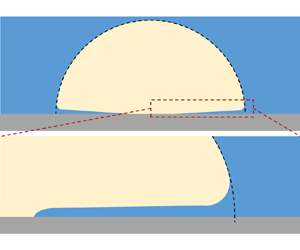
A phenomenological model is proposed to estimate the initial thickness of the liquid microlayer forming beneath a vapour bubble growing on a solid surface upon nucleate boiling. The model employs an analogy between the microlayer formation and the classic plate withdrawal problem. It calculates the microlayer thickness by considering it as a Landau–Levich film, where the thickness is a function of the meniscus speed and radius of curvature. Given the nearly hemispherical shape of the bubble during the early growth stage when the microlayer is first deposited, we assume that the meniscus speed can be approximated by the bubble expansion rate, and estimate the meniscus curvature using the Rayleigh equations. Unlike previous theories that assume that the bubble radius growth is proportional to the square root of time, the proposed model does not rely on any specific law of growth for vapour bubbles. The model is validated for predicting the microlayer thickness in water and ethanol, showing good agreement with experimental measurements and empirical correlations. Subsequent analyses of the microlayer interface profile address inconsistent reports – some described a wedge-like shape, whereas others reported a slight outward curvature with decreasing thickness in the outer region. This discrepancy is attributed to a reduction in the expansion rate of the microlayer's outer edge, particularly when the bubble reaches its maximum width. Our model provides insights into microlayer dynamics, essential to boiling heat transfer, as the evaporative heat flux through the microlayer is very sensitive to its initial thickness.
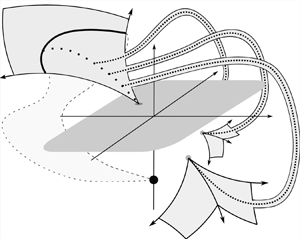
When studying two-dimensional fluid–body interactions in the low-Froude limit, traditional asymptotic theory predicts a waveless free surface at every order. The waves are, in fact, exponentially small and it has been well-established that such waves ‘switch on’ seemingly instantaneously across so-called Stokes lines, partitioning the fluid domain into wave-free regions and regions with waves. In three dimensions, the Stokes-line concept extends to higher-dimensional Stokes surfaces. This article is concerned with the archetypal problem of uniform flow over a point source, reminiscent of, but separate to, the famous Kelvin wave problem. In prior research, the intersection of the Stokes surface with the free surface was found, in implicit form, for this case of a point source. However, on account of the algebraic manipulations required, it is not clear how this approach can be extended to more challenging settings. Here we develop a numerical-based procedure that allows the Stokes surface to be computed. The intersections of the Stokes surfaces with both the free surface and the deeper fluid are discussed for the case of the point source. Crucially, this procedure provides an important tool for generalising exponential asymptotics to the case of nonlinear (non-point-source) wave-generating bodies.
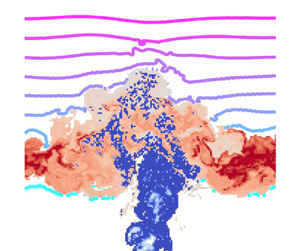
We use large-eddy simulations to study the penetration of a buoyant plume carrying a passive tracer into a stably stratified layer with constant buoyancy frequency. Using a buoyancy-tracer volume distribution, we develop a method for objectively partitioning plume fluid in buoyancy-tracer space into three regions, each of which corresponds to a coherent region in physical space. Specifically, we identify a source region where undiluted plume fluid enters the stratified layer, a transport region where much of the transition from undiluted to mixed fluid occurs in the plume cap and an accumulation region corresponding to a radially spreading intrusion. This method enables quantification of different measures of turbulence and mixing within each of the three regions, including potential energy and turbulent kinetic energy dissipation rates, an activity parameter and the instantaneous mixing efficiency. We find that the most intense buoyancy gradients lie in a thin layer at the cap of the penetrating plume. This provides the primary stage of mixing between plume and environment and exhibits a mixing efficiency around 50 %. Newly generated mixtures of environmental and plume fluid join the intrusion and experience relatively weak turbulence and buoyancy gradients. As the intrusion spreads radially, environmental fluid surrounding the intrusion is mixed into the intrusion with moderate mixing efficiency. This dominates the volume of environmental fluid entrained into the region containing plume fluid. However, the ‘strongest’ entrainment, as measured by the specific entrainment rate, is largest in the plume cap, where the most buoyant environmental fluid is entrained.
Environmental education (EE) can never be separated from politics and the relationship between the two is complex, has changed over time, and is understood and experienced differently. The field’s relationship with politics is both internal (its own politics) and external (political forces outside the field) to it. In this article, I narrate my story of engaging with EE, politics and the relationship between the two. I refer to my story as an autocartophilosography because it has been significantly influenced by my engagement with philosophy and by my movement in space and over time. My most recent engagement has been with scholars’ theorising in the posthuman condition, and I suggest that this present condition requires a different politics, an affirmative politics. I generate seven propositions towards an affirmative politics for EE: making kin, transversal subjectivity, new alliances, dis/identification, embracing slowness, ethical and intellectual stamina; experimental energy.