To save content items to your account,
please confirm that you agree to abide by our usage policies.
If this is the first time you use this feature, you will be asked to authorise Cambridge Core to connect with your account.
Find out more about saving content to .
To save content items to your Kindle, first ensure no-reply@cambridge.org
is added to your Approved Personal Document E-mail List under your Personal Document Settings
on the Manage Your Content and Devices page of your Amazon account. Then enter the ‘name’ part
of your Kindle email address below.
Find out more about saving to your Kindle.
Note you can select to save to either the @free.kindle.com or @kindle.com variations.
‘@free.kindle.com’ emails are free but can only be saved to your device when it is connected to wi-fi.
‘@kindle.com’ emails can be delivered even when you are not connected to wi-fi, but note that service fees apply.
It remains uncertain whether long-term use of benzodiazepines is associated with age-related cognitive decline, and if cognitive ability in early life is the driver of any association. This study examines the association of cognitive ability in young adulthood with later use of benzodiazepines and explores whether the use of benzodiazepines during adult life is associated with cognitive decline in late midlife.
Methods
The study samples include cognitive tests on the Børge Priens Prøve (BPP) from the conscription board examination (age 19 years) from 335 513 men born 1949–1961 and data from re-examinations of 5183 men 44 years later. Cognitive decline was defined as the difference between scores at the conscription board and the re-examination. Information on purchases of benzodiazepines was obtained from the Danish National Prescription Registry, 1995–2022. Associations were analysed using Cox proportional hazards and linear regression.
Results
In total, 120 911 (36%) men purchased benzodiazepines during a follow-up of 20 years. Lower cognitive scores in young adulthood were associated with a higher risk of initiating benzodiazepines (hazard ratio [95% CI] = 0.71[0.68–0.75]). Men with the highest cumulative use of benzodiazepines had larger cognitive decline (β-coefficient [95% CI] = −1.66 [−2.09 to −1.23] BPP scores) compared with never users. Current benzodiazepine users showed a larger cognitive decline than never users (β-coefficient [95% CI] = −2.42[−3.18 to −1.66] BPP scores) and this partially explained the above association. These estimates for cognitive decline were relatively small and may lack clinical relevance.
Conclusion
Low cognitive ability increases the risk of benzodiazepine use in adulthood and cognitive decline is more pronounced in those with the highest benzodiazepine use compared with never-use, but the difference lacks clinical significance.
To examine the relationship between race and ethnicity and central line-associated bloodstream infections (CLABSI) while accounting for inherent differences in CLABSI risk related to central venous catheter (CVC) type.
Design:
Retrospective cohort analysis.
Setting:
Acute care facilities within an academic healthcare system.
Patients:
Adult inpatients from January 2012 through December 2017 with CVC present for ≥2 contiguous days.
Methods:
We describe variability in demographics, comorbidities, CVC type/configuration, and CLABSI rate by patient’s race and ethnicity. We estimated the unadjusted risk of CLABSI for each demographic and clinical characteristic and then modelled the effect of race on time to CLABSI, adjusting for total parenteral nutrition use and CVC type. We also performed exploratory analysis replacing race and ethnicity with social vulnerability index (SVI) metrics.
Results:
32,925 patients with 57,642 CVC episodes met inclusion criteria, most of which (51,348, 89%) were among non-Hispanic White or non-Hispanic Black patients. CVC types differed between race/ethnicity groups. However, after adjusting for CVC type, configuration, and indication in an adjusted cox regression, the risk of CLABSI among non-Hispanic Black patients did not significantly differ from non-Hispanic White patients (adjusted hazard ratio [aHR] 1.19; 95% confidence interval [CI]: 0.94, 1.51). The odds of having a CLABSI among the most vulnerable SVI subset compared to the less vulnerable was no different (odds ratio [OR] 0.95; 95% CI: 0.75–1.2).
Conclusions:
We did not find a difference in CLABSI risk between non-Hispanic White and non-Hispanic Black patients when adjusting for CLABSI risk inherent in type and configuration of CVC.
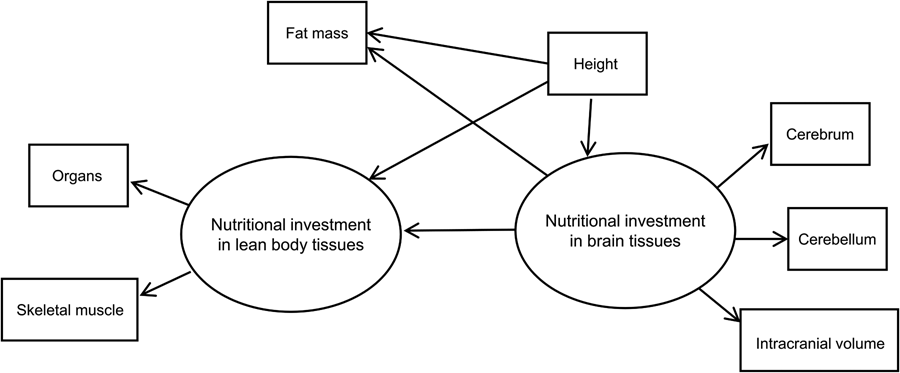
The expensive-tissue hypothesis (ETH) posited a brain–gut trade-off to explain how humans evolved large, costly brains. Versions of the ETH interrogating gut or other body tissues have been tested in non-human animals, but not humans. We collected brain and body composition data in 70 South Asian women and used structural equation modelling with instrumental variables, an approach that handles threats to causal inference including measurement error, unmeasured confounding and reverse causality. We tested a negative, causal effect of the latent construct ‘nutritional investment in brain tissues’ (MRI-derived brain volumes) on the construct ‘nutritional investment in lean body tissues’ (organ volume and skeletal muscle). We also predicted a negative causal effect of the brain latent on fat mass. We found negative causal estimates for both brain and lean tissue (−0.41, 95% CI, −1.13, 0.23) and brain and fat (−0.56, 95% CI, −2.46, 2.28). These results, although inconclusive, are consistent with theory and prior evidence of the brain trading off with lean and fat tissues, and they are an important step in assessing empirical evidence for the ETH in humans. Analyses using larger datasets, genetic data and causal modelling are required to build on these findings and expand the evidence base.
In West Africa, vast areas are being deforested; the remnant forest patches provide a wealth of ecosystem services and biodiversity conservation potential, yet they are threatened by human activity. Forest patches <100 ha have not been widely catalogued before; we mapped forest loss of small forest patches outside of protected areas in the Guinean savannah and humid Guineo-Congolian bioclimatic regions of Togo, Benin, Nigeria and Cameroon between 2000 and 2022. Focusing on the dynamics of small patches, without considering the splitting process of larger patches, we quantified changes in their number and area and the rate and trend of forest loss. Small forest patches are widespread, yet their area and number have decreased, while the forest loss rate is increasing. Primary forest patches lost almost half of their area annually – twice as much as secondary forests, and this loss was especially pronounced across small patches (0.5 – 10 ha), suggesting deforestation preferentially occurs in the smallest patches of primary forest. If forest loss continues at the current rate, 14% of the total forest area mapped in this study will have disappeared by 2032, jeopardizing their potential to provide ecosystem services and emphasizing the need for measures to counter their deforestation.
Metabolic and inflammatory dysfunction is prevalent in middle-aged people with major mood disorders, but less is known about young people. We investigated the trajectories of sensitive metabolic (Homeostatic Model Assessment for Insulin Resistance [HOMA2-IR]) and inflammatory markers (C-reactive protein [CRP]) in 155 young people (26.9 ± 5.6 years) accessing mental health services. We examined demographic and clinical correlates, longitudinal trajectories and relationships with specific illness subtypes. Additionally, we compared the HOMA2-IR with fasting blood glucose (FBG) for sensitivity. We observed a significant increase in HOMA2-IR and CRP over time with higher baseline levels predicting greater increases, although the rate of increase diminished in those with higher baseline levels. Body mass index predicted increases in HOMA2-IR (p < 0.001), but not CRP (p = 0.135). Multinomial logistic regression revealed that higher HOMA2-IR levels were associated with 2.3-fold increased odds of the “circadian-bipolar spectrum” subtype (p = 0.033), while higher CRP levels were associated with a reduced risk of the “neurodevelopmental psychosis” subtype (p = 0.033). Standard FBG measures were insensitive in detecting early metabolic dysregulation in young people with depression. The study supports the use of more sensitive markers of metabolic dysfunction to address the longitudinal relationships between immune-metabolic dysregulation and mood disorders in young people.
Should COVID-19 have a direct impact on the risk of depression, it would suggest specific pathways for prevention and treatment. In this retrospective population-based study, we aimed to examine the association of prior SARS-CoV-2 infection with depressive symptoms, distinguishing self-reported v. biologically confirmed COVID-19.
Methods
32 007 participants from the SAPRIS survey nested in the French CONSTANCES cohort were included. COVID-19 was measured as followed: ad hoc serologic testing, self-reported PCR or serology positive test results, and self-reported COVID-19. Depressive symptoms were measured with the Center of Epidemiologic Studies-Depression Scale (CES-D). Outcomes were depressive symptoms (total CES-D score, its four dimensions, and clinically significant depressive symptoms) and exposure was prior COVID-19 (no COVID-19/self-reported unconfirmed COVID-19/biologically confirmed COVID-19).
Results
In comparison to participants without COVID-19, participants with self-reported unconfirmed COVID-19 and biologically confirmed COVID-19 had higher CES-D scores (β for one interquartile range increase [95% CI]: 0.15 [0.08–0.22] and 0.09 [0.05–0.13], respectively) and somatic complaints dimension scores (0.15 [0.09–0.21] and 0.10 [0.07–0.13]). Only those with self-reported but unconfirmed COVID-19 had higher depressed affect dimension scores (0.08 [0.01–0.14]). Accounting for ad hoc serologic testing only, the CES-D score and the somatic complaints dimension were only associated with the combination of self-reported COVID-19 and negative serology test results.
Conclusions
The association between COVID-19 and depressive symptoms was merely driven by somatic symptoms of depression and did not follow a gradient consistent with the hypothesis of a direct impact of SARS-CoV-2 infection on the risk of depression.
Khata Corridor forest, which serves as a border crossing for wildlife between Nepal and India, is one of the areas in Nepal with the highest incidence of human–wildlife conflict. In recent years both the tiger Panthera tigris tigris and human populations in this region have increased, leading to more frequent conflict. We aimed to determine whether increased conflict risk was primarily from tigers entering human settlements or whether there are additional drivers associated with human use of forested areas. We conducted the study in four settlements that varied in socio-economic status and distance from Bardiya National Park, through field visits and household surveys. Tiger records (sightings, pug marks and attacks) were most frequent far from Bardiya National Park, in settlements without benefits from tiger-based tourism and nearer the periphery of forest, and were rarely associated with the interior of settlements. Human visitation into forests was also highest in the most remote settlement. Our findings suggest that conflict risk is driven by the extent of human activity in forested areas, reflecting an unequal distribution of the conservation benefits of tourism amongst settlements. In the long-term, continued coexistence between people and tigers will depend on minimizing conflict risk across settlements through establishing an equitable distribution of conservation benefits. In the short term, we recommend raising public awareness of tiger behaviour to emphasize that tigers are highly unlikely to enter and occupy the interior of human settlements, mitigating negative perceptions of conflict risk.
Cover crops are important in organic arable cropping systems because they improve soil fertility and suppress annual weeds in the post-harvest period (the period between cash crops), but their effectiveness against perennial weeds is less clear. This study analyzed outbreaks of perennial weeds in two long-term organic crop rotations with and without cover crops in the period 2011–2022 in Denmark. In addition, the impact of including forage plantain (Plantago lanceolata) in cover crop mixtures on the growth of perennial weeds was studied from 2020 to 2022. P. lanceolata is known to contain secondary metabolites that inhibit nitrification and may influence nitrogen (N) availability. This study found that cover crops did not hinder outbreaks of Cirsium arvense, Sonchus arvensis, Elytrigia repens or other perennial weed species. E. repens actually proliferated more with cover crops whose presence prevented repeated mechanical post-harvest interventions. The crop rotation involving regular cutting of a one-year or two-year green manure crop provided the best management of perennial weeds if repeated post-harvest soil cultivation was also conducted. This could only be done in the absence of cover crops. Mixing P. lanceolata into the cover crop mixtures did not change the outcome of competition between cover crops and perennial weeds in the period between crop harvest in August and November. Instead, P. lanceolata significantly reduced the number of shoots emerging from perennial weeds in the subsequent growing season. The causality of this effect was not further elaborated in the study.
Affective responses to the menstrual cycle vary widely. Some individuals experience severe symptoms like those with premenstrual dysphoric disorder, while others have minimal changes. The reasons for these differences are unclear, but prior studies suggest stressor exposure may play a role. However, research in at-risk psychiatric samples is lacking.
Methods
In a large clinical sample, we conducted a prospective study of how lifetime stressors relate to degree of affective change across the cycle. 114 outpatients with past-month suicidal ideation (SI) provided daily ratings (n = 6187) of negative affect and SI across 1–3 menstrual cycles. Participants completed the Stress and Adversity Inventory (STRAIN), which measures different stressor exposures (i.e. interpersonal loss, physical danger) throughout the life course, including before and after menarche. Multilevel polynomial growth models tested the relationship between menstrual cycle time and symptoms, moderated by stressor exposure.
Results
Greater lifetime stressor exposure predicted a more pronounced perimenstrual increase in active SI, along with marginally significant similar patterns for negative affect and passive SI. Additionally, pre-menarche stressors significantly increased the cyclicity of active SI compared to post-menarche stressors. Exposure to more interpersonal loss stressors predicted greater perimenstrual symptom change of negative affect, passive SI and active SI. Exploratory item-level analyses showed that lifetime stressors moderated a more severe perimenstrual symptom trajectory for mood swings, anger/irritability, rejection sensitivity, and interpersonal conflict.
Conclusion
These findings suggest that greater lifetime stressor exposure may lead to heightened emotional reactivity to ovarian hormone fluctuations, elevating the risk of psychopathology.
The neural correlates underlying late-life depressive symptoms and cognitive deterioration are largely unclear, and little is known about the role of chronic physical conditions in such association. This research explores both concurrent and longitudinal associations between late-life depressive symptoms and cognitive functions, with examining the neural substrate and chronic vascular diseases (CVDs) in these associations.
Methods
A total of 4109 participants (mean age = 65.4, 63.0% females) were evaluated for cognitive functions through various neuropsychological assessments. Depressive symptoms were assessed by the Geriatric Depression Scale and CVDs were self-reported. T1-weighted magnetic resonance imaging (MRI), diffusion tensor imaging, and functional MRI (fMRI) data were acquired in a subsample (n = 791).
Results
Cognitively, higher depressive symptoms were correlated with poor performance across all cognitive domains, with the strongest association with episodic memory (r = ‒0.138, p < 0.001). Regarding brain structure, depressive symptoms were negatively correlated with thalamic volume and white matter integrity. Further, white matter integrity was found to mediate the longitudinal association between depressive symptoms and episodic memory (indirect effect = −0.017, 95% CI −0.045 to −0.002) and this mediation was only significant for those with severe CVDs (β = −0.177, p = 0.008).
Conclusions
This study is one of the first to provide neural evidence elucidating the longitudinal associations between late-life depressive symptoms and cognitive dysfunction. Additionally, the severity of CVDs strengthened these associations, which enlightens the potential of managing CVDs as an intervention target for preventing depressive symptoms-related cognitive decline.
Iron toxicity is one of the constraints limiting rice production in Africa. This study used a randomized controlled trial to assess the impact of an iron toxicity-tolerant variety, named ARICA 6, on different outcomes and investment in modern inputs by smallholder farmers. Two rounds of data were collected from 520 rice-farming households in Guinea. Results showed that the use of ARICA 6 increased rice yield by 330 kg ha−1 and net income by US$ 120 ha−1. However, adoption of improved variety may not be enough to crowd in investment in modern inputs because farmers face other constraints.
Many factors influence where people die, but most people prefer to die at home. Investigating the factors affecting death at different locations can enhance end-of-life care and enable more people to die at their preferred place. The aim was to investigate barriers and facilitators affecting place of death and compare facilitators and barriers across different places of death.
Methods
A scoping review registered on Open Science Framework was conducted in accordance with the guidelines for Scoping Reviews (PRISMA-ScR). An electronic search of literature was undertaken in MEDLINE, EMBASE, PUBMED, PsycINFO, and CINAHL covering the years January 2013–December 2023. Studies were included if they described barriers and/or facilitators for place of death among adults.
Results
This review identified 517 studies, and 95 of these were included in the review. The review identified the following themes. Illness factors: disease type, dying trajectory, treatment, symptoms, and safe environment. Individual factors: sex, age, ethnicity, preferences, and for environmental factors the following were identified: healthcare inputs, education and employment, social support, economy, and place of residence.
Significance of results
The factors influencing place of death are complex and some have a cumulative impact affecting where people die. These factors are mostly rooted in structural aspects and make hospital death more likely for vulnerable groups, who are also less likely to receive palliative care and advanced care planning. Disease type and social support further impact the location of death. Future research is needed regarding vulnerable groups and their preferences for place of death.
It is a widespread idea that suspended judgement implies a state of doxastic neutrality. Jane Friedman has recently claimed that while inquiring into a given question, one suspends one's judgement on it. Jointly considered, the previous claims imply that one is in a state of doxastic neutrality about a given question while inquiring into it. In this article, I explore the leading cases against Friedman's perspective, arguing that it is debatable whether they exhibit inquiries into questions without doxastic neutrality. However, I will propose the possibility of “explorative disconfirmation inquiries” to show that doxastically non-neutral inquiries do exist.
In Bangladesh, many secularists pursue their political goals through cultural activism. While committed to achieving a secular, progressive, and non-communal society, they often refrain from explicitly articulating their politics due to the sensitivity of their goals. Instead, cultural performances allow them to instantiate and embody a secular ethos with transformative potential, expressed through distinct cultural genres that become recognized as secular aesthetics. While activists consider culture to be a morally superior and ‘purer’ way to promote their political aims than party politics, which they perceive as ‘dirty’ and corrupt, cultural traditions are hardly neutral ground from which to enact secular aspirations. This article explores the ethical struggles that emerge from this position to illuminate what it means to act politically while trying to avoid politics, and why people might choose comparatively elusive forms of political engagement despite their strong commitment to a cause. Attending to less tangible forms of politics encourages us to rethink the role of political messages and visibility in social movements by highlighting the significant role, as well as contradictory implications, of aesthetics, embodiment, and gestures in political action. Conversely, the elusive politics of cultural activism underlines the need to go beyond analysing national discourses to understand the contested nature of secularism in Bangladesh.
In 2022, assisted suicide (AS) was legalized in Austria. We aimed to investigate the experiences and attitudes of palliative care (PC) and hospice nurses toward AS in Austria after the first year of implementation of the new law.
Methods
A cross-sectional survey was distributed online to nurses in every known specialized and general hospice and PC units in Austria (n = 255 units). The questionnaire included sociodemographic characteristics, the Assisted Suicide Attitude Scale, the Comfort Discussing Assisted Suicide Scale, and questions on recent experiences with AS requests. We used Spearman’s correlation coefficient for determining associations between sociodemographic characteristics and attitudes toward AS, as well as comfort discussing AS. For comparison of frequencies, we applied ꭓ2 tests. We computed a linear regression model to examine predictors for attitudes toward AS.
Results
The total sample were N = 280 nurses. More than half (61.2%) indicated that they had cared for a patient who expressed a wish for AS within the first year of implementation. Though responses varied widely, more nurses expressed support for AS than those were opposed (50.36% and 31.75%, respectively). Factors that statistically contributed to more reluctance toward AS in the regression model were older age, religiousness, and experience of working with patients expressing a wish for AS.
Significance of results
This work provides valuable insight into nurses’ perceptions toward the legislation of AS in the first year since the new law was passed. The results can inform the future development of the AS system and support for nurses in end-of-life care, and critically contribute to international discussions on this controversial topic.
This study evaluates the visibility of French-speaking scholars in Canadian political science by analyzing the reading materials assigned in Canadian politics courses. Extending Daoust et al.'s (2022) research, we establish a baseline for their calculations and build an original dataset gathered from all political science departments’ websites and Google Scholar. Our analysis based on three assumptions about the expected academic representation of francophones—Canada's linguistic composition, the makeup of political science departments and faculty members’ productivity—reveals a discrepancy favouring anglophone scholars by up to four percentage points. Our findings extend Daoust et al.'s (2022) contribution by highlighting a similar language-based bias in overall citation practices among Canadian scholars, with French-speaking authors being significantly under-cited compared to their English-speaking counterparts despite demonstrating higher levels of overall productivity. Implications for the future of the discipline are also discussed.
Acquired prosopagnosia is a rare disorder, but it serves as a model for impairments in expert-level visual processing. This review discusses five key observations made over the past 30 years. First, there are variants, an apperceptive type linked to damage to the inferior occipitotemporal cortex and an amnestic type associated with anterior temporal lesions, both either right or bilateral. Second, these variants are clustered in syndromes with other perceptual deficits, the apperceptive type with field defects, dyschromatopsia and topographagnosia, and the amnestic type with topographagnosia and the auditory disorders of phonagnosia and acquired amusia. Third, extensive testing often shows additional problems with recognizing exemplars of other objects, especially when degrees of expertise are taken into account. Fourth, the prosopagnosic impairment does not affect all facial information. For example, the perception of expression and lip-reading likely depends on other neural substrates than those for processing facial identity. Last, face perception in prosopagnosia is not immutable but can improve with extensive training, though as yet this does not represent a cure for the condition. Continuing work with neural networks and animal models will enhance our understanding of this intriguing condition and what it tells us about how our brains process vision.
The aims of this feasibility trial were to assess the acceptability and feasibility of peer-led recovery groups for people with psychosis in a low-resource South African setting, to assess the feasibility of trial methods, and to determine key parameters in preparation for a definitive trial.
Methods
The design was an individually randomised feasibility trial comparing recovery groups in addition to treatment as usual (TAU) with TAU alone. Ninety-two isiXhosa-speaking people with psychosis and forty-seven linked caregivers were recruited from primary care clinics and randomly allocated to trial arms in a 1:1 allocation ratio. TAU comprised anti-psychotic medication delivered in primary care. The intervention arm comprised six recovery groups including service users and caregivers. Two-hour recovery group sessions were delivered weekly in a 2-month auxiliary social worker (ASW)-led phase, then a 3-month peer-led phase. To explore acceptability and feasibility, a mixed methods process evaluation included 25 in-depth interviews and 2 focus group discussions at 5 months with service users, caregivers and implementers, and quantitative data collection including attendance and facilitator competence. To explore potential effectiveness, quantitative outcome data (functioning, relapse, unmet needs, personal recovery, stigma, health service use, medication adherence and caregiver burden) were collected at baseline, 2 months and 5 months post randomisation. Trial registration: PACTR202202482587686.
Results
Qualitative interviews revealed that recovery groups were broadly acceptable with most participants finding groups to be an enjoyable opportunity for social interaction, and joint problem-solving. Peer facilitation was a positive experience; however a minority of participants did not value expertise by lived experience to the same degree as expertise of professional facilitators. Attendance was moderate in the ASW-led phase (participants attended 59% sessions on average) and decreased in the peer-led phase (41% on average). Participants desired a greater focus on productive activities and financial security. Recovery groups appeared to positively impact on relapse. Relapse occurred in 1 (2.2%) of 46 participants in the recovery group arm compared to 8 (17.4%) of 46 participants in the control arm (risk difference -0.15 [95% CI: −0.26; −0.05]). Recovery groups also impacted on the number of days in the last month totally unable to work (mean 1.4 days recovery groups vs 7.7 days control; adjusted mean difference −6.3 [95%CI: −12.2; −0.3]). There were no effects on other outcomes.
Conclusion
Peer-led recovery groups for people with psychosis in South Africa are potentially acceptable, feasible and effective. A larger trial, incorporating amendments such as increased support for peer facilitators, is needed to demonstrate intervention effectiveness definitively.
This article is about contingency and determination. It identifies three “inflection points”—tipping points or points of no return—in the not-so-longue durée of Soviet history: 1929, 1959, and 1989. The article thus reflects on the collectivization of agriculture and associated brutalities; the promise and limitations of Khrushchev’s reforms as well as the appeal—again, limited—of the Soviet Union to the emerging Third World; and the opportunities presented by perestroika and glasnost to reconfigure relations and purposes of production before the waves of nationalism and neoliberal market madness washed over the Soviet Union.