To save content items to your account,
please confirm that you agree to abide by our usage policies.
If this is the first time you use this feature, you will be asked to authorise Cambridge Core to connect with your account.
Find out more about saving content to .
To save content items to your Kindle, first ensure no-reply@cambridge.org
is added to your Approved Personal Document E-mail List under your Personal Document Settings
on the Manage Your Content and Devices page of your Amazon account. Then enter the ‘name’ part
of your Kindle email address below.
Find out more about saving to your Kindle.
Note you can select to save to either the @free.kindle.com or @kindle.com variations.
‘@free.kindle.com’ emails are free but can only be saved to your device when it is connected to wi-fi.
‘@kindle.com’ emails can be delivered even when you are not connected to wi-fi, but note that service fees apply.
The present experimental studies shed light on effects of implicit prosodic cues on anaphora resolution as well as on how these differ both within and between L1 and L2 speaker groups. In two self-paced reading studies, L1 and L2 participants read poem-like texts that contained anaphoric ambiguity. These stimuli were designed to include a rhyming scheme and meter that were either regular or disrupted. We expected a rhyme cue on a nonsubject pronoun antecedent (in the regularly metered and rhyming version of the texts) to induce competition effects in L1 speakers and cause them to adapt their interpretative preferences and processing strategies; yet, for L2 speakers we hypothesized that effects would either not be observed or that they would be attenuated. Additionally, we examined whether comprehender-dependent factors would modulate effects in each group. We tested both L1 and L2 participants on memory-related tasks. We also measured L1 speakers’ print exposure and L2ers’ proficiency in English. Results revealed L1–L2 dissimilarities in interpretative preferences and reading behavior, as L2 speakers were not equally sensitive to the prosodic cues introduced. The examination of memory-related measures provided evidence of within-group differences and between-group parallels: higher working memory in both groups modulated anaphora resolution, although for L2 speakers there was no additional influence of context.
Humans depend heavily on nature. Drylands are home to 2.5 billion people, but the extent to which nature contributes to people (NCP) in drylands has been little explored. We examined the global contribution of nature to people, aiming to compare drylands and non-drylands. We predicted a lower contribution in drylands than non-drylands, largely because of the sparser population densities (peoples’ needs) and more degraded status of natural resources (lower potential contribution). Consistent with expectation, nature’s contribution was about 30% lower in drylands, with significantly lower values for drylands in Asia, Oceania, Africa and South America, but no difference for Europe and North America. Differences were due mainly to lower contributions from material and regulating contributions, i.e., the regulation of air quality, climate, water quantity and flow, soil protection and the supply of woody material, and potentially, lower use by people in drylands. Predicted declines in rainfall and increasing temperature are likely to place increasing pressure on nature to contribute to human well-being in drylands. A better understanding of nature’s contributions to people would improve our ability to allocate limited resources and achieve sustainable development in drylands.
The diffusiophoresis of charged hydrophobic nanoparticles (NPs) governed by an imposed ionic concentration gradient is analysed. The main objective is to elucidate the impact of the laterally mobile adsorbed surface ions at the interface on the propulsion of the hydrophobic NPs in diffusiophoresis. In addition, the dielectric polarization due to the difference in dielectric constant between the NPs and the suspension medium is also considered. The mobile surface ions create a friction as well as an electric force at the hydrophobic surface, which leads to a modification of the slip velocity condition and the slip length. We obtain an exact numerical solution of the governing electrokinetic equations in their full form by adopting a control volume formulation. The numerical model is supplemented by analytical solutions derived based on the Debye–Hückel linearization. We find that the lateral mobility of the surface ions obstruct the coions to diffuse from the higher concentration side to the lower concentration side, which results in a repulsive force to the particle leading to the occurrence of a negative mobility. Based on the numerical results and analytical solutions, we have shown that for a fully mobile surface charge, the diffusiophoresis of a hydrophobic NP is identical to the diffusiophoresis of a liquid droplet whose viscosity is related to the slip length of the hydrophobic particle. We establish that the dielectric polarization enhances the velocity of a hydrophobic particle, which has potential applications in the practical context.
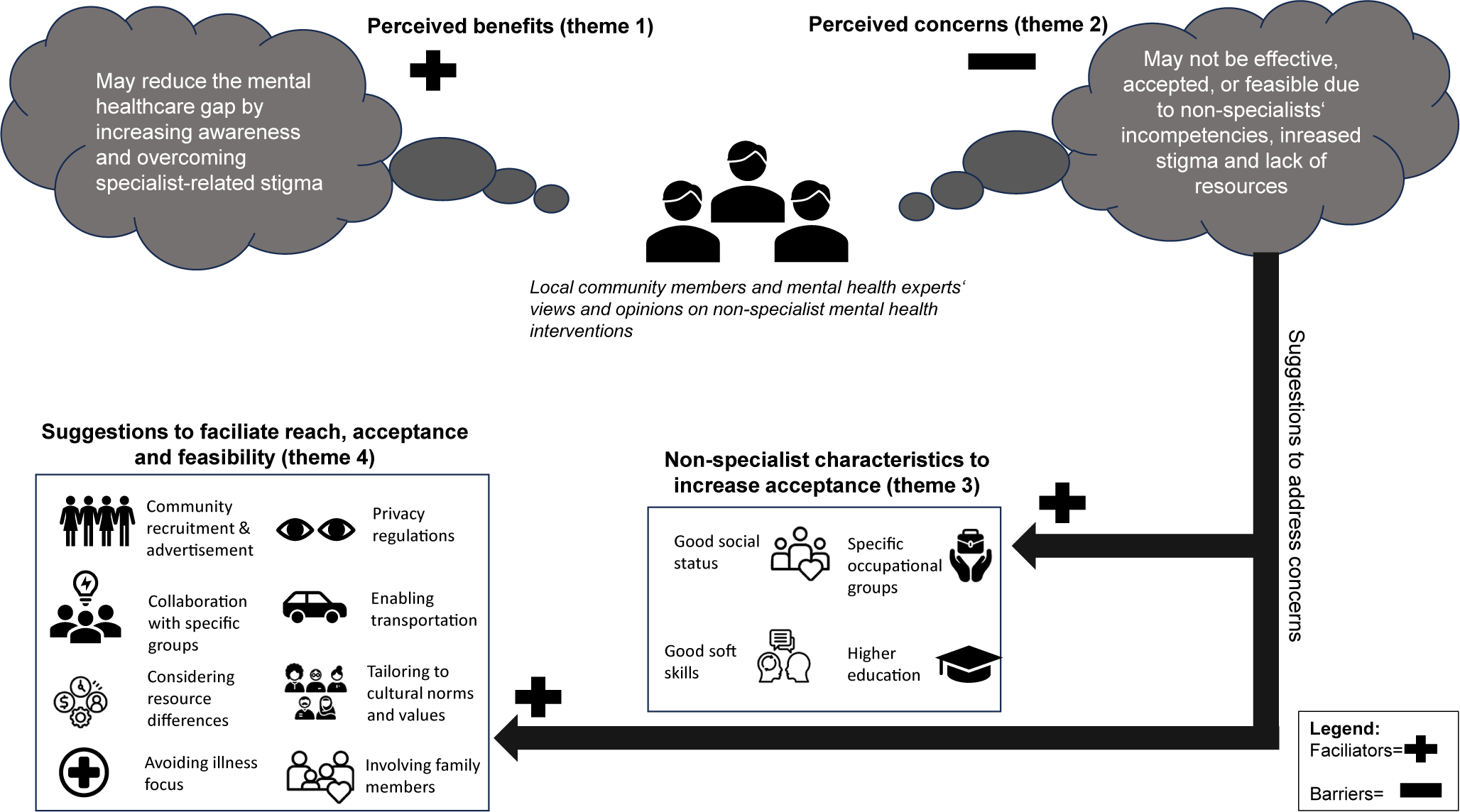
Non-specialist mental health interventions serve as a potential solution to reduce the mental healthcare gap in low- and middle-income countries, such as Sri Lanka. However, contextual factors often influence their effective implementation, reflecting a research-to-practice gap. This study, using a qualitative, participatory approach with local mental health workers (n = 9) and potential service users (n = 11), identifies anticipated barriers and facilitators to implementing these interventions while also exploring alternative strategies for reducing the mental healthcare gap in this context. Perceived barriers include concerns about effectiveness, acceptance and feasibility in the implementation of non-specialist mental health interventions (theme 1). The participants’ overall perception that these interventions are a beneficial strategy for reducing the mental healthcare gap was identified as a facilitating factor for implementation (theme 2). Further facilitators relate to important non-specialist characteristics (theme 3), including desirable traits and occupational backgrounds that may aid in increasing the acceptance of this cadre. Other suggestions relate to facilitating the reach, intervention acceptance and feasibility (theme 4). This study offers valuable insights to enhance the implementation process of non-specialist mental health interventions in low-and middle-income countries such as Sri Lanka.
The shoreline hazard posed by ocean long waves such as tsunamis and meteotsunamis critically depends on the fraction of energy transmitted across the shallow near-shore shelf. In linear setting, bathymetric inhomogeneities of length comparable to the incident wavelength act as a protective high-pass filter, reflecting long waves and allowing only shorter waves to pass through. Here, we show that, for weakly nonlinear waves, the transmitted energy flux fraction can significantly depend on the amplitude of the incoming wave. The basis of this mechanism is the formation of dispersive shock waves (DSWs), a salient feature of nonlinear evolution of long water waves, often observed in tidal bores and tsunami/meteotsunami evolution. Within the framework of the Boussinesq equations, we show that the DSWs efficiently transfer wave energy into the high wavenumber band, where reflection is negligible. This is phenomenologically similar to self-induced transparency in nonlinear optics: small amplitude long waves are reflected by the bathymetric inhomogeneity, while larger amplitude waves that develop DSWs blueshift into the transparency regime and pass through. We investigate this mechanism in a simplified setting that retains only the key processes of DSW disintegration and reflection, while the effects such as bottom dissipation and breaking are ignored. The results suggests that the phenomenon is a robust, order-one effect. In contrast, the increased transmission due to the growth of bound harmonics associated with the steepening of the wave is weak. The results of the simplified modelling are validated by simulations with the FUNWAVE-TVD Boussinesq model.
ADP-ribosylation (ADPRylation), which encompasses poly(ADP-ribosyl)ation and mono(ADP-ribosyl)ation, is an important post-translational modification catalysed by the poly(ADP-ribose) polymerase (PARP) enzyme superfamily. The process involves writers (PARPs) and erasers (ADP-ribose hydrolases), which work together to precisely regulate diverse cellular and molecular responses. Although the PARP-mediated synthesis of ADP-ribose (ADPr) has been well studied, ADPr degradation by degrading enzymes deserves further investigation. Nonetheless, recent studies have provided important new insights into the biology and functions of ADPr hydrolases. Notably, research has illuminated the significance of the poly(ADP-ribose) degradation pathway and its activation by the coordinated actions of poly(ADP-ribose) glycohydrolase and other ADPr hydrolases, which have been identified as key components of ADPRylation signalling networks. The degradation pathway has been proposed to play crucial roles in key cellular processes, such as DNA damage repair, chromatin dynamics, transcriptional regulation and cell death. A deep understanding of these ADPr erasing enzymes provides insights into the biological roles of ADPRylation in human health and disease aetiology and paves the road for the development of novel therapeutic strategies. This review article provides a summary of current knowledge about the biochemical and molecular functions of ADPr erasers and their physiological implications in human pathology.
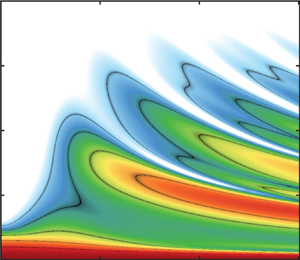
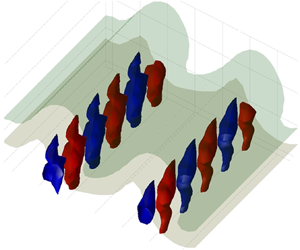
This work examines the control of cross-flow instabilities (CFIs) and laminar–turbulent transition on a swept wing, through the plasma-based base flow modification (BFM) technique. The effect of experimentally derived plasma body forces on the steady boundary layer base flow is explored through numerical simulations. Linear stability theory is subsequently used to predict the net BFM effect on CFIs. Based on these preliminary predictions, experiments are conducted in a low-turbulence wind tunnel where a spanwise-invariant plasma actuator is installed near the wing leading edge and operated at constant input voltage and frequency. Various flow parameters governing the plasma-based BFM technique are investigated, namely the Reynolds number, angle of attack and wavelength of excited stationary CFI modes. Stationary and travelling CFIs are quantified by planar particle image velocimetry while the transition topology and location are recorded by infrared thermography. The results confirm the stabilising effect of BFM on the swept-wing boundary layer. However, the plasma-based BFM is found to render the boundary layer more susceptible to travelling CFIs. In the presence of both net BFM effect and intrinsic plasma unsteady perturbations, the plasma-based BFM technique achieves transition delay with specific combinations of Reynolds number, angle of attack and wavelength of excited stationary CFI modes. The present findings provide insights into the fundamental principles of operating plasma actuators within the context of BFM control.
According to the Bayesian brain hypothesis, the brain can be viewed as a predictive machine, such that predictions (or expectations) affect how sensory inputs are integrated. This means that in many cases, affective responses may depend more on the subject’s perception of the experience (driven by expectations built on past experiences) rather than on the situation itself. Little research to date has applied this concept to affective states in animals. The aim of this paper is to explore how the Bayesian brain hypothesis can be used to understand the affective experiences of animals and to develop a basis for novel predictions regarding animal welfare. Drawing from the literature illustrating how predictive processes are important to human well-being, and are often impaired in affective disorders, we explore whether the Bayesian brain theories may help understanding animals’ affective responses and whether deficits in predictive processes may lead to previously unconsidered welfare consequences. We conclude that considering animals as predictive entities can improve our understanding of their affective responses, with implications for basic research and for how to provide animals a better life.
In the current study we evaluated an afterschool nutrition education programme, called Vetri Cooking Lab (VCL), for promoting healthy and diverse eating habits among at-risk children in the Greater Philadelphia area. To understand potential programme impacts, we conducted a longitudinal analysis of survey data collected before and after participation in VCL. Main study included cooking confidence, cooking knowledge, changes in dietary consumption behaviours, and changes in vegetable preferences. Participants included students in grades 3–11 enrolled in VCL during the 2018–19 school year at VCL sites (n = 60) throughout Philadelphia, PA, and Camden, NJ. Eligible participants completed surveys both before and after participating in the programme. We found that students’ confidence and knowledge increased (P < 0.001) after the cooking intervention. Knowledge and confidence were positively associated (r = 0.55; P < 0.001). Confidence was correlated with consumption behaviour changes (r = 0.18; P = 0.022). Confidence was positively associated with consumption changes in both our adjusted (OR = 1.81; P < 0.001) and unadjusted models (aOR = 1.88; P = 0.013). Compared to Black students, White students were more likely to report consumption changes (aOR = 5.83; P = 0.013). Hispanic/Latino participants and participants who spoke Spanish had nearly three times higher odds of consumption behaviour changes (Hispanic/Latino OR = 2.55; P = 0.007; Spanish OR = 3.04; P = 0.005). Student age and gender were not associated with behaviour changes. Our research demonstrates that programmes integrating practical cooking skills education along with nutrition, food, and cooking education can improve confidence and knowledge about healthy food choices amongst children driving an overall improvement in children’s eating habits.
The development of human rights law is generally presented as a story of progress. This progress is an evolution from an “old” legal regime that did not recognize individual rights to a “new” law (starting with the 1948 Universal Declaration of Human Rights (UDHR)) that anointed all individuals as possessors of internationally recognized rights against their states. Further, the definition of these rights has supposedly expanded over time, adding elements of complementary protection and extraterritorial application.
Cross-sectional studies have identified health risks associated with epigenetic aging. However, it is unclear whether these risks make epigenetic clocks ‘tick faster’ (i.e. accelerate biological aging). The current study examines concurrent and lagged within-person changes of a variety of health risks associated with epigenetic aging.
Methods
Individuals from the Great Smoky Mountains Study were followed from age 9 to 35 years. DNA methylation profiles were assessed from blood, at multiple timepoints (i.e. waves) for each individual. Health risks were psychiatric, lifestyle, and adversity factors. Concurrent (N = 539 individuals; 1029 assessments) and lagged (N = 380 individuals; 760 assessments) analyses were used to determine the link between health risks and epigenetic aging.
Results
Concurrent models showed that BMI (r = 0.15, PFDR < 0.01) was significantly correlated to epigenetic aging at the subject-level but not wave-level. Lagged models demonstrated that depressive symptoms (b = 1.67 months per symptom, PFDR = 0.02) in adolescence accelerated epigenetic aging in adulthood, also when models were fully adjusted for BMI, smoking, and cannabis and alcohol use.
Conclusions
Within-persons, changes in health risks were unaccompanied by concurrent changes in epigenetic aging, suggesting that it is unlikely for risks to immediately ‘accelerate’ epigenetic aging. However, time lagged analyses indicated that depressive symptoms in childhood/adolescence predicted epigenetic aging in adulthood. Together, findings suggest that age-related biological embedding of depressive symptoms is not instant but provides prognostic opportunities. Repeated measurements and longer follow-up times are needed to examine stable and dynamic contributions of childhood experiences to epigenetic aging across the lifespan.
Community inclusion in research may increase the quality and relevance of research, but doing so in an equitable way is complex. Novel approaches used to build engagement with historically marginalized communities in other sectors may have relevance in the clinical research sector.
Method:
To address long-standing gaps and challenges, a stakeholder group was convened to develop a theory of change (ToC), a structured method for obtaining input from stakeholders to enhance the design, conduct, and dissemination of research. The stakeholder group, comprised of Black residents within a metropolitan area, followed a structured monthly meeting schedule for 12 months to produce an outcome map, a model that formally defines aspects of research and engagement for this community.
Results:
Stakeholders reported significant improvements in trust in and engagement with research over the 12-month period, but not changes in health empowerment (individual, organizational, or community level). Through this convening process, a ToC and outcome map were developed with the focus of building bidirectional relationships between groups identifying as Black, Indigenous, and People of Color (BIPOC) and researchers in Boston, MA. Additionally, the group developed a community ownership model and guidelines for researchers to adhere to when utilizing the ToC and outcome map with BIPOC communities.
Conclusion:
Co-ownership of models to develop bidirectional relationships between researchers and community members, such as the ToC and outcome map, may advance and further the value and reach of community-based participatory research while increasing levels of trust and engagement in research.
Post-independence national historical writings have often been seen as a product of nationalist advocacy and modern nation-state formation. Moving beyond this perspective, this article considers how political leaders took a direct role in promoting different kinds and forms of collective historical thoughts to strengthen their leadership. Specifically, the article explores an active engagement of independent Cambodia's leaders such as Prince Sihanouk, Lon Nol, and Pol Pot, who independently saw national historical understanding as one's own monopolized source of power. It also discusses how different historical accounts in the country were shaped by, and kept up with, other important factors such as Cold War confrontations and regional and global historiographical trends, including “Modernist” and “Marxist” approaches. Discussing these factors helps us understand more critically national historical accounts, which were closely intertwined with specific socioreligious and political circumstances such as political rule and legitimacy, widespread public anxieties, and geopolitical tensions. It also sheds light on the substantial impact of state-imposed historical interpretations on society. As informed by the Cambodian case, this impact can be seen in the implementation of state projects stirred by certain kinds of historical understanding which consequently transformed the living conditions of thousands of people.
Inaccurate penicillin allergy labeling may deter healthcare providers from initiating appropriate therapy and contribute to antibiotic resistance. In a rural urgent care setting, the current practice of penicillin allergy labeling was evaluated using the PEN-FAST tool. The results confirm opportunity to further evaluate and improve current practice for allergy assessment.
Deploying novel COVID-19 therapies proved challenging amid rapidly evolving data, drug shortages, and conflicting guidelines. We established a remdesivir formulary restriction remdesivir to promote its evidence-based use. This intervention led to changes in remdesivir utilization patterns and cost savings. Formulary restrictions can play an important role in pandemic preparedness and response.
Synthesising knowledge on the health of marine ecosystems and the human activities is crucial to informing holistic marine management. In many coastal states, however, research is conducted in an ad hoc manner and rarely compiled into accessible repositories making it challenging for marine managers to identify knowledge gaps when allocating resources. Here we conduct a structured review of existing literature to identify the current state of marine and coastal knowledge in the Isles of Scilly, an oceanic archipelago in the UK. The archipelago's marine flora and fauna are biogeographically unique in the Northeast Atlantic, with a distinct mosaic of warm and cold temperate habitats and species and are also considered a rare example of a near pristine marine environment in the otherwise highly degraded Northeast Atlantic Ocean. We found 150 sources relating to the marine biodiversity and relevant human activities in the Isles of Scilly with increasing diversification of research topics in recent years. Sources however remain dominated by specific taxa and habitats, suggesting the Isles of Scilly would particularly benefit from future research into: (1) anthropogenic impacts associated with warming waters and intense seasonal vessel activity; (2) development of repeatable survey protocols that can underpin long-term, ecosystem-based monitoring and management (notably for reef and sediment habitats and the European spiny lobster); and (3) data gaps associated with marine teleost fish and elasmobranch communities including identifying core habitat. This review can therefore act as a baseline biological synthesis for the region and importantly, can inform future research priorities.
When organizations solve collective action problems or realize values, they do so by means of institutions. These are commonly regarded as self-stabilizing. Yet, they can also be subject to endogenous processes of decay, or so we argue. We explain this in terms of psychological and cultural processes, which can change even if the formal structures remain unchanged. One key implication is that the extent to which norms, values and ideals motivate individuals to comply with institutions is limited.
This article re-examines the race-populism nexus. It asks: Does populist political construction of the figure of “the people” necessarily involve processes of racial othering? We answer this question by revisiting three emblematic cases of populism. Each historical case illustrates a basic type of identity formation that can have an i) exclusionary, ii) ambivalent or iii) positive impact on racial justice. The first case is Thatcherism, whose “authoritarian populism” feeds on and reinforces anti-Black racial prejudice. The second is Peronism, which has an ambivalent relationship with race that promises to shed important new light on this classic case of populism. The third case is that of the American Populists, whose pioneering experiments in interracial politics remain an enduring illustration of populism’s progressive potential. In each case, we focus on a key document from that political regime/movement: the Conservative Manifesto of 1979, the Peronist Constitution of 1949, and the Omaha Platform of 1892. The article concludes that populism, as a logic of action, acts as a catalyst that intensifies whatever specific content is mobilised – racist and anti-racist content alike.
Whether the recent rise in adolescent self-reported depressive symptoms is influenced by changing reporting behavior is much debated. Most studies use observed sum scores to document trends but fail to assess whether their measures are invariant across time, a prerequisite for meaningful inferences about change. We examined whether measurement noninvariance, indicative of changing perceptions and reporting of symptoms, may influence the assessment of time trends in adolescent depressive symptoms.
Methods
Data stem from the nationwide repeated cross-sectional Ungdata-surveys (2010–2019) of 560 712 responses from adolescents aged 13 to 19 years. Depressive symptoms were measured with the Kandel and Davies' six-item Depressive Mood Inventory. Using structural equation modeling, we examined measurement invariance across time, gender and age, and estimated the consequences of noninvariance on cross-cohort time trends.
Results
Across most conditions, the instrument was found measurement invariant across time. The few noninvariant parameters detected had negligible impact on trend estimates. From 2014, latent mean depressive symptom scores increased among girls. For boys, a U shaped pattern was detected, whereby an initial decrease in symptoms was followed by an increase from 2016. Larger issues of noninvariance were found across age in girls and between genders.
Conclusions
From a measurement perspective, the notion that changed reporting of symptoms has been an important driver of secular trends in depressive symptoms was not supported. Thus, other causes of these trends should be considered. However, noninvariance across age (in girls) and gender highlights that depressive symptoms are not necessarily perceived equivalently from early to late adolescence and across gender.
In the transitioning era towards the COVID-19 endemic, there is still a sizable population that has never been vaccinated against COVID-19 in the Netherlands. This study employs Bayesian spatio-temporal modelling to assess the relative chances of COVID-19 vaccination uptake – first, second, and booster doses – both at the municipal and regional (public health services) levels. Incorporating ecological regression modelling to consider socio-demographic factors, our study unveils a diverse spatio-temporal distribution of vaccination uptake. Notably, the areas located in or around the Dutch main urban area (Randstad) and regions that are more religiously conservative exhibit a below-average likelihood of vaccination. Analysis at the municipal level within public health service regions indicates internal heterogeneity. Additionally, areas with a higher proportion of non-Western migrants consistently show lower chances of vaccination across vaccination dose scenarios. These findings highlight the need for tailored national and local vaccination strategies. Particularly, more regional efforts are essential to address vaccination disparities, especially in regions with elevated proportions of marginalized populations. This insight informs ongoing COVID-19 campaigns, emphasizing the importance of targeted interventions for optimizing health outcomes during the second booster phase, especially in regions with a relatively higher proportion of marginalized populations.