Refine listing
Actions for selected content:
142590 results in Open Access
Aortic valve function and aortic dimensions in obese and overweight patients with bicuspid aortic valve
-
- Journal:
- Cardiology in the Young / Volume 34 / Issue 12 / December 2024
- Published online by Cambridge University Press:
- 08 October 2024, pp. 2577-2582
-
- Article
-
- You have access
- Open access
- HTML
- Export citation
A review of “Democracy in a Hotter Time: Climate Change and Democratic Transformation” - D. Orr, (Ed.). (2023). Democracy in a hotter time: Climate change and democratic transformation. Cambridge, MT: MIT Press.
- Part of
-
- Journal:
- Australian Journal of Environmental Education / Volume 40 / Issue 3 / June 2024
- Published online by Cambridge University Press:
- 08 October 2024, pp. 643-646
-
- Article
-
- You have access
- Open access
- HTML
- Export citation
Lord Tony Sewell
-
- Journal:
- BJPsych Bulletin / Volume 48 / Issue 6 / December 2024
- Published online by Cambridge University Press:
- 08 October 2024, pp. 384-386
- Print publication:
- December 2024
-
- Article
-
- You have access
- Open access
- HTML
- Export citation
Review of the facilitators and barriers to adoption of biofortified foods and food products
-
- Journal:
- Nutrition Research Reviews / Volume 38 / Issue 1 / June 2025
- Published online by Cambridge University Press:
- 08 October 2024, pp. 371-392
-
- Article
-
- You have access
- Open access
- HTML
- Export citation
The Fight for Eternity in Paul Tillich's First World War Sermons
-
- Journal:
- The Journal of Ecclesiastical History / Volume 76 / Issue 2 / April 2025
- Published online by Cambridge University Press:
- 08 October 2024, pp. 380-396
- Print publication:
- April 2025
-
- Article
-
- You have access
- Open access
- HTML
- Export citation
Mapping the pathway and support offered to children with an intellectual disability referred to specialist mental health services in the UK
-
- Journal:
- BJPsych Bulletin / Volume 49 / Issue 3 / June 2025
- Published online by Cambridge University Press:
- 08 October 2024, pp. 157-162
- Print publication:
- June 2025
-
- Article
-
- You have access
- Open access
- HTML
- Export citation
Modelling contrast and feature inventory: the nature of [web] in French Sign Language
-
- Article
-
- You have access
- Open access
- HTML
- Export citation
Lunatic Asylums: Their Organisation and Management, by Charles Arthur Mercier
- Part of
-
- Journal:
- BJPsych Advances / Volume 32 / Issue 1 / January 2026
- Published online by Cambridge University Press:
- 08 October 2024, pp. 57-59
- Print publication:
- January 2026
-
- Article
-
- You have access
- Open access
- HTML
- Export citation
The problem of complex legislation
-
- Journal:
- Legal Theory / Volume 30 / Issue 1 / March 2024
- Published online by Cambridge University Press:
- 08 October 2024, pp. 1-21
-
- Article
-
- You have access
- Open access
- HTML
- Export citation
Speaking like a ‘good student’: Norms and deviations in contemporary upper secondary education in Denmark
-
- Journal:
- Nordic Journal of Linguistics / Volume 47 / Issue 3 / December 2024
- Published online by Cambridge University Press:
- 08 October 2024, pp. 303-327
-
- Article
-
- You have access
- Open access
- HTML
- Export citation
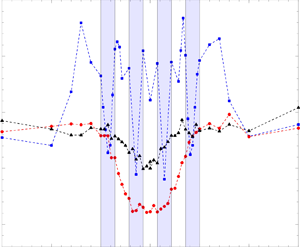
Experimental study of the turbulent characteristics in the wake of tall building clusters
-
- Journal:
- Flow: Applications of Fluid Mechanics / Volume 4 / 2024
- Published online by Cambridge University Press:
- 08 October 2024, E15
-
- Article
-
- You have access
- Open access
- HTML
- Export citation
-
This manuscript mainly explores the characteristics of turbulence quantities in the wake of tall building clusters of different array size ( $N$) and building spacing ( $W_S$) arranged in an aligned and regular grid in the flow direction. Velocity fields are measured in a wind tunnel using three-dimensional laser Doppler anemometry. Results show a delayed recovery of $u_{rms}$ and $v_{rms}$ (defined as the root-mean-square of the streamwise and lateral velocities, respectively) in the wake flow compared with the mean flow. Based on the turbulent fluctuations, the extents of the near-, transition- and far-wake regions in Mishra et al. (Boundary-Layer Meteorol., vol. 189, 2023, pp. 1–25) are revisited. In the near wake, we observe a significant reduction in $u_{rms}$ and $v_{rms}$ in the wake of a $4\times 4$ cluster compared with that of a single building. In the transition region, the turbulence intensity magnitudes within the cluster reduce to below their free-stream counterpart; this reduction is associated with the slowly varying nature of the normalised wake deficit in the streamwise direction. The recovery of the root mean square in the far-wake region is observed for $x \geq 2.5W_A$ (where $W_A$ is the width of the cluster), with the mutual interaction of the wakes formed behind the individual buildings reducing with an increase in $W_S$, resulting in a faster recovery of the turbulent fluctuations. Finally, wavelet analysis suggests the existence of multi-scale vortex-shedding frequencies downwind of tall building clusters.


Documented penicillin allergy and beta-lactam antibiotic use in Massachusetts long-term care facilities: opportunities for penicillin allergy delabeling
-
- Journal:
- Antimicrobial Stewardship & Healthcare Epidemiology / Volume 4 / Issue 1 / 2024
- Published online by Cambridge University Press:
- 08 October 2024, e166
-
- Article
-
- You have access
- Open access
- HTML
- Export citation
Collateral kids: Weighing the lives of children in targeting
-
- Journal:
- Leiden Journal of International Law / Volume 37 / Issue 4 / December 2024
- Published online by Cambridge University Press:
- 08 October 2024, pp. 1018-1038
-
- Article
-
- You have access
- Open access
- HTML
- Export citation
Neurological Birdsong By A. J. Lees. Mirabeau Press. 2024. £7.85 (pb). 134 pp. ISBN 9781735705569
-
- Journal:
- BJPsych Bulletin / Volume 49 / Issue 3 / June 2025
- Published online by Cambridge University Press:
- 08 October 2024, pp. 216-217
- Print publication:
- June 2025
-
- Article
-
- You have access
- Open access
- HTML
- Export citation
Promoting responsive care and early learning practices among caregivers of children 0–23 months in the Kyrgyz Republic: findings from integrating a counselling intervention with nutrition services
- Part of
-
- Journal:
- Public Health Nutrition / Volume 27 / Issue 1 / 2024
- Published online by Cambridge University Press:
- 08 October 2024, e202
-
- Article
-
- You have access
- Open access
- HTML
- Export citation
Repulsive guidance molecules b (RGMb): molecular mechanism, function and role in diseases
-
- Journal:
- Expert Reviews in Molecular Medicine / Volume 26 / 2024
- Published online by Cambridge University Press:
- 08 October 2024, e24
-
- Article
-
- You have access
- Open access
- HTML
- Export citation
Biological properties of vitamin B12
-
- Journal:
- Nutrition Research Reviews / Volume 38 / Issue 1 / June 2025
- Published online by Cambridge University Press:
- 08 October 2024, pp. 338-370
-
- Article
-
- You have access
- Open access
- HTML
- Export citation
Oxygen saturation measurement in cyanotic heart disease with the Apple watch
-
- Journal:
- Cardiology in the Young / Volume 34 / Issue 9 / September 2024
- Published online by Cambridge University Press:
- 08 October 2024, pp. 1971-1973
-
- Article
-
- You have access
- Open access
- HTML
- Export citation
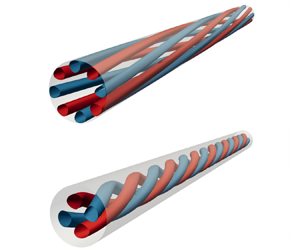
Energy-based characterisation of large-scale coherent structures in turbulent pipe flows
-
- Journal:
- Journal of Fluid Mechanics / Volume 996 / 10 October 2024
- Published online by Cambridge University Press:
- 08 October 2024, A45
-
- Article
-
- You have access
- Open access
- HTML
- Export citation
-
Large-scale coherent structures in incompressible turbulent pipe flow are studied for a wide range of Reynolds numbers ( $Re_\tau =180, 550, 1000, 2000$ and $5200$). Employing the Karhunen–Loève decomposition and a novel approach based on the Voronoi diagram, we identify and classify statistically coherent structures based on their location, dimensions and $Re_{\tau }$. With increasing $Re_{\tau }$, two distinct classes of structures become more energetic, namely wall-attached and detached eddies. The Voronoi methodology is shown to delineate these two classes without the need for specific criteria or thresholds. At the highest $Re_{\tau }$, the attached eddies scale linearly with the wall-normal distance with a slope of approximately $l_y\sim 1.2y/R$, while the detached eddies remain constant at the size of $l_y \approx 0.26R$, with a progressive shift towards the pipe centre. We extract these two classes of structures and describe their spatial characteristics, including radial size, helix angle and azimuthal self-similarity. The spatial distribution could help explain the differences in mean velocity between pipe and channel flows, as well as in modelling large and very-large-scale motions (LSM and VLSM). In addition, a comprehensive description is provided for both wall-attached and detached structures in terms of LSM and VLSM.


Menu provision in a young offenders institution, comparison with dietary guidelines, and previous menu allocation: a cross-sectional nutritional analysis
-
- Journal:
- Journal of Nutritional Science / Volume 13 / 2024
- Published online by Cambridge University Press:
- 08 October 2024, e55
-
- Article
-
- You have access
- Open access
- HTML
- Export citation
