Refine search
Actions for selected content:
168 results
Global Hopf bifurcation and connected components in a delayed predator–prey model
- Part of
-
- Journal:
- European Journal of Applied Mathematics , First View
- Published online by Cambridge University Press:
- 22 April 2026, pp. 1-22
-
- Article
-
- You have access
- Open access
- HTML
- Export citation
On the dynamics of a diffusive SEIRS epidemic model
- Part of
-
- Journal:
- European Journal of Applied Mathematics , First View
- Published online by Cambridge University Press:
- 13 April 2026, pp. 1-45
-
- Article
-
- You have access
- Open access
- HTML
- Export citation
-
This work investigates the dynamics of positive classical solutions to a diffusive susceptible-exposed-infected-recovered-susceptible epidemic model with a mass-action incidence mechanism in spatially heterogeneous environments. Under minimal assumptions on the initial data, the global existence of classical solutions is established. Moreover, the eventual boundedness of these solutions is proved when either the spatial domain has dimension five or lower or the susceptible and exposed subpopulations share the same diffusion rate. Next, we define the basic reproduction number, $\mathcal{R}_0$, and demonstrate that the disease-free equilibrium is globally stable when $\mathcal{R}_0$ is sufficiently small. However, due to the complex interaction between population movement and spatial variation in transmission rates, we find that the disease may persist even when $\mathcal{R}_0$ is slightly less than one. In such cases, we show that the system admits at least two endemic equilibrium (EE) solutions, an outcome not observed under the frequency-dependent incidence mechanism. These results highlight the significant influence of the transmission mechanism on disease dynamics. Furthermore, we examine the spatial profiles of the EE solutions when diffusion rates are small. Our analysis suggests that limiting the movement of the susceptible population can significantly reduce disease prevalence, provided that the total population remains below a specific threshold. In contrast, restricting the movement of the infected, exposed, or recovered populations alone may not eradicate the disease. Overall, our findings provide important insights into the spatial dynamics of infectious diseases and may offer guidance for developing and implementing effective containment strategies.


Global dynamics of a renewal equation for size-structured population models
- Part of
-
- Journal:
- Proceedings of the Royal Society of Edinburgh. Section A: Mathematics , First View
- Published online by Cambridge University Press:
- 26 March 2026, pp. 1-20
-
- Article
- Export citation
-
We study a size-structured tree growth model from [4–6], described by the nonlinear renewal equation $\phi(t) = \mathfrak{F} \phi_t, \ \phi_t \in L^1_\rho(\mathbb{R}_{-}),$ with reproduction, death, and growth rates $\beta$, $\mu$, and $g$. We prove that, under mild conditions on these rates, the equation generates a semiflow in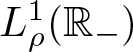 $L^1_\rho(\mathbb{R}_{-})$ that is permanent and possesses a compact global attractor $\mathcal{A}$. If $\beta$ is monotone, $\mathcal{A}$ reduces to a single asymptotically stable equilibrium attracting all compact sets with positive initial data. Adapting an approach from [21], originally developed for simpler renewal equations, we investigate stability and persistence in this more complex setting via the one-dimensional recurrence $b_{n+1} = \mathfrak{F} b_n,$ thereby complementing the functional-analytic framework of [13].


On asymptotic behavior of time of extinction of critical bisexual branching process in random environment
- Part of
-
- Journal:
- Journal of Applied Probability , First View
- Published online by Cambridge University Press:
- 02 March 2026, pp. 1-13
-
- Article
- Export citation
-
We consider a critical bisexual branching process in a random environment generated by independent and identically distributed random variables. Assuming that the process starts with a large number of pairs N, we prove that its extinction time is of order $\ln^2 N$. Interestingly, this result is valid for a general class of mating functions. Among these are the functions describing the monogamous and polygamous behavior of couples, as well as the function reducing the bisexual branching process to the simple one.

Threshold dynamics of a time-periodic SIS model with anomalous diffusion in heterogeneous environments
- Part of
-
- Journal:
- Proceedings of the Royal Society of Edinburgh. Section A: Mathematics , First View
- Published online by Cambridge University Press:
- 24 February 2026, pp. 1-28
-
- Article
- Export citation
Periodic dynamics in a time-switching advection-diffusion model for competing Aedes mosquitoes
- Part of
-
- Journal:
- European Journal of Applied Mathematics , First View
- Published online by Cambridge University Press:
- 16 February 2026, pp. 1-21
-
- Article
-
- You have access
- Open access
- HTML
- Export citation
Propagation dynamics of time-dependent reaction-diffusion equations under climate change in an infinite cylinder
- Part of
-
- Journal:
- European Journal of Applied Mathematics , First View
- Published online by Cambridge University Press:
- 19 December 2025, pp. 1-22
-
- Article
-
- You have access
- Open access
- HTML
- Export citation
-
In this paper, we consider a reaction-diffusion equation that models the time-almost periodic response to climate change within a straight, infinite cylindrical domain. The shifting edge of the habitat is characterised by a time-almost periodic function, reflecting the varying pace of environmental changes. Note that the principal spectral theory is an important role to study the dynamics of reaction-diffusion equations in time heterogeneous environment. Initially, for time-almost periodic parabolic equations in finite cylindrical domains, we develop the principal spectral theory of such equations with mixed Dirichlet–Neumann boundary conditions. Subsequently, we demonstrate that the approximate principal Lyapunov exponent serves as a definitive threshold for species persistence versus extinction. Then, the existence, exponential decay and stability of the forced wave solutions $U(t,x_{1},y)=V\left (t,x_{1}-\int ^{t}_{0}c(s)ds,y\right )$ are established. Additionally, we analyse how fluctuations in the shifting speed affect the approximate top Lyapunov exponent.

Ageing and mortality of persons with HIV: a novel data-driven approach
- Part of
-
- Journal:
- European Journal of Applied Mathematics , First View
- Published online by Cambridge University Press:
- 28 November 2025, pp. 1-27
-
- Article
-
- You have access
- Open access
- HTML
- Export citation
Impact of birth pulse and environment shift on population survival and propagation
- Part of
-
- Journal:
- Canadian Journal of Mathematics , First View
- Published online by Cambridge University Press:
- 17 October 2025, pp. 1-27
-
- Article
- Export citation
Two-type branching processes with immigration, and the structured coalescents
- Part of
-
- Journal:
- Journal of Applied Probability / Volume 63 / Issue 1 / March 2026
- Published online by Cambridge University Press:
- 29 September 2025, pp. 32-60
- Print publication:
- March 2026
-
- Article
- Export citation
BIFURCATION ANALYSIS AND FAST APPROACH OF A LESLIE-TYPE PREY–PREDATOR MODEL INVOLVING ALLEE EFFECT
- Part of
-
- Journal:
- The ANZIAM Journal / Volume 67 / 2025
- Published online by Cambridge University Press:
- 22 August 2025, e29
-
- Article
-
- You have access
- Open access
- HTML
- Export citation
Periodic dynamics of a general switching dynamical system
- Part of
-
- Journal:
- European Journal of Applied Mathematics , First View
- Published online by Cambridge University Press:
- 08 August 2025, pp. 1-15
-
- Article
-
- You have access
- Open access
- HTML
- Export citation
Spatio-temporal dynamics of a lattice prey–predator system with non-local diffusion in a periodic habitat
- Part of
-
- Journal:
- Proceedings of the Royal Society of Edinburgh. Section A: Mathematics , First View
- Published online by Cambridge University Press:
- 31 March 2025, pp. 1-43
-
- Article
- Export citation
Impact of prey-taxis on a harvested intraguild predation predator–prey model
- Part of
-
- Journal:
- European Journal of Applied Mathematics / Volume 36 / Issue 6 / December 2025
- Published online by Cambridge University Press:
- 10 March 2025, pp. 1183-1220
-
- Article
-
- You have access
- Open access
- HTML
- Export citation
An elliptic operator with a nonlocal term: maximum principle, principal eigenvalue, and applications to a logistic equation with indefinite weight
- Part of
-
- Journal:
- Proceedings of the Royal Society of Edinburgh. Section A: Mathematics , First View
- Published online by Cambridge University Press:
- 24 February 2025, pp. 1-38
-
- Article
- Export citation
Global well-posedness and Turing–Hopf bifurcation of prey-taxis systems with hunting cooperation
- Part of
-
- Journal:
- European Journal of Applied Mathematics / Volume 36 / Issue 6 / December 2025
- Published online by Cambridge University Press:
- 24 February 2025, pp. 1121-1147
-
- Article
-
- You have access
- Open access
- HTML
- Export citation
Fractional order for the transmission dynamics of coffee berry diseases (CBD)
- Part of
-
- Journal:
- European Journal of Applied Mathematics / Volume 36 / Issue 4 / August 2025
- Published online by Cambridge University Press:
- 20 November 2024, pp. 879-896
-
- Article
-
- You have access
- Open access
- HTML
- Export citation
Hopf bifurcations for a delayed discrete single population patch model in advective environments
- Part of
-
- Journal:
- European Journal of Applied Mathematics / Volume 36 / Issue 4 / August 2025
- Published online by Cambridge University Press:
- 11 November 2024, pp. 705-737
-
- Article
-
- You have access
- Open access
- HTML
- Export citation
Travelling wavefronts for the Belousov–Zhabotinsky system with non-local delayed interaction
- Part of
-
- Journal:
- European Journal of Applied Mathematics / Volume 36 / Issue 4 / August 2025
- Published online by Cambridge University Press:
- 10 October 2024, pp. 738-774
-
- Article
-
- You have access
- Open access
- HTML
- Export citation
Asymptotic profiles of a nonlocal dispersal SIS epidemic model with saturated incidence
- Part of
-
- Journal:
- Proceedings of the Royal Society of Edinburgh. Section A: Mathematics / Volume 156 / Issue 2 / April 2026
- Published online by Cambridge University Press:
- 14 May 2024, pp. 364-396
- Print publication:
- April 2026
-
- Article
- Export citation
