Refine search
Actions for selected content:
28 results
A fixed-point theorem for face maps, or deletion-tolerant random finite sets
- Part of
-
- Journal:
- Mathematical Proceedings of the Cambridge Philosophical Society , First View
- Published online by Cambridge University Press:
- 26 March 2026, pp. 1-22
-
- Article
- Export citation
-
We establish a fixed-point theorem for the face maps that consist in deleting the ith entry of an ordered set. Furthermore, we show that there exists random finite sets of integers that are almost invariant under such deletions. Consequences for various monoids of order-preserving transformations of $\mathbf{N}$ are discussed in an appendix.

Classifying the Polish semigroup topologies on the symmetric inverse monoid
- Part of
-
- Journal:
- Proceedings of the Edinburgh Mathematical Society , First View
- Published online by Cambridge University Press:
- 06 March 2026, pp. 1-30
-
- Article
-
- You have access
- Open access
- HTML
- Export citation
-
We classify all Polish semigroup topologies on the symmetric inverse monoid $I_{\mathbb N}$ on the natural numbers $\mathbb N$. This result answers a question of Elliott et al. There are countably infinitely many such topologies. Under containment, these Polish semigroup topologies form a join-semilattice with infinite descending chains, no infinite ascending chains, and arbitrarily large finite anti-chains. Also, we show that the monoid $I_{\mathbb N}$ endowed with any second countable $T_1$ semigroup topology is homeomorphic to the Baire space $\mathbb N^{\mathbb N}$.


A NOTE ON MAXIMAL ELEMENTS IN NATURALLY ORDERED SEMIGROUPS OF TRANSFORMATIONS WITH AN INVARIANT SET
- Part of
-
- Journal:
- Bulletin of the Australian Mathematical Society / Volume 113 / Issue 1 / February 2026
- Published online by Cambridge University Press:
- 28 April 2025, pp. 135-139
- Print publication:
- February 2026
-
- Article
- Export citation
-
In this paper, we characterise all maximal elements in the semigroup $S(X,Y)=\{f\in T(X) : f(Y)\subseteq Y\}$ with respect to the natural partial order. Our results correct an error in the work of Sun and Wang [‘Natural partial order in semigroups of transformations with invariant set’, Bull. Aust. Math. Soc. 87(1) (2013), 94–107].
Reversibility and transitivity of semigroup actions on homogeneous spaces
- Part of
-
- Journal:
- Canadian Journal of Mathematics / Volume 78 / Issue 2 / April 2026
- Published online by Cambridge University Press:
- 24 February 2025, pp. 355-374
- Print publication:
- April 2026
-
- Article
- Export citation
-
This paper studies reversibility and transitivity of semigroups acting on homogeneous spaces. Properties of the reversor set of a subsemigroup acting on homogeneous spaces are presented. Let G be a topological group and L a subgroup of G. Assume that S is a subsemigroup of G with nonempty interior. It is presented a study of the reversibility of the S-action on $G/L$ in terms of the actions of S and L on homogeneous spaces of G. The results relate the reversibility and the transitivity of S in $G/L$ with the minimality of the action of L on homogeneous spaces of G. In addition, sufficient conditions for S to be right reversible in G if S is reversible in $G/L$ are presented.


MAXIMAL SUBSEMIGROUPS OF INFINITE SYMMETRIC GROUPS
- Part of
-
- Journal:
- Bulletin of the Australian Mathematical Society / Volume 110 / Issue 2 / October 2024
- Published online by Cambridge University Press:
- 29 January 2024, pp. 324-337
- Print publication:
- October 2024
-
- Article
- Export citation
-
Brazil et al. [‘Maximal subgroups of infinite symmetric groups’, Proc. Lond. Math. Soc. (3) 68(1) (1994), 77–111] provided a new family of maximal subgroups of the symmetric group $G(X)$ defined on an infinite set X. It is easy to see that, in this case, $G(X)$ contains subsemigroups that are not groups, but nothing is known about nongroup maximal subsemigroups of $G(X)$. We provide infinitely many examples of such semigroups.


ON THE ZARISKI TOPOLOGY ON ENDOMORPHISM MONOIDS OF OMEGA-CATEGORICAL STRUCTURES
- Part of
-
- Journal:
- The Journal of Symbolic Logic / Volume 91 / Issue 1 / March 2026
- Published online by Cambridge University Press:
- 31 October 2023, pp. 317-335
- Print publication:
- March 2026
-
- Article
-
- You have access
- Open access
- HTML
- Export citation
-
The endomorphism monoid of a model-theoretic structure carries two interesting topologies: on the one hand, the topology of pointwise convergence induced externally by the action of the endomorphisms on the domain via evaluation; on the other hand, the Zariski topology induced within the monoid by (non-)solutions to equations. For all concrete endomorphism monoids of $\omega $-categorical structures on which the Zariski topology has been analysed thus far, the two topologies were shown to coincide, in turn yielding that the pointwise topology is the coarsest Hausdorff semigroup topology on those endomorphism monoids.
We establish two systematic reasons for the two topologies to agree, formulated in terms of the model-complete core of the structure. Further, we give an example of an $\omega $-categorical structure on whose endomorphism monoid the topology of pointwise convergence and the Zariski topology differ, answering a question of Elliott, Jonušas, Mitchell, Péresse, and Pinsker.


Tame or wild Toeplitz shifts
- Part of
-
- Journal:
- Ergodic Theory and Dynamical Systems / Volume 44 / Issue 5 / May 2024
- Published online by Cambridge University Press:
- 18 August 2023, pp. 1379-1417
- Print publication:
- May 2024
-
- Article
-
- You have access
- Open access
- HTML
- Export citation
ON MAXIMAL SUBGROUPS OF IDEMPOTENT-GENERATED SEMIGROUPS ASSOCIATED WITH BIORDERED SETS
- Part of
-
- Journal:
- Bulletin of the Australian Mathematical Society / Volume 105 / Issue 2 / April 2022
- Published online by Cambridge University Press:
- 05 January 2022, pp. 341-343
- Print publication:
- April 2022
-
- Article
-
- You have access
- HTML
- Export citation
ORIENTATION OF PIECEWISE POWERS OF A MINIMAL HOMEOMORPHISM
- Part of
-
- Journal:
- Journal of the Australian Mathematical Society / Volume 113 / Issue 2 / October 2022
- Published online by Cambridge University Press:
- 15 November 2021, pp. 226-256
-
- Article
- Export citation
-
We show that, given a compact minimal system $(X,g)$ and an element h of the topological full group $\tau [g]$ of g, the infinite orbits of h admit a locally constant orientation with respect to the orbits of g. We use this to obtain a clopen partition of $(X,G)$ into minimal and periodic parts, where G is any virtually polycyclic subgroup of $\tau [g]$. We also use the orientation of orbits to give a refinement of the index map and to describe the role in $\tau [g]$ of the submonoid generated by the induced transformations of g. Finally, we consider the problem, given a homeomorphism h of the Cantor space X, of determining whether or not there exists a minimal homeomorphism g of X such that $h \in \tau [g]$.


INJECTIVE LINEAR TRANSFORMATIONS WITH EQUAL GAP AND DEFECT
- Part of
-
- Journal:
- Bulletin of the Australian Mathematical Society / Volume 105 / Issue 1 / February 2022
- Published online by Cambridge University Press:
- 18 May 2021, pp. 106-116
- Print publication:
- February 2022
-
- Article
- Export citation
-
Let V be an infinite-dimensional vector space over a field F and let $I(V)$ be the inverse semigroup of all injective partial linear transformations on V. Given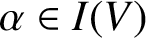 $\alpha \in I(V)$, we denote the domain and the range of $\alpha $ by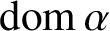 ${\mathop {\textrm {dom}}}\,\alpha $ and ${\mathop {\textrm {im}}}\,\alpha $, and we call the cardinals $g(\alpha )={\mathop {\textrm {codim}}}\,{\mathop {\textrm {dom}}}\,\alpha $ and $d(\alpha )={\mathop {\textrm {codim}}}\,{\mathop {\textrm {im}}}\,\alpha $ the ‘gap’ and the ‘defect’ of $\alpha $. We study the semigroup $A(V)$ of all injective partial linear transformations with equal gap and defect and characterise Green’s relations and ideals in $A(V)$. This is analogous to work by Sanwong and Sullivan [‘Injective transformations with equal gap and defect’, Bull. Aust. Math. Soc. 79 (2009), 327–336] on a similarly defined semigroup for the set case, but we show that these semigroups are never isomorphic.


The Ellis semigroup of certain constant-length substitutions
- Part of
-
- Journal:
- Ergodic Theory and Dynamical Systems / Volume 41 / Issue 3 / March 2021
- Published online by Cambridge University Press:
- 06 December 2019, pp. 935-960
- Print publication:
- March 2021
-
- Article
- Export citation
DISTALITY OF CERTAIN ACTIONS ON $p$-ADIC SPHERES
- Part of
-
- Journal:
- Journal of the Australian Mathematical Society / Volume 109 / Issue 2 / October 2020
- Published online by Cambridge University Press:
- 29 July 2019, pp. 250-261
-
- Article
-
- You have access
- Export citation
-
Consider the action of $\operatorname{GL}(n,\mathbb{Q}_{p})$ on the $p$-adic unit sphere ${\mathcal{S}}_{n}$ arising from the linear action on $\mathbb{Q}_{p}^{n}\setminus \{0\}$. We show that for the action of a semigroup $\mathfrak{S}$ of $\operatorname{GL}(n,\mathbb{Q}_{p})$ on ${\mathcal{S}}_{n}$, the following are equivalent: (1) $\mathfrak{S}$ acts distally on ${\mathcal{S}}_{n}$; (2) the closure of the image of $\mathfrak{S}$ in $\operatorname{PGL}(n,\mathbb{Q}_{p})$ is a compact group. On ${\mathcal{S}}_{n}$, we consider the ‘affine’ maps $\overline{T}_{a}$ corresponding to $T$ in $\operatorname{GL}(n,\mathbb{Q}_{p})$ and a nonzero $a$ in $\mathbb{Q}_{p}^{n}$ satisfying $\Vert T^{-1}(a)\Vert _{p}<1$. We show that there exists a compact open subgroup $V$, which depends on $T$, such that $\overline{T}_{a}$ is distal for every nonzero $a\in V$ if and only if $T$ acts distally on ${\mathcal{S}}_{n}$. The dynamics of ‘affine’ maps on $p$-adic unit spheres is quite different from that on the real unit spheres.


GRASSMANNIAN SEMIGROUPS AND THEIR REPRESENTATIONS
- Part of
-
- Journal:
- Journal of the Australian Mathematical Society / Volume 104 / Issue 3 / June 2018
- Published online by Cambridge University Press:
- 27 March 2018, pp. 308-337
-
- Article
-
- You have access
- Export citation
-
The set of row reduced matrices (and of echelon form matrices) is closed under multiplication. We show that any system of representatives for the $\text{Gl}_{n}(\mathbb{K})$ action on the $n\times n$ matrices, which is closed under multiplication, is necessarily conjugate to one that is in simultaneous echelon form. We call such closed representative systems Grassmannian semigroups. We study internal properties of such Grassmannian semigroups and show that they are algebraic semigroups and admit gradings by the finite semigroup of partial order preserving permutations, with components that are naturally in one–one correspondence with the Schubert cells of the total Grassmannian. We show that there are infinitely many isomorphism types of such semigroups in general, and two such semigroups are isomorphic exactly when they are semiconjugate in $M_{n}(\mathbb{K})$ . We also investigate their representation theory over an arbitrary field, and other connections with multiplicative structures on Grassmannians and Young diagrams.


Four notions of conjugacy for abstract semigroups
- Part of
-
- Journal:
- Proceedings of the Royal Society of Edinburgh. Section A: Mathematics / Volume 147 / Issue 6 / December 2017
- Published online by Cambridge University Press:
- 20 September 2017, pp. 1169-1214
- Print publication:
- December 2017
-
- Article
- Export citation
THE IDEMPOTENT-GENERATED SUBSEMIGROUP OF THE KAUFFMAN MONOID
- Part of
-
- Journal:
- Glasgow Mathematical Journal / Volume 59 / Issue 3 / September 2017
- Published online by Cambridge University Press:
- 01 March 2017, pp. 673-683
-
- Article
-
- You have access
- Export citation
EMBEDDING IN A FINITE 2-GENERATOR SEMIGROUP
- Part of
-
- Journal:
- Glasgow Mathematical Journal / Volume 59 / Issue 1 / January 2017
- Published online by Cambridge University Press:
- 10 June 2016, pp. 61-75
-
- Article
-
- You have access
- Export citation
Gröbner bases for quadratic algebras of skew type
- Part of
-
- Journal:
- Proceedings of the Edinburgh Mathematical Society / Volume 55 / Issue 2 / June 2012
- Published online by Cambridge University Press:
- 16 March 2012, pp. 387-401
-
- Article
-
- You have access
- Export citation
-
Non-degenerate monoids of skew type are considered. This is a class of monoids S defined by n generators and
 quadratic relations of certain type, which includes the class of monoids yielding set-theoretic solutions of the quantum Yang–Baxter equation, also called binomial monoids (or monoids of I-type with square-free defining relations). It is shown that under any degree-lexicographic order on the associated free monoid FMn. of rank n the set of normal forms of elements of S is a regular language in FMn. As one of the key ingredients of the proof, it is shown that an identity of the form xN yN = yN xN holds in S. The latter is derived via an investigation of the structure of S viewed as a semigroup of matrices over a field. It also follows that the semigroup algebra K[S] is a finite module over a finitely generated commutative subalgebra of the form K[A] for a submonoid A of S.
 quadratic relations of certain type, which includes the class of monoids yielding set-theoretic solutions of the quantum Yang–Baxter equation, also called binomial monoids (or monoids of I-type with square-free defining relations). It is shown that under any degree-lexicographic order on the associated free monoid FM
Inverse semigroups determined by their partial automorphism monoids
- Part of
-
- Journal:
- Journal of the Australian Mathematical Society / Volume 81 / Issue 2 / October 2006
- Published online by Cambridge University Press:
- 09 April 2009, pp. 185-198
-
- Article
-
- You have access
- Export citation
Growth of linear semigroups
- Part of
-
- Journal:
- Journal of the Australian Mathematical Society. Series A. Pure Mathematics and Statistics / Volume 60 / Issue 1 / February 1996
- Published online by Cambridge University Press:
- 09 April 2009, pp. 18-30
-
- Article
-
- You have access
- Export citation
NATURALLY ORDERED TRANSFORMATION SEMIGROUPS PRESERVING AN EQUIVALENCE
- Part of
-
- Journal:
- Bulletin of the Australian Mathematical Society / Volume 78 / Issue 1 / August 2008
- Published online by Cambridge University Press:
- 01 August 2008, pp. 117-128
- Print publication:
- August 2008
-
- Article
-
- You have access
- Export citation
-
Let 𝒯X be the full transformation semigroup on a set X and E be a nontrivial equivalence on X. Write
 then TE(X) is a subsemigroup of 𝒯X. In this paper, we endow TE(X) with the so-called natural order and determine when two elements of TE(X) are related under this order, then find out elements of TE(X) which are compatible with ≤ on TE(X). Also, the maximal and minimal elements and the covering elements are described.
