Refine search
Actions for selected content:
26 results
LINEAR INDEPENDENCE OF QUANTUM TRANSLATES
- Part of
-
- Journal:
- Bulletin of the Australian Mathematical Society , First View
- Published online by Cambridge University Press:
- 26 January 2026, pp. 1-7
-
- Article
- Export citation
-
If A is in the p-Schatten class on ${\mathbb {R}}^n$, $1\leq p \leq {4n}/{(2n-1)}$, then the quantum translates of A are linearly independent. Moreover, there exists a nonzero operator in the p-Schatten class on ${\mathbb {R}}^n$, $p>{4n}/{(2n-1)}$, whose quantum translates are linearly dependent.


Signature characters of invariant Hermitian forms on irreducible Verma modules of singular infinitesimal character and Hall–Littlewood polynomials
- Part of
-
- Journal:
- Canadian Mathematical Bulletin , First View
- Published online by Cambridge University Press:
- 09 January 2026, pp. 1-23
-
- Article
-
- You have access
- Open access
- HTML
- Export citation
-
The Unitary Dual Problem is one of the most important open problems in mathematics: classify the irreducible unitary representations of a given group. It is known for a real reductive Lie group that $A_{\mathfrak {q}}(\lambda )$ modules are unitary and that any unitarizable Harish-Chandra module of strongly regular infinitesimal character is isomorphic to an $A_{\mathfrak {q}}(\lambda )$. Thus, it is of interest to study representations of singular infinitesimal character. For a compact real form and any alcove of the form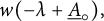 $w(-\lambda + \underline {A}_\circ ),$ where $\lambda $ is dominant (possibly singular) and $\underline {A}_\circ $ is the dominant fundamental alcove, the signature character of the canonical invariant Hermitian form on the irreducible Verma module of infinitesimal character in that alcove is the “negative” of a Hall–Littlewood polynomial summand at $q=-1$ times a version of the Weyl denominator. (Signature characters for other real forms and alcoves of other forms may also be expressed using Hall–Littlewood polynomial summands.) Such formulas give hope that the Unitary Dual Problem is tractable in the singular case.


Density and unitarity of the Burau representation from a non-semisimple TQFT
- Part of
-
- Journal:
- Canadian Journal of Mathematics , First View
- Published online by Cambridge University Press:
- 28 July 2025, pp. 1-29
-
- Article
- Export citation
The planar 3-colorable subgroup ε of Thompson’s group F and its even part
- Part of
-
- Journal:
- Proceedings of the Edinburgh Mathematical Society / Volume 68 / Issue 1 / February 2025
- Published online by Cambridge University Press:
- 25 November 2024, pp. 173-197
-
- Article
- Export citation
-
We study the planar 3-colorablesubgroup $\mathcal{E}$ of Thompson’s group F and its even part ${\mathcal{E}_{\rm EVEN}}$. The latter is obtained by cutting $\mathcal{E}$ with a finite index subgroup of F isomorphic to F, namely the rectangular subgroup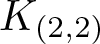 $K_{(2,2)}$. We show that the even part ${\mathcal{E}_{\rm EVEN}}$ of the planar 3-colorable subgroup admits a description in terms of stabilisers of suitable subsets of dyadic rationals. As a consequence ${\mathcal{E}_{\rm EVEN}}$ is closed in the sense of Golan and Sapir. We then study three quasi-regular representations associated with ${\mathcal{E}_{\rm EVEN}}$: two are shown to be irreducible and one to be reducible.


THE WEYL TRANSFORM OF A SMOOTH MEASURE ON A REAL-ANALYTIC SUBMANIFOLD
- Part of
-
- Journal:
- Bulletin of the Australian Mathematical Society / Volume 112 / Issue 1 / August 2025
- Published online by Cambridge University Press:
- 11 October 2024, pp. 184-193
- Print publication:
- August 2025
-
- Article
- Export citation
-
If $\mu $ is a smooth measure supported on a real-analytic submanifold of ${\mathbb {R}}^{2n}$ which is not contained in any affine hyperplane, then the Weyl transform of $\mu $ is a compact operator.


On Bohr compactifications and profinite completions of group extensions
- Part of
-
- Journal:
- Mathematical Proceedings of the Cambridge Philosophical Society / Volume 176 / Issue 2 / March 2024
- Published online by Cambridge University Press:
- 09 October 2023, pp. 373-393
- Print publication:
- March 2024
-
- Article
-
- You have access
- Open access
- HTML
- Export citation
-
Let $G= N\rtimes H$ be a locally compact group which is a semi-direct product of a closed normal subgroup N and a closed subgroup H. The Bohr compactification ${\rm Bohr}(G)$ and the profinite completion ${\rm Prof}(G)$ of G are, respectively, isomorphic to semi-direct products $Q_1 \rtimes {\rm Bohr}(H)$ and $Q_2 \rtimes {\rm Prof}(H)$ for appropriate quotients $Q_1$ of ${\rm Bohr}(N)$ and $Q_2$ of ${\rm Prof}(N).$ We give a precise description of $Q_1$ and $Q_2$ in terms of the action of H on appropriate subsets of the dual space of N. In the case where N is abelian, we have ${\rm Bohr}(G)\cong A \rtimes {\rm Bohr}(H)$ and ${\rm Prof}(G)\cong B \rtimes {\rm Prof}(H),$ where A (respectively B) is the dual group of the group of unitary characters of N with finite H-orbits (respectively with finite image). Necessary and sufficient conditions are deduced for G to be maximally almost periodic or residually finite. We apply the results to the case where $G= \Lambda\wr H$ is a wreath product of discrete groups; we show in particular that, in case H is infinite, ${\rm Bohr}(\Lambda\wr H)$ is isomorphic to ${\rm Bohr}(\Lambda^{\rm Ab}\wr H)$ and ${\rm Prof}(\Lambda\wr H)$ is isomorphic to ${\rm Prof}(\Lambda^{\rm Ab} \wr H),$ where $\Lambda^{\rm Ab}=\Lambda/ [\Lambda, \Lambda]$ is the abelianisation of $\Lambda.$ As examples, we compute ${\rm Bohr}(G)$ and ${\rm Prof}(G)$ when G is a lamplighter group and when G is the Heisenberg group over a unital commutative ring.


A new characterization of the Haagerup property by actions on infinite measure spaces
- Part of
-
- Journal:
- Ergodic Theory and Dynamical Systems / Volume 41 / Issue 8 / August 2021
- Published online by Cambridge University Press:
- 02 June 2020, pp. 2349-2368
- Print publication:
- August 2021
-
- Article
- Export citation
-
The aim of the article is to provide a characterization of the Haagerup property for locally compact, second countable groups in terms of actions on $\unicode[STIX]{x1D70E}$-finite measure spaces. It is inspired by the very first definition of amenability, namely the existence of an invariant mean on the algebra of essentially bounded, measurable functions on the group.

STABILITY, COHOMOLOGY VANISHING, AND NONAPPROXIMABLE GROUPS
- Part of
-
- Journal:
- Forum of Mathematics, Sigma / Volume 8 / 2020
- Published online by Cambridge University Press:
- 30 March 2020, e18
-
- Article
-
- You have access
- Open access
- Export citation
-
Several well-known open questions (such as: are all groups sofic/hyperlinear?) have a common form: can all groups be approximated by asymptotic homomorphisms into the symmetric groups $\text{Sym}(n)$ (in the sofic case) or the finite-dimensional unitary groups $\text{U}(n)$ (in the hyperlinear case)? In the case of $\text{U}(n)$, the question can be asked with respect to different metrics and norms. This paper answers, for the first time, one of these versions, showing that there exist finitely presented groups which are not approximated by $\text{U}(n)$ with respect to the Frobenius norm $\Vert T\Vert _{\text{Frob}}=\sqrt{\sum _{i,j=1}^{n}|T_{ij}|^{2}},T=[T_{ij}]_{i,j=1}^{n}\in \text{M}_{n}(\mathbb{C})$. Our strategy is to show that some higher dimensional cohomology vanishing phenomena implies stability, that is, every Frobenius-approximate homomorphism into finite-dimensional unitary groups is close to an actual homomorphism. This is combined with existence results of certain nonresidually finite central extensions of lattices in some simple $p$-adic Lie groups. These groups act on high-rank Bruhat–Tits buildings and satisfy the needed vanishing cohomology phenomenon and are thus stable and not Frobenius-approximated.


Characters of inductive limits of finite alternating groups
- Part of
-
- Journal:
- Ergodic Theory and Dynamical Systems / Volume 40 / Issue 4 / April 2020
- Published online by Cambridge University Press:
- 04 September 2018, pp. 1068-1082
- Print publication:
- April 2020
-
- Article
- Export citation
-
If $G\ncong \operatorname{Alt}(\mathbb{N})$ is an inductive limit of finite alternating groups, then the indecomposable characters of $G$ are precisely the associated characters of the ergodic invariant random subgroups of $G$.
$G$.


LOCALLY COMPACT WREATH PRODUCTS
- Part of
-
- Journal:
- Journal of the Australian Mathematical Society / Volume 107 / Issue 1 / August 2019
- Published online by Cambridge University Press:
- 15 August 2018, pp. 26-52
-
- Article
-
- You have access
- Export citation
EQUIVARIANT COMPRESSION OF CERTAIN DIRECT LIMIT GROUPS AND AMALGAMATED FREE PRODUCTS
- Part of
-
- Journal:
- Glasgow Mathematical Journal / Volume 58 / Issue 3 / September 2016
- Published online by Cambridge University Press:
- 10 June 2016, pp. 739-752
-
- Article
-
- You have access
- Export citation
Finiteness Properties of Some Groups of Local Similarities
- Part of
-
- Journal:
- Proceedings of the Edinburgh Mathematical Society / Volume 58 / Issue 2 / June 2015
- Published online by Cambridge University Press:
- 10 April 2015, pp. 379-402
-
- Article
-
- You have access
- Export citation
NONCOMMUTATIVE REAL ALGEBRAIC GEOMETRY OF KAZHDAN’S PROPERTY (T)
- Part of
-
- Journal:
- Journal of the Institute of Mathematics of Jussieu / Volume 15 / Issue 1 / January 2016
- Published online by Cambridge University Press:
- 30 July 2014, pp. 85-90
- Print publication:
- January 2016
-
- Article
- Export citation
-
It is well known that a finitely generated group ${\rm\Gamma}$ has Kazhdan’s property (T) if and only if the Laplacian element ${\rm\Delta}$ in $\mathbb{R}[{\rm\Gamma}]$ has a spectral gap. In this paper, we prove that this phenomenon is witnessed in $\mathbb{R}[{\rm\Gamma}]$. Namely, ${\rm\Gamma}$ has property (T) if and only if there exist a constant ${\it\kappa}>0$ and a finite sequence ${\it\xi}_{1},\ldots ,{\it\xi}_{n}$ in $\mathbb{R}[{\rm\Gamma}]$ such that ${\rm\Delta}^{2}-{\it\kappa}{\rm\Delta}=\sum _{i}{\it\xi}_{i}^{\ast }{\it\xi}_{i}$. This result suggests the possibility of finding new examples of property (T) groups by solving equations in $\mathbb{R}[{\rm\Gamma}]$, possibly with the assistance of computers.


Representation Equivalent Bieberbach Groups and Strongly Isospectral Flat Manifolds
-
- Journal:
- Canadian Mathematical Bulletin / Volume 57 / Issue 2 / 14 June 2014
- Published online by Cambridge University Press:
- 20 November 2018, pp. 357-363
- Print publication:
- 14 June 2014
-
- Article
-
- You have access
- Export citation
-
Let ${{\Gamma }_{1}}$ and ${{\Gamma }_{2}}$ be Bieberbach groups contained in the full isometry group $G$ of ${{\mathbb{R}}^{n}}$ . We prove that if the compact flat manifolds ${{\Gamma }_{1}}\backslash {{\mathbb{R}}^{n}}$ and ${{\Gamma }_{2}}\backslash {{\mathbb{R}}^{n}}$ are strongly isospectral, then the Bieberbach groups ${{\Gamma }_{1}}$ and ${{\Gamma }_{2}}$ are representation equivalent; that is, the right regular representations ${{L}^{2}}\left( {{\Gamma }_{1}}\backslash G \right)$ and ${{L}^{2}}\left( {{\Gamma }_{2}}\backslash G \right)$ are unitarily equivalent.


POSITIVE ENERGY REPRESENTATIONS AND CONTINUITY OF PROJECTIVE REPRESENTATIONS FOR GENERAL TOPOLOGICAL GROUPS
-
- Journal:
- Glasgow Mathematical Journal / Volume 56 / Issue 2 / May 2014
- Published online by Cambridge University Press:
- 13 August 2013, pp. 295-316
-
- Article
-
- You have access
- Export citation
-
Let G and T be topological groups, α : T → Aut(G) a homomorphism defining a continuous action of T on G and G♯ := G ⋊αT the corresponding semidirect product group. In this paper, we address several issues concerning irreducible continuous unitary representations (π♯, ${\mathcal{H}}$) of G♯ whose restriction to G remains irreducible. First, we prove that, for T = ${\mathbb R}$, this is the case for any irreducible positive energy representation of G♯, i.e. for which the one-parameter group Ut := π♯(1,t) has non-negative spectrum. The passage from irreducible unitary representations of G to representations of G♯ requires that certain projective unitary representations are continuous. To facilitate this verification, we derive various effective criteria for the continuity of projective unitary representations. Based on results of Borchers for W*-dynamical systems, we also derive a characterization of the continuous positive definite functions on G that extend to G♯.


On the Iwasawa theory of the Lubin–Tate moduli space
- Part of
-
- Journal:
- Compositio Mathematica / Volume 149 / Issue 5 / May 2013
- Published online by Cambridge University Press:
- 26 February 2013, pp. 793-839
- Print publication:
- May 2013
-
- Article
- Export citation
-
We study the affine formal algebra $R$ of the Lubin–Tate deformation space as a module over two different rings. One is the completed group ring of the automorphism group $\Gamma $ of the formal module of the deformation problem, the other one is the spherical Hecke algebra of a general linear group. In the most basic case of height two and ground field $\mathbb {Q}_p$, our structure results include a flatness assertion for $R$ over the spherical Hecke algebra and allow us to compute the continuous (co)homology of $\Gamma $ with coefficients in $R$.
$R$.


On diameters of orbits of compact groups in unitary representations
- Part of
-
- Journal:
- Journal of the Australian Mathematical Society. Series A. Pure Mathematics and Statistics / Volume 59 / Issue 3 / December 1995
- Published online by Cambridge University Press:
- 09 April 2009, pp. 308-312
-
- Article
-
- You have access
- Export citation
-
For a compact group G, we compute the Kazhdan constants κ(G, G) obtained by taking G itself as a generating subset. We get κ(G, G) =
 if G is finite of order n, and κ(G, G) =
  if G is infinite.
 if
if  if
if Isometric Group Actions on Hilbert Spaces: Structure of Orbits
-
- Journal:
- Canadian Journal of Mathematics / Volume 60 / Issue 5 / October 2008
- Published online by Cambridge University Press:
- 20 November 2018, pp. 1001-1009
- Print publication:
- October 2008
-
- Article
-
- You have access
- Export citation
EVERY COUNTABLE GROUP HAS THE WEAK ROHLIN PROPERTY
-
- Journal:
- Bulletin of the London Mathematical Society / Volume 38 / Issue 6 / December 2006
- Published online by Cambridge University Press:
- 19 December 2006, pp. 932-936
- Print publication:
- December 2006
-
- Article
- Export citation
On the Generalized d’Alembert's and Wilson's Functional Equations on a Compact Group
-
- Journal:
- Canadian Mathematical Bulletin / Volume 48 / Issue 4 / 01 December 2005
- Published online by Cambridge University Press:
- 20 November 2018, pp. 505-522
- Print publication:
- 01 December 2005
-
- Article
-
- You have access
- Export citation
-
Let $G$ be a compact group.
Let $\sigma$ be a continuous involution of $G$ . In this paper, we are concerned by the following functional equation
 $$\int\limits_{G}{f\left( xty{{t}^{-1}} \right)dt}\,+\int\limits_{G}{f\left( xt\sigma \left( y \right){{t}^{-1}} \right)dt}=2g\left( x \right)h\left( y \right),\,\,\,x,y\in G,$$
where $f,g,h:G\mapsto \mathbb{C}$ , to be determined, are complex continuous functions on $G$ such that $f$ is central. This equation generalizes d’Alembert's and Wilson's functional equations. We show that the solutions are expressed by means of characters of irreducible, continuous and unitary representations of the group $G$ .


