Refine search
Actions for selected content:
81 results
Integrable perturbation theory for dark solitons of the defocusing nonlinear Schrödinger equation
- Part of
-
- Journal:
- Journal of Nonlinear Waves / Volume 2 / 2026
- Published online by Cambridge University Press:
- 24 March 2026, e10
-
- Article
-
- You have access
- Open access
- HTML
- Export citation
MULTIPLE SOLUTIONS FOR QUASILINEAR SCHRÖDINGER EQUATIONS WITH NONLINEARITY SUBLINEAR AT ZERO
- Part of
-
- Journal:
- Bulletin of the Australian Mathematical Society , First View
- Published online by Cambridge University Press:
- 26 January 2026, pp. 1-13
-
- Article
- Export citation
-
We consider quasilinear Schrödinger equations in $\mathbb {R}^N$ of the form $-\Delta u+V(x)u-u\Delta (u^2)=g(u)$, where the potential V is allowed to be sign-changing and the nonlinearity g is sublinear at zero. Except for being subcritical, no additional condition is imposed on $g(u)$ for $|u|$ large. We obtain a sequence of solutions with negative energy and converging to zero via Clark’s theorem. We also obtain a similar result for fourth-order quasilinear Schrödinger equations in $\mathbb {R}^N$ of the form $\Delta ^2u-\Delta u+ V(x)u-u\Delta (u^2)=g(u)$.


Ground states of the planar nonlinear Schrödinger–Newton system with a point interaction
- Part of
-
- Journal:
- Proceedings of the Royal Society of Edinburgh. Section A: Mathematics , First View
- Published online by Cambridge University Press:
- 12 January 2026, pp. 1-26
-
- Article
- Export citation
-
We establish sufficient conditions for the existence of ground states of the following normalized nonlinear Schrödinger–Newton system with a point interaction:
 \begin{equation*}\begin{cases}- \Delta_\alpha u + \omega u=w u+\beta u |u|^{p - 2}&\text{on} ~ \mathbb{R}^2;\\- \Delta w=2 \pi |u|^2&\text{on} ~ \mathbb{R}^2;\\\|u\|_{L^2}^2 = c,\end{cases}\end{equation*}
where $p \gt 2$;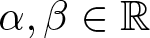 $\alpha, \beta \in \mathbb{R}$; $c \gt 0$ and $- \Delta_\alpha$ denotes the Laplacian of point interaction with s-wave scattering length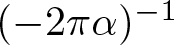 $(- 2 \pi \alpha)^{- 1}$, the unknowns being $u \colon \mathbb{R}^2 \to \mathbb{C}$, $w \colon \mathbb{R}^2 \to \lbrack0, \infty\lbrack$ and the Lagrange multiplier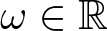 $\omega \in \mathbb{R}$. Additionally, we show that critical points of the corresponding constrained energy functional are naturally associated with standing waves of the evolution problem
 \begin{equation*}\mathrm{i} \psi' (t)=- \Delta_\alpha \psi (t)-(\log |\cdot| \ast |\psi (t)|^2)\psi (t)-\beta\psi (t)|\psi (t)|^{p - 2}.\end{equation*}


Numerical inverse scattering transform for the defocusing nonlinear Schrödinger equation with box-type initial conditions on a nonzero background
-
- Journal:
- Journal of Nonlinear Waves / Volume 2 / 2026
- Published online by Cambridge University Press:
- 09 January 2026, e1
-
- Article
-
- You have access
- Open access
- HTML
- Export citation
-
We present a method to solve numerically the Cauchy problem for the defocusing nonlinear Schrödinger (NLS) equation with a box-type initial condition (IC) having a nontrivial background of amplitude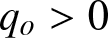 $q_o \gt 0$ as $x\to \pm \infty$ by implementing numerically the corresponding inverse scattering transform (IST). The Riemann–Hilbert problem associated with the inverse transform is solved numerically by means of appropriate contour deformations in the complex plane following the numerical implementation of the Deift–Zhou nonlinear steepest descent method. In this work, the box parameters are chosen so that there is no discrete spectrum (i.e., no solitons). The numerical method is demonstrated to be accurate within the two asymptotic regimes corresponding to two different regions of the $(x,t)$-plane depending on whether $|x/(2t)| \lt q_o$ or $|x/(2t)| \gt q_o$, as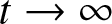 $t \to \infty$.

Normalized solutions of L2-supercritical NLS equations on non-compact metric graphs
- Part of
-
- Journal:
- Proceedings of the Royal Society of Edinburgh. Section A: Mathematics , First View
- Published online by Cambridge University Press:
- 11 December 2025, pp. 1-34
-
- Article
- Export citation
Global solutions to 3D quadratic nonlinear Schrödinger-type equation
- Part of
-
- Journal:
- Forum of Mathematics, Sigma / Volume 13 / 2025
- Published online by Cambridge University Press:
- 05 November 2025, e183
-
- Article
-
- You have access
- Open access
- HTML
- Export citation
-
We consider the Cauchy problem to the 3D fractional Schrödinger equation with quadratic interaction of $u\bar u$ type. We prove the global existence of solutions and scattering properties for small initial data. For the proof, one novelty is that we combine the normal form methods and the space-time resonance methods. Using the normal form transform enables us to have more flexibility in designing the resolution spaces so that we can control various interactions. It is also convenient for the final data problem.

Quantitative quasi-invariance of Gaussian measures below the energy level for the 1D generalized nonlinear Schrödinger equation and application to global well-posedness
- Part of
-
- Journal:
- Proceedings of the Royal Society of Edinburgh. Section A: Mathematics , First View
- Published online by Cambridge University Press:
- 08 October 2025, pp. 1-33
-
- Article
-
- You have access
- Open access
- HTML
- Export citation
-
We consider the Schrödinger equation on the one dimensional torus with a general odd-power nonlinearity $p \geq 5$, which is known to be globally well-posed in the Sobolev space $H^\sigma(\mathbb{T})$, for every $\sigma \geq 1$, thanks to the conservation and finiteness of the energy. For regularities σ < 1, where this energy is infinite, we explore a globalization argument adapted to random initial data distributed according to the Gaussian measures µs, with covariance operator $(1-\Delta)^s$, for s in a range $(s_p,\frac{3}{2}]$. We combine a deterministic local Cauchy theory with the quasi-invariance of Gaussian measures µs, with additional Lq-bounds on the Radon-Nikodym derivatives, to prove that the Gaussian initial data generate almost surely global solutions. These Lq-bounds are obtained with respect to Gaussian measures accompanied by a cutoff on a renormalization of the energy; the main tools to prove them are the Boué-Dupuis variational formula and a Poincaré-Dulac normal form reduction. This approach is similar in spirit to Bourgain’s invariant argument [7] and to arecent work by Forlano-Tolomeo in [18].


Local well-posedness and blow-up in the energy space for the 2D NLS with point interaction
- Part of
-
- Journal:
- Proceedings of the Royal Society of Edinburgh. Section A: Mathematics , First View
- Published online by Cambridge University Press:
- 11 July 2025, pp. 1-20
-
- Article
- Export citation
Regular solutions to the dissipative Aw–Rascle system
- Part of
-
- Journal:
- Proceedings of the Royal Society of Edinburgh. Section A: Mathematics , First View
- Published online by Cambridge University Press:
- 10 July 2025, pp. 1-33
-
- Article
-
- You have access
- Open access
- HTML
- Export citation
-
In this article, we prove the local-in-time existence of regular solutions to dissipative Aw–Rascle system with the offset equal to gradient of some increasing and regular function of density. It is a mixed degenerate parabolic-hyperbolic hydrodynamic model, and we extend the techniques previously developed for compressible Navier–Stokes equations to show the well-posedness of the system in the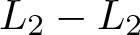 $L_2-L_2$ setting. We also discuss relevant existence results for offset involving singular or non-local functions of density.
Regularity criteria for the 3D Navier–Stokes and MHD equations
- Part of
-
- Journal:
- Proceedings of the Edinburgh Mathematical Society / Volume 68 / Issue 4 / November 2025
- Published online by Cambridge University Press:
- 26 June 2025, pp. 1262-1296
-
- Article
- Export citation
-
We prove that a solution to the 3D Navier–Stokes or magneto-hydrodynamics equations does not blow up at t = T provided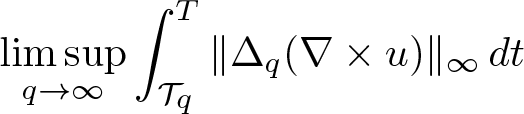 $\displaystyle \limsup_{q \to \infty} \int_{\mathcal{T}_q}^T \|\Delta_q(\nabla \times u)\|_\infty \, dt$ is small enough, where u is the velocity, $\Delta_q$ is the Littlewood–Paley projection and $\mathcal T_q$ is a certain sequence such that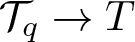 $\mathcal T_q \to T$ as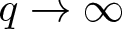 $q \to \infty$. This improves many existing regularity criteria.


Remark on the local well-posedness for NLS with the modulated dispersion
- Part of
-
- Journal:
- Proceedings of the Royal Society of Edinburgh. Section A: Mathematics , First View
- Published online by Cambridge University Press:
- 02 April 2025, pp. 1-12
-
- Article
- Export citation
Solutions with prescribed mass for L2-supercritical NLS equations under Neumann boundary conditions
- Part of
-
- Journal:
- Proceedings of the Royal Society of Edinburgh. Section A: Mathematics , First View
- Published online by Cambridge University Press:
- 02 April 2025, pp. 1-34
-
- Article
-
- You have access
- Open access
- HTML
- Export citation
-
In this article, we investigate the following non-linear Schrödinger (NLS) equation with Neumann boundary conditions:
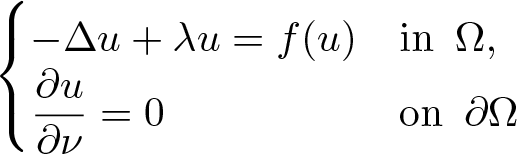 \begin{equation*}\begin{cases}-\Delta u+ \lambda u= f(u) & {\mathrm{in}} \,~ \Omega,\\\displaystyle\frac{\partial u}{\partial \nu}=0 \, &{\mathrm{on}}\,~\partial \Omega\end{cases}\end{equation*}
coupled with a constraint condition:
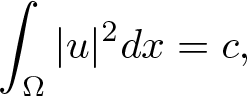 \begin{equation*}\int_{\Omega}|u|^2 dx=c,\end{equation*}
where $\Omega\subset \mathbb{R}^N(N\ge3)$ denotes a smooth bounded domain, ν represents the unit outer normal vector to $\partial \Omega$, c is a positive constant, and λ acts as a Lagrange multiplier. When the non-linearity f exhibits a general mass supercritical growth at infinity, we establish the existence of normalized solutions, which are not necessarily positive solutions and can be characterized as mountain pass type critical points of the associated constraint functional. Our approach provides a uniform treatment of various non-linearities, including cases such as $f(u)=|u|^{p-2}u$, $|u|^{q-2}u+ |u|^{p-2}u$, and $-|u|^{q-2}u+|u|^{p-2}u$, where $2 \lt q \lt 2+\frac{4}{N} \lt p \lt 2^*$. The result is obtained through a combination of a minimax principle with Morse index information for constrained functionals and a novel blow-up analysis for the NLS equation under Neumann boundary conditions.

SYMMETRY RESTORATION IN COLLISIONS OF SOLITONS IN FRACTIONAL COUPLERS
- Part of
-
- Journal:
- The ANZIAM Journal / Volume 67 / 2025
- Published online by Cambridge University Press:
- 03 December 2024, e7
-
- Article
-
- You have access
- Open access
- HTML
- Export citation
-
Recently, we analysed spontaneous symmetry breaking (SSB) of solitons in linearly coupled dual-core waveguides with fractional diffraction and cubic nonlinearity. In a practical context, the system can serve as a model for optical waveguides with the fractional diffraction or Bose–Einstein condensate of particles with Lévy index $\alpha <2$. In an earlier study, the SSB in the fractional coupler was identified as the bifurcation of subcritical type, becoming extremely subcritical in the limit of $\alpha \rightarrow 1$. There, the moving solitons and collisions between them at low speeds were also explored. In the present paper, we present new numerical results for fast solitons demonstrating restoration of symmetry in post-collision dynamics.


Instability of standing waves for fractional NLS with combined nonlinearities
- Part of
-
- Journal:
- Proceedings of the Royal Society of Edinburgh. Section A: Mathematics , First View
- Published online by Cambridge University Press:
- 27 November 2024, pp. 1-29
-
- Article
- Export citation
-
We study the existence and strong instability of standing wave solutions for the fractional nonlinear Schrödinger equation
 \begin{equation*}\begin{cases}\mathrm{i} \psi_{t}=\left(-\Delta\right)^s \psi-\left(|\psi|^{p-2}\psi+\mu|\psi|^{q-2}\psi\right), & \quad(t,x)\in(0,\infty)\times\mathbb{R}^N,\\\psi(0,x)=\psi_0(x),&\quad x\in\mathbb{R}^N,\end{cases}\end{equation*}
where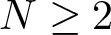 $N\geq2$, $0 \lt s \lt 1$, $2 \lt q \lt p \lt 2_s^*=2N/(N-2s)$, and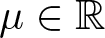 $\mu\in\mathbb{R}$. The primary challenge lies in the inhomogeneity of the nonlinearity.We deal with the following three cases: (i) for $2 \lt q \lt p \lt 2+4s/N$ and µ < 0, there exists a threshold mass a0 for the existence of the least energy normalized solution; (ii) for $2+4s/N \lt q \lt p \lt 2_s^*$ and µ > 0, we reveal the existence of the ground state solution, explore the strong instability of standing waves, and provide a blow-up criterion; (iii) for $2 \lt q\leq2+4s/N \lt p \lt 2_s^*$ and µ < 0, the strong instability of standing wave solutions is demonstrated. These findings are illuminated through variational characterizations, the profile decomposition, and the virial estimate.
Radial solutions of initial boundary value problems of nonlinear Schrödinger equations in ℝn
- Part of
-
- Journal:
- Proceedings of the Royal Society of Edinburgh. Section A: Mathematics , First View
- Published online by Cambridge University Press:
- 25 November 2024, pp. 1-55
-
- Article
-
- You have access
- Open access
- HTML
- Export citation
-
The article studies an initial boundary valueproblem (ibvp) for the radial solutions of the nonlinear Schrödinger (NLS) equation in a radially symmetric region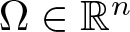 $\Omega\in \mathbb R^n$ with boundaries. All such regions can be classified into three types: a ball Ω0 centred at origin, a region Ω1 outside a ball, and an n-dimensional annulus Ω2. To study the well-posedness of those ibvps, the function spaces for the boundary data must be specified in terms of the solutions in appropriate Sobolev spaces. It is shown that when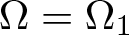 $\Omega = \Omega_1$, the ibvp for the NLS equation is locally well-posed in $ C( [0, T^*]; H^s(\Omega_1))$ if the initial data is in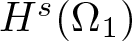 $H^s(\Omega_1)$ and boundary data is in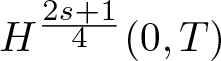 $ H^{\frac{2s+1}{4}}(0, T)$ with $s \geq 0$. This is the optimal regularity for the boundary data and cannot be improved. When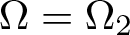 $\Omega = \Omega_2$, the ibvp is locally well-posed in $ C( [0, T^*]; H^s(\Omega_2))$ if the initial data is in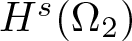 $ H^s(\Omega_2)$ and boundary data is in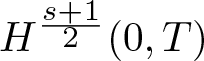 $ H^{\frac{s+1}{2}}(0, T)$ with $s \geq 0$. In this case, the boundary data requires $1/4$ more derivative compared to the case when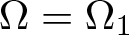 $\Omega = \Omega_1$. When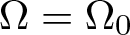 $\Omega = \Omega_0$ with n = 2 (the case with n > 2 can be discussed similarly), the ibvp is locally well-posed in $ C( [0, T^*]; H^s(\Omega_0))$ if the initial data is in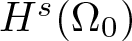 $ H^s(\Omega_0)$ and boundary data is in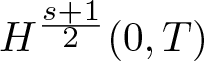 $ H^{\frac{s+1}{2}}(0, T)$ with s > 1 (or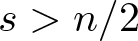 $s \gt n/2$). Due to the lack of Strichartz estimates for the corresponding boundary integral operator with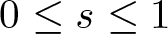 $ 0 \leq s \leq 1$, the local well-posedness can only be achieved for s > 1. It is noted that the well-posedness results on Ω0 and Ω2 are the first ones for the ibvp of NLS equations in bounded regions of higher dimension.


Blowup of cylindrically symmetric solutions for biharmonic NLS
- Part of
-
- Journal:
- Proceedings of the Edinburgh Mathematical Society / Volume 67 / Issue 4 / November 2024
- Published online by Cambridge University Press:
- 03 October 2024, pp. 1085-1098
-
- Article
- Export citation
-
In this paper, we consider blowup of solutions to the Cauchy problem for the following biharmonic nonlinear Schrödinger equation (NLS),
 \begin{equation*}\text{i } \partial_t u=\Delta^2 u-\mu \Delta u-|u|^{2 \sigma} u \quad \text{in} \,\, \mathbb{R} \times \mathbb{R}^d,\end{equation*}
where $d \geq 1$,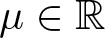 $\mu \in \mathbb{R}$ and $0 \lt \sigma \lt \infty$ if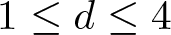 $1 \leq d \leq 4$ and $0 \lt \sigma \lt 4/(d-4)$ if $d \geq 5$. In the mass critical and supercritical cases, we establish the existence of blowup solutions to the problem for cylindrically symmetric data. The result extends the known ones with respect to blowup of solutions to the problem for radially symmetric data.


A remark on Gibbs measures with log-correlated Gaussian fields
- Part of
-
- Journal:
- Forum of Mathematics, Sigma / Volume 12 / 2024
- Published online by Cambridge University Press:
- 08 April 2024, e50
-
- Article
-
- You have access
- Open access
- HTML
- Export citation
-
We study Gibbs measures with log-correlated base Gaussian fields on the d-dimensional torus. In the defocusing case, the construction of such Gibbs measures follows from Nelson’s argument. In this paper, we consider the focusing case with a quartic interaction. Using the variational formulation, we prove nonnormalizability of the Gibbs measure. When $d = 2$, our argument provides an alternative proof of the nonnormalizability result for the focusing $\Phi ^4_2$-measure by Brydges and Slade (1996). Furthermore, we provide a precise rate of divergence, where the constant is characterized by the optimal constant for a certain Bernstein’s inequality on $\mathbb R^d$. We also go over the construction of the focusing Gibbs measure with a cubic interaction. In the appendices, we present (a) nonnormalizability of the Gibbs measure for the two-dimensional Zakharov system and (b) the construction of focusing quartic Gibbs measures with smoother base Gaussian measures, showing a critical nature of the log-correlated Gibbs measure with a focusing quartic interaction.


Sharp well-posedness for the cubic NLS and mKdV in $H^s({{\mathbb {R}}})$
- Part of
-
- Journal:
- Forum of Mathematics, Pi / Volume 12 / 2024
- Published online by Cambridge University Press:
- 02 April 2024, e6
-
- Article
-
- You have access
- Open access
- HTML
- Export citation
-
We prove that the cubic nonlinear Schrödinger equation (both focusing and defocusing) is globally well-posed in $H^s({{\mathbb {R}}})$ for any regularity $s>-\frac 12$. Well-posedness has long been known for $s\geq 0$, see [55], but not previously for any $s<0$. The scaling-critical value $s=-\frac 12$ is necessarily excluded here, since instantaneous norm inflation is known to occur [11, 40, 48].
We also prove (in a parallel fashion) well-posedness of the real- and complex-valued modified Korteweg–de Vries equations in $H^s({{\mathbb {R}}})$ for any $s>-\frac 12$. The best regularity achieved previously was $s\geq \tfrac 14$ (see [15, 24, 33, 39]).
To overcome the failure of uniform continuity of the data-to-solution map, we employ the method of commuting flows introduced in [37]. In stark contrast with our arguments in [37], an essential ingredient in this paper is the demonstration of a local smoothing effect for both equations. Despite the nonperturbative nature of the well-posedness, the gain of derivatives matches that of the underlying linear equation. To compensate for the local nature of the smoothing estimates, we also demonstrate tightness of orbits. The proofs of both local smoothing and tightness rely on our discovery of a new one-parameter family of coercive microscopic conservation laws that remain meaningful at this low regularity.


Necessary and sufficient conditions for ground state solutions to planar Kirchhoff-type equations
- Part of
-
- Journal:
- Proceedings of the Royal Society of Edinburgh. Section A: Mathematics / Volume 155 / Issue 5 / October 2025
- Published online by Cambridge University Press:
- 11 March 2024, pp. 1938-1959
- Print publication:
- October 2025
-
- Article
- Export citation
-
In this paper, we are concerned with the ground states of the following planar Kirchhoff-type problem:
\[ -\left(1+b\displaystyle\int_{\mathbb{R}^2}|\nabla u|^2\,{\rm d}x\right)\Delta u+\omega u=|u|^{p-2}u, \quad x\in\mathbb{R}^2. \]where $b,\, \omega >0$
 are constants, $p>2$
 . Based on variational methods, regularity theory and Schwarz symmetrization, the equivalence of ground state solutions for the above problem with the minimizers for some minimization problems is obtained. In particular, a new scale technique, together with Lagrange multipliers, is delicately employed to overcome some intrinsic difficulties.


A NOTE ON NORMALISED GROUND STATES FOR THE TWO-DIMENSIONAL CUBIC-QUINTIC NONLINEAR SCHRÖDINGER EQUATION
- Part of
-
- Journal:
- Bulletin of the Australian Mathematical Society / Volume 109 / Issue 3 / June 2024
- Published online by Cambridge University Press:
- 09 October 2023, pp. 552-561
- Print publication:
- June 2024
-
- Article
- Export citation
-
We consider the two-dimensional minimisation problem for $\inf \{ E_a(\varphi ):\varphi \in H^1(\mathbb {R}^2)\ \text {and}\ \|\varphi \|_2^2=1\}$, where the energy functional $ E_a(\varphi )$ is a cubic-quintic Schrödinger functional defined by $E_a(\varphi ):=\tfrac 12\int _{\mathbb {R}^2}|\nabla \varphi |^2\,dx-\tfrac 14a\int _{\mathbb {R}^2}|\varphi |^4\,dx+\tfrac 16a^2\int _{\mathbb {R}^2}|\varphi |^6\,dx$. We study the existence and asymptotic behaviour of the ground state. The ground state $\varphi _{a}$ exists if and only if the $L^2$ mass a satisfies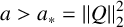 $a>a_*={\lVert Q\rVert }^2_2$, where Q is the unique positive radial solution of $-\Delta u+ u-u^3=0$ in $\mathbb {R}^2$. We show the optimal vanishing rate $\int _{\mathbb {R}^2}|\nabla \varphi _{a}|^2\,dx\sim (a-a_*)$ as $a\searrow a_*$ and obtain the limit profile.


