Refine search
Actions for selected content:
34 results
On a degenerate diffusive free boundary model for rabies in fox populations
- Part of
-
- Journal:
- Proceedings of the Royal Society of Edinburgh. Section A: Mathematics , First View
- Published online by Cambridge University Press:
- 28 April 2026, pp. 1-41
-
- Article
-
- You have access
- Open access
- HTML
- Export citation
-
In this paper, we use a degenerate reaction-diffusion system with free boundaries to model the spatial spread of rabies among foxes, whose population is divided into three sub-populations: susceptible ( $S$), infected ( $E$), and rabid ( $I$). Based on established biological observations, susceptible and infected foxes are assumed to be territorial (random diffusion is ignored for $E$ and $S$ in the model), whereas rabid foxes disperse randomly (random diffusion is assumed for $I$), causing the spread of the disease. While $S$ evolves over the entire real line $\mathbb{R}$, $E$ and $I$ are found only in the infected region represented by an interval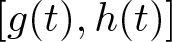 $[g(t), h(t)]$, which expands with moving fronts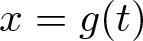 $x = g(t)$ and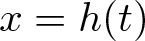 $x = h(t)$ as time $t$ increases. We show that this system admits a unique global solution and then analyse its dynamics and establish a spreading-vanishing dichotomy in certain natural parameter regimes. Moreover, we supply some simple sufficient conditions for the vanishing and spreading of the rabies, respectively. For example, we show that if the corresponding ODE system has basic reproduction number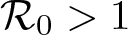 $\mathcal{R}_0 \gt 1$, then a spreading-vanishing dichotomy holds, and the outcome depends on the initial size of the infected region, while if a certain quantity $\mathcal R_0^* \in (\mathcal R_0,\infty)$ is no bigger than 1, then the rabies will always vanish. The degenerate nature of the model, combined with the evolving infected region, causes considerable difficulties in the mathematical treatment, both in proving the well-posedness and in understanding the long-time dynamics. This paper appears to be the first to treat a free boundary model where one reaction-diffusion equation is coupled with two ordinary differential equations.


DEAD-CORE PROBLEM FOR A CLASS OF INFINITY LAPLACIAN
- Part of
-
- Journal:
- Journal of the Australian Mathematical Society , First View
- Published online by Cambridge University Press:
- 07 April 2026, pp. 1-21
-
- Article
- Export citation
-
For $h>1,$ we consider the reaction-diffusion equation: where
 $$ \begin{align*} \Delta_\infty^hu(x)=f(x,u(x),Du(x)),\quad x\in\Omega, \end{align*} $$ $\Delta _\infty ^h$ denotes the h-degree infinity Laplacian, $f\in C(\Omega \times \mathbb {R}\times \mathbb {R}^n)$ satisfies $ 0\leq f(x,\delta t,p)\leq \Lambda (x)\delta ^{\gamma }f(x,t,p),$ a positive function $\Lambda (x)\in C(\overline {\Omega }), \, \gamma \in [0,h), \,t>0$, and $\delta>0 $ is small enough. Such an equation may cause a dead-core region, that is, an unknown region where the nonnegative solution vanishes completely. We establish a flattening estimate for the viscosity solution and obtain sharp $C^{({h+1})/({h-\gamma })}$-regularity along the free boundary $\partial \{u>0\}\cap \Omega .$ Using the sharp regularity, we prove Liouville-type theorems for the global solution and give the porosity of the free boundary. In the end, for the limit case $\gamma =h,$ we show that if the viscosity solution vanishes at a point, then the dead-core region must vanish.


An obstacle approach to rate-independent droplet evolution
- Part of
-
- Journal:
- Forum of Mathematics, Sigma / Volume 14 / 2026
- Published online by Cambridge University Press:
- 03 March 2026, e38
-
- Article
-
- You have access
- Open access
- HTML
- Export citation
-
We consider a toy model of rate-independent droplet motion on a surface with contact angle hysteresis based on the one-phase Bernoulli free boundary problem. We introduce a notion of solutions based on an obstacle problem. These solutions jump “as late and as little as possible”, a physically natural property that energy solutions do not satisfy. When the initial data is star-shaped, we show that obstacle solutions are uniquely characterized by satisfying the local stability and dynamic slope conditions. This is proved via a novel comparison principle, which is one of the main new technical results of the paper. In this setting we can also show the (almost) optimal $C^{1,1/2-}$-spatial regularity of the contact line. This regularity result explains the asymptotic profile of the contact line as it de-pins via tangential motion similar to de-lamination. Finally we apply our comparison principle to show the convergence of minimizing movements schemes to the same obstacle solution, again in the star-shaped setting.

On a Cahn–Hilliard equation for the growth and division of chemically active droplets modelling protocells
- Part of
-
- Journal:
- European Journal of Applied Mathematics , First View
- Published online by Cambridge University Press:
- 06 November 2025, pp. 1-31
-
- Article
-
- You have access
- Open access
- HTML
- Export citation
Optimal stopping of Gauss–Markov bridges
- Part of
-
- Journal:
- Advances in Applied Probability / Volume 57 / Issue 1 / March 2025
- Published online by Cambridge University Press:
- 04 December 2024, pp. 1-34
- Print publication:
- March 2025
-
- Article
- Export citation
A free boundary model for transport-induced neurite growth
- Part of
-
- Journal:
- European Journal of Applied Mathematics / Volume 36 / Issue 4 / August 2025
- Published online by Cambridge University Press:
- 07 November 2024, pp. 829-855
-
- Article
-
- You have access
- Open access
- HTML
- Export citation
A singularly perturbed ruin problem for a two-dimensional Brownian motion in the positive quadrant
- Part of
-
- Journal:
- Journal of Applied Probability / Volume 62 / Issue 1 / March 2025
- Published online by Cambridge University Press:
- 14 October 2024, pp. 269-283
- Print publication:
- March 2025
-
- Article
-
- You have access
- Open access
- HTML
- Export citation
Variational inequalities arising from credit rating migration with buffer zone
- Part of
-
- Journal:
- European Journal of Applied Mathematics / Volume 35 / Issue 4 / August 2024
- Published online by Cambridge University Press:
- 14 December 2023, pp. 515-532
-
- Article
-
- You have access
- Open access
- HTML
- Export citation
Long-time dynamics and semi-wave of a delayed nonlocal epidemic model with free boundaries
- Part of
-
- Journal:
- Proceedings of the Royal Society of Edinburgh. Section A: Mathematics / Volume 155 / Issue 2 / April 2025
- Published online by Cambridge University Press:
- 05 October 2023, pp. 564-610
- Print publication:
- April 2025
-
- Article
- Export citation
Spreading dynamics of a diffusive epidemic model with free boundaries and two delays
- Part of
-
- Journal:
- European Journal of Applied Mathematics / Volume 34 / Issue 6 / December 2023
- Published online by Cambridge University Press:
- 11 August 2023, pp. 1133-1169
-
- Article
- Export citation
The effect of pore-scale contaminant distribution on the reactive decontamination of porous media
- Part of
-
- Journal:
- European Journal of Applied Mathematics / Volume 35 / Issue 2 / April 2024
- Published online by Cambridge University Press:
- 08 August 2023, pp. 318-358
-
- Article
-
- You have access
- Open access
- HTML
- Export citation
On the joint survival probability of two collaborating firms
- Part of
-
- Journal:
- Journal of Applied Probability / Volume 61 / Issue 2 / June 2024
- Published online by Cambridge University Press:
- 01 August 2023, pp. 369-384
- Print publication:
- June 2024
-
- Article
- Export citation
OPTIMAL STOPPING PROBLEMS WITH A RANDOM TIME HORIZON
- Part of
-
- Journal:
- Bulletin of the Australian Mathematical Society / Volume 108 / Issue 2 / October 2023
- Published online by Cambridge University Press:
- 29 June 2023, pp. 345-346
- Print publication:
- October 2023
-
- Article
-
- You have access
- HTML
- Export citation
The monostable cooperative system with nonlocal diffusion and free boundaries
- Part of
-
- Journal:
- Proceedings of the Royal Society of Edinburgh. Section A: Mathematics / Volume 154 / Issue 2 / April 2024
- Published online by Cambridge University Press:
- 20 March 2023, pp. 629-659
- Print publication:
- April 2024
-
- Article
- Export citation
-
This paper concerns the monostable cooperative system with nonlocal diffusion and free boundaries, which has recently been discussed by Du and Ni [J. Differential equations 308(2021) 369-420 and arXiv:2010.01244]. We here aim at four aspects: the first is to give more accurate estimates for the longtime behaviours of the solution; the second is to discuss the limits of solution pair of a semi-wave problem; the third is to investigate the asymptotic behaviours of the corresponding Cauchy problem; the last is to study the limiting profiles of the solution as one of the expanding rates of free boundaries converges to $\infty$
 . Moreover, some epidemic models are given to illustrate their own rich longtime behaviours, which are quite different from those of the relevant existing works.

Branch points for (almost-)minimizers of two-phase free boundary problems
- Part of
-
- Journal:
- Forum of Mathematics, Sigma / Volume 11 / 2023
- Published online by Cambridge University Press:
- 05 January 2023, e1
-
- Article
-
- You have access
- Open access
- HTML
- Export citation
Convergence to a self-similar solution for a one-phase Stefan problem arising in corrosion theory
- Part of
-
- Journal:
- European Journal of Applied Mathematics / Volume 34 / Issue 4 / August 2023
- Published online by Cambridge University Press:
- 09 August 2022, pp. 701-737
-
- Article
- Export citation
-
Steel corrosion plays a central role in different technological fields. In this article, we consider a simple case of a corrosion phenomenon which describes a pure iron dissolution in sodium chloride. This article is devoted to prove rigorously that under rather general hypotheses on the initial data, the solution of this iron dissolution model converges to a self-similar profile as $t\rightarrow +\infty$. We will do so for an equivalent formulation as presented in the book of Avner Friedman about parabolic equations (Friedman (1964) Partial Differential Equations of Parabolic Type, Prentice-Hall, Inc., Englewood Cliffs, NJ.). In order to prove the convergence result, we apply a comparison principle together with suitable upper and lower solutions.

Discounted optimal stopping problems in first-passage time models with random thresholds
- Part of
-
- Journal:
- Journal of Applied Probability / Volume 59 / Issue 3 / September 2022
- Published online by Cambridge University Press:
- 27 June 2022, pp. 714-733
- Print publication:
- September 2022
-
- Article
- Export citation
Discounted Optimal Stopping Problems for Maxima of Geometric Brownian Motions With Switching Payoffs
- Part of
-
- Journal:
- Advances in Applied Probability / Volume 53 / Issue 1 / March 2021
- Published online by Cambridge University Press:
- 17 March 2021, pp. 189-219
- Print publication:
- March 2021
-
- Article
- Export citation
Approximate solutions to one-phase Stefan-like problems with space-dependent latent heat
- Part of
-
- Journal:
- European Journal of Applied Mathematics / Volume 32 / Issue 2 / April 2021
- Published online by Cambridge University Press:
- 15 June 2020, pp. 337-369
-
- Article
- Export citation
Optimal stopping for the exponential of a Brownian bridge
- Part of
-
- Journal:
- Journal of Applied Probability / Volume 57 / Issue 1 / March 2020
- Published online by Cambridge University Press:
- 04 May 2020, pp. 361-384
- Print publication:
- March 2020
-
- Article
- Export citation
