Refine search
Actions for selected content:
91 results
Square functions and variational estimates for Ritt operators on $L^1$
$L^1$
- Part of
-
- Journal:
- Ergodic Theory and Dynamical Systems , First View
- Published online by Cambridge University Press:
- 17 April 2026, pp. 1-24
-
- Article
-
- You have access
- Open access
- HTML
- Export citation
-
A power-bounded operator T satisfying $\sup _n n\lVert T^n-T^{n+1}\rVert <\infty $ is a Ritt operator. For such operators, we study the generalized square function $Q_{\alpha ,s,r}^Tf=(\sum _n n^{\alpha } |T^n(I-T)^rf|^s)^{1/s}$. It is known that when T is a positive contraction and a Ritt operator on $L^p$, $1<p<\infty $, then for any integer $r\ge 1$, the square function $Q_{2r-1,2,r}^Tf$ defines a bounded operator [17] on $L^p$. In this work, we extend the theory to the endpoint case $p=1$. We show that if T is a Ritt operator on $L^1$, then the generalized square function $Q_{\alpha ,s,r}^Tf $ is bounded on $L^1$ whenever $\alpha +1<sr$. In the particular setting where T is a convolution operator of the form $T_{\mu }=\sum _k \mu (k) U^kf$, with $\mu $ a probability measure on $\mathbb Z$ and U the composition operator induced by an invertible measure-preserving transformation, we provide sufficient conditions on $\mu $ under which $Q_{2r-1,2,r}^{T_{\mu }}f$ is of weak type $(1,1)$, for $r>0$. We also establish bounds for variational and oscillation norms, $\lVert n^{\beta } T^n(1-T)^r\rVert _{v(s)}$ and $\lVert n^{\beta } T^n(1-T)^r\rVert _{o(s)}$, for Ritt operators, highlighting endpoint behavior.


Meromorphic optimal domain of Volterra operators between Bergman–Morrey spaces
- Part of
-
- Journal:
- Canadian Mathematical Bulletin , First View
- Published online by Cambridge University Press:
- 16 February 2026, pp. 1-22
-
- Article
- Export citation
-
We study Volterra-type operators on Bergman–Morrey spaces. First, we obtain sharp boundedness criteria between scales, identifying the exact Bloch-type regularity required of the symbol and showing that the companion operator is bounded precisely for bounded symbols. Next, we develop the holomorphic optimal domain, prove that it is a Banach space with bounded point evaluations and multiplier algebra $H^\infty $, and establish strict inclusions as the parameters vary. Then, we introduce the meromorphic optimal domain, characterize the constant-symbol case, and show that it is a Banach space with point evaluations bounded off the zero set of the derivative. Finally, we analyze the symbol classes $W_g$ and $V_g^{p}$, prove the structural identity $W_g=T_g(H^\infty )+\mathbb C$, and give equivalence and comparison criteria for optimal domains across symbols.


The norm of the Hilbert matrix operator on Bergman spaces
- Part of
-
- Journal:
- Canadian Mathematical Bulletin , First View
- Published online by Cambridge University Press:
- 30 January 2026, pp. 1-16
-
- Article
- Export citation
-
Karapetrović conjectured that the norm of the Hilbert matrix operator on the Bergman space $A^p_\alpha $ is equal to $\pi /\sin ((2+\alpha )\pi /p)$ when $-1<\alpha <p-2$. In this article, we provide a proof of this conjecture for $0\leq \alpha \leq \frac {6p^3-29p^2+17p-2+2p\sqrt {6p^2-11p+4}}{(3p-1)^2}$, and this range of $\alpha $ improves the best known result when $\alpha>\frac {1}{47}$ and $\alpha \not =1$.


Infinite dimensional metapopulation SIS model with generalized incidence rate
- Part of
-
- Journal:
- Canadian Journal of Mathematics , First View
- Published online by Cambridge University Press:
- 29 January 2026, pp. 1-43
-
- Article
- Export citation
Numerical range of Toeplitz and weighted composition operators on weighted Bergman spaces
- Part of
-
- Journal:
- Canadian Mathematical Bulletin , First View
- Published online by Cambridge University Press:
- 21 October 2025, pp. 1-19
-
- Article
-
- You have access
- Open access
- HTML
- Export citation
An extension-restriction theorem for weighted Besov spaces
- Part of
-
- Journal:
- Canadian Journal of Mathematics , First View
- Published online by Cambridge University Press:
- 26 August 2025, pp. 1-48
-
- Article
- Export citation
Schatten class composition operators
- Part of
-
- Journal:
- Canadian Mathematical Bulletin / Volume 68 / Issue 3 / September 2025
- Published online by Cambridge University Press:
- 26 February 2025, pp. 883-890
- Print publication:
- September 2025
-
- Article
- Export citation
-
Let $C_{\varphi }$ be a composition operator on the Bergman space $A^2$ of the unit disc. A well-known problem asks whether the condition $\int _D\big ({1-|z|^2\over 1-|\varphi (z)|^2}\big )^pd\lambda (z) < \infty $ is equivalent to the membership of $C_\varphi $ in the Schatten class ${\mathcal {C}}_p$, $1 < p < \infty $. This was settled in the negative for the case $2 < p < \infty $ in [3]. When $2 < p < \infty $, this condition is not sufficient for $C_\varphi \in {\mathcal {C}}_p$. In this article, we take up the case $1 < p < 2$. We show that when $1 < p < 2$, this condition is not necessary for $C_\varphi \in {\mathcal {C}}_p$.


New aspects of Bargmann transform using Touchard polynomials and hypergeometric functions
- Part of
-
- Journal:
- Canadian Journal of Mathematics / Volume 78 / Issue 2 / April 2026
- Published online by Cambridge University Press:
- 09 January 2025, pp. 405-450
- Print publication:
- April 2026
-
- Article
- Export citation
-
In this paper, we study the ranges of the Schwartz space $\mathcal {S}$ and its dual $\mathcal {S}'$ (space of tempered distributions) under the Bargmann transform. The characterization of these two ranges leads to interesting reproducing kernel Hilbert spaces whose reproducing kernels can be expressed, respectively, in terms of the Touchard polynomials and the hypergeometric functions. We investigate the main properties of some associated operators and introduce two generalized Bargmann transforms in this framework. This can be considered as a continuation of an interesting research path that Neretin started earlier in his book on Gaussian integral operators.


Cesàro-type operators on Bergman–Morrey spaces and Dirichlet–Morrey spaces
- Part of
-
- Journal:
- Proceedings of the Edinburgh Mathematical Society / Volume 68 / Issue 1 / February 2025
- Published online by Cambridge University Press:
- 26 November 2024, pp. 268-299
-
- Article
- Export citation
-
In this paper, we will show the Carleson measure characterizations for the boundedness and compactness of the Cesàro-type operator
 \begin{equation*}\mathcal{C}_{\mu}(f)(z)=\sum^{\infty}_{n=0}\left( \int_{[0,1)}t^nd\mu(t)\right) \left(\sum^{n}_{k=0}a_k \right)z^n, \quad z\in \mathbb{D},\end{equation*}
acting on a number of important analytic function spaces on $\mathbb{D}$, where µ is a positive finite Borel measure. The function spaces are some newly appeared analytic function spaces (e.g., Bergman–Morrey spaces $A^{p,\lambda}$ and Dirichlet–Morrey spaces $\mathcal{D}_p^{\lambda}$) . This work continues the lines of the previous characterizations by Blasco and Galanopoulos et al. for classical Hardy spaces and weighted Bergman spaces and so forth.


Minimal isometric dilations and operator models for the polydisc
- Part of
-
- Journal:
- Proceedings of the Royal Society of Edinburgh. Section A: Mathematics , First View
- Published online by Cambridge University Press:
- 26 November 2024, pp. 1-40
-
- Article
- Export citation
-
For commuting contractions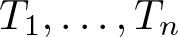 $T_1,\dots,T_n$ acting on a Hilbert space $\mathscr{H}$ with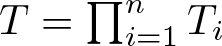 $T=\prod_{i=1}^n T_i$, we find a necessary and sufficient condition such that $(T_1,\dots,T_n)$ dilates to a commuting tuple of isometries $(V_1,\dots,V_n)$ on the minimal isometric dilation space of T with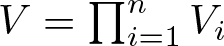 $V=\prod_{i=1}^nV_i$ being the minimal isometric dilation of T. This isometric dilation provides a commutant lifting of $(T_1, \dots, T_n)$ on the minimal isometric dilation space of T. We construct both Schäffer and Sz. Nagy–Foias-type isometric dilations for $(T_1,\dots,T_n)$ on the minimal dilation spaces of T. Also, a different dilation is constructed when the product T is a $C._0$ contraction, that is, ${T^*}^n \rightarrow 0$ as $n \rightarrow \infty$. As a consequence of these dilation theorems, we obtain different functional models for $(T_1,\dots,T_n)$ in terms of multiplication operators on vectorial Hardy spaces. One notable fact about our models is that the multipliers are all analytic functions in one variable. The dilation when T is a $C._0$ contraction leads to a conditional factorization of T. Several examples have been constructed.


A class of Hausdorff–Berezin operators on the unit ball
- Part of
-
- Journal:
- Canadian Mathematical Bulletin / Volume 67 / Issue 4 / December 2024
- Published online by Cambridge University Press:
- 23 October 2024, pp. 1069-1080
- Print publication:
- December 2024
-
- Article
- Export citation
Characterization of continuous homomorphisms on entire slice monogenic functions
- Part of
-
- Journal:
- Proceedings of the Edinburgh Mathematical Society / Volume 67 / Issue 3 / August 2024
- Published online by Cambridge University Press:
- 17 May 2024, pp. 892-920
-
- Article
- Export citation
Growth of hypercyclic functions: a continuous path between $\mathcal{U}$-frequent hypercyclicity and hypercyclicity
- Part of
-
- Journal:
- Proceedings of the Edinburgh Mathematical Society / Volume 67 / Issue 3 / August 2024
- Published online by Cambridge University Press:
- 08 May 2024, pp. 794-829
-
- Article
- Export citation
-
We are interested in the optimal growth in terms of Lp-averages of hypercyclic and $\mathcal{U}$-frequently hypercyclic functions for some weighted Taylor shift operators acting on the space of analytic functions on the unit disc. We unify the results obtained by considering intermediate notions of upper frequent hypercyclicity between $\mathcal{U}$-frequent hypercyclicity and hypercyclicity.


Dirichlet-type spaces of the unit bidisc and toral 2-isometries
- Part of
-
- Journal:
- Canadian Journal of Mathematics / Volume 77 / Issue 4 / August 2025
- Published online by Cambridge University Press:
- 15 April 2024, pp. 1271-1293
- Print publication:
- August 2025
-
- Article
-
- You have access
- Open access
- HTML
- Export citation
-
We introduce and study Dirichlet-type spaces $\mathcal D(\mu _1, \mu _2)$ of the unit bidisc $\mathbb D^2,$ where $\mu _1, \mu _2$ are finite positive Borel measures on the unit circle. We show that the coordinate functions $z_1$ and $z_2$ are multipliers for $\mathcal D(\mu _1, \mu _2)$ and the complex polynomials are dense in $\mathcal D(\mu _1, \mu _2).$ Further, we obtain the division property and solve Gleason’s problem for $\mathcal D(\mu _1, \mu _2)$ over a bidisc centered at the origin. In particular, we show that the commuting pair $\mathscr M_z$ of the multiplication operators $\mathscr M_{z_1}, \mathscr M_{z_2}$ on $\mathcal D(\mu _1, \mu _2)$ defines a cyclic toral $2$-isometry and $\mathscr M^*_z$ belongs to the Cowen–Douglas class $\mathbf {B}_1(\mathbb D^2_r)$ for some $r>0.$ Moreover, we formulate a notion of wandering subspace for commuting tuples and use it to obtain a bidisc analog of Richter’s representation theorem for cyclic analytic $2$-isometries. In particular, we show that a cyclic analytic toral $2$-isometric pair T with cyclic vector $f_0$ is unitarily equivalent to $\mathscr M_z$ on $\mathcal D(\mu _1, \mu _2)$ for some $\mu _1,\mu _2$ if and only if $\ker T^*,$ spanned by $f_0,$ is a wandering subspace for $T.$
$T.$


On BMO and Hardy regularity estimates for a class of non-local elliptic equations
- Part of
-
- Journal:
- Proceedings of the Royal Society of Edinburgh. Section A: Mathematics / Volume 153 / Issue 6 / December 2023
- Published online by Cambridge University Press:
- 14 December 2022, pp. 2025-2052
- Print publication:
- December 2023
-
- Article
- Export citation
-
Let $\sigma \in (0,\,2)$
 , $\chi ^{(\sigma )}(y):={\mathbf 1}_{\sigma \in (1,2)}+{\mathbf 1}_{\sigma =1} {\mathbf 1}_{y\in B(\mathbf {0},\,1)}$
 , where $\mathbf {0}$
 denotes the origin of $\mathbb {R}^n$
 , and $a$
 be a non-negative and bounded measurable function on $\mathbb {R}^n$
 . In this paper, we obtain the boundedness of the non-local elliptic operator\[ Lu(x):=\int_{\mathbb{R}^n}\left[u(x+y)-u(x)-\chi^{(\sigma)}(y)y\cdot\nabla u(x)\right]a(y)\,\frac{{\rm d}y}{|y|^{n+\sigma}} \]from the Sobolev space based on $\mathrm {BMO}(\mathbb {R}^n)\cap (\bigcup _{p\in (1,\infty )}L^p(\mathbb {R}^n))$
 to the space $\mathrm {BMO}(\mathbb {R}^n)$
 , and from the Sobolev space based on the Hardy space $H^1(\mathbb {R}^n)$
 to $H^1(\mathbb {R}^n)$
 . Moreover, for any $\lambda \in (0,\,\infty )$
 , we also obtain the unique solvability of the non-local elliptic equation $Lu-\lambda u=f$
 in $\mathbb {R}^n$
 , with $f\in \mathrm {BMO}(\mathbb {R}^n)\cap (\bigcup _{p\in (1,\infty )}L^p(\mathbb {R}^n))$
 or $H^1(\mathbb {R}^n)$
 , in the Sobolev space based on $\mathrm {BMO}(\mathbb {R}^n)$
 or $H^1(\mathbb {R}^n)$
 . The boundedness and unique solvability results given in this paper are further devolvement for the corresponding results in the scale of the Lebesgue space $L^p(\mathbb {R}^n)$
 with $p\in (1,\,\infty )$
 , established by H. Dong and D. Kim [J. Funct. Anal. 262 (2012), 1166–1199], in the endpoint cases of $p=1$
 and $p=\infty$
 .
.


On a class of Hilbert-type inequalities in the whole plane involving some classical kernel functions
- Part of
-
- Journal:
- Proceedings of the Edinburgh Mathematical Society / Volume 65 / Issue 3 / August 2022
- Published online by Cambridge University Press:
- 06 October 2022, pp. 833-846
-
- Article
- Export citation
Volterra-type operators on the minimal Möbius-invariant space
- Part of
-
- Journal:
- Canadian Mathematical Bulletin / Volume 66 / Issue 2 / June 2023
- Published online by Cambridge University Press:
- 13 June 2022, pp. 509-524
- Print publication:
- June 2023
-
- Article
- Export citation
-
In this note, we mainly study operator-theoretic properties on the Besov space $B_{1}$ on the unit disk. This space is the minimal Möbius-invariant space. First, we consider the boundedness of Volterra-type operators. Second, we prove that Volterra-type operators belong to the Deddens algebra of a composition operator. Third, we obtain estimates for the essential norm of Volterra-type operators. Finally, we give a complete characterization of the spectrum of Volterra-type operators.

EXTREME POINT METHODS IN THE STUDY OF ISOMETRIES ON CERTAIN NONCOMMUTATIVE SPACES
- Part of
-
- Journal:
- Glasgow Mathematical Journal / Volume 64 / Issue 2 / May 2022
- Published online by Cambridge University Press:
- 06 August 2021, pp. 462-483
-
- Article
- Export citation
-
In this paper, we characterize surjective isometries on certain classes of noncommutative spaces associated with semi-finite von Neumann algebras: the Lorentz spaces $L^{w,1}$, as well as the spaces $L^1+L^\infty$ and $L^1\cap L^\infty$. The technique used in all three cases relies on characterizations of the extreme points of the unit balls of these spaces. Of particular interest is that the representations of isometries obtained in this paper are global representations.


Characterizations of Morrey type spaces
- Part of
-
- Journal:
- Canadian Mathematical Bulletin / Volume 65 / Issue 2 / June 2022
- Published online by Cambridge University Press:
- 14 May 2021, pp. 328-344
- Print publication:
- June 2022
-
- Article
- Export citation
-
For a nondecreasing function $K: [0, \infty)\rightarrow [0, \infty)$ and $0<s<\infty $, we introduce a Morrey type space of functions analytic in the unit disk $\mathbb {D}$, denoted by $\mathcal {D}^s_K$. Some characterizations of $\mathcal {D}^s_K$ are obtained in terms of K-Carleson measures. A relationship between two spaces $\mathcal {D}^{s_1}_K$ and $\mathcal {D}^{s_2}_K$ is given by fractional order derivatives. As an extension of some known results, for a positive Borel measure $\mu $ on $\mathbb {D}$, we find sufficient or necessary condition for the embedding map $I: \mathcal {D}^{s}_{K}\mapsto \mathcal {T}^s_{K}(\mu)$ to be bounded.


Multiplicities, invariant subspaces and an additive formula
- Part of
-
- Journal:
- Proceedings of the Edinburgh Mathematical Society / Volume 64 / Issue 2 / May 2021
- Published online by Cambridge University Press:
- 30 April 2021, pp. 279-297
-
- Article
- Export citation
-
Let $T = (T_1, \ldots , T_n)$
 be a commuting tuple of bounded linear operators on a Hilbert space $\mathcal{H}$
 . The multiplicity of $T$
 is the cardinality of a minimal generating set with respect to $T$
 . In this paper, we establish an additive formula for multiplicities of a class of commuting tuples of operators. A special case of the main result states the following: Let $n \geq 2$
 , and let $\mathcal{Q}_i$
 , $i = 1, \ldots , n$
 , be a proper closed shift co-invariant subspaces of the Dirichlet space or the Hardy space over the unit disc in $\mathbb {C}$
 . If $\mathcal{Q}_i^{\bot }$
 , $i = 1, \ldots , n$
 , is a zero-based shift invariant subspace, then the multiplicity of the joint $M_{\textbf {z}} = (M_{z_1}, \ldots , M_{z_n})$
 -invariant subspace $(\mathcal{Q}_1 \otimes \cdots \otimes \mathcal{Q}_n)^{\perp }$
 of the Dirichlet space or the Hardy space over the unit polydisc in $\mathbb {C}^{n}$
 is given by\[ \mbox{mult}_{M_{\textbf{{z}}}|_{ (\mathcal{Q}_1 \otimes \cdots \otimes \mathcal{Q}_n)^{{\perp}}}} (\mathcal{Q}_1 \otimes \cdots \otimes \mathcal{Q}_n)^{{\perp}} = \sum_{i=1}^{n} (\mbox{mult}_{M_z|_{\mathcal{Q}_i^{{\perp}}}} (\mathcal{Q}_i^{\bot})) = n. \]A similar result holds for the Bergman space over the unit polydisc.


