To save content items to your account,
please confirm that you agree to abide by our usage policies.
If this is the first time you use this feature, you will be asked to authorise Cambridge Core to connect with your account.
Find out more about saving content to .
To save content items to your Kindle, first ensure no-reply@cambridge.org
is added to your Approved Personal Document E-mail List under your Personal Document Settings
on the Manage Your Content and Devices page of your Amazon account. Then enter the ‘name’ part
of your Kindle email address below.
Find out more about saving to your Kindle.
Note you can select to save to either the @free.kindle.com or @kindle.com variations.
‘@free.kindle.com’ emails are free but can only be saved to your device when it is connected to wi-fi.
‘@kindle.com’ emails can be delivered even when you are not connected to wi-fi, but note that service fees apply.
This classic textbook, thoroughly revised and updated for its third edition, introduces the basic methods of computational physics. Clear, concise and practical, the new edition includes an additional chapter on machine learning and is supported with sample programs in Python. First, readers are presented with the numerical techniques that every computational scientist should have in their toolbox, including approximation of functions, numerical calculus, differential and partial differential equations, spectral analysis, linear algebra and matrix operations. The author then provides self-contained introductions to the research areas of molecular dynamics, fluid dynamics, Monte Carlo simulations, genetic algorithms and machine learning. Important concepts are illustrated with relevant examples, and each chapter concludes with a selection of exercises. Suitable for upper-division undergraduate to graduate courses on computational physics and scientific computing, this book is also a useful resource for anyone interested in using computation to solve scientific problems.
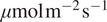
Boreal forests play a critical role in the global carbon cycle as they are one of the largest terrestrial carbon sinks globally. In this study, we employ explainable machine learning (ML) techniques to investigate the influence of environmental and vegetation variables on net ecosystem exchange (NEE), focusing specifically on the effects of diffuse radiation. We utilize a sub-hourly resolution data set including satellite and in-situ observations from three boreal or hemiboreal forest research stations across the latitudes 58–68° N to capture latitudinal variability in forest carbon uptake. Using SHAP (Shapley Additive Explanations) values, we identify key drivers influencing NEE and quantify their importance across various ML model architectures. Photosynthetically active radiation (PAR), diffuse radiation, normalized difference vegetation index, and soil temperature were identified as the variables having the largest explanatory power for NEE across the ML models. ML models using only these variables result in $ {R}^2\approx 0.8 $ and RMSE$ \approx 2.3 $$ \mu \mathrm{mol}\;{\mathrm{m}}^{-2}\hskip0.1em {\mathrm{s}}^{-1} $. Further analysis of SHAP values indicates that higher diffuse radiation (DiffPAR) is associated with more negative NEE (stronger carbon sink). SHAP analysis highlights this effect much more clearly than raw DiffPAR measurements, because it accounts for interactions with other environmental factors. This suggests that the diffuse radiation effect emerges from interactions between DiffPAR and co-varying environmental factors (such as cloudiness and total PAR). Cases identified by SHAP ($ \mathrm{DiffPAR}\ \mathrm{SHAP}<-2 $) have a median NEE $ 1.55\mu \mathrm{mol},{\mathrm{m}}^{-2},{\mathrm{s}}^{-1} $ more negative than cases with raw $ \mathrm{DiffPAR}\ge 400 $. When applied to ML models, SHAP uncovers nonlinear, context-dependent interactions between diffuse radiation and other drivers of NEE without assuming a priori relationships.



Cost planning for Product-Service Systems faces rising complexity, making life-cycle cost estimates essential. This paper investigates how machine learning (ML) can be applied for life-cycle cost estimation in product development. A literature review was conducted to identify ML-based methods, classify them across life cycle phases, and compare them against traditional methods. Results show that traditional models remain transparent but limited in early stages, while ML methods achieve higher accuracy in data-rich phases. A clear research gap exists for hybrid models and end-of-life costing.
Conformal prediction (CP) can yield statistically valid prediction intervals for any regression model, with no model modifications and small computational costs. To assess its practical value, we apply conformal methods to quantify uncertainty in machine learning emulators of six microphysical process rates (MPRs). MPRs describe small-scale processes in atmospheric clouds such as precipitation formation and aerosol–cloud interactions and help understand weather and climate. The emulators are trained on simulation output from the ICOsahedral Nonhydrostatic (ICON) model in a limited-area numerical weather prediction configuration. We compare split CP for deterministic emulators with conformalized quantile regression (CQR) for quantile regression (QR) emulators. Both CP methods yield well-calibrated and sharp prediction intervals on average, but CQR provides more consistent intervals across several orders of magnitude, making it preferable for the uncertainty quantification of climate variables.
Recent advances in machine learning (ML) offer substantial potential for product development (PD), yet adoption remains limited. A crucial step is identifying suitable ML algorithms for a given PD problem, which requires translating domain-specific formulations into appropriate ML tasks. Prior work indicates that LLMs struggle with this step due to insufficient domain knowledge. Therefore, this study investigates whether a domain-specific GraphRAG approach improves model performance by enriching prompts with structured context from a PD knowledge graph.
The operational weather radar network is highly suitable for large-scale bird monitoring and early warning systems. This study discusses, compares and contrasts current state-of-the-art technologies for large-scale bird surveillance – including manual observation, satellite tracking, dedicated avian radar and the operational weather radar network – evaluating their respective strengths, limitations and applicability for different monitoring scenarios. Key research questions focus on how to extract reliable bird movement information from weather radar data and how such data can support ecological studies and aviation safety. From the perspective of radar signal analysis, we examine the characteristics of bird echoes in terms of reflectivity, altitude distribution, flight speed and direction. We further review and compare methodologies for distinguishing bird echoes from weather and ground clutter, including clutter suppression, meteorological echo removal, feature extraction, machine learning classification and cross-validation with auxiliary data. Our synthesis demonstrates that weather radar can effectively identify and track bird movements over wide areas, providing valuable data on migration patterns and flight behaviours. These findings have practical significance for applications in avian ecology research and bird strike prevention in aviation.
We apply machine learning methods to predict Thoroughbred yearling auction prices at the Keeneland September Sale (2020–2024). Our sample includes 5,788 yearling prices with pedigree data. We use both linear and tree-based models to predict log prices. We use cross-validation to tune model hyperparameters and select Ridge regression (α = 1.451) as the primary model for interpretation given its stability and interpretability. The Ridge regression explains approximately 54% of out-of-sample variation (R2≈ 0.5403). Sire and Dam Reputation emerge as the dominant predictors. Results provide pricing benchmarks and show how reputation and session structure shape Thoroughbred yearling auction prices.
There are many topics that are not covered in the book. First, networks may be weighted, directed or signed. Then networks may exhibit structures other than those considered in the book, such as hierarchical structures, or have edges of different types, and collections of networks may arise as snapshots of a network process evolving in time. Each of these settings requires different methods of analysis. Then relationships may be expressed in more intricate ways; `edges’ may link more than just two objects, as in a hypergraph, and abstract simplicial complexes can be thought of as higher dimensional analogues of geometric graphs. These, and other topics, are sketched in this chapter. The material in this book forms a general basis that can be used in coming to grips with these more advanced settings.
In this article I am concerned with interrogating the intersection between the Newtonian and Cartesian intellectual inheritances of AI and machine learning, and ideas about the ethics of war. As militaries turn to new and emerging technologies to maintain or achieve a technological edge over their perceived adversaries, they create new imaginaries of future war—alongside the technologists, academics, and defense scientists crafting new terms, ideologies, and frameworks for making sense of these technologies. In this article I will argue that the intellectual inheritances of machine learning strengthen certain pre-existing tendencies of thinking about ethics and war that function to push the experience of war, particularly for those subjected to it, to one side. The first of these is ethics as code, which in its most extreme form seeks to quantify ethics. The second is ethics as identity, in which we see the reduction of complex ethical debates to a simple belief that “we” are the ethical actors and the “other” is not. To combat the expansion of militarism that these narratives enable we must foreground the experience of war, both of those subject to it and of those creating the conditions for war.
To develop and assess interpretable machine-learning models for sarcopenia risk assessment among physically inactive middle-aged and older adults using two large population-based datasets from the UK and the US.
Background:
Physical inactivity represents a major modifiable risk factor for sarcopenia in aging populations, yet prediction models specifically targeting this high-risk subgroup remain limited. This study developed and evaluated interpretable machine-learning models for sarcopenia risk stratification in physically inactive middle-aged and older adults using large-scale UK and US population-based data.
Methods:
We analyzed physically inactive participants from the English Longitudinal Study of Ageing (ELSA, 2012; n = 1,146) and the US National Health and Nutrition Examination Survey (NHANES, 1999–2006 and 2011–2018; n = 2,733). Sarcopenia and physical inactivity were defined using cohort-specific measurements and cutoffs. Within each cohort, six machine-learning algorithms were trained using 70/30 training–testing splits, Synthetic Minority Oversampling Technique to address class imbalance, and five-fold cross-validation for hyperparameter optimization. Model performance was evaluated using area under the curve, accuracy, precision, recall, and F1 scores. Shapley Additive Explanations quantified predictor contributions, and stratified analyses explored heterogeneity by age and body-composition strata.
Findings:
Random forest demonstrated optimal performance across both cohorts (area under the curve: 0.817 and 0.801; accuracy: 83.8% and 83.1%). Shapley Additive Explanations analysis revealed waist-to-height ratio as the dominant predictor, followed by age, frailty score, and poverty-income ratio. Stratified analyses showed heterogeneous risk patterns across age groups and body-composition categories.
In this study, experimental deep reinforcement learning (DRL) control of aerofoil flow separation is conducted at a chord-based Reynolds number of ${\textit{Re}}_c=1.5\times 10^5$. A dielectric barrier discharge plasma actuator mounted at the leading edge and a hotwire placed in the separated shear layer act as the flow disturber and the state monitor, respectively. The closed-loop control law is parameterised by a radial basis function network and executed in real time on a field-programmable gate array at 1 kHz. With the aid of a deep deterministic policy gradient algorithm, a satisfying closed-loop control strategy can be derived in less than one minute, and the resulting lift coefficient increment (21 %) is similar to that achieved by the best open-loop control. For stable and effective DRL control, the sensor should be placed at the position with strongest velocity fluctuation, and both time delay and cashing period should be accounted in the reward design. Incorporating historical sensor measurements are beneficial to DRL control, and the optimal history length is approximately equal to the ratio of the local Taylor microscale to the control period. The final control law sought by DRL dictates that strong plasma actuation should only be applied when the flow separation region contracts to a minimum. Statistically, control benefits can be ascribed to both the increase of average reward at each cluster and the elevation of occurrence probabilities of high-reward clusters. Physically, suppression of the aerofoil flow separation is attributed to the excitation of large-scale shear layer vortices, which promotes the momentum exchange between the free stream and the reverse flow.

This work aims to investigate experimentally the control of a turbulent boundary layer over a flat plate based on a genetic-algorithm (GA)-based control system. A novel actuator is developed in house, consisting of one array of 11 spanwise-aligned synthetic minijets through longitudinal miniature slits, each independently controlled in terms of its exit momentum coefficient Cμ, frequency fe and phase ϕ, while nine wall wires are placed downstream of the actuator to measure a variation in wall friction. A GA is employed for the unsupervised learning of near-optimal control strategies, i.e. the optimal ϕ of the synthetic jets, with fe and Cμ optimized first. The learning process unveils three typical control strategies that may attain substantial drag reduction (DR) in both actuation and downstream regions, i.e. conventional uniform forcing (CUF), GA-I and GA-II. The latter two are characterized by the triangle- and trapezoid-like distributions of ϕ, respectively, thus each producing a spanwise motion. The three strategies achieve spanwise-averaged local DR by 45 %, 52 % and 52 %, respectively. The downstream drag-reducing areas exhibit an appreciable difference between the three cases, with CUF recovering drag more rapidly than the other two. It has been found that the three cases are associated with different DR mechanisms and flow physics, which account for the distinct control performances.
Anthropomorphic learning in behavioural data science refers to a hybrid modelling paradigm that integrates human-centric principles from decision theory with data-driven methodologies of machine learning to simulate, predict and optimise human-like behaviours in artificial systems. This chapter introduces and explores this hybrid approach, examining its theoretical underpinnings, methodological framework and practical applications. Anthropomorphic learning seeks to bridge the normative rigour of decision theory – grounded in models of preference, choice and rationality – with the empirical flexibility of machine learning, particularly in settings marked by uncertainty, complexity and interactivity. The chapter distinguishes anthropomorphic learning from conventional hybrid modelling techniques and critiques its promise through a detailed analysis of recent implementations in user modelling, digital choice architectures and autonomous agent systems. It also discusses its limitations and ethical implications, especially concerning transparency, replicability and human interpretability. By embedding agency, intentionality and bounded rationality into algorithmic structures, anthropomorphic learning represents a compelling frontier for advancing both human-aligned AI and behavioural data science.
Humans are emotional beings that reason, not reasoning beings that occasionally experience emotions. In fact, emotions are essential to good decision-making. In the world of big data and machine learning, the human potential for emotions can influence the way machine learning systems are developed and deployed and also influence the way they are perceived and used. The two manifestations of emotion that can influence decision-making are bias and noise, both of which have emotional undertones. In this chapter, I consider the impact of emotion, bias and noise and suggest a way to acknowledge and measure their impact in the realm of machine learning and big data.
This chapter explores how traders’ performance may be influenced by the rationality levels of their peers in the market. Using a Behavioural Data Science approach, the study integrates experimental methods, machine learning and large-scale digital trace analysis to examine this relationship. Specifically, we analysed data from a cryptoasset exchange over a five-week period in late 2017 and early 2018, covering over 700,000 transactions across 17 trading pairs. We complemented this behavioural trace data with an online guessing game involving 2,622 active traders, of whom 273 participated. By combining survey results and trading histories, we applied clustering algorithms to identify seven distinct trader profiles, including ‘jokers’, ‘focal point traders’ and those operating at different levels of strategic reasoning (first, second and third order), as well as ‘professional’ and ‘Nash equilibrium’ traders. The findings suggest that traders engaging in higher-order reasoning generally achieve better financial outcomes, yet even experienced professionals are not immune to behavioural biases. The chapter highlights how Behavioural Data Science methods – linking experimental insight with real-world data and computational tools – can illuminate the cognitive patterns underlying economic decision-making in digital markets.
The Outlook argues that whatever the participant or mediatory statuses of machines may be in future research with large and complex datasets, understanding their uses and impacts at the granularity of human interaction and social accountability will be essential for attempts to integrate human and machine learning from data. It highlights the uses of the two notions of accountability addressed in this book, identifies a spectrum of natural scientists’ social inquiries that hints at their normative orientations, and argues for the use of ethnography as a reminder of human agency and responsibility.
Machines are becoming more autonomous and intelligent, capable of making decisions and interacting with their environment. As they become more ubiquitous in our daily lives, it becomes increasingly important to understand and model their behaviour. This chapter will discuss the concept of machine behaviour and its importance in various fields, including artificial intelligence, robotics and human–computer interaction. The chapter starts by defining machine behaviour and providing an overview of its key characteristics. It will then explore the different approaches to modelling and understanding machine behaviour, including rule-based systems, statistical models and deep learning techniques. The chapter also covers the challenges and limitations of modelling machine behaviour, including the black box problem, interpretability and ethics. It also focuses on the applications of machine behaviour in various domains, such as autonomous vehicles, robotics and cybersecurity. The chapter will highlight how machine behaviour models can help in improving the performance, safety and security of these systems. The chapter discusses the future of machine behaviour and its potential impact on society. The chapter will explore the ethical implications of autonomous machines, including issues of responsibility, accountability and transparency. It will also discuss the need for interdisciplinary research in machine behaviour.
Various biomarkers have been identified as being associated with the pathophysiology of major depression, with the potential to be utilised within an objective laboratory test for the diagnosis of depression, based on machine learning techniques.
Aims
This study aims to build on previous results by modelling, in a larger and more heterogeneous cohort, the joint diagnostic accuracy of urine and serum-based biomarkers that showed predictive value for depression in our previous work.
Method
A novel, multivariable, machine learning-based diagnostic tool for depression was tested on a combination of 34 urine- and serum-based biomarkers among 160 people diagnosed with major depressive disorder (MDD) and 120 controls, split into 3 different cohorts. Quantile-based prediction was applied to construct a biomarker-based diagnostic model (BDM) yielding a score for each biomarker. The sum score for each participant was used to calculate an area under the receiver operating characteristic curve (AUC) as a measure of discriminatory power.
Results
We demonstrated that the BDM after internal validation had good discriminatory power, with an AUC of 0.81. Further internal–external validation by calculating individual depression probability scores for each separate cohort resulted in an AUC of between 0.62 and 0.72.
Conclusions
In terms of clinical applicability, the present study shows that the combination of biomarkers and a machine learning model can discriminate between MDD and healthy controls with a modest level of diagnostic accuracy. A biomarker test could have potential added value for the future diagnostic toolkit, but this does require further research.
In a non-generative approach to artificial intelligence in an artistic practice, this work looks at mapping processing data from artificial neural networks (NNs) onto sound and visuals. One aim of this practice-based piece of research is to paradoxically offer insights into how these ubiquitous, yet notoriously opaque algorithms operate, by exposing the audience to the intrinsic unintelligibility of their processes. The other is to use these vast amounts of abstract data as a creative starting point for audiovisual artworks, referring to aesthetic traditions that have emerged from the need to make use and potentially make sense of such extensive masses of information, and from ones that have developed sounds that have gradually become associated with digital and post-digital worlds and other exterior and abstract concepts. At the heart of the whole work is a link and cross-fertilisation between the use of sounds and visuals aesthetically associated with errors and digital malfunction and the use of actual ‘waste’ data (from NN training), which acts as a trace of their operation.
We provide an overview of interatomic potentials, explaining their components and significance. Moving from simple to complex formalisms, we discover pair-wise potentials and multi-body potentials, demonstrating their importance in modelling atomic interactions. We then focus on interatomic potentials for metals, exploring their specific characteristics and applications. Additionally, we discuss force fields and machine learning approaches, highlighting their role in enhancing accuracy and efficiency. Finally, we outline the essential requirements for developing high-quality interatomic potentials.
