Refine search
Actions for selected content:
599 results
GLOBAL BIFURCATION AND STABILITY FOR SEMI-INFINITE CLINE
- Part of
-
- Journal:
- The ANZIAM Journal / Volume 68 / 2026
- Published online by Cambridge University Press:
- 25 June 2026, e15
-
- Article
-
- You have access
- HTML
- Export citation
-
We study the semi-infinite Neumann problem, which models the variation law of a cline in a semi-infinite habitat. Using the bifurcation analysis method, we find that there is a unique solution curve emanating from $(\arctan \alpha ,0)$ with $\alpha> 0$, which is strictly increasing and approaches $1$ in $C[0,+\infty )$. Furthermore, we show that any cline (bifurcation solution) is stable, thereby providing a confirmed answer to a conjecture. Moreover, we also establish the stability of the trivial solution. Our conclusions are consistent with the related numerical results and biological reality.


Fabrication of stable superamphiphobic coatings based on palygorskite nanorods for anti-adhesion and anti-icing
-
- Journal:
- Clay Minerals , FirstView
- Published online by Cambridge University Press:
- 18 June 2026, pp. 1-12
-
- Article
-
- You have access
- HTML
- Export citation
3 - Turán’s Theorem
- from Part I - Extremal Graph Theory
-
- Book:
- Extremal Graph and Hypergraph Theory
- Print publication:
- 18 June 2026, pp 53-71
-
- Chapter
- Export citation
Stationary solutions and asymptotic behaviour for a nonlinear free-boundary tumour model with three layers
- Part of
-
- Journal:
- European Journal of Applied Mathematics , First View
- Published online by Cambridge University Press:
- 15 June 2026, pp. 1-19
-
- Article
-
- You have access
- Open access
- HTML
- Export citation
Cognitive diffusion of susceptibles driven by new infection cases in SIS epidemic models: frequency-dependent incidence
- Part of
-
- Journal:
- European Journal of Applied Mathematics , First View
- Published online by Cambridge University Press:
- 10 June 2026, pp. 1-29
-
- Article
-
- You have access
- Open access
- HTML
- Export citation
5 - Inertial Effects for a Rigid Body
-
- Book:
- Engineering Dynamics
- Published online:
- 19 June 2026
- Print publication:
- 04 June 2026, pp 299-398
-
- Chapter
- Export citation
Structure and temporal stability of adolescent psychotic experiences: findings from a German longitudinal cohort study
-
- Journal:
- Psychological Medicine / Volume 56 / 2026
- Published online by Cambridge University Press:
- 01 June 2026, e172
-
- Article
-
- You have access
- Open access
- HTML
- Export citation
10 - Phase Space and Optimization
-
- Book:
- Introduction to Environmental Modeling and R
- Print publication:
- 21 May 2026, pp 121-141
-
- Chapter
- Export citation
On the new weighted geometric inequalities near the sphere in space forms
- Part of
-
- Journal:
- Canadian Journal of Mathematics , First View
- Published online by Cambridge University Press:
- 27 April 2026, pp. 1-28
-
- Article
- Export citation
-
In this article, we first investigate weighted Minkowski-type inequalities for nearly spherical sets in space forms, focusing on the sets that are $C^1$-close to geodesic spheres. Our results generalize the work of Glaudo (2022, Adv. Math. 408, 108595) by incorporating broader geometric settings and convex weight functions. Additionally, we establish quantitative stability estimates for weighted Alexandrov–Fenchel-type inequalities in $\mathbb {R}^{n+1}$ and $\mathbb {H}^{n+1}$, extending the earlier results of VanBlargan and Wang (2024, Commun. Contemp. Math. 26, 2350026) and Zhou and Zhou (2024, J. Geom. Anal. 34, 376). These inequalities hold for nearly spherical sets that are $W^{2,\infty }$-close to geodesic spheres coupled with general convex weights.


EXISTENCE, NAGUMO-TYPE UNIQUENESS AND STABILITY OF MINKOWSKI-CURVATURE ON UNBOUNDED DOMAINS
- Part of
-
- Journal:
- Journal of the Australian Mathematical Society , First View
- Published online by Cambridge University Press:
- 20 April 2026, pp. 1-21
-
- Article
-
- You have access
- HTML
- Export citation
-
In this paper, we show the existence, uniqueness and stability of nontrivial solutions to the following Minkowski-curvature problems on unbounded domains:
where $$ \begin{align*} \bigg(\frac{x'}{\sqrt{1-x^{\prime2}}}\bigg)'=f(t,\ x),\quad t\geq t_0, \quad \lim_{t\to\infty}x(t)=\psi_0,\quad \lim_{t\to\infty}x'(t)e^{t}=0, \end{align*} $$ $f:\ [t_0, \infty )\times \mathbb {R}\rightarrow \mathbb {R}$ is continuous, $t_0>0$ and $\psi _0\in \mathbb {R}$ are some given constants. Moreover, this unique solution is obtained as the uniform limit of the sequence of successive approximations.


Two-sex life tables of bifenthrin-selected and unselected strains of Chrysoperla carnea: stability of resistance
-
- Journal:
- Bulletin of Entomological Research / Volume 116 / Issue 4 / August 2026
- Published online by Cambridge University Press:
- 16 April 2026, pp. 533-542
-
- Article
-
- You have access
- Open access
- HTML
- Export citation
Global dynamics of a renewal equation for size-structured population models
- Part of
-
- Journal:
- Proceedings of the Royal Society of Edinburgh. Section A: Mathematics , First View
- Published online by Cambridge University Press:
- 26 March 2026, pp. 1-20
-
- Article
- Export citation
-
We study a size-structured tree growth model from [4–6], described by the nonlinear renewal equation $\phi(t) = \mathfrak{F} \phi_t, \ \phi_t \in L^1_\rho(\mathbb{R}_{-}),$ with reproduction, death, and growth rates $\beta$, $\mu$, and $g$. We prove that, under mild conditions on these rates, the equation generates a semiflow in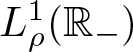 $L^1_\rho(\mathbb{R}_{-})$ that is permanent and possesses a compact global attractor $\mathcal{A}$. If $\beta$ is monotone, $\mathcal{A}$ reduces to a single asymptotically stable equilibrium attracting all compact sets with positive initial data. Adapting an approach from [21], originally developed for simpler renewal equations, we investigate stability and persistence in this more complex setting via the one-dimensional recurrence $b_{n+1} = \mathfrak{F} b_n,$ thereby complementing the functional-analytic framework of [13].


2 - Extremal Graph Theory
-
- Book:
- Basic Graph Theory
- Published online:
- 15 March 2026
- Print publication:
- 26 March 2026, pp 44-79
-
- Chapter
- Export citation
5 - Discovery of X Chromosome Inactivation
- from Part II - Activity of Sex Chromosomes
-
- Book:
- Sex, Genes and Chromosomes
- Published online:
- 08 March 2026
- Print publication:
- 19 March 2026, pp 145-173
-
- Chapter
- Export citation
Chapter 2 - Psychopathy Debates, Myths, and Misconceptions
-
- Book:
- Psychopathy in Adolescence and its Consequences in Adulthood
- Published online:
- 22 April 2026
- Print publication:
- 19 March 2026, pp 27-58
-
- Chapter
- Export citation
8 - Stability, 1922–1969
-
- Book:
- A Concise History of Ireland
- Published online:
- 12 February 2026
- Print publication:
- 12 March 2026, pp 204-232
-
- Chapter
- Export citation
Stabilization of arbitrary structures in a three-dimensional doubly degenerate nutrient taxis system
- Part of
-
- Journal:
- European Journal of Applied Mathematics , First View
- Published online by Cambridge University Press:
- 05 March 2026, pp. 1-28
-
- Article
-
- You have access
- Open access
- HTML
- Export citation
-
The doubly degenerate nutrient taxis system(0.1)
is considered under zero-flux boundary conditions in a smoothly bounded domain \begin{equation} \left \{ \begin{aligned} &u_{t}=\nabla \cdot (uv\nabla u)-\chi \nabla \cdot (u^{\alpha }v\nabla v)+\ell uv,&x\in \Omega ,\, t\gt 0,\\[5pt] & v_{t}=\Delta v-uv,&x\in \Omega ,\, t\gt 0,\\ \end{aligned} \right . \end{equation} $\Omega \subset \mathbb{R}^3$ where $\alpha \gt 0,\chi \gt 0$ and $\ell \gt 0$. By developing a novel class of functional inequalities to address the challenges posed by the doubly degenerate diffusion mechanism in (0.1), it is shown that for $\alpha \in (\frac {3}{2},\frac {19}{12})$, the associated initial-boundary value problem admits a global continuous weak solution for sufficiently regular initial data. Furthermore, in an appropriate topological setting, this solution converges to an equilibrium $(u_\infty , 0)$ as $t\rightarrow \infty$. Notably, the limiting profile $u_{\infty }$ is non-homogeneous when the initial signal concentration $v_0$ is sufficiently small, provided the initial data $u_0$ is not identically constant.


A Dynamic Discrete Choice Approach to Attitude Stability and Constraint
-
- Journal:
- Political Analysis , First View
- Published online by Cambridge University Press:
- 25 February 2026, pp. 1-20
-
- Article
-
- You have access
- Open access
- HTML
- Export citation
Ground control to Elon Musk: Stability implications of satellite mega-constellations
-
- Journal:
- European Journal of International Security , First View
- Published online by Cambridge University Press:
- 23 February 2026, pp. 1-19
-
- Article
-
- You have access
- Open access
- HTML
- Export citation
8 - Refinements of Nash Equilibrium
- from Part II - Mathematics Of Game Theory And Its Foundations
-
-
- Book:
- One Hundred Years of Game Theory
- Published online:
- 03 March 2026
- Print publication:
- 19 February 2026, pp 69-78
-
- Chapter
- Export citation
