Refine search
Actions for selected content:
795 results
A systematic characterisation of canopy density based on turbulent-structure penetration
-
- Journal:
- Journal of Fluid Mechanics / Volume 1033 / 25 April 2026
- Published online by Cambridge University Press:
- 20 April 2026, A27
-
- Article
-
- You have access
- Open access
- HTML
- Export citation
-
We investigate turbulent flows over canopies of rigid elements with different geometries, spacings and Reynolds numbers to identify and characterise different canopy density regimes. In the sparse regime, the overlying turbulence penetrates relatively unhindered within the canopy, whereas in the dense regime, this penetration is limited. The frontal density, $\lambda _f$, a common a measure of canopy density, is effective for e.g. conventional vegetation with no preferential orientation, but we observe that it does not fully characterise the density regime for some less conventional topologies, suggesting it may not always capture the underlying physics. To address this, we propose to quantify turbulence penetration directly, from the position and extent of individual turbulent eddies, particularly those associated with intense Reynolds shear stress. We analyse a series of direct simulations for isotropic- and anisotropic-layout canopies with frontal densities $\lambda _f\approx 0.01$– $2.04$, heights $h^+\approx 44$– $266$, element width-to-pitch ratios $w/s\approx 0.06$– $0.7$ and Reynolds numbers ${\textit{Re}}_{\tau} \approx 180$– $2000$. For the same $\lambda _f$, canopies with elements closely packed in the streamwise direction but large spanwise gaps result in deeper turbulence penetration, appearing sparser than isotropic or spanwise-packed ones. For the same spanwise gap, turbulence penetration remains similar across canopies independently of their streamwise pitch and gap. As the spanwise gap increases, eddies penetrate deeper and more vigorously into the canopy. Turbulence penetration is also Reynolds-number-dependent: the same canopy can behave as dense at low ${\textit{Re}}_{\tau}$, but increasingly sparse as ${\textit{Re}}_{\tau}$ increases. Our results suggest that turbulence penetration depends essentially on the ability of turbulent eddies to fit within the canopy as they travel downstream, and that this can be characterised by an effective spanwise gap, and its ratio to the typical eddy size; turbulence penetration is substantial when this gap is larger than the eddy size, and negligible in the opposite case. A penetration length $d_p$ can then be defined from the effective gap or the eddy size, whichever is smaller. For small $d_p/h$, the canopy behaves as dense; for moderate $d_p/h$, as intermediate; and for $d_p/h\approx 1$, turbulent eddies can penetrate all the way to the canopy bed and the canopy behaves as sparse.


Direct numerical simulations of out-scale-actuated spanwise wall oscillation in turbulent boundary layers
-
- Journal:
- Journal of Fluid Mechanics / Volume 1033 / 25 April 2026
- Published online by Cambridge University Press:
- 20 April 2026, A28
-
- Article
-
- You have access
- HTML
- Export citation
-
Spanwise wall oscillation (SWO) of turbulent boundary layers (TBLs) is investigated via direct numerical simulations (DNS) over an extended actuation region (momentum Reynolds number $344\lt Re_\theta \lt 2340$) with oscillation periods up to $T_{\textit{sc}}^+=600$, scaled by the uncontrolled friction velocity $u_{\tau 0}$ at the onset of SWO (i.e. $ \textit{Re}_\theta =344$). For low periods ( $T_{\textit{sc}}^+\lt 200$), drag reduction ( $ \textit{DR} $) decreases with increasing $ \textit{Re}_\theta$, consistent with conventional inner-scaled control strategies targeting near-wall turbulence. In sharp contrast, for large periods ( $T_{\textit{sc}}^+\gt 200$), $ \textit{DR} $ increases with $ \textit{Re}_\theta$. For example, at $T_{\textit{sc}}^+=600$, $ \textit{DR} $ rises from 1.3 % at $ \textit{Re}_\theta =713$ to 7.0 % at $ \textit{Re}_\theta =2340$. This unexpected growth is partly explained by the streamwise evolution of the effective oscillation parameter: as a TBL develops, $u_{\tau 0}$ decreases downstream, reducing the local-scaled period $T^+$ and thereby enhancing suppression of near-wall turbulence. Interestingly, if the results are compared at approximately fixed $T^+$, then $ \textit{DR} $ for $T^+\gt 350$ still exhibits a weak positive dependence on $ \textit{Re}_\theta$, consistent with recent experiments by Marusic et al. (2021, Nat. Commun., vol. 12, 5805). We further develop a new analytical relationship that links $ \textit{DR} $ to the upward shift of mean velocity in the wake region. Unlike previous formulations, the relationship avoids logarithmic-region fitting and does not rely on an invariant Kármán constant under SWO, while maintaining good agreement with DNS data. Flow diagnostics – including Reynolds stresses, skin-friction decomposition, and energy spectra – demonstrate that the observed variation of $ \textit{DR} $ with Reynolds number ( $ \textit{Re}$) arises from period-dependent modulation of near-wall turbulence. Overall, these findings challenge the conventional view that $ \textit{DR} $ inevitably deteriorates with $ \textit{Re}$, and demonstrate that out-scaled actuation can instead enhance $ \textit{DR} $ performance – offering new physical insights for high- $ \textit{Re}$ control strategies.


Resolvent-based estimation of a turbulent wake
-
- Journal:
- Journal of Fluid Mechanics / Volume 1033 / 25 April 2026
- Published online by Cambridge University Press:
- 16 April 2026, A22
-
- Article
-
- You have access
- Open access
- HTML
- Export citation
-
We present a resolvent-based framework for estimating turbulent velocity fluctuations in the wake of a spanwise-periodic NACA0012 airfoil at Mach 0.3, Reynolds number 23 000, and an angle of attack of $6^{\circ }$. Building on the methodology of Jung et al. (2025, J. Fluid Mech. 1016, A41), we extend the approach to the more complex regime of a turbulent wake, which involves three primary challenges: (i) globally unstable modes in the linearised Navier–Stokes operator, (ii) multi-scale turbulent structures and (iii) high-dimensional datasets. To address these challenges, we employ a data-driven approach that constructs causal resolvent-based estimation kernels from cross-spectral densities obtained via large-eddy simulations. These kernels are derived using the Wiener–Hopf method, which optimally enforces causality, thereby enhancing real-time estimation accuracy. The framework captures the spectral signatures of coherent structures and, through the empirically determined cross-spectral densities, implicitly accounts for the coloured statistics of the nonlinear forcing acting on the linear system. To handle the computational demands of the high-dimensional estimation problem, we utilise parallel algorithms developed within the same framework. We further investigate sensor placement by analysing single-sensor estimation error and coherence with target flow quantities. Results demonstrate accurate causal estimation of streamwise velocity for the spanwise-averaged, spanwise-Fourier-transformed and mid-span flow using limited shear-stress measurements on the surface of the airfoil. This study underscores the potential of the resolvent-based framework for efficient estimation in compressible, turbulent environments.

Direct numerical simulation of turbulent flow in a flexible pipe with imposed standing-wave vibration
-
- Journal:
- Journal of Fluid Mechanics / Volume 1032 / 10 April 2026
- Published online by Cambridge University Press:
- 06 April 2026, A53
-
- Article
- Export citation
-
Direct numerical simulations of turbulence in a flexible pipe with imposed standing-wave vibration are performed to reveal the flow dynamics inside an oscillating pipe. We choose the parameters of standing-wave vibration with small amplitude as the most unstable mode in flow-induced free vibration. The flow is driven under the condition of constant mass flow rate, with the bulk Reynolds number, based on the bulk velocity and pipe diameter, being ${\textit{Re}}_b$ = 5300. In response to the imposed vibration, the evolution of the flow inside manifests obvious space–time-dependent characteristics. Specifically, the streamwise velocity fluctuation is enhanced downstream of the crest – the convex region on the internal pipe wall – an event often accompanied by localised flow separation. Meanwhile, the two other components of velocity fluctuation are augmented downstream of the trough – the concave region of the wall’s sinusoidal undulation. This is attributed to the wall deformation, which forces a redistribution of turbulent kinetic energy among the components. The latter process gives rise to a high-level fluctuation of wall shear stresses, leading to the intermittent variation of the drag force in that region. In addition, secondary flow emerges in the form of a typical counter-rotating vortex pair due to the bending of pipe, with the vortex cores located near the wall. The temporal variation of the magnitude of secondary flow lags slightly behind the pipe vibration and its maximum occurs closer to the node where the pipe displacement is consistently zero. Moreover, the secondary flow intensity increases with the increasing of steepness and a slight drag reduction can be achieved with relatively low-wavenumber vibration.

Scale-by-scale energy transfers in bubbly flows
-
- Journal:
- Journal of Fluid Mechanics / Volume 1032 / 10 April 2026
- Published online by Cambridge University Press:
- 30 March 2026, A12
-
- Article
- Export citation
Transport structure of two-dimensional homogeneous Rayleigh–Bénard convection
-
- Journal:
- Journal of Fluid Mechanics / Volume 1032 / 10 April 2026
- Published online by Cambridge University Press:
- 30 March 2026, A11
-
- Article
- Export citation
Modification of turbulence by the movement of a spherical vortex
-
- Journal:
- Journal of Fluid Mechanics / Volume 1031 / 25 March 2026
- Published online by Cambridge University Press:
- 24 March 2026, A46
-
- Article
-
- You have access
- Open access
- HTML
- Export citation
Direct numerical simulations of channel flow with a molecular-dynamics-informed wall slip boundary condition
-
- Journal:
- Journal of Fluid Mechanics / Volume 1030 / 10 March 2026
- Published online by Cambridge University Press:
- 09 March 2026, A65
-
- Article
-
- You have access
- Open access
- HTML
- Export citation
Self-similar scaling of variable-density Rayleigh–Taylor turbulence
-
- Journal:
- Journal of Fluid Mechanics / Volume 1030 / 10 March 2026
- Published online by Cambridge University Press:
- 27 February 2026, A14
-
- Article
- Export citation
-
The dynamics of turbulent Rayleigh–Taylor (RT) mixing layers is investigated across a broad range of Atwood and Reynolds numbers using the statistically stationary RT flow configuration – a computational framework that enables simulation of a minimal flow unit for RT flows at reduced cost. Normalizations are developed for all dominant non-transport terms in the continuity, mixed mass and turbulent kinetic energy budgets in terms of the input parameters: the mixing layer height $h$, gravitational acceleration $g$ and fluid densities $\rho _H$ and $\rho _L$. Most normalized quantities collapse well across the parameter space. In some cases, variations in the Atwood number $A$ (or the density ratio $R$) lead to consistent integral magnitudes but spatially shifted profiles. These shifts are primarily related to a division by density and are similarly observed in the analytical solution of the one-dimensional variable-density diffusion problem. The analysis introduces a reference density for the mixed mass, examines trends in Favre-averaged statistics and derives a scaling law for the growth rate of the mixing layer. For height definitions encompassing the full extent of the layer, the conventional growth parameter, $\alpha =\dot {h}^2/4Agh$, varies with Atwood number. Our analysis leads to an alternative formulation using an effective Atwood number, $A^*= (\ln R)/2$, that is consistent with the scaling proposed by Belen’kii & Fradkin (1965 Trudy FIAN 29, 207–238). Applying this $A^*$ scaling to existing RT data, the corresponding growth parameter, $\alpha ^*=\dot {h}^2/4A^*gh$, remains nearly constant across all Atwood numbers considered, offering a unified scaling for variable-density RT flows.


Evidence for the incompatibility of smoothed particle hydrodynamics and eddy viscosity models for large eddy simulations
-
- Journal:
- Journal of Fluid Mechanics / Volume 1029 / 25 February 2026
- Published online by Cambridge University Press:
- 19 February 2026, A34
-
- Article
-
- You have access
- Open access
- HTML
- Export citation
-
In this work, we will present evidence for the incompatibility of smoothed particle hydrodynamics (SPH) methods and eddy viscosity models. Taking a coarse-graining perspective, we physically argue that SPH methods operate intrinsically as Lagrangian large eddy simulations for turbulent flows with strongly overlapping discretisation elements. However, these overlapping elements in combination with numerical errors cause a significant amount of implicit subfilter stresses (SFS). Considering a Taylor–Green flow at $Re=10^4$, the SFS will be shown to be relevant where turbulent fluctuations are created, explaining why turbulent flows are challenging even for current SPH methods. Although one might hope to mitigate the implicit SFS using eddy viscosity models, we show a degradation of the turbulent transition process, which is rooted in the non-locality of these methods.

Direct numerical simulations of Taylor–Couette flow for vanishingly small inner cylinders
-
- Journal:
- Journal of Fluid Mechanics / Volume 1029 / 25 February 2026
- Published online by Cambridge University Press:
- 13 February 2026, A16
-
- Article
-
- You have access
- Open access
- HTML
- Export citation
-
We investigate turbulent Taylor–Couette flow between two concentric cylinders, where the inner cylinder of radius $r_i$ rotates while the outer one of radius $r_o$ remains stationary. Using direct numerical simulations, we examine how varying the radius ratio $\eta = r_i / r_o$ from $\eta = 0.714$ down to $0.0244$ affects the flow characteristics at low to moderate Reynolds numbers. Our results show significant changes in the flow structures and statistics in the limit of a vanishingly small inner radius. The turbulent kinetic energy, scaled with the friction velocity at the inner cylinder, does not exhibit a self-similar scaling; instead, it decreases with decreasing $\eta$. The turbulent kinetic energy budgets reveal that the locations of peak production and total dissipation are independent of $\eta$, whereas their amplitudes decrease as $\eta$ increases. The pressure–velocity correlation near the inner cylinder is large for small $\eta$ and its amplitude decreases with increasing $\eta$, while the turbulent transport term exhibits the opposite trend. Numerical simulations for $\eta \leqslant 0.5$ show that, for our specific set-up, a rather good collapse of the distribution of the normalised torque versus the Taylor number ( $ \textit{Ta}$) is obtained when the latter is defined according to Chandrasekhar (Hydrodynamic and Hydromagnetic Stability, Oxford Univ. Press, 1961), with a tendency towards a $ \textit{Ta}^{1/3}$ regime at sufficiently large $ \textit{Ta}$.


Preferential concentration and flow field modification in bubble-laden vertical turbulent channel flow
-
- Journal:
- Journal of Fluid Mechanics / Volume 1029 / 25 February 2026
- Published online by Cambridge University Press:
- 10 February 2026, A3
-
- Article
-
- You have access
- Open access
- HTML
- Export citation
-
Direct numerical simulations with two-way coupled Lagrangian tracking are carried out to study the bubble preferential concentration and the flow field modification. Simulations are conducted in an upward vertical turbulent channel driven by a constant pressure gradient, corresponding to a friction Reynolds number $Re_{\tau 0}=180$. Micro-sized bubbles with diameters ranging from 0.72 to 1.43 wall units are considered. Competition between lift force and wall-lift force in the wall-normal direction leads to significant near-wall bubble accumulation and directly results in distinct preferential concentration patterns across the channel. Below (above) the peak concentration height, the wall-lift (lift) force dominates, driving bubbles to accumulate in regions of high-speed sweep (low-speed ejection) events. In the vicinity of the wall, the wall-normal lift force exhibits a strong correlation with the local streamwise flow velocity, further reinforcing the preferential concentration of bubbles in high-speed regions. Additionally, bubbles show a strong preference for the low-enstrophy and high-dissipation nodal topologies. Furthermore, small bubbles primarily accumulate in the vicinity of the wall, reducing the work done on the flow and leading to a decrease in bulk velocity and turbulence statistics. In contrast, the turbulence statistics of large bubbles are nearly identical to those of the unladen flow. The impact of large bubbles on the flow field primarily manifests as an effective increase in the mean pressure gradient. These findings demonstrate that bubbles in the upward vertical channel flow exhibit strong preferential concentration behaviours, whereas their ability to modulate turbulence remains limited.

Non-dimensional dissipation at strong unsteady transitions in isotropic turbulence
-
- Journal:
- Journal of Fluid Mechanics / Volume 1028 / 10 February 2026
- Published online by Cambridge University Press:
- 10 February 2026, A46
-
- Article
- Export citation
-
Exact mathematical expressions are derived to predict the exponent $p$ observed in non-equilibrium turbulence, where the classical dissipation law is replaced by a new dissipation scaling law $C_{\varepsilon } \sim \textit{Re}_{\lambda }^p$. Here, $ \textit{Re}_{\lambda }$ is the Taylor-based Reynolds number and $C_{\varepsilon } = \varepsilon L_{11} / u^{\prime 3}$ is the non-dimensional dissipation rate, defined by the viscous dissipation rate, $\varepsilon$, longitudinal integral scale, $L_{11}$, and root-mean-square of the velocity fluctuations $u^{\prime} = \sqrt {\overline {u^{\prime 2}}}$ (Vassilicos, Annu. Rev. Fluid Mech., vol. 47, 2015, pp. 95–114). Assuming homogeneous and isotropic turbulence, it is shown that the exact value of $p$ involves only first-order derivatives of these variables; however, at very high Reynolds numbers, and under particularly strong changes in the power input of the external forcing (without changing the shape of the forcing spectrum), the exact expression simplifies to $p = 3\pi / 4\alpha L_{110} - 5 / 2$, where $L_{110}$ is the initial value of the longitudinal integral scale and $\alpha$ represents an effective forcing wavenumber. Thus, the main finding is that only large-scale effects are involved in the imposition of the non-equilibrium dissipation scaling law. The results are compared with direct numerical simulation (DNS) results of isotropic turbulence under abruptly changing forcing conditions and with experimental data of non-equilibrium decaying isotropic turbulence, showing consistent results.


Unified scaling laws in porous-medium vertical natural convection
-
- Journal:
- Journal of Fluid Mechanics / Volume 1028 / 10 February 2026
- Published online by Cambridge University Press:
- 30 January 2026, A17
-
- Article
- Export citation
-
This study conducted theoretical analysis and direct numerical simulations (DNS) of vertical natural convection in a two-dimensional cavity filled with porous media, where the imposed temperature gradient is oriented perpendicular to the direction of gravity. Three regimes characterised by distinct flow states and the angle $\theta$ of the isothermal layer are identified. In the steady regime I with $\theta \approx \pi /2$, the flow is weak and heat transfer is dominated by conduction. In the transitional regime II with rapidly increasing $\theta$, kinetic and thermal boundary layers gradually develop. In the turbulent regime III with $\theta \approx 0$, clear boundary layers arise and turbulent thermal convection prevails. Corresponding to these flow states, theoretical analysis is performed to derive the scaling laws of the Nusselt number $\textit{Nu}-1\sim Ra_{D}^{\gamma _1 }\textit{Pr}^{\eta _1}$ and Reynolds number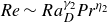 $\textit{Re}\sim Ra_{D}^{\gamma _2 }\textit{Pr}^{\eta _2}$ with respect to Rayleigh–Darcy number $Ra_D$ and Prandtl number $\textit{Pr}$. We derive $(\gamma _1,\gamma _2,\eta _1,\eta _2)=(2,1,0,-1)$ for the steady regime and $(1/3,4/9,0,-2/3)$ for the turbulent regime. All theoretical scaling exponents in these two regimes are validated by DNS results. Furthermore, we find that the influence of the Darcy number $Da$ becomes almost negligible when it is sufficiently small. Unified models for $\textit{Pr}=1$ are proposed to integrate the three regimes and are applicable across a broad range of $\phi$ and $Ra_D$, which are satisfactorily verified by DNS results. The unified models provide a predictive framework for heat transport and flow intensity in porous-medium thermal convection, thereby offering practical values for thermal engineering applications.


Assessment of non-intrusive sensing in wall-bounded turbulence through explainable deep learning
-
- Journal:
- Journal of Fluid Mechanics / Volume 1028 / 10 February 2026
- Published online by Cambridge University Press:
- 30 January 2026, A19
-
- Article
-
- You have access
- Open access
- HTML
- Export citation
-
In this work we present a framework to explain the prediction of the velocity fluctuation at a certain wall-normal distance from wall measurements with a deep-learning model. For this purpose, we apply the deep-SHAP (deep Shapley additive explanations) method to explain the velocity fluctuation prediction in wall-parallel planes in a turbulent open channel at a friction Reynolds number ${\textit{Re}}_\tau =180$. The explainable-deep-learning methodology comprises two stages. The first stage consists of training the estimator. In this case, the velocity fluctuation at a wall-normal distance of 15 wall units is predicted from the wall-shear stress and wall-pressure. In the second stage, the deep-SHAP algorithm is applied to estimate the impact each single grid point has on the output. This analysis calculates an importance field, and then, correlates the high-importance regions calculated through the deep-SHAP algorithm with the wall-pressure and wall-shear stress distributions. The grid points are then clustered to define structures according to their importance. We find that the high-importance clusters exhibit large pressure and shear-stress fluctuations, although generally not corresponding to the highest intensities in the input datasets. Their typical values averaged among these clusters are equal to one to two times their standard deviation and are associated with streak-like regions. These high-importance clusters present a size between 20 and 120 wall units, corresponding to approximately 100 and 600 $\unicode{x03BC} \textrm {m}$ for the case of a commercial aircraft.


Influence of inflow turbulence on wake dynamics of a square cylinder
-
- Journal:
- Journal of Fluid Mechanics / Volume 1028 / 10 February 2026
- Published online by Cambridge University Press:
- 29 January 2026, A15
-
- Article
- Export citation
Fluctuations around turbulence models
-
- Journal:
- Journal of Fluid Mechanics / Volume 1027 / 25 January 2026
- Published online by Cambridge University Press:
- 22 January 2026, A39
-
- Article
-
- You have access
- Open access
- HTML
- Export citation
-
Numerical simulations of turbulent flows at realistic Reynolds numbers generally rely on filtering out small scales from the Navier–Stokes equations and modelling their impact through the subgrid-scale stress tensor ${\tau }_{\textit{ij}}$. Traditional models approximate ${\tau }_{\textit{ij}}$ solely as a function of the filtered velocity gradient, leading to deterministic subgrid-scale closures. However, small-scale fluctuations can locally exhibit instantaneous values whose deviation from the mean can have a significant influence on the flow dynamics. In this work, we investigate these effects by employing direct numerical simulations combined with Gaussian filtering to quantify subgrid-scale effects and evaluating the local energy flux in both space and time. The mean performance of the canonical Clark model is assessed by conditioning the energy flux distributions on the invariants of the filtered velocity gradient tensor, $Q$ and $R$. The Clark model captures to a good degree the mean energy flux. However, the fluctuations around these mean values for given ( $Q,R$) are of the order of the mean, displaying fat-tailed distributions. To be more precise, we examine the joint distributions of true energy flux and the predictions from both the Clark and the Smagorinsky models. This approach mirrors the strategy adopted in early stochastic subgrid-scale models. Clear non-Gaussian characteristics emerge from the obtained distributions, particularly through the appearance of heavy tails. The mean, the variance, the skewness and the flatness of these distributions are quantified. Our results emphasise that fluctuations are an integral component of the small-scale feedback onto the large-scale dynamics and should be incorporated into subgrid-scale modelling through an appropriate stochastic framework.


Comparison between the acoustic fields of contra-rotating and conventional marine propellers in wetted conditions and thrust similitude
-
- Journal:
- Journal of Fluid Mechanics / Volume 1027 / 25 January 2026
- Published online by Cambridge University Press:
- 15 January 2026, A21
-
- Article
-
- You have access
- Open access
- HTML
- Export citation
-
The acoustic fields of a contra-rotating propeller and isolated propellers producing the same overall thrust are compared at both design and off-design working conditions. The sound levels are reconstructed by using the Ffowcs Williams–Hawkings acoustic analogy, exploiting results of computations conducted on a cylindrical grid consisting of $4.6 \times {10}^9$ points and a large-eddy simulation technique. The analysis shows that, although the blades of the contra-rotating propeller are less loaded and produce less intense flow structures, the levels of radiated sound are reinforced, compared with the propellers working alone. This is due to the loading sound, originating from the pressure fluctuations on the surface of the blades of the propellers. The higher levels of linear sound are attributable to the interplay between the front and rear rotors of the contra-rotating system. This interaction is able to reinforce the unsteady component of the loads acting on the blades of the propellers and the resulting linear component of sound. While the shear occurring between the tip vortices shed by the front and rear rotors gives rise to a complex system of isolated vortex rings in the wake, increasing the quadrupole component of sound, these phenomena are balanced by the lower intensity of the vortices shed by the contra-rotating system.

Cavitation inception mechanisms during the interaction between a pair of counter-rotating vortices
-
- Journal:
- Journal of Fluid Mechanics / Volume 1027 / 25 January 2026
- Published online by Cambridge University Press:
- 14 January 2026, A15
-
- Article
-
- You have access
- Open access
- HTML
- Export citation
-
Cavitation inception in the wake of propulsor systems often arises from the interaction between multiple vortices. We use large-eddy simulation (LES) to study cavitation during the canonical interaction of a pair of unequal strength counter-rotating vortices generated in the wake of a hydrofoil pair at a chord-based Reynolds number ( $ \textit{Re}$) of $1.7 \times 10^6$. The simulations reproduce the experimental observations by Knister et al. (In 33rd Symposium on Naval Hydrodynamics, Osaka, Japan, 2020) of spatially and temporally intermittent inception events occurring in the weaker vortex. Sinusoidal instabilities representing the Crow instability develop on the weaker vortex beyond one chord length downstream of the hydrofoils, causing it to bend and wrap around the stronger vortex. The inviscid stretching causes a significant reduction of the weaker core pressure and inception occurs as it approaches close to the stronger core. These intermittent inception events correspond to $3{-}4$ fold pressure reduction from the unperturbed value, with the instantaneous pressures reaching $40\,\%{-}60\,\%$ lower than the mean minimum pressure. However, the loss of circulation ( ${\gt} 20\,\%$) in both cores during the later stages of interaction reduces the possibility of further inception events. Statistical analysis reveals that inception occurs once per Crow cycle and is most likely to occur near the central regions of the Crow wavelength. Conditional averages show that the axial stretching is non-uniform along the weaker vortex axis, with the stretching intensities in the central regions being four times larger than the wavelength-averaged value. Probability distribution analysis shows that only a small portion of the weaker core experiences inception pressures and these regions have relatively lower axial stretching intensities compared with the bulk of the core.


Enthalpy transformation for wall-bounded supercritical flows with heat transfer
-
- Journal:
- Journal of Fluid Mechanics / Volume 1026 / 10 January 2026
- Published online by Cambridge University Press:
- 05 January 2026, A36
-
- Article
- Export citation
