To save content items to your account,
please confirm that you agree to abide by our usage policies.
If this is the first time you use this feature, you will be asked to authorise Cambridge Core to connect with your account.
Find out more about saving content to .
To save content items to your Kindle, first ensure no-reply@cambridge.org
is added to your Approved Personal Document E-mail List under your Personal Document Settings
on the Manage Your Content and Devices page of your Amazon account. Then enter the ‘name’ part
of your Kindle email address below.
Find out more about saving to your Kindle.
Note you can select to save to either the @free.kindle.com or @kindle.com variations.
‘@free.kindle.com’ emails are free but can only be saved to your device when it is connected to wi-fi.
‘@kindle.com’ emails can be delivered even when you are not connected to wi-fi, but note that service fees apply.
Chapter 5 returns to Ibn ʿAbd al-Salām’s biography to examine his attempts to embody, apply, and disseminate his legal philosophy among diverse classes: scholars, students of the law, and a non-specialist public in Damascus and later in Cairo, where he retired. I demonstrate that Ibn ʿAbd al-Salām’s public activism and frequent embroilment in political controversy are best understood as manifestations of these efforts. I outline the connections between his legal philosophy and the socioreligious goals he pursued, highlighting the continuity between his theoretical scholarship and his embodied activism.
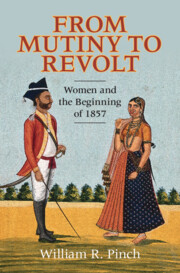
Why did the nonviolent Meerut mutiny of 1857 in India explode into a violent military revolt? Breaking new ground on the events of May 10, William Pinch reexamines the evidence, shifting our focus toward the identity of female participants and their actions in the hours before the revolt began. Drawing upon a wide range of sources, including Hindi folksongs, military records, police reports, literary fiction, and Urdu memoir, he creates snapshots from the perspective of key figures to uncover the social and emotional world of the military 'cantonment' and its rural hinterland. By foregrounding the lives of ordinary 'military women' and 'their men' - the Indian sepoys who peopled the revolt - Pinch challenges conventional narratives and guides readers through the literary and historiographical echoes of the fateful decision to take up arms against the British.
In 1932, Khana Ratsadon (the People’s Party) overthrew the absolute monarchy in a military coup, introducing constitutional rule in Siam (Thailand after 1939). The dominant historical narrative in Thailand centres on the monarchy as the instigator of historical change, celebrating the roles of Thai monarchs in the development and protection of democracy. According to this narrative, democracy is portrayed as the monarchy’s gift to the people, while the significance of the 1932 revolution and Khana Ratsadon has been marginalized in the history of the origins of democracy in Thailand. Since the military coups in Thailand in 2006 and 2014, both original and newly created objects related to Khana Ratsadon have emerged in political protests against coups and post-coup governments. Simultaneously, a revisionist historiography has gained momentum. This article explores how the discursive and material (re)emergence of Khana Ratsadon contributes to the formation of a counter-memory, creating a space for political commentary to enact and reimagine the possibilities of community anew. In doing so, the article will examine the intricate relationship between a historiography of oblivion, counter-memory, and what we term ‘banal and revolutionary objects’.
Debates over the links between ethnicity and conflict often focus on the national level and take an ahistorical approach. This approach hides cases of ethnic conflict that arise at the subnational level and leaves unanswered questions over how ethnicity became a driver of conflict. This article explores these blind spots, using three cases in the African Great Lakes region. The cases reviewed here are the bipolar situations of Hema v. Lendu in Ituri (DRC), Banyarwanda/Banyamulenge v. ‘Autochthons’ in South and North Kivu (DRC), and Hima v. Iru in Ankole (Uganda). These cases suggest that polarisation is a more useful approach than fragmentation, but simple correlations between ethnic dyads and conflict obfuscate the nature and depths of the cleavages, as well as the mechanisms fuelling them. We elaborate on the pathways of escalation, highlighting how and when elite manipulations can activate deeply held identitarian norms. We conclude by emphasising the many lulls and moments of de-escalation, countering the portrayal of ethnic conflict as somehow inevitable.
After nearly two decades of documenting Ngũgĩ wa Thiong’o’s life and work, this reflection situates my conversations with him within a broader canvas—one that allows us to hear him in dialogue with fellow writers, activists, and global artists.
To what extent does refugee protection in Western Europe depend on the ethno-religious and gender identity of asylum seekers? This article examines how selective humanitarianism, shaped by the identity of asylum seekers and migrants, shapes their protection status. It offers an analysis of Germany’s response to Yezidi refugees, in comparison with that of France, in the wake of the genocidal campaign carried out by the Islamic State in 2014. Drawing on fieldwork that includes interviews with Yezidi refugees and stakeholders in Germany, we argue that contemporary asylum regimes operate through three interrelated mechanisms: the securitization of certain groups, selective humanitarian exceptions, and neoliberal selection criteria. The Yezidi experience illustrates how these mechanisms generate hierarchies of protection, wherein even recognized victims of genocide must meet increasingly economic thresholds to secure lasting refuge. While specialized programs for women survivors represent important humanitarian innovations, they often exclude male family members, thereby producing new forms of vulnerability. Struggling to align with dominant narratives of economically valuable migrants, Yezidis encounter a renewed form of liminality in Europe.
Daniel James, a preeminent historian of the Argentine working class and Peronism, has fundamentally transformed how we understand Latin American labor history. This oral history interview, conducted by four of his former doctoral students, explores the personal, intellectual, and methodological foundations of his pioneering work. James discusses his working-class upbringing in post-war England as the son of Communist Party militants, his formative experiences at Oxford during the late 1960s, and his introduction to Argentina during the politically charged early 1970s. The conversation traces his evolution from the social history approach of Resistance and Integration: Peronism and the Argentine Working Class (1988) through his methodological innovations in oral history with Doña María’s Story (2000) to his recent collaborative work on photography and memory in Paisajes del pasado (2025). James reflects candidly on the influence of E. P. Thompson, Walter Benjamin, and the Latin American Labor History Workshop on his scholarship, while emphasizing the centrality of relationships, empathy, and historical imagination in his approach to working-class history. The interview also addresses his teaching philosophy, his commitment to graduate mentorship, and his view of history as a moral enterprise aimed at rescuing ordinary people “from the enormous condescension of posterity.” James concludes by outlining two prospective research projects on Argentine photography and political exile.
Does increasing descriptive representation enhance substantive representation? While ethnic minorities are generally underrepresented in legislatures worldwide, they are overrepresented in China’s National People’s Congress. We show that overrepresentation of ethnic legislators does not result in greater substantive representation. Compared to their Han counterparts, ethnic minority legislators are less likely to sponsor bills, show no significant difference in submitting policy suggestions, and are reticent to propose legislation on ethnic issues. They face challenges in mobilizing sufficient signatures for bill sponsorship within delegations and in building cross-delegation policy coalitions. Ethnic fragmentation may hinder their ability to advance the policy agenda. Our findings suggest that institutional constraints and collective action problems may hinder ethnic legislators from achieving substantive representation.
The Kurdish movement in Turkey illustrates a complex struggle for political recognition and decolonization. The article examines this dual strategic orientation, focusing on the peace process initiated in October 2024 between the Turkish state and Kurdish representatives. Through a detailed and symptomatic reading of the two texts by Abdullah Öcalan, February Call and Perspektif, the article aims to demonstrate that the movement both interacts with the state to secure democratic prerequisites for political participation and continues to promote a radical critique of capitalist modernity and nation-state structures. Drawing upon Axel Honneth’s recognition theory and Étienne Balibar’s concept of “equaliberty,” the struggle for recognition is no longer seen just to result in a depoliticization through governmental control, but is rethought as building the capacity to stage an ongoing, performative process that manages the constitutive tension between equality and autonomy within Kurdish decolonial practice. This approach raises questions about how the movement navigates state structures while promoting alternative social institutions and epistemic spaces, including the problematic site of communes as a form of democratic autonomous experimentation.
China's approach to digital governance has gained global influence, often evoking Orwellian 'Big Brother' comparisons. Governing Digital China challenges this perception, arguing that China's approach is radically different in practice. This book explores the logic of popular corporatism, highlighting the bottom-up influences of China's largest platform firms and its citizens. Drawing on extensive fieldwork and nationally representative surveys, the authors track governance of social media and commercial social credit ratings during both the Hu Jintao and Xi Jinping eras. Their findings reveal how Chinese tech companies such as Tencent, Sina, Baidu, and Alibaba, have become consultants and insiders to the state, thus forming a state-company partnership. Meanwhile, citizens voluntarily produce data, incentivizing platform firms to cater to their needs and motivating resistance by platforms. Daniela Stockmann and Ting Luo unveil the intricate mechanisms linking the state, platform firms, and citizens in the digital governance of authoritarian states.
The Anglo-American invasion of Iraq and the fall of Saddam Hussein in 2003 brought exiles of Hussein's tyrannical reign flooding back to their native land, bringing with them the flavours and customs from adopted homes and with it sweeping, transnational power. 'Handing over power to the Iraqis' meant handing over power to the country's most elite transplants. Meanwhile, transnational diasporic activism and networks have simultaneously challenged state policies, buttressing the state apparatus through welfare provision and solidarity networks. How did the Iraqi diaspora achieve such a powerful position and shape the Iraqi state in 2003? What kind of state did they build? And what lessons can be learnt from the Iraqi diaspora for understanding Iraqi nationhood and statehood today? This study explores these questions, drawing on interviews with a wide range of actors to offer a pertinent insight into the critical role of diaspora in shaping the evolution of homeland states under modern processes of globalisation.
This article presents the results of excavations in Early Bronze Age levels at the site of Hamoukar in northeastern Syria. During the 2008 and 2010 field seasons, excavations in the lower town at Hamoukar uncovered evidence for three distinct architectural phases dating to the second half of the third millennium B.C. Prior to these excavations, attention had been focused on the final phase of Early Bronze Age occupation in the lower town, when the settlement was violently destroyed and then abandoned. It is now possible, however, to provide a backstory for the settlement’s violent end and also a more complicated––if still preliminary––account of exactly how the urbanisation process played out at the site. This article presents a summary of the Early Bronze Age stratigraphic sequence in the lower town at Hamoukar and, at the same time, a description of new evidence for the evolution of social, economic, and ritual practice across three phases of urban development. A brief comparison with urban trajectories at two other contemporary sites highlights the heterogeneity of cities and urban dynamics in Early Bronze Age northern Mesopotamia.
This research note explores an iconic female fraudster, who achieved celebrity criminal status with a substantial fanbase, by analyzing her status as an empowering female figure and the sociocultural context in contemporary Japan. In due course, we attempt to fill the notable research gap regarding the phenomenon of a female fraudster becoming a “celebrity criminal” from a post-feminist perspective. By analyzing online and interview materials, this article demonstrates that the highlighted otherness in Young’s “transgressive other” (Young 2007, 2011) is hardly applicable. We shed light on instrumentalized femininity shared among young women challenging the pre-existing normative femininity in contemporary Japan.