Refine search
Actions for selected content:
212709 results in Engineering
Spatial characterization of debris ejection from the interaction of a tightly focused PW-laser pulse with metal targets
-
- Journal:
- High Power Laser Science and Engineering / Volume 13 / 2025
- Published online by Cambridge University Press:
- 03 February 2025, e27
-
- Article
-
- You have access
- Open access
- HTML
- Export citation
Tunable attenuating diplexer using miniaturized multilayer graphene pads
-
- Journal:
- International Journal of Microwave and Wireless Technologies / Volume 16 / Issue 10 / December 2024
- Published online by Cambridge University Press:
- 03 February 2025, pp. 1722-1729
-
- Article
- Export citation
Coarse Graining Turbulence
- Modeling and Data-Driven Approaches and their Applications
-
- Published online:
- 31 January 2025
- Print publication:
- 06 February 2025
Swedish microwave days 2023 special issue
-
- Journal:
- International Journal of Microwave and Wireless Technologies / Volume 16 / Issue 10 / December 2024
- Published online by Cambridge University Press:
- 30 January 2025, p. 1623
-
- Article
-
- You have access
- Open access
- HTML
- Export citation
Hints to Selected Exercises
-
- Book:
- Convexity and its Applications in Discrete and Continuous Optimization
- Published online:
- 14 January 2025
- Print publication:
- 30 January 2025, pp 287-290
-
- Chapter
- Export citation
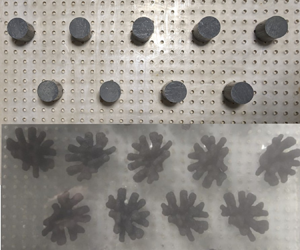
On the use of simplified geometries to represent turbulent flow over coral reefs
-
- Journal:
- Journal of Fluid Mechanics / Volume 1004 / 10 February 2025
- Published online by Cambridge University Press:
- 30 January 2025, A11
-
- Article
- Export citation
Index
-
- Book:
- Convexity and its Applications in Discrete and Continuous Optimization
- Published online:
- 14 January 2025
- Print publication:
- 30 January 2025, pp 305-310
-
- Chapter
- Export citation
Preface
-
- Book:
- Convexity and its Applications in Discrete and Continuous Optimization
- Published online:
- 14 January 2025
- Print publication:
- 30 January 2025, pp xiii-xviii
-
- Chapter
- Export citation
Part I - Structural Aspects
-
- Book:
- Convexity and its Applications in Discrete and Continuous Optimization
- Published online:
- 14 January 2025
- Print publication:
- 30 January 2025, pp 21-22
-
- Chapter
- Export citation
1 - Preliminaries
-
- Book:
- Convexity and its Applications in Discrete and Continuous Optimization
- Published online:
- 14 January 2025
- Print publication:
- 30 January 2025, pp 1-20
-
- Chapter
- Export citation
5 - Ingredients of Mathematical Optimization
- from Part II - Optimization
-
- Book:
- Convexity and its Applications in Discrete and Continuous Optimization
- Published online:
- 14 January 2025
- Print publication:
- 30 January 2025, pp 173-189
-
- Chapter
- Export citation
7 - Certificates and Duality
- from Part II - Optimization
-
- Book:
- Convexity and its Applications in Discrete and Continuous Optimization
- Published online:
- 14 January 2025
- Print publication:
- 30 January 2025, pp 263-286
-
- Chapter
- Export citation
References
-
- Book:
- Convexity and its Applications in Discrete and Continuous Optimization
- Published online:
- 14 January 2025
- Print publication:
- 30 January 2025, pp 291-304
-
- Chapter
- Export citation
4 - Geometry of Numbers
- from Part I - Structural Aspects
-
- Book:
- Convexity and its Applications in Discrete and Continuous Optimization
- Published online:
- 14 January 2025
- Print publication:
- 30 January 2025, pp 139-170
-
- Chapter
- Export citation
Compact eight-channel diplexer based on quad-mode stepped impedance resonator
-
- Journal:
- International Journal of Microwave and Wireless Technologies / Volume 16 / Issue 10 / December 2024
- Published online by Cambridge University Press:
- 30 January 2025, pp. 1713-1721
-
- Article
- Export citation
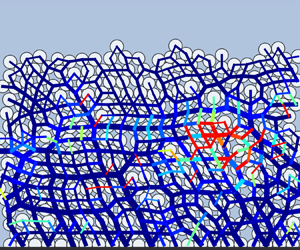
Ultrasound-induced dense granular flows: a two-time scale modelling
-
- Journal:
- Journal of Fluid Mechanics / Volume 1004 / 10 February 2025
- Published online by Cambridge University Press:
- 30 January 2025, A10
-
- Article
- Export citation
-
Understanding the mechanisms behind the remote triggering of landslides by seismic waves at micro-strain amplitude is essential for quantifying seismic hazards. Granular materials provide a relevant model system to investigate landslides within the unjamming transition framework, from solid to liquid states. Furthermore, recent laboratory experiments have revealed that ultrasound-induced granular avalanches can be related to a reduction in the interparticle friction through shear acoustic lubrication of the contacts. However, investigating slip at the scale of grain contacts within an optically opaque granular medium remains a challenging issue. Here, we propose an original coupling model and numerically investigate two-dimensional dense granular flows triggered by basal acoustic waves. We model the triggering dynamics at two separated time scales – one for grain motion (milliseconds) and the other for ultrasound (10 ${\rm \mu} {\rm s}$) – relying on the computation of vibrational modes with a discrete element method through the reduction of the local friction. We show that ultrasound predominantly propagates through the strong-force chains, while the ultrasound-induced decrease of interparticle friction occurs in the weak contact forces perpendicular to the strong-force chains. This interparticle friction reduction initiates local rearrangements at the grain scale that eventually lead to a continuous flow through a percolation process at the macroscopic scale – with a delay depending on the proximity to the failure. Consistent with experiments, we show that ultrasound-induced flow appears more uniform in space than pure gravity-driven flow, indicating the role of an effective temperature by ultrasonic vibration.

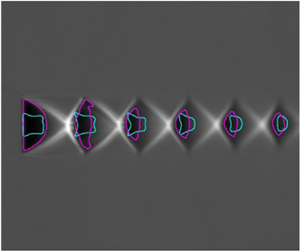
Manifestation of screech modes in non-axisymmetric jets
-
- Journal:
- Journal of Fluid Mechanics / Volume 1004 / 10 February 2025
- Published online by Cambridge University Press:
- 30 January 2025, A7
-
- Article
-
- You have access
- Open access
- HTML
- Export citation
-
This study identifies two previously unrecognised screech modes in non-axisymmetric jets. Spectral proper orthogonal decomposition (SPOD) of ultra-high-speed schlieren images reveals a bi-axial flapping mode in a rectangular jet and a quasi-helical mode in an elliptical jet. To educe the complex three-dimensional structure of these new modes, SPOD is performed on datasets from different viewing perspectives, produced by rotating the nozzle with respect to the schlieren path to an azimuthal angle $\theta$. The bi-axial flapping mode is strongly antisymmetric from any perspective. However, the SPOD eigenvalue at the screech frequency ( $\lambda _s$) varies with $\theta$ and the axial distance of the SPOD domain from the nozzle lip. This mode most closely resembles a flapping mode in the minor-axis plane close to the nozzle lip and a wagging mode in the major-axis plane further downstream. This transition from flapping to wagging at the same frequency correlates with the axis switching defined by the shock-cell structure in the mean flow. The quasi-helical mode in the elliptical jet is characterised by an antisymmetric structure present in the SPOD spatial modes whose eigenvalue $\lambda _s$ is insensitive to both $\theta$ and the axial domain. These findings indicate that the spatial evolution of the mean flow in non-axisymmetric jets may allow them to support a range of additional screech modes that differ significantly from those supported by the original three-dimensional shape of the jet.


3 - Convex Functions
- from Part I - Structural Aspects
-
- Book:
- Convexity and its Applications in Discrete and Continuous Optimization
- Published online:
- 14 January 2025
- Print publication:
- 30 January 2025, pp 89-138
-
- Chapter
- Export citation
Worst-case performance for real-time systems
-
- Journal:
- Research Directions: Cyber-Physical Systems / Volume 3 / 2025
- Published online by Cambridge University Press:
- 30 January 2025, e2
-
- Article
-
- You have access
- Open access
- HTML
- Export citation
From the idea to the user: a pragmatic multifaceted approach to testing occupational exoskeletons
-
- Journal:
- Wearable Technologies / Volume 6 / 2025
- Published online by Cambridge University Press:
- 30 January 2025, e5
-
- Article
-
- You have access
- Open access
- HTML
- Export citation
