Refine search
Actions for selected content:
212709 results in Engineering
Contents
-
- Book:
- Convexity and its Applications in Discrete and Continuous Optimization
- Published online:
- 14 January 2025
- Print publication:
- 30 January 2025, pp vii-xii
-
- Chapter
- Export citation
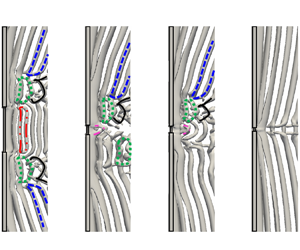
Laminar flow over I-shaped dual-step cylinders
-
- Journal:
- Journal of Fluid Mechanics / Volume 1004 / 10 February 2025
- Published online by Cambridge University Press:
- 30 January 2025, A9
-
- Article
-
- You have access
- Open access
- HTML
- Export citation
-
The three-dimensional flow field past an I-shaped dual-step cylinder has been obtained by numerical integration of the Navier–Stokes equations at Reynolds number ( $Re_D$) 150. The I-shaped cylinder consisted of two large-diameter (D) cylinders with a small-diameter (d) cylinder in between. With a view to exploring the vortex dynamics and structural loads, simulations were performed for eight different lengths $l$ of the small cylinder, varied from $l/D=10$ to 0.2 for a fixed diameter ratio $D/d=2$. When the length of the small cylinder is sufficiently large, the wake behind the I-shaped cylinder is similar to the wake behind the single-step cylinder (Tian et al., J. Fluid Mech., vol. 891, 2020, A24). As the small cylinder length decreases, the enhanced interactions between the two steps make the present wake deviate from the wake of the single-step cylinder, leading to four different wake modes distinguished by different combinations of vortex cells. The physical formation mechanisms were analysed in terms of the vortex dynamics. Besides the wake flow, the streamwise vortices around the I-shaped step cylinder were also investigated. A pair of edge vortices and a junction vortex were identified for $l/D \geq ~1$. When the gap between the two steps becomes too small, $l/D \leq ~0.2$, the junction vortex disappears, and only a pair of edge vortices exists. Varying the distance between the two steps strongly affects the structural loads (drag and lift) along the I-shaped cylinder. The dependence of the loads on $l/D$ was readily explained by the different wake modes.


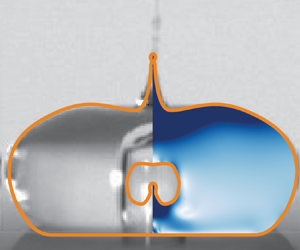
The role of viscosity on drop impact forces on non-wetting surfaces
- Part of
-
- Journal:
- Journal of Fluid Mechanics / Volume 1004 / 10 February 2025
- Published online by Cambridge University Press:
- 30 January 2025, A6
-
- Article
-
- You have access
- Open access
- HTML
- Export citation
-
A liquid drop impacting a rigid substrate undergoes deformation and spreading due to normal reaction forces, which are counteracted by surface tension. On a non-wetting substrate, the drop subsequently retracts and takes off. Our recent work (Zhang et al., Phys. Rev. Lett., vol. 129, 2022, 104501) revealed two peaks in the temporal evolution of the normal force $F(t)$ – one at impact and another at jump-off. The second peak coincides with a Worthington jet formation, which vanishes at high viscosities due to increased viscous dissipation affecting flow focusing. In this article, using experiments, direct numerical simulations and scaling arguments, we characterize both the peak amplitude $F_1$ at impact and the one at takeoff ( $F_2$) and elucidate their dependency on the control parameters: the Weber number $We$ (dimensionless impact kinetic energy) and the Ohnesorge number $Oh$ (dimensionless viscosity). The first peak amplitude $F_1$ and the time $t_1$ to reach it depend on inertial time scales for low viscosity liquids, remaining nearly constant for viscosities up to 100 times that of water. For high viscosity liquids, we balance the rate of change in kinetic energy with viscous dissipation to obtain new scaling laws: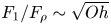 $F_1/F_\rho \sim \sqrt {Oh}$ and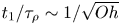 $t_1/\tau _\rho \sim 1/\sqrt {Oh}$, where $F_\rho$ and $\tau _\rho$ are the inertial force and time scales, respectively, which are consistent with our data. The time $t_2$ at which the amplitude $F_2$ appears is set by the inertiocapillary time scale $\tau _\gamma$, independent of both the viscosity and the impact velocity of the drop. However, these properties dictate the magnitude of this amplitude.


2 - Convex Sets
- from Part I - Structural Aspects
-
- Book:
- Convexity and its Applications in Discrete and Continuous Optimization
- Published online:
- 14 January 2025
- Print publication:
- 30 January 2025, pp 23-88
-
- Chapter
- Export citation
Dedication
-
- Book:
- Convexity and its Applications in Discrete and Continuous Optimization
- Published online:
- 14 January 2025
- Print publication:
- 30 January 2025, pp v-vi
-
- Chapter
- Export citation
Part II - Optimization
-
- Book:
- Convexity and its Applications in Discrete and Continuous Optimization
- Published online:
- 14 January 2025
- Print publication:
- 30 January 2025, pp 171-172
-
- Chapter
- Export citation
Frontmatter
-
- Book:
- Convexity and its Applications in Discrete and Continuous Optimization
- Published online:
- 14 January 2025
- Print publication:
- 30 January 2025, pp i-iv
-
- Chapter
- Export citation
6 - Complexity of Convex Optimization with Integer Variables
- from Part II - Optimization
-
- Book:
- Convexity and its Applications in Discrete and Continuous Optimization
- Published online:
- 14 January 2025
- Print publication:
- 30 January 2025, pp 190-262
-
- Chapter
- Export citation
Four-port flexible UWB-MIMO antenna with triple band-notched for wearable IoT applications
-
- Journal:
- International Journal of Microwave and Wireless Technologies / Volume 16 / Issue 8 / October 2024
- Published online by Cambridge University Press:
- 29 January 2025, pp. 1261-1271
-
- Article
- Export citation
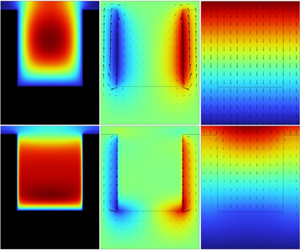
Thermoelectric magnetohydrodynamic flow in a liquid metal-infused trench
-
- Journal:
- Journal of Fluid Mechanics / Volume 1004 / 10 February 2025
- Published online by Cambridge University Press:
- 28 January 2025, A2
-
- Article
-
- You have access
- Open access
- HTML
- Export citation
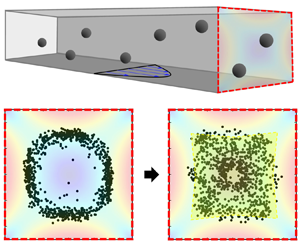
Suppression of the Segré–Silberberg effect by polymer additives
-
- Journal:
- Journal of Fluid Mechanics / Volume 1004 / 10 February 2025
- Published online by Cambridge University Press:
- 28 January 2025, A5
-
- Article
- Export citation
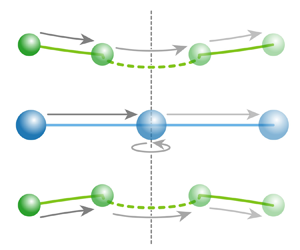
Control of microparticles through hydrodynamic interactions
-
- Journal:
- Journal of Fluid Mechanics / Volume 1004 / 10 February 2025
- Published online by Cambridge University Press:
- 28 January 2025, A4
-
- Article
-
- You have access
- Open access
- HTML
- Export citation
-
The controllability of passive microparticles that are advected with the fluid flow generated by an actively controlled one is studied. The particles are assumed to be suspended in a viscous fluid and well separated so that the far-field Stokes flow solutions may be used to describe their interactions. Explicit elementary moves parametrized by an amplitude $\varepsilon >0$ are devised for the active particle. Applying concepts from geometric control theory, the leading-order resulting displacements of the passive particles in the limit $\varepsilon \to 0$ are used to propose strategies for moving one active particle and one or two passive particles, proving controllability in such systems. The leading-order (in $\varepsilon$) theoretical predictions of the particle displacements are compared with those obtained numerically and it is found that the discrepancy is small even when $\varepsilon \approx 1$. These results demonstrate the potential for a single actuated particle to perform complex micromanipulations of passive particles in a suspension.


Battery pack technological considerations for hybrid-electric regional aircraft feasibility
-
- Journal:
- The Aeronautical Journal / Volume 129 / Issue 1335 / May 2025
- Published online by Cambridge University Press:
- 28 January 2025, pp. 1142-1166
-
- Article
-
- You have access
- Open access
- HTML
- Export citation
-
This paper presents a study of the effects of the durability and level of energy storage technology on energy management strategies and the performance of hybrid electric turboprops. The results highlight the key role of battery energy density on the durability of the battery pack and the viability of the concept of hybrid electric aircraft. Additionally, the trade-off between zero-day environmental compatibility and battery lifetime is identified, caused by the size of the pack. The effective energy density would decrease with the aging of the cells, leaving a significant inert mass and increasing fuel consumption. Optimal energy management strategies are suggested in light of this new information. Higher specific energy of the pack would mitigate this aspect, along with a reduction in fuel consumption and ${\rm{N}}{{\rm{O}}_{\rm{x}}}$ emissions. Indeed, the improvement of environmental compatibility was found to be nonlinear with a positive rate, suggesting high returns in investing in great improvements in energy density over a gradual increase. This result relates to the results of the statistical technological forecast presented in this study, which, without an increase in funding, predicts the availability of the specific energy required to match the fuel-only baseline in the 2040–2050 decade.


Inertial collapse of a gas bubble in a shear flow near a rigid wall
-
- Journal:
- Journal of Fluid Mechanics / Volume 1004 / 10 February 2025
- Published online by Cambridge University Press:
- 28 January 2025, A3
-
- Article
-
- You have access
- Open access
- HTML
- Export citation
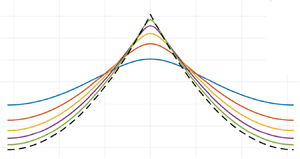
On smooth and peaked travelling waves in a local model for shallow water waves
-
- Journal:
- Journal of Fluid Mechanics / Volume 1004 / 10 February 2025
- Published online by Cambridge University Press:
- 28 January 2025, A1
-
- Article
-
- You have access
- Open access
- HTML
- Export citation
A 3-D printed X-band spherical waveguide filter based on the hybrid BSCT and CT topology
-
- Journal:
- International Journal of Microwave and Wireless Technologies / Volume 16 / Issue 8 / October 2024
- Published online by Cambridge University Press:
- 28 January 2025, pp. 1423-1430
-
- Article
- Export citation
On–off switching digitalized W-band SiGe variable gain power amplifier for large-scale phased array
-
- Journal:
- International Journal of Microwave and Wireless Technologies / Volume 16 / Issue 9 / November 2024
- Published online by Cambridge University Press:
- 28 January 2025, pp. 1609-1616
-
- Article
- Export citation
Ray tracing simulation and experimental validation for millimeter-wave massive MIMO systems
-
- Journal:
- International Journal of Microwave and Wireless Technologies / Volume 17 / Issue 5 / June 2025
- Published online by Cambridge University Press:
- 27 January 2025, pp. 794-803
-
- Article
- Export citation
On the performance of highly aggressive inter compressor ducts
-
- Journal:
- The Aeronautical Journal / Volume 129 / Issue 1335 / May 2025
- Published online by Cambridge University Press:
- 27 January 2025, pp. 1125-1141
-
- Article
-
- You have access
- Open access
- HTML
- Export citation
Thrust variations in small rotors due to corner and vertex effects on the ground side
-
- Journal:
- The Aeronautical Journal / Volume 129 / Issue 1334 / April 2025
- Published online by Cambridge University Press:
- 27 January 2025, pp. 1077-1095
-
- Article
- Export citation
