Refine search
Actions for selected content:
212709 results in Engineering
The materialised temporality of dust: developing a biodesign methodology to spatialise time and temporalise space
-
- Journal:
- Research Directions: Biotechnology Design / Volume 3 / 2025
- Published online by Cambridge University Press:
- 27 January 2025, e4
-
- Article
-
- You have access
- Open access
- HTML
- Export citation
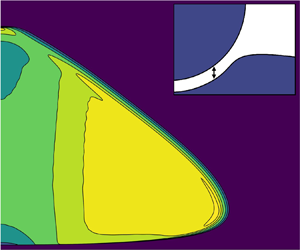
On the bounce: developing reduced models for air–liquid interactions in droplet rebounds
-
- Journal:
- Journal of Fluid Mechanics / Volume 1002 / 10 January 2025
- Published online by Cambridge University Press:
- 27 January 2025, F1
-
- Article
-
- You have access
- HTML
- Export citation
Distributed planning method for detection array of UAV formation with bearing-only sensor network
-
- Journal:
- The Aeronautical Journal / Volume 129 / Issue 1333 / March 2025
- Published online by Cambridge University Press:
- 27 January 2025, pp. 559-581
-
- Article
- Export citation
Optimal scheduling for many-to-many on-orbit service manoeuvers considering variances in target accessibility
-
- Journal:
- The Aeronautical Journal / Volume 129 / Issue 1336 / June 2025
- Published online by Cambridge University Press:
- 27 January 2025, pp. 1550-1578
-
- Article
- Export citation
A compact ultrawide bandpass filter along notch characteristics with rectangular resonator through a machine learning approach
-
- Journal:
- International Journal of Microwave and Wireless Technologies / Volume 16 / Issue 8 / October 2024
- Published online by Cambridge University Press:
- 27 January 2025, pp. 1414-1422
-
- Article
- Export citation
Velocity vector estimation in automotive radar networks
-
- Journal:
- International Journal of Microwave and Wireless Technologies / Volume 17 / Issue 2 / March 2025
- Published online by Cambridge University Press:
- 27 January 2025, pp. 347-356
-
- Article
-
- You have access
- Open access
- HTML
- Export citation
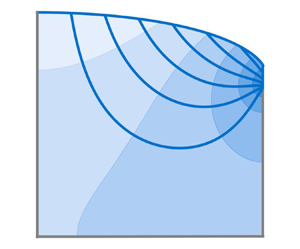
Active volume of water in a laboratory aquifer
-
- Journal:
- Journal of Fluid Mechanics / Volume 1002 / 10 January 2025
- Published online by Cambridge University Press:
- 27 January 2025, A36
-
- Article
- Export citation

Bioprocesses
- A Comprehensive Guide to Sustainable Resources in the Non-Fossil Era
-
- Published online:
- 24 January 2025
- Print publication:
- 13 February 2025
Wind Turbines
- Theory and Practice
-
- Published online:
- 24 January 2025
- Print publication:
- 19 December 2024
-
- Textbook
- Export citation

Attenuation of shear-layer instabilities in steady and pulsatile axisymmetric shear-thinning flows
-
- Journal:
- Journal of Fluid Mechanics / Volume 1003 / 25 January 2025
- Published online by Cambridge University Press:
- 24 January 2025, A30
-
- Article
-
- You have access
- Open access
- HTML
- Export citation
-
The current study characterizes the attenuation of instabilities in steady and unsteady shear layers by investigating shear-thinning flows downstream of a confined axisymmetric sudden expansion. Flow fields were captured using particle image velocimetry. Tested fluids exhibited approximate power-law indices of 1, 0.81, 0.61 and 0.47 and measurements were performed at mean throat-based Reynolds numbers of ${Re_m} = 4800$ and 14 400. Unsteady flows were tested at a Strouhal number and amplitude-to-mean velocity ratio of $St = 0.15$ and $\lambda = 0.95$, respectively. For unsteady shear layers, shear-layer roll-up regardless of shear-thinning strength was evidenced by collapse of average circulation over time. For steady shear layers, consistent shear-layer behaviour regardless of shear-thinning strength was evidenced by similar shear-layer trajectories and by growth rates in vorticity thickness. However, vorticity fields of the unsteady and steady shear layers, standard deviations of shear-layer trajectory, thickness of steady shear layers and Reynolds shear-stress spectra of the steady shear layers reveal an attenuation of shear-layer instabilities not captured by Reynolds number. Specifically, shear-layer instabilities exhibit increased diffusion with increasing shear-thinning strength and, in the case of steady shear layers, shear-thinning strength is shown to promote shear-layer stabilization. Also, evidenced by vorticity fields and through Reynolds shear-stress spectra, instabilities frequently coalesce into large rollers, a result that would suggest the presence of an inverse eddy cascade. The behaviour of shear-thinning fluids is shown to stabilize shear layers through attenuating shear-layer instabilities, complementing observations from previous studies showing how shear-thinning fluids promote turbulence in the dominant flow direction.


Infrared signature of aero-engine exhaust plume’s potential core and aircraft surface from direct bottom view
-
- Journal:
- The Aeronautical Journal / Volume 129 / Issue 1334 / April 2025
- Published online by Cambridge University Press:
- 24 January 2025, pp. 885-901
-
- Article
-
- You have access
- Open access
- HTML
- Export citation

Large-eddy simulations of the noise control of supersonic rectangular jets with bevelled nozzles
-
- Journal:
- Journal of Fluid Mechanics / Volume 1003 / 25 January 2025
- Published online by Cambridge University Press:
- 24 January 2025, A32
-
- Article
- Export citation
-
The bevelled nozzle is a promising noise control approach and has been tested to suppress the noise levels in supersonic circular jets, but not in rectangular jets so far. In this study, implicit large-eddy simulations are performed to analyse the noise control of supersonic rectangular jets with single- and double-bevelled nozzles. Three nozzle pressure ratios ( $NPR = 2.3$, 3.0 and 5.0) are considered to form two over-expanded cold jets and one under-expanded cold jet, exhausted from a baseline convergent–divergent rectangular nozzle with an aspect ratio of 2.0. Results show that, with the increase of $NPR$, the oscillation of the jet plume is switched from a symmetrical mode to a flapping mode (preferential in the minor-axis plane), then to a helical mode, together with a reduction of the screech frequency. The amplitude of the screech tone is the strongest in the flapping jet, and the turbulent mixing noise is the most prominent in the helically oscillating jet. The single-bevelled nozzle induces asymmetric shock-cell structures and deflects the jet plumes, and the double-bevelled nozzle primarily enables the enhancement of the shear-layer mixing and shortens the lengths of the jet potential cores. With the bevelled nozzles, the gross thrusts of the baseline nozzle are increased by $0.05 \sim 7.38$ %. Details on the characteristics of far-field noise in the jets with/without the bevel cuts and their noise control mechanisms are discussed using the Ffowcs Williams–Hawkings acoustic analogy, dynamic mode decomposition and spatio-temporal Fourier transformation. Results suggest that the noise control has a close relationship with the destruction of well-organized coherent structures and the suppression of upstream-propagating guided-jet modes, which interrupt the feedback mechanism accounting for the generation of screech tones in the supersonic rectangular jets.


An estimation method for the fuel burn and other performance characteristics of civil transport aircraft; part 3 full flight profile when the trajectory is specified
-
- Journal:
- The Aeronautical Journal / Volume 129 / Issue 1334 / April 2025
- Published online by Cambridge University Press:
- 24 January 2025, pp. 825-861
-
- Article
-
- You have access
- Open access
- HTML
- Export citation

The role of double‐layer vortex rings with the local swirl in the rapid transition to turbulent flows in Richtmyer–Meshkov instability with reshock
-
- Journal:
- Journal of Fluid Mechanics / Volume 1003 / 25 January 2025
- Published online by Cambridge University Press:
- 24 January 2025, A36
-
- Article
-
- You have access
- Open access
- HTML
- Export citation
Cooperative line-of-sight guidance strategy with prescribed performance and input saturation against active defensive aircraft in two-on-two engagement
-
- Journal:
- The Aeronautical Journal / Volume 129 / Issue 1336 / June 2025
- Published online by Cambridge University Press:
- 24 January 2025, pp. 1601-1628
-
- Article
- Export citation

Scaling analysis of the swirling wake of a porous disc: application to wind turbines
-
- Journal:
- Journal of Fluid Mechanics / Volume 1003 / 25 January 2025
- Published online by Cambridge University Press:
- 24 January 2025, A34
-
- Article
- Export citation
A 5.32 mJ and 47.5 kW cavity-dumped Pr3+:LiYF4 pulsed laser at 639 nm
-
- Journal:
- High Power Laser Science and Engineering / Volume 13 / 2025
- Published online by Cambridge University Press:
- 24 January 2025, e18
-
- Article
-
- You have access
- Open access
- HTML
- Export citation
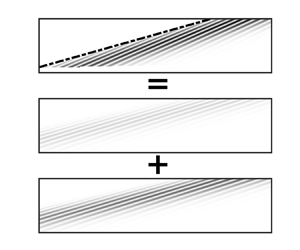
A resolvent-based perspective on the generation of Mach wave radiation from compressible boundary layers
-
- Journal:
- Journal of Fluid Mechanics / Volume 1003 / 25 January 2025
- Published online by Cambridge University Press:
- 24 January 2025, A31
-
- Article
-
- You have access
- Open access
- HTML
- Export citation

LES combustion model for premixed turbulent hydrogen flames with thermodiffusive instabilities: a priori and a posteriori analysis
-
- Journal:
- Journal of Fluid Mechanics / Volume 1003 / 25 January 2025
- Published online by Cambridge University Press:
- 24 January 2025, A33
-
- Article
-
- You have access
- Open access
- HTML
- Export citation
Proof of concept of a nonlinear structural stability constraint for aeroelastic optimisation
-
- Journal:
- The Aeronautical Journal / Volume 129 / Issue 1335 / May 2025
- Published online by Cambridge University Press:
- 24 January 2025, pp. 1237-1264
-
- Article
-
- You have access
- Open access
- HTML
- Export citation
-
In the past few decades, substantial work has been directed towards the design of aircraft structures that maximise fuel efficiency, improve performance and curtail emissions. Aeroelastic optimisation offers an effective way to devise lightweight and fuel efficient structures, with structural stability constraints often driving the design. To date, the aeroelastic optimisation community has relied mostly on linear buckling predictions for the evaluation of structural stability constraints, mainly because of their conservativeness, computational efficiency and simplicity of implementation. This approach typically leads to overly conservative buckling margins, and this over-conservativeness places a glass ceiling over the load carrying capacity of wing structures, consequently restricting the exploration of regions within the design space where considerable weight savings could be achieved.
By contrast to previous works that predominantly rely on linear buckling constraints, the present paper introduces a method to incorporate nonlinear structural stability analysis into aeroelastic optimisations of wingbox-like structures. The method relies on the evaluation of the positive-definiteness of the tangent stiffness matrix, which is an indicator of structural stability. The sign of the stiffness eigenvalues is monitored while tracing the load-displacement equilibrium paths by means of the arc-length method, thus pinpointing the onset of instability. The proposed constraint is tested in a proof of concept structural optimisation of an idealised version of the CRM wingbox. This optimisation shows a $10.9{\rm{\% }} $ reduction in mass with respect to a baseline design that is optimal with a linear buckling approach, promising great potential for application to more realistic aeroelastic optimisations.

