Refine search
Actions for selected content:
212709 results in Engineering
Quasi-optical modeling of a millimeter- and submillimeter-wave free-space characterization bench
-
- Journal:
- International Journal of Microwave and Wireless Technologies / Volume 17 / Issue 6 / July 2025
- Published online by Cambridge University Press:
- 11 February 2025, pp. 950-960
-
- Article
- Export citation
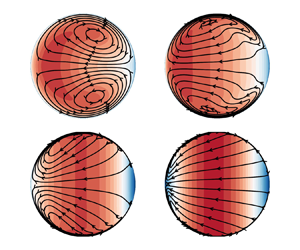
Direct numerical simulation study of turbulent pipe flow with imposed radial rotation
-
- Journal:
- Journal of Fluid Mechanics / Volume 1004 / 10 February 2025
- Published online by Cambridge University Press:
- 11 February 2025, A15
-
- Article
-
- You have access
- Open access
- HTML
- Export citation
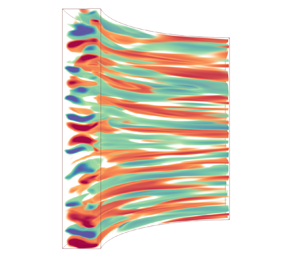
Elastic turbulence in space
-
- Journal:
- Journal of Fluid Mechanics / Volume 1004 / 10 February 2025
- Published online by Cambridge University Press:
- 11 February 2025, F1
-
- Article
-
- You have access
- Open access
- HTML
- Export citation
Triangular patch-based wideband long-range UHF RFID tag for metallic environment
-
- Journal:
- International Journal of Microwave and Wireless Technologies / Volume 17 / Issue 1 / February 2025
- Published online by Cambridge University Press:
- 10 February 2025, pp. 11-19
-
- Article
- Export citation
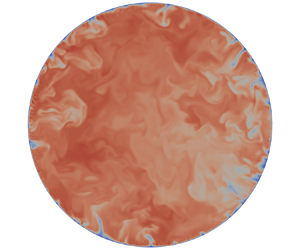
Thermal convection in the internally heated sphere
-
- Journal:
- Journal of Fluid Mechanics / Volume 1004 / 10 February 2025
- Published online by Cambridge University Press:
- 10 February 2025, A14
-
- Article
-
- You have access
- Open access
- HTML
- Export citation
-
We present the first nonlinear results on the problem of non-rotating thermal convection in an internally heated full sphere. A nonlinear stability analysis by the energy method yields that, at least for no-slip boundary conditions, the critical Rayleigh numbers for linear stability and nonlinear stability coincide. We then explore different ranges of the parameter regime using direct numerical simulations. We first report on the system behaviour for a fixed Prandtl number of unity and both stress-free and no-slip boundary conditions up to very high forcing, reaching Rayleigh number $Ra=2\times 10^{12}$, approximately 250 million times the critical value ( $Ra_c$) for the onset of convection under no-slip conditions. For both boundary conditions, we observe a scaling for the advective heat transfer measured by the Nusselt number $Nu$ close to $Nu \sim Ra^{1/4}$. This is consistent with a scaling prediction that we formulate analogously to the classical scaling in Rayleigh–Bénard convection. We then investigate the Prandtl number dependence at low to intermediate forcing for stress-free boundary conditions in the ranges $0.1 \leq Pr \leq 30$ and $Ra_c=3091\leq Ra \leq 3\times 10^5 \approx 100Ra_c$. We find five distinct dynamical regimes depending on the Prandtl number, describe each regime individually and issue heuristic interpretations of the system behaviour where possible.


A large compact, 2-D expandable RFID reader antenna for near-field applications
-
- Journal:
- International Journal of Microwave and Wireless Technologies / Volume 17 / Issue 1 / February 2025
- Published online by Cambridge University Press:
- 10 February 2025, pp. 20-31
-
- Article
- Export citation
-
In this paper, a large, compact array antenna that can be expanded in the 2-D plane is proposed for near-field radio frequency identification applications. By the introduction of the fractal structure and corner joint method, the array is easy to expand in the 2-D plane. An antenna element can be divided into a dozen or so loops, and traveling wave distribution makes sure that every loop is excited in a time period. So that a strong and uniform magnetic field could be generated in a large area. As a proof of concept, array antennas with $1 \times 8$, $2 \times 4$, and $3 \times 3$ elements are designed, fabricated, and measured. The measured bandwidth of the antennas covers the entire Chinese standard. Reading distances of the proposed large array antennas achieved up to 57 mm. Results show that the proposed antenna could realize flexibility and extendibility in a large area with stable and uniform magnetic field distribution.


Calendar of Forthcoming Meetings: (Occurring after 1 January 2025)
-
- Journal:
- Powder Diffraction / Volume 39 / Issue 4 / December 2024
- Published online by Cambridge University Press:
- 10 February 2025, p. 292
-
- Article
-
- You have access
- HTML
- Export citation
The philosophical foundations of digital twinning
-
- Journal:
- Data-Centric Engineering / Volume 6 / 2025
- Published online by Cambridge University Press:
- 10 February 2025, e12
-
- Article
-
- You have access
- Open access
- HTML
- Export citation
Hydrogen reaction rate modeling based on convolutional neural network for large eddy simulation
-
- Journal:
- Data-Centric Engineering / Volume 6 / 2025
- Published online by Cambridge University Press:
- 10 February 2025, e11
-
- Article
-
- You have access
- Open access
- HTML
- Export citation
-
This article establishes a data-driven modeling framework for lean hydrogen ( $ {\mathrm{H}}_2 $)-air reaction rates for the Large Eddy Simulation (LES) of turbulent reactive flows. This is particularly challenging since $ {\mathrm{H}}_2 $ molecules diffuse much faster than heat, leading to large variations in burning rates, thermodiffusive instabilities at the subfilter scale, and complex turbulence-chemistry interactions. Our data-driven approach leverages a Convolutional Neural Network (CNN), trained to approximate filtered burning rates from emulated LES data. First, five different lean premixed turbulent $ {\mathrm{H}}_2 $-air flame Direct Numerical Simulations (DNSs) are computed each with a unique global equivalence ratio. Second, DNS snapshots are filtered and downsampled to emulate LES data. Third, a CNN is trained to approximate the filtered burning rates as a function of LES scalar quantities: progress variable, local equivalence ratio, and flame thickening due to filtering. Finally, the performances of the CNN model are assessed on test solutions never seen during training. The model retrieves burning rates with very high accuracy. It is also tested on two filter and downsampling parameters and two global equivalence ratios between those used during training. For these interpolation cases, the model approximates burning rates with low error even though the cases were not included in the training dataset. This a priori study shows that the proposed data-driven machine learning framework is able to address the challenge of modeling lean premixed $ {\mathrm{H}}_2 $-air burning rates. It paves the way for a new modeling paradigm for the simulation of carbon-free hydrogen combustion systems.


Compact 8-port EMSIW MIMO antenna with high isolation for sub-6 GHz communication systems
-
- Journal:
- International Journal of Microwave and Wireless Technologies / Volume 16 / Issue 10 / December 2024
- Published online by Cambridge University Press:
- 10 February 2025, pp. 1749-1755
-
- Article
- Export citation
A wideband biconic shape metasurface for polarization conversion and radar cross-section reduction
-
- Journal:
- International Journal of Microwave and Wireless Technologies / Volume 16 / Issue 10 / December 2024
- Published online by Cambridge University Press:
- 10 February 2025, pp. 1685-1695
-
- Article
- Export citation
-
A single-layer polarization converting metasurface (PCMS) with wideband is presented for polarization conversion and radar cross-section (RCS) reduction. The proposed PCMS is composed of metallic biconic shape resonator imprinted on a metal-backed F4BM dielectric substrate of relative permittivity 2.2 and loss tangent 0.001. The unit cell has a compact size of 0.16 $\lambda_\mathrm{o} \times 0.16\lambda_\mathrm{o}$. A comprehensive parametric analysis, angular sensitivity study, bistatic and monostatic RCS analysis are conducted by illuminating the proposed PCMS using linearly polarized (LP) plane waves. The PCMS converts LP electromagnetic waves to their orthogonal polarization state in the frequency band of 8.7–24.8 GHz resulting in polarization conversion ratio over 90% with a fractional bandwidth of 96%. Additionally, the developed structure is applied in chessboard configuration, using phase cancellation techniques for RCS reduction, that achieve 10 dB RCS reduction across a wideband of 7.9–23.4 GHz. The unit cell and its rotated version has a cross-polarization reflection phase difference of ( ${180}\pm {37}{^\circ}$) in the operating band, which fulfill the criteria for RCS reduction. The chessboard configuration exhibits a scattering pattern with four strong lobes that deviates from the normal incident path because of the phase cancellation in normal direction. The experimental results are in good agreement with the simulated result. Applications for the developed structure include antenna design (gain enhancement and beam steering), target hiding, imaging, and microwave communications.
Flutter assessment of a rotor blade in hover based on indicial aerodynamics considering blade aerofoil, rotor inflow and wake periodicity
-
- Journal:
- The Aeronautical Journal / Volume 129 / Issue 1333 / March 2025
- Published online by Cambridge University Press:
- 10 February 2025, pp. 593-608
-
- Article
-
- You have access
- Open access
- HTML
- Export citation
Analysis of interference effects on CaCS-based radar systems
-
- Journal:
- International Journal of Microwave and Wireless Technologies / Volume 17 / Issue 2 / March 2025
- Published online by Cambridge University Press:
- 10 February 2025, pp. 373-380
-
- Article
-
- You have access
- Open access
- HTML
- Export citation
-
This paper presents a comprehensive analysis of interference events in automotive scenarios based on radar systems equipped with communication-assisted chirp sequence (CaCS). First, it examines the impact of interference on radar and communication functionalities in CaCS systems according to the orientation of the investigated nodes. For this purpose, a graph-based approach is employed with MATLAB simulations to illustrate the potential occurrence of interference on the graph for communication functionality compared with their counterparts on radar. Second, the paper delves into the impact of interference on the synchronization between two communicating CaCS nodes. It extends a previous study to match the frequency of current radar sensors, where chirp estimation, an adjusted version of the Schmidl & Cox algorithm, and correlation are adopted to synchronize the transmitter and receiver of two CaCS communicating nodes in the time-frequency plane. The proposed synchronization method is finally verified by measurements at ${79}\,\mathrm{GHz}$ with a system-on-chip, where the resulting correlation metric and mean square error are illustrated as validation factors.
Wearable CNT/PAni/fabric piezoresistive sensor for continuous blood pressure monitoring
-
- Journal:
- Wearable Technologies / Volume 6 / 2025
- Published online by Cambridge University Press:
- 10 February 2025, e6
-
- Article
-
- You have access
- Open access
- HTML
- Export citation
Causal temporal reasoning for Markov decision processes
-
- Journal:
- Research Directions: Cyber-Physical Systems / Volume 3 / 2025
- Published online by Cambridge University Press:
- 10 February 2025, e3
-
- Article
-
- You have access
- Open access
- HTML
- Export citation
High-gain circularly polarized Fabry–Perot resonator antenna based on advanced polarization conversion metasurface
-
- Journal:
- International Journal of Microwave and Wireless Technologies / Volume 16 / Issue 10 / December 2024
- Published online by Cambridge University Press:
- 10 February 2025, pp. 1705-1712
-
- Article
- Export citation
A comparison of near-field to far-field transformation techniques for use with industrial multi-axis robotic antenna measurement systems
-
- Journal:
- International Journal of Microwave and Wireless Technologies / Volume 17 / Issue 5 / June 2025
- Published online by Cambridge University Press:
- 10 February 2025, pp. 756-765
-
- Article
-
- You have access
- Open access
- HTML
- Export citation
Metabolic aesthetics against planetary indigestion
-
- Journal:
- Research Directions: Biotechnology Design / Volume 3 / 2025
- Published online by Cambridge University Press:
- 07 February 2025, e8
-
- Article
-
- You have access
- Open access
- HTML
- Export citation
Contents
-
- Book:
- Coarse Graining Turbulence
- Published online:
- 31 January 2025
- Print publication:
- 06 February 2025, pp v-xi
-
- Chapter
- Export citation
8 - Verification, Validation, Uncertainty Quantification, and Coarse-Graining
- from Part I - Paradigms and Tools
-
-
- Book:
- Coarse Graining Turbulence
- Published online:
- 31 January 2025
- Print publication:
- 06 February 2025, pp 222-260
-
- Chapter
- Export citation
