Refine search
Actions for selected content:
212908 results in Engineering
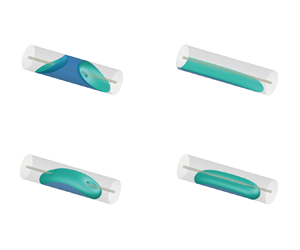
Multistability of a long droplet in a capillary tube under transverse body force
-
- Journal:
- Journal of Fluid Mechanics / Volume 996 / 10 October 2024
- Published online by Cambridge University Press:
- 30 September 2024, A28
-
- Article
- Export citation
Legendre quadrature for the discretization of 1D radiating panels
-
- Journal:
- International Journal of Microwave and Wireless Technologies / Volume 16 / Issue 1 / February 2024
- Published online by Cambridge University Press:
- 30 September 2024, pp. 49-54
-
- Article
-
- You have access
- Open access
- HTML
- Export citation
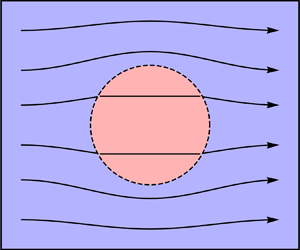
Flow manipulation of a nematic liquid crystal in a Hele-Shaw cell with an electrically controlled viscous obstruction
-
- Journal:
- Journal of Fluid Mechanics / Volume 996 / 10 October 2024
- Published online by Cambridge University Press:
- 30 September 2024, R1
-
- Article
-
- You have access
- Open access
- HTML
- Export citation
IJMWT special issue on the 21st Mediterranean Microwave Symposium (MMS2022)
-
- Journal:
- International Journal of Microwave and Wireless Technologies / Volume 16 / Issue 1 / February 2024
- Published online by Cambridge University Press:
- 30 September 2024, pp. 1-2
-
- Article
-
- You have access
- HTML
- Export citation
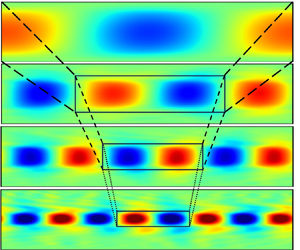
Nested travelling wave structures in elastoinertial turbulence
-
- Journal:
- Journal of Fluid Mechanics / Volume 993 / 25 August 2024
- Published online by Cambridge University Press:
- 30 September 2024, A8
-
- Article
-
- You have access
- Open access
- HTML
- Export citation
-
Elastoinertial turbulence (EIT) is a chaotic flow resulting from the interplay between inertia and viscoelasticity in wall-bounded shear flows. Understanding EIT is important because it is thought to set a limit on the effectiveness of turbulent drag reduction in polymer solutions. Here, we analyse simulations of two-dimensional EIT in channel flow using spectral proper orthogonal decomposition (SPOD), discovering a family of travelling wave structures that capture the sheetlike stress fluctuations that characterise EIT. The frequency-dependence of the leading SPOD mode contains distinct peaks and the mode structures corresponding to these peaks exhibit well-defined travelling structures. The structure of the dominant travelling mode exhibits shift–reflect symmetry similar to the viscoelasticity-modified Tollmien–Schlichting (TS) wave, where the velocity fluctuation in the travelling mode is characterised by large-scale regular structures spanning the channel and the polymer stress field is characterised by thin, inclined sheets of high polymer stress localised at the critical layers near the channel walls. The travelling structures corresponding to the higher-frequency modes have a very similar structure, but are nested in a region roughly bounded by the critical layer positions of the next-lower-frequency mode. A simple theory based on the idea that the critical layers of mode $\kappa$ form the ‘walls’ for the structure of mode $\kappa +1$ yields quantitative agreement with the observed wave speeds and critical layer positions, indicating self-similarity between the structures. The physical idea behind this theory is that the sheetlike localised stress fluctuations in the critical layer prevent velocity fluctuations from penetrating them.



Fluctuation-driven dynamics of liquid nano-threads with external hydrodynamic perturbations
-
- Journal:
- Journal of Fluid Mechanics / Volume 996 / 10 October 2024
- Published online by Cambridge University Press:
- 30 September 2024, A29
-
- Article
- Export citation
Multilayer circular substrate-integrated waveguide cavity band-pass filters with ultrawide stopband characteristics
-
- Journal:
- International Journal of Microwave and Wireless Technologies / Volume 16 / Issue 1 / February 2024
- Published online by Cambridge University Press:
- 30 September 2024, pp. 63-68
-
- Article
-
- You have access
- Open access
- HTML
- Export citation
Modelling of morphogenesis to support the design of fungal-based engineered living materials
-
- Journal:
- Research Directions: Biotechnology Design / Volume 2 / 2024
- Published online by Cambridge University Press:
- 30 September 2024, e11
-
- Article
-
- You have access
- Open access
- HTML
- Export citation
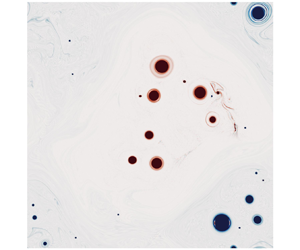
Multiple states of two-dimensional turbulence above topography
-
- Journal:
- Journal of Fluid Mechanics / Volume 994 / 10 September 2024
- Published online by Cambridge University Press:
- 30 September 2024, R2
-
- Article
-
- You have access
- Open access
- HTML
- Export citation
-
The recent work of Siegelman & Young (Proc. Natl Acad. Sci. USA, vol. 120, issue 44, 2023, e2308018120) revealed two extreme states reached by the evolution of unforced and weakly damped two-dimensional turbulence above random rough topography, separated by a critical kinetic energy $E_\#$. The low- and high-energy solutions correspond to topographically locked and roaming vortices, surrounded by non-uniform and homogeneous background potential vorticity (PV), respectively. However, we found that these phenomena are restricted to the particular intermediate length scale where the energy was initially injected into the system. Through simulations initialized by injecting the energy at larger and smaller length scales, we found that the long-term state of topographic turbulence is also dependent on the initial length scale and thus the initial enstrophy. If the initial length scale is comparable to the domain size, the long-term flow field resembles the minimum-enstrophy state proposed by Bretherton & Haidvogel (J. Fluid Mech., vol. 78, issue 1, 1976, pp. 129–154), with very few topographically locked vortices; the long-term enstrophy is quite close to the minimum value, especially when the energy is no larger than $E_\#$. As the initial length scale becomes smaller, more vortices nucleate and become more mobile; the long-term enstrophy increasingly deviates from the minimum value. Simultaneously, the background PV tends to homogenization, even if the energy is below $E_\#$. These results complement the phenomenology of topographic turbulence documented by Siegelman & Young, by showing that the minimum-enstrophy and background PV homogenization states can be adequately approached by large- and small-scale initial fields, respectively, with relatively arbitrary energy.


Modeling sector route segment capacity under convective weather based on machine learning
-
- Journal:
- The Aeronautical Journal / Volume 129 / Issue 1332 / February 2025
- Published online by Cambridge University Press:
- 30 September 2024, pp. 506-527
-
- Article
- Export citation
Why business adoption of quantum and AI technology must be ethical
-
- Journal:
- Research Directions: Quantum Technologies / Volume 2 / 2024
- Published online by Cambridge University Press:
- 30 September 2024, e4
-
- Article
-
- You have access
- Open access
- HTML
- Export citation
Numerical simulation of different aircraft sub-floor structures during ditching
-
- Journal:
- The Aeronautical Journal / Volume 128 / Issue 1329 / November 2024
- Published online by Cambridge University Press:
- 27 September 2024, pp. 2530-2544
-
- Article
- Export citation
Chapter 11 - Antennas
-
- Book:
- Electromagnetic Fields for Engineers
- Published online:
- 09 January 2025
- Print publication:
- 26 September 2024, pp 553-582
-
- Chapter
- Export citation
Appendix D - Gradient, Divergence, and Curl
-
- Book:
- Electromagnetic Fields for Engineers
- Published online:
- 09 January 2025
- Print publication:
- 26 September 2024, pp 618-635
-
- Chapter
- Export citation
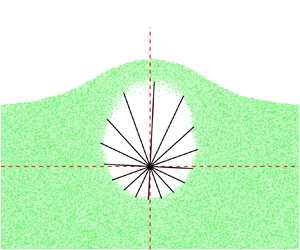
Closed equation model for cavity evolution in granular media
-
- Journal:
- Journal of Fluid Mechanics / Volume 996 / 10 October 2024
- Published online by Cambridge University Press:
- 26 September 2024, A15
-
- Article
- Export citation
-
Cavity evolution in granular media is crucial in explosion-driven gas–particle flows, particularly in many engineering applications. In this study, a theoretical model was first proposed to describe the cavity evolution in granular media by extending the classical Rayleigh–Plesset model. A closed equation set comprising the radius, pressure and gas leak-off velocity equations was built by considering the gas expansion and non-Darcy gas-penetration effects. Both centrally symmetric and non-centrally symmetric cases of gas injection into granular media were investigated. Especially for modelling the non-symmetric scenario, the radius and gas leak-off velocity equations were proposed in each radial direction with angle $\theta$, and then the pressure equation was built up based on the integral gas leak-off along the cavity outline. Through non-dimensionalizing the theoretical equations, four key dimensionless numbers $\varPi_1,\ \varPi_4$ were obtained to characterize the response time of cavity expansion and the intensity of non-Darcy effects for both cases. This allowed us to determine a scaling law of effective cavity radius $R_{eff}^*=\sqrt {2\varPi _2/(7{\rm \pi} )}t^{*1/2}$ and the critical time $t_{cr}^*=\sqrt {12.5/\varPi _1}$ for two-dimensional cavity evolution. Additionally, the necessity of incorporating non-Darcy effects was ascertained under conditions of $\varPi _4>400$. The findings demonstrate that the proposed theoretical equations effectively predict the cavity evolution results under various operational conditions ( $0.7<\varPi _1<7\times 10^2, 3<\varPi _4<1.1\times 10^3$), as validated by refined Euler–Lagrange numerical simulations.


SI Units
-
- Book:
- Electromagnetic Fields for Engineers
- Published online:
- 09 January 2025
- Print publication:
- 26 September 2024, pp xxi-xxiii
-
- Chapter
- Export citation
Appendix C - Scalar and Vector Integration
-
- Book:
- Electromagnetic Fields for Engineers
- Published online:
- 09 January 2025
- Print publication:
- 26 September 2024, pp 604-617
-
- Chapter
- Export citation
Appendix K - Fundamental Constants and Physical Quantities
-
- Book:
- Electromagnetic Fields for Engineers
- Published online:
- 09 January 2025
- Print publication:
- 26 September 2024, pp 663-663
-
- Chapter
- Export citation
Chapter 12 - Wrap Up
-
- Book:
- Electromagnetic Fields for Engineers
- Published online:
- 09 January 2025
- Print publication:
- 26 September 2024, pp 583-583
-
- Chapter
- Export citation
Chapter 5 - Faraday’s Law
-
- Book:
- Electromagnetic Fields for Engineers
- Published online:
- 09 January 2025
- Print publication:
- 26 September 2024, pp 228-254
-
- Chapter
- Export citation
