Refine search
Actions for selected content:
212937 results in Engineering
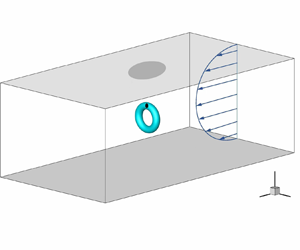
Transition induced by a bursting vortex ring in channel flow
-
- Journal:
- Journal of Fluid Mechanics / Volume 986 / 10 May 2024
- Published online by Cambridge University Press:
- 08 May 2024, A11
-
- Article
- Export citation
Revisiting Taylor’s analysis of the Trinity test
-
- Journal:
- Data-Centric Engineering / Volume 5 / 2024
- Published online by Cambridge University Press:
- 07 May 2024, e11
-
- Article
-
- You have access
- Open access
- HTML
- Export citation
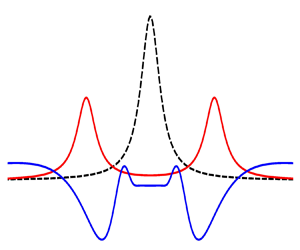
Hilbert transform view of water-wave theory
-
- Journal:
- Journal of Fluid Mechanics / Volume 986 / 10 May 2024
- Published online by Cambridge University Press:
- 07 May 2024, R3
-
- Article
- Export citation
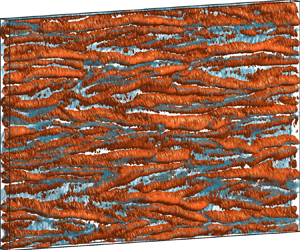
Coherent structures of elastoinertial instabilities in Taylor–Couette flows
-
- Journal:
- Journal of Fluid Mechanics / Volume 986 / 10 May 2024
- Published online by Cambridge University Press:
- 07 May 2024, A27
-
- Article
-
- You have access
- Open access
- HTML
- Export citation
-
We combine flow visualisation techniques and particle image velocimetry to experimentally investigate the higher-order transition to elastoinertial turbulence of Boger fluids ( $El = 0.11\unicode{x2013}0.34$) in Taylor–Couette flows. The observed route to turbulence is associated with the appearance of chaotic inflow jets, termed flame patterns, for increasing inertia, and stable structures of solitons, known as diwhirls, for decreasing inertia. We also report for the first time spatially and temporally resolved flow fields in the meridional plane for the three characteristic viscoelastic flow regimes (diwhirls, flame patterns and elastoinertial turbulence). We observe in all cases coherent structures of dynamically independent solitary vortex pairs. The stability of these coherent structures is jet-dominated and can be mainly ascribed to the high extension of the polymer chains in the inflow boundaries in the $r$–
$r$– $z$ plane. Solitary pairs are self-sustained when created through random events and do not split; instead, they merge when moving sufficiently close and annihilate when hoop stresses are not sufficient to sustain them. The highly localised and random events result in highly fluctuating, chaotic flow states. We estimate the decay exponent of spatial power spectral density, illustrating a universal scaling of $-2.5$ for elastoinertial turbulence. Based on our observations and in an effort to unify and combine precedent theories with our results, we suggest a mechanism for the origins of elastoinertial instabilities, accounting for both the effect of elasticity on the vortex formation and the effect of increasing/decreasing inertia on the flow dynamics.


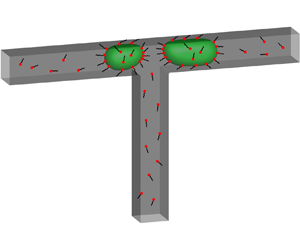
Modelling the passive breakup of a surfactant-contaminated droplet in a T-junction microchannel
-
- Journal:
- Journal of Fluid Mechanics / Volume 986 / 10 May 2024
- Published online by Cambridge University Press:
- 06 May 2024, A23
-
- Article
- Export citation
-
A lattice Boltzmann method is used to explore the effect of surfactants on the unequal volume breakup of a droplet in a T-junction microchannel, and the asymmetry due to fabrication defects in real-life microchannels is modelled as the pressure difference between the two branch outlets ( $\Delta {P^\ast }$). We first study the effect of the surfactants on the droplet dynamics at different dimensionless initial droplet lengths ( $l_0^\ast $) and capillary numbers (Ca) under symmetric boundary conditions ( $\Delta {P^\ast } = 0$). The results indicate that the presence of surfactants promotes droplet deformation and breakup at small and moderate $l_0^\ast $ values, while the surfactant effect is weakened at large $l_0^\ast $ values. When the branch channels are completely blocked by the droplet, a linear relationship is observed between the dimensionless droplet length ( $l_d^\ast $) and dimensionless time ( ${t^\ast }$), and two formulas are proposed for predicting the evolution of $l_d^\ast $ with ${t^\ast }$ for the two systems. We then investigate the effect of the surfactants on the droplet breakup at different values of $\Delta {P^\ast }$ and bulk surfactant concentrations ( ${\psi _b}$) under asymmetric boundary conditions ( $\Delta {P^\ast } \ne 0$). It is observed that, as $\Delta {P^\ast }$ increases, the volume ratio of the generated droplets ( ${V_1}/{V_2}$) decreases to 0 in both systems, while the rate of decrease is higher in the clean system, i.e. the presence of surfactants could cause a decreased pressure difference between the droplet tips. As ${\psi _b}$ increases, ${V_1}/{V_2}$ first increases rapidly, then remains almost constant and finally decreases slightly. We thus establish a phase diagram that describes the ${V_1}/{V_2}$ variation with $\Delta {P^\ast }$ and ${\psi _b}$.


Characteristics of turbulent core–annular flow with water-lubricated high viscosity oil in a horizontal pipe
-
- Journal:
- Journal of Fluid Mechanics / Volume 986 / 10 May 2024
- Published online by Cambridge University Press:
- 06 May 2024, A19
-
- Article
-
- You have access
- Open access
- HTML
- Export citation
-
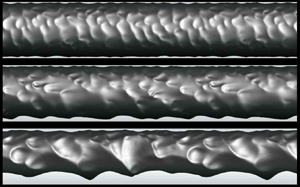
Direct numerical simulations are performed to investigate the characteristics of a turbulent core–annular flow with water-lubricated high viscosity oil in a horizontal pipe. Six different superficial velocity ratios ( $\,j_w/j_o = 0.057\unicode{x2013}0.41$) are examined by changing the water superficial velocity $j_w$ for a fixed oil superficial velocity $j_o$. The pressure drops in the pipe and the shapes of the phase interface agree well with those from previous experiments. The oil core flow is almost a plug flow, and the gaps between the phase interface and pipe wall are narrow and wide near the upper and lower surfaces of the pipe, respectively, due to the buoyancy. Within a narrow gap, water is confined mostly in a valley region of the wavy phase interface and hardly goes through its crest. On the other hand, water near the phase interface at a wide gap convects downstream almost at the core speed and the flow near the wall is similar to that of single-phase wall-bounded turbulent flow. The annular flow is characterized by three different regimes depending on the clearance Reynolds number ( $Re_c$) based on the core velocity and local gap size: laminar Couette flow driven by the core for $Re_c \le 600$, transitional flow for $600 < Re_c < 2500$ and turbulent flow for $Re_c \ge 2500$. The minimum pressure drop occurs at $j_w/j_o = 0.11$ in the early transition regime. For all $j_w/j_o$ considered, the negative lift force acting on the core comes from the pressure force which balances the buoyancy.


Rapidly pitching plates in decelerating motion near the ground
-
- Journal:
- Journal of Fluid Mechanics / Volume 986 / 10 May 2024
- Published online by Cambridge University Press:
- 06 May 2024, A22
-
- Article
-
- You have access
- Open access
- HTML
- Export citation
-
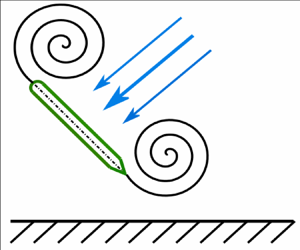
Birds employ rapid pitch-up motions close to the ground for different purposes: perching birds use this motion to decelerate and come to a complete stop while hunting birds, such as bald eagles, employ it to catch prey and swiftly fly away. Motivated by these observations, our study investigates how natural flyers accomplish diverse flying objectives by rapidly pitching their wings while decelerating near ground. We conducted experimental and analytical investigations focusing on rapidly pitching plates during deceleration in close proximity to the ground to explore the impact of ground proximity on the unsteady dynamics. Initially, we executed synchronous pitch-up motion, where both pitching and deceleration have the same motion duration, at different ground heights. Experimental results demonstrate that as the pitching wing approaches the ground, the instantaneous lift increases by approximately $38\,\%$ compared with a far-from-ground case, while the initial peak drag force remains relatively unchanged. Our analytical model conforms to this trend, predicting an increase in lift force as the wing approaches the ground, indicating enhanced added mass and circulatory lift force due to the ground effect. Next, we examined asynchronous pitch-up motion cases, where rapid pitching motions were initiated at different stages of deceleration. The results reveal that initiating the wing pitch early in the deceleration leads to the formation of larger counter-rotating vortices at the early stage of the manoeuvre. These vortices generate stronger dipole jets that orient backward in the later stages of the manoeuvre after impinging with the ground surface, which hunting birds utilize to accelerate after catching prey. Conversely, when the wing pitch is delayed, smaller vortices form, but their growth is postponed until late in the manoeuvre. This delayed vortex growth produces lift and drag force at the end phase of the manoeuvre that facilitates a smooth landing or perching. Thus, through strategic tuning of a rapid pitch-up motion with deceleration, natural flyers, such as birds, achieve diverse flying objectives.

Laminar separation bubble formation and bursting on a finite wing
-
- Journal:
- Journal of Fluid Mechanics / Volume 986 / 10 May 2024
- Published online by Cambridge University Press:
- 06 May 2024, A26
-
- Article
-
- You have access
- Open access
- HTML
- Export citation
-
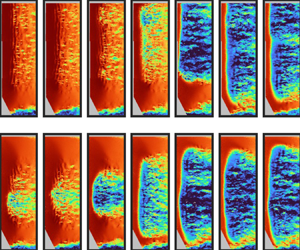
The transient processes of laminar separation bubble (LSB) formation and bursting on a rectangular NACA 0018 wing are studied experimentally. A two-dimensional airfoil model is used as a baseline for the assessment of finite wing effects. The models are subjected to ramp changes in free-stream velocity causing the flow to switch between a state where an LSB forms and a state without reattachment. Lift force and particle image velocimetry measurements are used to relate the flow development to the aerodynamic loading. The lift coefficient of the airfoil exhibits substantial hysteresis, and the duration of the lift transients range from $10$ to $22$ convective time scales for bubble formation and $22$ to $30$ convective time scales for bursting. In contrast, the transient lift coefficients of the wing change gradually, with less hysteresis. The wing tip causes greater three-dimensionality in the separation bubble, whose thickness increases near the midspan where bursting is initiated. During bubble formation, the region of separated flow contracts towards the midspan. The gradual change in lift of the wing is linked to slower spanwise expansion and contraction of the separated flow region relative to the airfoil. On both models, the wavenumbers and amplitudes of disturbances in the separated shear layer rapidly change when reattachment initiates or ceases. Applying the bursting criterion of Gaster (Tech. Rep. Reports and Memoranda 3595. Aeronautical Research Council, London, 1967) to the bubble on the wing shows that bursting of the bubble at a single spanwise location is insufficient to cause complete spanwise failure of reattachment, and that the relationship between bursting parameters depends on spanwise position.


Crystal structure of valbenazine, C24H38N2O4
-
- Journal:
- Powder Diffraction / Volume 39 / Issue 3 / September 2024
- Published online by Cambridge University Press:
- 06 May 2024, pp. 176-181
-
- Article
-
- You have access
- Open access
- HTML
- Export citation
Wall-attached structure characteristics of flow and dust concentration fields in high-Reynolds-number particle-laden flows
-
- Journal:
- Journal of Fluid Mechanics / Volume 986 / 10 May 2024
- Published online by Cambridge University Press:
- 06 May 2024, A21
-
- Article
- Export citation
-
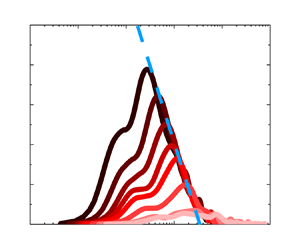
The wall-attached structure characteristics of flow and dust concentration fields are investigated in this study based on high-Reynolds-number (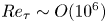 $Re_{\tau } \sim O(10^{6})$) synchronous multiphase observations from the Qingtu Lake observation array site (recorded by Liu et al., J. Fluid Mech., vol. 957, 2023, A14). The results show that not only the particle-free flow field but also the particle-laden flow and dust concentration field contain wall-attached structures. The linear coherence spectrum, as a data-driven filter, is adopted to separate the wall-attached portions from the premultiplied spectra. The decomposed spectra for wall-attached structures in streamwise velocity fluctuations under particle-free and particle-laden conditions show obvious outer-scaling and wall-scaling at large-scale and medium-scale ranges, respectively, but the spectra of dust concentration exhibit only wall-scaling rather than outer-scaling. The streamwise length of the most significant wall-attached dust clustering structures in the logarithmic region is approximately five times the boundary layer thickness, and does not change significantly with height. Furthermore, the streamwise turbulence intensity for wall-attached portions follows the universal Townsend–Perry constant, without particle mass loading effect. Correspondingly, the wall-attached portions of the dust concentration also exhibit universal logarithmic decay slope. The remaining non-attached portions for the turbulent velocity and dust concentration have significant dependence on the particle mass loading.
Microfluidic jet impacts on deep pools: transition from capillary-dominated cavity closure to gas-pressure-dominated closure at higher Weber numbers
-
- Journal:
- Journal of Fluid Mechanics / Volume 986 / 10 May 2024
- Published online by Cambridge University Press:
- 06 May 2024, A24
-
- Article
-
- You have access
- Open access
- HTML
- Export citation
-
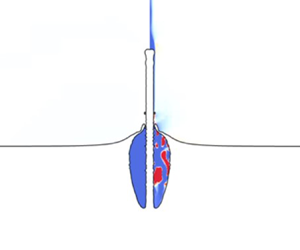
Studying liquid jet impacts on a liquid pool is crucial for various engineering and environmental applications. During jet impact, the free surface of the pool deforms and a cavity is generated. Simultaneously, the free surface of the cavity extends radially outward and forms a rim. Eventually the cavity collapses by means of gas inertia and surface tension. Our numerical investigation using an axisymmetric model in Basilisk C explores cavity collapse dynamics under different impact velocities and gas densities. We validate our model against theory and experiments across a previously unexplored parameter range. Our results show two distinct regimes in the cavity collapse mechanism. By considering forces pulling along the interface, we derive scaling arguments for the time of closure and maximum radius of the cavity, based on the Weber number. For jets with uniform constant velocity from tip to tail and $We \leqslant 150$, the cavity closure is capillary-dominated and happens below the surface (deep seal). In contrast, for $We \geqslant 180$ the cavity closure happens above the surface (surface seal) and is dominated by the gas entrainment and the pressure gradient that it causes. Additionally, we monitor gas velocity and pressure throughout the impact process. This analysis reveals three critical moments of maximum gas velocity: before impact, at the instant of cavity collapse and during droplet ejection following cavity collapse. Our results provide information for understanding pollutant transport during droplet impacts on large bodies of water, and other engineering applications, like additive manufacturing, lithography and needle-free injections.


Crystal structure of brimonidine hydrogen tartrate, (C11H11BrN5)(HC4H4O6)
-
- Journal:
- Powder Diffraction / Volume 39 / Issue 3 / September 2024
- Published online by Cambridge University Press:
- 06 May 2024, pp. 144-150
-
- Article
-
- You have access
- Open access
- HTML
- Export citation
Bayesian inference of vorticity in unbounded flow from limited pressure measurements
-
- Journal:
- Journal of Fluid Mechanics / Volume 986 / 10 May 2024
- Published online by Cambridge University Press:
- 03 May 2024, A18
-
- Article
-
- You have access
- Open access
- HTML
- Export citation
Powder X-ray diffraction of nintedanib esylate hemihydrate, (C31H33N5O4)(C2H5O3S)(H2O)0.5
-
- Journal:
- Powder Diffraction / Volume 39 / Issue 3 / September 2024
- Published online by Cambridge University Press:
- 03 May 2024, pp. 159-161
-
- Article
-
- You have access
- Open access
- HTML
- Export citation
A 3-D minimum-enstrophy vortex in stratified quasi-geostrophic flows
-
- Journal:
- Journal of Fluid Mechanics / Volume 986 / 10 May 2024
- Published online by Cambridge University Press:
- 03 May 2024, R1
-
- Article
-
- You have access
- Open access
- HTML
- Export citation
A physics-based model for wind turbine wake expansion in the atmospheric boundary layer – CORRIGENDUM
-
- Journal:
- Journal of Fluid Mechanics / Volume 985 / 25 April 2024
- Published online by Cambridge University Press:
- 03 May 2024, E1
-
- Article
-
- You have access
- Open access
- HTML
- Export citation
Multi-model workload specifications and their application to cyber-physical systems
-
- Journal:
- Research Directions: Cyber-Physical Systems / Volume 2 / 2024
- Published online by Cambridge University Press:
- 03 May 2024, e3
-
- Article
-
- You have access
- Open access
- HTML
- Export citation
What Rayleigh numbers are achievable under Oberbeck–Boussinesq conditions?
-
- Journal:
- Journal of Fluid Mechanics / Volume 986 / 10 May 2024
- Published online by Cambridge University Press:
- 03 May 2024, R2
-
- Article
-
- You have access
- Open access
- HTML
- Export citation
-
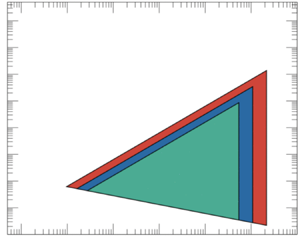
The validity of the Oberbeck–Boussinesq (OB) approximation in Rayleigh–Bénard (RB) convection is studied using the Gray & Giorgini (Intl J. Heat Mass Transfer, vol. 19, 1976, pp. 545–551) criterion that requires that the residuals, i.e. the terms that distinguish the full governing equations from their OB approximations, are kept below a certain small threshold $\hat {\sigma }$. This gives constraints on the temperature and pressure variations of the fluid properties (density, absolute viscosity, specific heat at constant pressure $c_p$, thermal expansion coefficient and thermal conductivity) and on the magnitudes of the pressure work and viscous dissipation terms in the heat equation, which all can be formulated as bounds regarding the maximum temperature difference in the system, $\varDelta$, and the container height, $L$. Thus for any given fluid and $\hat {\sigma }$, one can calculate the OB-validity region (in terms of $\varDelta$ and $L$) and also the maximum achievable Rayleigh number ${{Ra}}_{max,\hat {\sigma }}$, and we did so for fluids water, air, helium and pressurized SF $_6$ at room temperature, and cryogenic helium, for $\hat {\sigma }=5\,\%$, $10\,\%$ and $20\,\%$. For the most popular fluids in high- ${{Ra}}$ RB measurements, which are cryogenic helium and pressurized SF $_6$, we have identified the most critical residual, which is associated with the temperature dependence of $c_p$. Our direct numerical simulations (DNS) showed, however, that even when the values of $c_p$ can differ almost twice within the convection cell, this feature alone cannot explain a sudden and strong enhancement in the heat transport in the system, compared with its OB analogue.


Contact-angle hysteresis on rough surfaces: mechanical energy balance framework
-
- Journal:
- Journal of Fluid Mechanics / Volume 986 / 10 May 2024
- Published online by Cambridge University Press:
- 03 May 2024, A17
-
- Article
-
- You have access
- Open access
- HTML
- Export citation
Blind zones in radiating dispersion at high Péclet number driven by non-Newtonian fluids in porous media
-
- Journal:
- Journal of Fluid Mechanics / Volume 986 / 10 May 2024
- Published online by Cambridge University Press:
- 03 May 2024, A16
-
- Article
-
- You have access
- Open access
- HTML
- Export citation
