To save content items to your account,
please confirm that you agree to abide by our usage policies.
If this is the first time you use this feature, you will be asked to authorise Cambridge Core to connect with your account.
Find out more about saving content to .
To save content items to your Kindle, first ensure no-reply@cambridge.org
is added to your Approved Personal Document E-mail List under your Personal Document Settings
on the Manage Your Content and Devices page of your Amazon account. Then enter the ‘name’ part
of your Kindle email address below.
Find out more about saving to your Kindle.
Note you can select to save to either the @free.kindle.com or @kindle.com variations.
‘@free.kindle.com’ emails are free but can only be saved to your device when it is connected to wi-fi.
‘@kindle.com’ emails can be delivered even when you are not connected to wi-fi, but note that service fees apply.
Pursuing highly efficient aerodynamic efficiency in aircraft has driven the development of morphing wing technology. However, there are still limitations to morphing wing technology, including adaptation of load and deformation, and deformation monitoring and control. This work introduces an intelligent trailing edge structure that balances deformation and load-bearing and achieves deformation monitoring and active control. Firstly, we employ a honeycomb structure for non-uniform filling of the trailing edge. The filling method is obtained through inverse design using a genetic algorithm based on neural networks, allowing the device to undergo continuous deformation while meeting load-bearing requirements. The bending deformation of the wing is achieved using shape memory alloy (SMA) wire. Additionally, we design and fabricate a metal-based multichannel flexible sensor, and based on beam bending theory, we establish the strain–displacement relationship. These sensors are affixed to the trailing edge surface, enabling real-time monitoring and active control of trailing edge deformation. Building an experimental platform to test this system, the results show that the sensors can accurately give feedback on the degree of wing deformation, and the error of active deformation control technology is less than 4%. This provides a new method for the deformation feedback control closed-loop system of intelligent variant wings.
Flexible electronics researchers have been conducting studies to explore the response of flexible stretchable electrodes to strain. The regulation of strain response in current flexible stretchable electrodes relies primarily on altering the material system, interfacial adhesion, or electrode structure. However, modifying the material system or interfacial adhesion can negatively disrupt the stretchable electrode preparation process, making commercialization a significant challenge. Additionally, the material system may be inadequate in extreme environments such as high temperatures. Hence a systematic structural design approach is crucial for effective response modulation of stretchable electrodes. One potential solution is the design of fibre structures from the micro to macro scale. This article focuses on discussing how the response of stretchable electrodes can be modulated by fibres in different states. The discussion includes fibres on elastic films, fibres directly constituting fibrous membranes at the microscopic level, and fibres constituting metamaterials at the fine level. The modulation can be achieved by altering the orientation of the fibres, the geometrical structure of the fibres themselves, and the geometrical structure formed between the fibres. Additionally, the article analyses the current situation of stretchable electrodes in extreme environments such as high temperatures. It also reviews the development of ceramic fibre membranes that can be stretched in high-temperature environments. The authors further discuss how the stretchability of ceramic fibre membranes can be improved through the structuring of ceramic fibre membranes with metamaterials. Ultimately, the goal is to realize stretchable electrodes that can be used in extreme environments such as high temperatures.
Cyber-Physical Systems (CPSs) combine cyber, physical and human activities through computing and network technologies, creating opportunities for benign and malign actions that affect organisations in both the physical and computational spheres. The US National Cyber Security Strategy (US White House, 2023) warns that this exposes crucial systems to disruption over a wide CPS attack surface. The UK National Cyber Security Centre Annual Review (UK National Cyber Security Centre, 2023) acknowledges that, although some organisations are evolving ‘a more holistic view of critical systems rather than purely physical assets’, this is not reflected in governance structures that still tend to treat cyber and physical security separately.
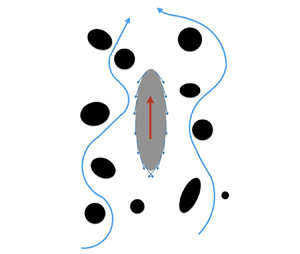
Biological microorganisms and artificial micro-swimmers often locomote in heterogeneous viscous environments consisting of networks of obstacles embedded into viscous fluid media. In this work, we use the squirmer model and present a numerical investigation of the effects of shape on swimming in a heterogeneous medium. Specifically, we analyse the microorganism's propulsion speed as well as its energetic cost and swimming efficiency. The analysis allows us to probe the general characteristics of swimming in a heterogeneous viscous environment in comparison with the case of a purely viscous fluid. We found that a spheroidal microorganism always propels faster, expends less energy and is more efficient than a spherical microorganism in either a homogeneous fluid or a heterogeneous medium. Moreover, we determined that above a critical eccentricity, a spheroidal microorganism in a heterogeneous medium can swim faster than a spherical microorganism in a homogeneous fluid. Based on an analysis of the forces acting on the squirmer, we offer an explanation for the decrease in the squirmer's speed observed in heterogeneous media compared with homogeneous fluids.
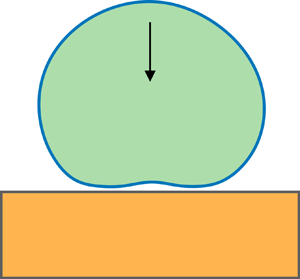
We investigate theoretically and numerically the impact of an elastic sphere on a rigid wall in a viscous fluid. Our focus is on the dynamics of the contact, employing the soft lubrication model in which the sphere is separated from the wall by a thin liquid film. In the limit of large sphere inertia, the sphere bounces and the dynamics is close to the Hertz theory. Remarkably, the film thickness separating the sphere from the wall exhibits non-trivial self-similar properties that vary during the spreading and retraction phases. Leveraging these self-similar properties, we establish the energy budget and predict the coefficient of restitution for the sphere. The general framework derived here opens many perspectives to study the lubrication film in impact problems.
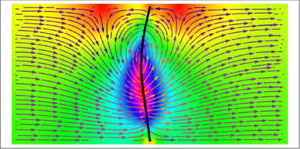
Snap-through is a buckling instability that allows slender objects, including those in plant and biological systems, to generate rapid motion that would be impossible if they were to use their internal forces exclusively. In microfluidic devices, such as micromechanical switches and pumps, this phenomenon has practical applications for manipulating fluids at small scales. The onset of this elastic instability often drives the surrounding fluid into motion – a process known as snap-induced flow. To analyse the complex dynamics resulting from the interaction between a sheet and a fluid, we develop a prototypical model of a thin sheet that is compressed between the two sides of a closed channel filled with an inviscid fluid. At first, the sheet bends towards the upstream direction and the system is at rest. However, once the pressure difference in the channel exceeds a critical value, the sheet snaps to the opposite side and drives the fluid dynamics. We formulate an analytical model that combines the elasticity of thin sheets with the hydrodynamics of inviscid fluids to explore how external pressure differences, material properties and geometric factors influence the system's behaviour. To analyse the early stages of the evolution, we perform a linear stability analysis and obtain the growth rate and the critical pressure difference for the onset of the instability. A weakly nonlinear analysis suggests that the system can exhibit a pressure spike in the vicinity of the inverted configuration.
In a Model Predictive Control (MPC) setting, the precise simulation of the behavior of the system over a finite time window is essential. This application-oriented benchmark study focuses on a robot arm that exhibits various nonlinear behaviors. For this arm, we have a physics-based model with approximate parameter values and an open benchmark dataset for system identification. However, the long-term simulation of this model quickly diverges from the actual arm’s measurements, indicating its inaccuracy. We compare the accuracy of black-box and purely physics-based approaches with several physics-informed approaches. These involve different combinations of a neural network’s output with information from the physics-based model or feeding the physics-based model’s information into the neural network. One of the physics-informed model structures can improve accuracy over a fully black-box model.
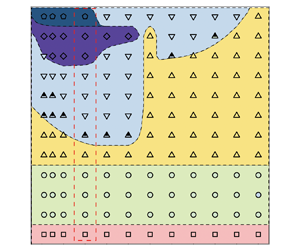
Numerical simulations are carried out on the vortex-induced rotations of a freely rotatable rigid square cylinder in a two-dimensional uniform cross-flow. A range of Reynolds numbers between 40 and 150 and density ratios between 0.1 and 10 are considered. Results show eight different characteristic regimes, expanding the classification of Ryu & Iaccarino (J. Fluid Mech., vol. 813, 2017, pp. 482–507). New regimes include the transition and wavy rotation regimes; in the ${\rm \pi}$-limited oscillation regime we observe multipeak subregimes. Moment-generating mechanisms of these regimes and subregimes are further elucidated. A phenomenon related to the influence of density ratio is the tooth-like shape of the ${\rm \pi} /2$-limit oscillation regime observed in the regime map, which is explained as a result of the imbalance relation between the main frequencies of rotation response and the vortex shedding frequency. In addition, existence of multiple regimes and multistable states are discussed, indicating multiple stable attractive structures in phase space.
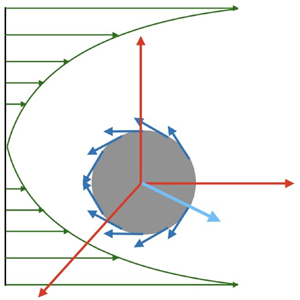
The classical paper by Lighthill (Commun. Pure Appl. Maths, vol. 109, 1952, p. 118) on the propulsion of ciliated microorganisms has become the reference against which many modern studies on swimming in low Reynolds number are compared. However, Lighthill's study was limited to propulsion in a uniform flow, whereas several biologically relevant microorganisms experience non-uniform flows. Here we propose a benchmark for ciliary propulsion in paraboloidal flows. We first consider the axisymmetric problem, with the microorganisms on the centreline of the background flow, and derive exact analytical solutions for the flow field. Our results reveal flow features, swimming characteristics and performance metrics markedly different from those generated in a uniform flow. In particular, the background paraboloidal flow introduces a Stokes quadrupole singularity at the leading-order flow field, generating vortices. Moreover, we determine the necessary conditions on the strength of the background flow for optimal power dissipation and swimming efficiency. We then consider the more general case of a microorganism off the centreline of the background flow. In this case, the squirmer experiences a paraboloidal, linear shear and uniform flows due to its position relative to the flow's centreline. Our findings show that while the linear shear flow does not affect the translational and rotational velocities of the squirmer, it does influence the velocity field and, therefore, the power dissipation.
The Automatic Identification System (AIS) is extensively used in monitoring vessel traffic, and ship navigation related information can be obtained from the AIS data. However, AIS data contain extensive redundant information, which leads to the general need to compress the data when applying it in practice or conducting research. In this paper, a three-dimensional compression of ship trajectories using the Dynamic Programming algorithm has been proposed. The AIS data near the ports of Long Beach and San Francisco in the United States were used to test and compare the Dynamic Programming algorithm with the Top-down Time-ratio algorithms. The experimental results show that the proposed algorithm can better retain the position and time information at low compression ratio such as 1%, 20% and 40%. Moreover, the algorithm is applicable to ship trajectories with different motion modes such as steering, mooring and straight ahead. The results show that the proposed algorithm can reasonably solve the problem of AIS data redundancy and ensure the quality of data, which is of practical significance for water transport, transport planning and other related research.
Safe and effective navigation of the world's oceans and waterways relies on maritime education and training. This involves the learning of motor, procedural and verbal components of complex skills. Motor learning theory evaluates training variables, such as instructions, feedback and scheduling, to determine best practices for long-term retention of such skills. Motor learning theory has come a long way from focusing primarily on underlying cognitive processes to now including individual and contextual characteristics in making predictions about instructional strategies and their role in performance and learning. A remaining challenge in applying recent motor learning theory to maritime education and training is a lack of empirical testing of complex vocational skills, such as simulation scenarios, with delayed retention and transfer tests. Incorporating theory-based understanding of beneficial instructional practices, through both cognitive approaches and those considering context and environment, task complexity and learner characteristics is a fruitful way forward in advancing maritime education and training.
Information is provided to navigators through advanced onboard navigation equipment, such as the electronic chart display and information system (ECDIS), radar and the automatic identification system (AIS). However, maritime accidents still occur, especially in coastal and inland water where many navigational dangers exist. The recent artificial intelligence (AI) technology is actively applied in navigation fields, such as collision avoidance and ship detection. However, utilising the aids to navigation (AtoN) system requires more engagement and further exploration. The AtoN system provides critical navigation information by marking the navigation hazards, such as shallow water areas and wrecks, and visually marking narrow passageways. The prime function of the AtoN can be enhanced by applying AI technology, particularly deep learning technology. With the help of this technology, an algorithm could be constructed to detect AtoN in coastal and inland waters and utilise the detected AtoN to create a safety function to supplement watchkeepers using recent navigation equipment.
Ship trajectory prediction plays a critical role in collision detection and risk assessment. To enhance prediction accuracy and efficiency, a novel hybrid particle swarm optimisation (PSO) and grey wolf optimisation (GWO) long, short-term memory (LSTM) network model is proposed (PGL model). The hybrid PSO-GWO optimisation method combines the algorithm's strengths and offers improved stability and performance. The hybrid algorithm is employed to optimise the hyperparameters of the LSTM neural networks to enhance prediction accuracy and efficiency. To demonstrate the superiority of the PGL model, the LSTM, PSO-LSTM and PGL are applied to the same dataset, and then prediction performance and processing time are compared. Experimental results indicate that the proposed PGL algorithm outperforms prediction accuracy and optimisation time.
To realise the overall calibration of the error model coefficients of accelerometers in an inertial combination and to improve the navigation accuracy of the inertial navigation system, a norm-observation method is applied to the calibration, especially for the quadratic coefficient of the accelerometer. The Taylor formula is used to expand the solution of the acceleration model, and the intermediate variables with error model coefficients are obtained using the least square method. The formulas for calculating the quadratic term coefficient, scale factor and bias of the accelerometer are given. A 20-position method is designed to calibrate the accelerometer combination, the effectiveness of the method is verified by simulation, and the effects of installation misalignment and rod-arm error on calibration accuracy are analysed. The results show that the installation misalignments and rod-arm errors have little influence on the coefficient calibration, less than 10−8, and can be neglected in a practical calibration process.
Navigational safety is one of the important focuses of Maritime Education and Training (MET), and the quality of MET is the key to cultivating competent officers at sea. This study aims to understand better the effects of a rapid training method on ship handling and navigation in restricted waters, as well as decision-making skills under stressful situations. Tests were carried out in a simulator-based maritime training environment to explore the decision-making skills of maritime students in stressful situations under different training levels and methods. This study compares routine maritime training and task-aimed rapid training in improving manoeuvring and navigational and decision-making skills, and examines the training outcomes. The data used in this study is based on comparing the task performance and stress levels of the two groups of students using simulator-based training results from a designed scenario. The results analyse the training outcomes of decision-making skills and maritime operation performance by applying a specific decision-making model. In addition, the impact of students' stress levels was examined, both subjectively and objectively. The paper concludes with a set of recommendations for the design of future MET. The research helps enhance decision-making skills in maritime training programmes and understanding how learning in simulator-based maritime training environments can be improved.
In Global Navigation Satellite Systems (GNSS)-denied environments, aiding a vehicle's inertial navigation system (INS) is crucial to reducing the accumulated navigation drift caused by sensor errors (e.g. bias and noise). One potential solution is to use measurements of gravity as an aiding source. The measurements are matched to a geo-referenced map of Earth's gravity to estimate the vehicle's position. In this paper, we propose a novel formulation of the map matching problem using a hidden Markov model (HMM). Specifically, we treat the spatial cells of the map as the hidden states of the HMM and present a Viterbi style algorithm to estimate the most likely sequence of states, i.e. most likely sequence of vehicle positions, that results in the sequence of observed gravity measurements. Using a realistic gravity map, we demonstrate the accuracy of our Viterbi map matching algorithm in a navigation scenario and illustrate its robustness compared with existing methods.
The identification of fishing vessel operations holds significant importance in addressing fishing industry issues, such as overfishing and illegal, unreported and unregulated fishing (IUUF). Many countries utilise data from vessel monitoring systems (VMSs) or automatic identification systems (AISs) to monitor fishing activities. These data include vessel trajectories, headings and speeds, among others. We aimed to analyse the fishing behaviours of three types of fishing gear used by vessels (trawl, purse seine and gill net) and identify the types of gear employed by the vessels. Therefore, a 1D CNN-LSTM fishing vessel operational behaviour prediction model was proposed by combining a one-dimensional convolutional (1D CNN) neural network and a long short-term memory (LSTM) neural network. The model utilises 1D CNN to extract local features from fishing vessel trajectories and employs LSTM to capture the time series information in the data, eventually classifying fishing gears. The results show that the proposed model achieves a classification accuracy of 92% in categorising fishing vessel operational trajectories. This study significantly contributes to preventing IUUF, curtailing overfishing, and enhancing fisheries management strategies.