To save content items to your account,
please confirm that you agree to abide by our usage policies.
If this is the first time you use this feature, you will be asked to authorise Cambridge Core to connect with your account.
Find out more about saving content to .
To save content items to your Kindle, first ensure no-reply@cambridge.org
is added to your Approved Personal Document E-mail List under your Personal Document Settings
on the Manage Your Content and Devices page of your Amazon account. Then enter the ‘name’ part
of your Kindle email address below.
Find out more about saving to your Kindle.
Note you can select to save to either the @free.kindle.com or @kindle.com variations.
‘@free.kindle.com’ emails are free but can only be saved to your device when it is connected to wi-fi.
‘@kindle.com’ emails can be delivered even when you are not connected to wi-fi, but note that service fees apply.
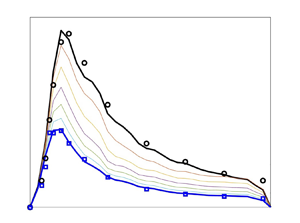
Double-cone ignition [Zhang et al., Phil. Trans. R. Soc. A 378, 20200015 (2020)] was proposed recently as a novel path for direct-drive inertial confinement fusion using high-power lasers. In this scheme, plasma jets with both high density and high velocity are required for collisions. Here we report preliminary experimental results obtained at the Shenguang-II upgrade laser facility, employing a CHCl shell in a gold cone irradiated with a two-ramp laser pulse. The CHCl shell was pre-compressed by the first laser ramp to a density of 3.75 g/cm3 along the isentropic path. Subsequently, the target was further compressed and accelerated by the second laser ramp in the cone. According to the simulations, the plasma jet reached a density of up to 15 g/cm3, while measurements indicated a velocity of 126.8 ± 17.1 km/s. The good agreements between experimental data and simulations are documented.
The usage areas of rotary or fixed wing unmanned aerial vehicles (UAV) have become very widespread with technological developments. For this reason, UAV designs differ in terms of aerodynamic design, flight performance and endurance depending on the intended use. In this study, maximising of the autonomous flight performance of the unmanned helicopter produced at Erciyes University using an optimisation algorithm is discussed. For this purpose, the input parameters of the dynamic model are chosen as blade length, blade mass density, blade chord width and blade twist angle of the unmanned helicopter and the proportional, integral, derivative gain coefficients of the lateral axis of the autopilot. The output parameters of the dynamic model are selected as settling time, rise time and maximum overshoot, which are autonomous performance parameters. The dynamic model consisting of helicopter and autopilot parameters is integrated into the back-tracking search optimisation (BSO) algorithm as an objective function. In the optimization process, where mean squared error (MSE) is used as the performance criterion, optimum input and output values were determined. Thus, helicopter and autopilot parameters, which are among the factors affecting autonomous performance, are taken into account with equal importance and simultaneously. Simulations show that the obtained values are satisfactory. With this approach based on the optimisation method, complex and time-consuming dynamic model calculations are reduced, time and cost are saved, and practicality is achieved in applications. Therefore, this approach can be an innovative and alternative method to improve UAV designs and increase flight performance compared to classical methods.
A previously developed method for large-eddy simulations (LES), based on spectral eddy-viscosity models, is generalised to the physical space representation. The method estimates the subgrid-scale (SGS) energy transfer using a similarity-type model expression for the SGS tensor obtained using Gaussian filtering of velocity fields advanced in the simulations. Following steps for the spectral space representation, the SGS transfer in the physical space is used to obtain a spatially varying eddy viscosity at each time step in LES. The computed eddy viscosity is employed to model the SGS stress tensor in the familiar Boussinesq form for use in LES. The method is tested in LES of isotropic turbulence at high Reynolds numbers where the inertial range dynamics is expected and for lower Reynolds number decaying turbulence under conditions of the classical Comte-Bellot and Corrsin experiments. In both cases the agreement with reference data is very good and the SGS transfer computed for the proposed eddy-viscosity model is highly correlated with the transfer computed for the similarity-type stress tensor.
Microvibrations originating from onboard disturbance sources can lead to a range of issues, including a decrease in satellite pointing accuracy, image distortion and blurring. Therefore, reaction wheels emerge as the primary sources of disturbance noise. This paper employs an experimental approach based on the real dynamics of rotating reaction wheel assembly, closely simulating on-orbit configurations to measure noise responses transferred to the satellite structure. An assessment of noise response behaviour, incorporating a comprehensive understanding of the factors influencing the levels, was conducted on a proto-flight satellite for three reaction wheels. Initially, reaction wheel assemblies underwent individual iterative balancing to reduce mass deviations. Subsequently, amplitude-time responses at different rotational speeds of reaction wheel assemblies (RWA) disturbance noise were measured. The experimental results demonstrate that each individually balanced reaction wheel generates independent perturbation noise level due to manufacturing imperfections. Hence, the necessity of wheels testing for accurate prediction and mitigation of disturbance levels is crucial, especially for payloads sensitive to microvibrations. Furthermore, increasing wheel speeds proportionally amplify disturbance noise levels. Therefore, implementing an optimised mission attitude control profile with lower rotation speeds of reaction wheels effectively reduces microvibration levels which minimises risks to payload performance and reduce power consumption.
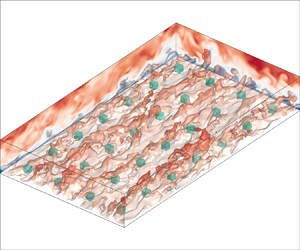
A primary objective of integral methods, such as the momentum integral method, is to discern the physical processes contributing to skin friction. These methods encompass the momentum, kinetic energy and angular momentum integrals. This paper reformulates existing integrals based on the double-averaged Navier–Stokes equations, and extends their application to flows over rough walls. Our derivation yields distinct decompositions for the bottom-wall viscous friction coefficient, denoted as $C_S$, and the roughness element drag coefficient $C_R$. The decompositions comprise three terms: a viscous term, a turbulent term and a roughness (dispersive) term – regardless of the flow configuration, be it channel or boundary layer. Notably, when these integrals are evaluated for laminar flow scenarios, only the viscous term remains significant. In addition, we elucidate the spatial distributions of the terms within these decompositions. To demonstrate the practicality of our formulations, we apply them to analyse data from direct numerical simulations of turbulent half-channel flows. These flows feature aligned and staggered cubical roughness at various packing densities. Our analyses, based on kinetic-energy-oriented decompositions, reveal that when the surface coverage density $\lambda _p$ is small, the dominant terms within the decompositions are the viscous and turbulent terms. With increasing $\lambda _p$, the viscous dissipation term decreases, while the turbulent production term increases and then decreases. These variations arise from a subdued near-wall cycle and the development of a shear layer at the height of the cubes.
In this article, a new microstrip dual-narrowband bandpass filter employing parallel-coupled transmission lines and open stubs is presented, investigated, and fabricated. The proposed dual-narrowband bandpass filter is analyzed and its exact scattering parameters are calculated, simulated, and measured. So, calculated scattering parameters offer a deep inside view of the performance of the proposed filter. To analyze the proposed filter, the even- and odd-mode excitation are utilized. The input impedance under even- and odd-mode excitation are achieved by transmission line theory and inserted in the scattering parameter equations. Finally, the accurate scattering parameters are derived and compared with simulation results. Simulation results prove the theoretical results. Then, an optimized proposed filter is fabricated and matched with simulation results. The center frequency bands are 4.5 and 6.8 GHz. The optimized filter occupies 0.12 $ \times $ 0.096$\lambda _g^2$, which is small. Its fractional bandwidth of the first and second passband are 1.5 and 2.5%, respectively. Furthermore, wide and strong rejection levels in the stopbands are offered. The structure of the proposed filter provides many freedoms to design. There is an agreement between experimental and simulation results.
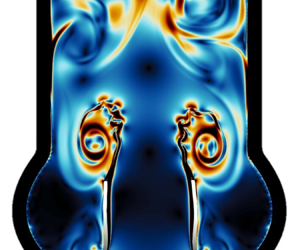
Bioprosthetic heart valves create turbulent flow during early systole which might be detrimental to their durability and performance. Complex mechanisms in the unsteady and heterogeneous flow field complicate the isolation of specific instability mechanisms. We use linear stability analysis and numerical simulations of the flow in a simplified model to study mechanisms initiating the laminar–turbulent transition. The analysis of a modified Orr–Sommerfeld equation, which includes a model for fluid–structure interaction (FSI), indicates Kelvin–Helmholtz and FSI instabilities for a physiological Reynolds number regime. Two-dimensional parametrized FSI simulations confirm the growth rates and phase speeds of these instabilities. The eigenmodes associated with the observed leaflet kinematics allow for decoupled leaflet oscillations. A detailed analysis of the temporal evolution of the flow field shows that the starting vortex interacts with the aortic wall leading to a secondary vortex which moves towards the shear layer in the wake of the leaflets. This appears to be connected to the onset of the shear layer instabilities that are followed by the onset of leaflet motion leading to large-scale vortex shedding and eventually to a nonlinear breakdown of the flow. Numerical results further indicate that a narrower aorta leads to an earlier onset of the shear layer instabilities. They also suggest that the growing perturbations of the shear layer instability propagate upstream and may initiate the FSI instabilities on the valve leaflets.
In this study, a high-isolation multiple-input multiple-output (MIMO) microstrip patch antenna (MPA), which utilizes an orthogonal mode cancellation method is proposed. This method employs TM10 and TM01 modes, which are simultaneously excited in the rectangular passive MPA. Initially, a rectangular decoupling structure featuring polarization rotation characteristics is designed. Further studies show that by loading the polarization conversion parasitic structure (PCPS), the electric field of the spatial coupling wave can be transformed from the x-polarized TM10 mode to the y-polarized TM01 mode. Therefore, TM10 and TM01 modes from the excited antenna and decoupling structure are concurrently coupled to the passive antenna, forming an evident weak-field region on the passive antenna. Placing the feeding probe of the passive MPA within the weak-field region prevents signal reception at the port. Consequently, this results in an extremely low mutual coupling of −49 dB at a resonant frequency of 5.8 GHz. Finally, a prototype of the proposed antenna is fabricated and tested, and the measured results closely match the simulated results. Additionally, it is observed that PCPS slightly influences the performance of the MIMO antenna.
In this study, we investigated the influence of fiber parameters on stimulated Raman scattering (SRS) and identified a unique pattern of SRS evolution in the counter tandem pumping configuration. Our findings revealed that the SRS threshold in counter-pumping is predominantly determined by the length of the output delivery fiber rather than the gain fiber. By employing the counter tandem pumping scheme and optimizing the fiber parameters, a 10 kW fiber laser was achieved with beam quality M2 of 1.92. No mode instability or severe SRS limitation was observed. To our knowledge, this study achieved the highest beam quality in over 10 kW fiber lasers based on conventional double-clad Yb-doped fiber.
Power scaling in conventional broad-area (BA) lasers often leads to the operation of higher-order lateral modes, resulting in a multiple-lobe far-field profile with large divergence. Here, we report an advanced sawtooth waveguide (ASW) structure integrated onto a wide ridge waveguide. It strategically enhances the loss difference between higher-order modes and the fundamental mode, thereby facilitating high-power narrow-beam emission. Both optical simulations and experimental results illustrate the significant increase in additional scattering loss of the higher-order modes. The optimized ASW lasers achieve an impressive output power of 1.1 W at 4.6 A at room temperature, accompanied by a minimal full width at half maximum lateral divergence angle of 4.91°. Notably, the far-field divergence is reduced from 19.61° to 11.39° at the saturation current, showcasing a remarkable 42% improvement compared to conventional BA lasers. Moreover, the current dependence of divergence has been effectively improved by 38%, further confirming the consistent and effective lateral mode control capability offered by our design.
Thoroughly revised and expanded, the new edition of this established textbook equips readers with a robust and practical understanding of experimental fluid mechanics. Enhanced features include improved support for students with emphasis on pedagogical instruction and self-learning, end-of-chapter summaries, 127 examples, 165 problems and refined illustrations, plus new coverage of digital photography, frequency analysis of signals and force measurement. It describes comprehensively classical and modern methods for flow visualisation and measuring flow rate, pressure, velocity, temperature, concentration, forces and wall shear stress, alongside supporting material on system response, measurement uncertainty, signal analysis, data analysis, optics, laboratory apparatus and laboratory practice. Instructor resources include lecture slides, additional problems, laboratory support materials and online solutions. Ideal for senior undergraduate and graduate students studying experimental fluid mechanics, this textbook is also suitable for an introductory measurements laboratory, and is a valuable resource for practising engineers and scientists in experimental fluid mechanics.
Development of large-scale quantum computing systems will require radio frequency (RF) and microwave technologies operating reliably at cryogenic temperatures down to tens of milli-Kelvin (mK). The quantum bits in the most promising quantum computing technologies such as the superconducting quantum computing are designed using principles of microwave engineering and operated using microwave signals. The control, readout, and coupling of qubits are implemented using a network of microwave components operating at various temperature stages. To ensure reliable operation of quantum computing systems, it is critical to ensure optimal performance of these microwave components and qubits at their respective operating temperatures, which can be as low as mK temperatures. It is, therefore, critical to understand the microwave characteristics of waveforms, components, circuits, networks, and systems at cryogenic temperatures. The UK’s National Physical Laboratory (NPL) is focussed on developing new microwave measurement capabilities through the UK’s National Quantum Technologies Programme to address various microwave test and measurement challenges in quantum computing. This includes the development of various measurement capabilities to characterize the microwave performance of quantum and microwave devices and substrate materials at cryogenic temperatures. This paper summarizes the roadmap of activities at NPL to address these microwave metrology challenges in quantum computing.
We use Bayesian inference, accelerated by adjoint methods, to construct a quantitatively accurate model of the thermoacoustic behaviour of a conical flame in a duct. We first perform a series of automated experiments on a ducted flame rig. Next, we propose several candidate models of the rig's components and assimilate data into each model to find the most probable parameters for that model. We rank the candidate models based on their marginal likelihood (evidence) and select the most likely model for each component. We begin this process by rigorously characterizing the acoustics of the cold rig. When the flame is introduced, we propose several candidate models for the fluctuating heat release rate. We find that the most likely flame model considers velocity perturbations in both the burner feed tube and the outer duct, even though studies in the literature typically neglect either one of these. Using the most likely model, we infer the flame transfer functions for 24 flames and quantify their uncertainties. We do this with the flames in situ, using only pressure measurements. We find that the inferred flame transfer functions render the model quantitatively accurate, and, where comparable, broadly consistent with direct measurements from several studies in the literature.
This work examines the influence of body porosity on the wake past nominally two-dimensional rectangular plates of fixed width $D$ in the moderate range of Reynolds numbers $Re = UD/\nu$ (with $U$ the incoming velocity and $\nu$ the kinematic viscosity) between 15 000 and 70 000. With porosity $\beta$ defined as the ratio of open to total area of the plate, it is well established that as porosity increases, the wake shifts from the periodic von Kármán shedding behaviour to a regime where this vortex shedding is absent. This change impacts the fluid forces acting on the plate, especially the drag, which is significantly lower for a wake without vortex shedding. We analyse experimentally the transition between these two regimes using hot-wire anemometry, particle-image velocimetry and force measurements. Coherence and phase measurements are used to determine the existence of regular, periodic vortex shedding based on the velocity fluctuations in the two main shear layers on either side of the wake. Results show that, independent of $Re$, the wake exhibits the classical Kármán vortex shedding pattern for $\beta <0.2$ but this is absent for $\beta >0.3$. In the intermediate range, $0.2<\beta <0.3$, there is a transitional regime that has not previously been identified; it is characterised by intermittent shedding. The flow alternates randomly between a vortex shedding and a non-shedding pattern and the total proportion of time during which vortex shedding is observed (the intermittency) decreases with increasing porosity.

Worldwide adoption of 5G mobile devices has been one of the main driving engines behind semiconductor industry. Since the initial release in 2020, 5G-enabled devices have surpassed the market penetration of 3G/4G smartphones. 5G brings higher data capacity, low latency, and new applications. These are possible due to lower feature nodes such as FinFET 3 nm/5 nm but also due to improvements of the 5G radio frequency (RF)front-end circuitry. This paper presents 5G RF front-end architectures with novel circuits and measurement details which will be part of future 5G advanced and 6G mobile devices and are easier to be controlled using digital circuitry. The paper presents an envelope-controlled power amplifier (PA) principle, along with a novel simplified calibration architecture designed for 5G/5G+ operating under 6 GHz, as well as for frequency range 2 millimeter-wave PAs. An earlier version of this paper was presented at the 2023 53rd European Microwave Conference and was published in the Proceedings [Balteanu F, Thoomu K, Pingale A, Venimadhavan S, Sarkar S, Choi Y, Modi H, Drogi S, Lee J and Agarwal B (2023) Enabling RF circuit techniques for 5G and beyond In 53rd European Microwave Conference (EuMC), Berlin, Germany, 22–25].
Gas turbines play a vital role in various industries. Timely and accurately predicting their degradation is essential for efficient operation and optimal maintenance planning. Diagnostic and prognostic outcomes aid in determining the optimal compressor washing intervals. Diagnostics detects compressor fouling and estimates the trend up to the current time. If the forecast indicates fast progress in the fouling trend, scheduling offline washing during the next inspection event or earlier may be crucial to address the fouling deposit comprehensively. This approach ensures that compressor cleaning is performed based on its actual health status, leading to improved operation and maintenance costs. This paper presents a novel prognostic method for gas turbine degradation forecasting through a time-series analysis. The proposed approach uses the Temporal Fusion Transformer model capable of capturing time-series relationships at different scales. It combines encoder and decoder layers to capture temporal dependencies and temporal-attention layers to capture long-range dependencies across the encoded degradation trends. Temporal attention is a self-attention mechanism that enables the model to consider the importance of each time step degradation in the context of the entire degradation profile of the given health parameter. Performance data from multiple two-spool turbofan engines is employed to train and test the method. The test results show promising forecasting ability of the proposed method multiple flight cycles into the future. By leveraging the insights provided by the method, maintenance events and activities can be scheduled in a proactive manner. Future work is to extend the method to estimate remaining useful life.
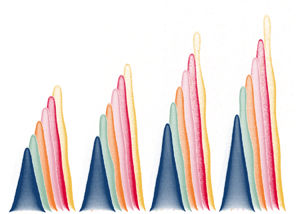
The probability density function (PDF) for the free surface elevation in an irregular sea has an integral formulation when based on the cumulant generating function. To leading order, the result is Gaussian, whereas nonlinear extensions have long been limited to Gram–Charlier series approximations. As shown recently by Fuhrman et al. (J. Fluid Mech., vol. 970, 2023, A38), however, the second-order integral can be represented exactly in closed form. The present work extends this further, enabling determination of this PDF to even higher orders. Towards this end, a new ordinary differential equation (ODE) governing the PDF is first derived. Asymptotic solutions in the limit of large surface elevation are then found, utilizing the method of dominant balance. These provide new analytical forms for the positive tail of the PDF beyond second order. These likewise clarify how high-order cumulants (involving statistical moments such as the kurtosis) govern the tail, which is shown to get heavier with each successive order. The asymptotic solutions are finally utilized to generate boundary conditions, such that the governing ODE may be solved numerically, enabling novel determination of the PDF at third and higher order. Successful comparisons with challenging data sets confirm accuracy. The methodology thus enables the PDF of the surface elevation to be determined numerically, and the asymptotic tail analytically, to any desired order. Results are worked out explicitly up to fifth order. The theoretical probability of extreme surface elevations (typical of rogue waves) may thus be assessed quantitatively for highly nonlinear irregular seas, requiring only relevant statistical quantities as input.
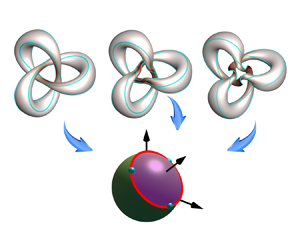
We derive the spin Euler equation for ideal flows by applying the spherical Clebsch mapping. This equation is based on the spin vector, a unit vector field encoding vortex lines, instead of the velocity. The spin Euler equation enables a feasible Lagrangian study of fluid dynamics, as the isosurface of a spin-vector component is a vortex surface and material surface in ideal flows. We establish a non-blowup criterion for the spin Euler equation, suggesting that the Laplacian of the spin vector must diverge if the solution forms a singularity at some finite time. The direct numerical simulations (DNS) of three ideal flows – the vortex knot, the vortex link and the modified Taylor–Green flow – are conducted by solving the spin Euler equation. The evolution of the Lagrangian vortex surface illustrates that the regions with large vorticity are rapidly stretched into spiral sheets. The DNS result exhibits a pronounced double-exponential growth of the maximum norm of Laplacian of the spin vector, showing no evidence of the finite-time singularity formation if the double-exponential growth holds at later times. Moreover, the present criterion with Lagrangian nature appears to be more sensitive than the Beale–Kato–Majda criterion in detecting the flows that are incapable of producing finite-time singularities.
In this paper, the results of an experimental investigation for a Y-shaped engine inlet are presented. The experiment is performed at subsonic flow conditions. The main focus is given to time-dependent total pressures measured at the aerodynamic interface plane. Distinctive frequencies carrying high energy contents of the fluctuating total pressures are given and the relation between time-dependent and time-average performance parameters is presented. The cross-correlation coefficients of the high frequency probe readings distributed through the aerodynamic interface plane are also investigated.
Helicopters are used in complex and harsh operational environments, such as search and rescue missions and firefighting, that require operating in ground proximity, tracking targets while avoiding impacting obstacles, namely a combination of point tracking (positive) and boundary avoidance (negative) objectives. A simulation task representing simplified helicopter dynamics is used to investigate point tracking and boundary avoidance tasks. The variance and regression analysis are used to study the effects of task conditions on participants’ tracking errors and input aggression. The overall tracking error shows a negative correlation with input aggression. The participants tend to have higher input aggression and lower tracking error near the boundaries, exposing the switching of manipulation input strategies under different task conditions. It also suggests a potential way of designing simulation tasks for human operators manipulating helicopters and a trigger for investigating pilots’ biodynamic feedthrough.