Refine search
Actions for selected content:
212937 results in Engineering
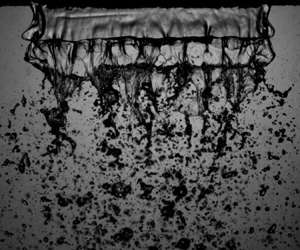
Air-blast atomization of a liquid film
-
- Journal:
- Journal of Fluid Mechanics / Volume 985 / 25 April 2024
- Published online by Cambridge University Press:
- 24 April 2024, A36
-
- Article
-
- You have access
- Open access
- HTML
- Export citation
Rapid dynamic aeroelastic response analysis of the highly flexible wing with distributed propellers influence
-
- Journal:
- The Aeronautical Journal / Volume 128 / Issue 1329 / November 2024
- Published online by Cambridge University Press:
- 24 April 2024, pp. 2668-2690
-
- Article
- Export citation
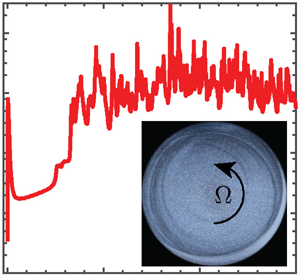
Elasto-inertial instability in torsional flows of shear-thinning viscoelastic fluids
-
- Journal:
- Journal of Fluid Mechanics / Volume 985 / 25 April 2024
- Published online by Cambridge University Press:
- 23 April 2024, A37
-
- Article
- Export citation
-
It is well known that inertia-free shearing flows of a viscoelastic fluid with curved streamlines, such as the torsional flow between a rotating cone and plate or the flow in a Taylor–Couette geometry, can become unstable to a three-dimensional time-dependent instability at conditions exceeding a critical Weissenberg ( $Wi$) number. However, the combined effects of fluid elasticity, shear thinning and finite inertia (as quantified by the Reynolds number $Re$) on the onset of elasto-inertial instabilities are not fully understood. Using a set of cone–plate geometries, we experimentally explore the entire $Wi$–
$Wi$– $Re$ phase space for a series of nonlinear viscoelastic fluids (with the dependence on shear rate $\dot{\gamma}$ quantified using a shear-thinning parameter $\beta _P(\dot {\gamma })$). We tune $\beta _P(\dot {\gamma })$ by varying the dissolved polymer concentration in solution. This progressively reduces shear thinning but leads to finite inertial effects before the onset of elastic instability, and thus naturally results in elasto-inertial coupling. Time-resolved rheometric measurements and flow visualization experiments allow us to investigate the effects of flow geometry, and document the combined effects of varying $Wi, Re$ and $\beta _P(\dot {\gamma })$ on the emergence of secondary motions at the onset of instability. The resulting critical state diagram quantitatively depicts the competition between the stabilizing effects of shear thinning and the destabilizing effects of inertia. We extend the curved streamline instability criterion of Pakdel & McKinley (Phys. Rev. Lett., vol. 77, no. 12, 1996, p. 2459) for the onset of purely elastic instability in curvilinear geometries by using scaling arguments to incorporate shear thinning and finite inertial effects. The augmented condition facilitates predictions of the onset of instability over a broader range of flow conditions, and thus bridges the gap between purely elastic and elasto-inertial curved streamline instabilities.


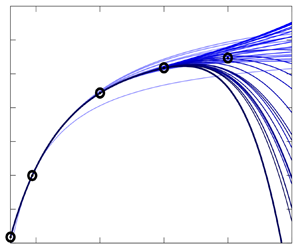
Arbitrary-order sensitivities of the incompressible base flow and its eigenproblem
-
- Journal:
- Journal of Fluid Mechanics / Volume 985 / 25 April 2024
- Published online by Cambridge University Press:
- 23 April 2024, A32
-
- Article
- Export citation
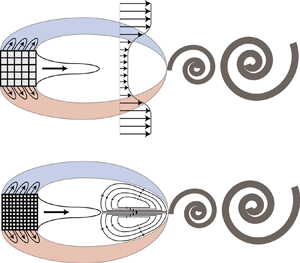
The effect of permeability on the flow structure of porous square cylinders
-
- Journal:
- Journal of Fluid Mechanics / Volume 985 / 25 April 2024
- Published online by Cambridge University Press:
- 23 April 2024, A29
-
- Article
- Export citation
-
This study experimentally investigates the wake structure of a porous square cylinder in terms of permeability over two decades of $Da$ (i.e. $2.4 \times 10^{-5} < Da < 2.9 \times 10^{-3}$). The porous cylinder, featuring a simple cubic lattice structure, was fabricated using an additive manufacturing technique. This unique method, combined with a periodic and scalable lattice structure, effectively isolates permeability from porosity, making it suitable for an in-depth parametric study. The key parameter, permeability, was directly estimated by measuring the pressure drop and superficial velocity for each porous case in an open-loop pipe flow system. The downstream flow fields were obtained using standard planar particle image velocimetry measurements in an open-loop wind tunnel. Based on the experimental data, structural modifications in the near wake were examined in relation to permeability, leading to the identification of four distinct flow regimes depending on $Da$. Additionally, the downstream flow adjustment length ( $L_i$) was assessed by introducing a permeability-based source term into the momentum equation, facilitating the development of an analytical model for $L_i$. The present experimental data support this analytical model, and our results further confirmed that $L_i$ plays a crucial role as a characteristic length scale in the near wake.


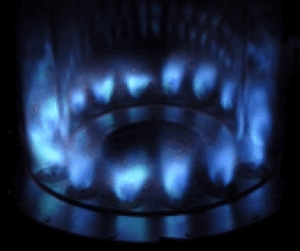
Experiments on symmetry breaking of azimuthal combustion instabilities and their analysis combining acoustic energy balance and flame describing functions
-
- Journal:
- Journal of Fluid Mechanics / Volume 985 / 25 April 2024
- Published online by Cambridge University Press:
- 23 April 2024, A31
-
- Article
- Export citation
-
Combustion instabilities in annular systems raise fundamental issues that are also of practical importance to aircraft engines and ground-based gas turbine combustors. Recent studies indicate that the injector plays a significant role in the stability of combustors by defining the flame dynamical response and setting the inlet impedance of the system. The present investigation examines the effects of combinations of injectors of two different types ( $U$ and $S$) on thermoacoustic instabilities in a laboratory-scale annular combustor and compares different circumferential staging strategies. The combustor operates in a stable fashion when all injection units belong to the $S$-family, but exhibits large amplitude pressure oscillations when all these units are of the $U$-type. When the system comprises a mix of $U$- and $S$-injectors, it is possible to determine the number of $S$-injectors leading to stable operation. For a fixed proportion of $U$- and $S$-injectors, some arrangements give rise to stable operation while others do not. Results also show that introducing symmetry-breaking elements affects the system's modal dynamics. These experimental observations are interpreted in an acoustic energy balance framework used to derive an expression for the growth rate as a function of the describing functions of the flames formed by the different injectors and their respective azimuthal locations. Growth rates are determined for the different configurations and used to explain the various observations, estimate the system damping rate and predict the location of the nodal line when the standing mode prevails.


Growing mycelium leather: a paste substrate approach with post-treatments
-
- Journal:
- Research Directions: Biotechnology Design / Volume 2 / 2024
- Published online by Cambridge University Press:
- 23 April 2024, e6
-
- Article
-
- You have access
- Open access
- HTML
- Export citation
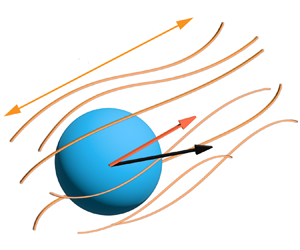
Density-contrast induced inertial forces on particles in oscillatory flows
-
- Journal:
- Journal of Fluid Mechanics / Volume 985 / 25 April 2024
- Published online by Cambridge University Press:
- 23 April 2024, A33
-
- Article
-
- You have access
- Open access
- HTML
- Export citation
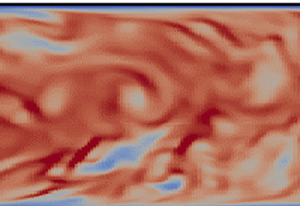
Resolvent analysis of turbulent flow laden with low-inertia particles
-
- Journal:
- Journal of Fluid Mechanics / Volume 985 / 25 April 2024
- Published online by Cambridge University Press:
- 23 April 2024, A27
-
- Article
-
- You have access
- Open access
- HTML
- Export citation
-
We extend the resolvent framework to two-phase flows with low-inertia particles. The particle velocities are modelled using the equilibrium Eulerian model. We analyse the turbulent flow in a vertical pipe with Reynolds number of $5300$ (based on diameter and bulk velocity), for Stokes numbers $St^+=0-1$, Froude numbers $Fr_z=-4,-0.4,0.4,4$ and $1/Fr_z = 0$ (gravity omitted). The governing equations are written in input–output form and a singular value decomposition is performed on the resolvent operator. As for single-phase flows, the operator is low rank around the critical layer, and the true response can be approximated using one singular vector. Even with a crude forcing model, the formulation can predict physical phenomena observed in Lagrangian simulations, such as particle clustering and gravitational effects. Increasing the Stokes number shifts the predicted concentration spectra to lower wavelengths; this shift also appears in the direct numerical simulation spectra and is due to particle clustering. When gravity is present, there are two critical layers, one for the concentration field, and one for the velocity field. For upward flow, the peak of concentration fluctuations shifts closer to the wall, in agreement with the literature. We explain this with the aid of the different locations of the two critical layers. Finally, the model correctly predicts the interaction of near-wall vortices with particle clusters. Overall, the resolvent operator provides a useful framework to explain and interpret many features observed in Lagrangian simulations. The application of the resolvent framework to higher $St^+$ flows in combination with Lagrangian simulations is also discussed.


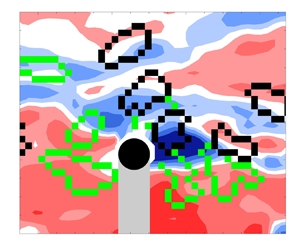
Effect of fluid motions on finite spheres released in turbulent boundary layers
-
- Journal:
- Journal of Fluid Mechanics / Volume 985 / 25 April 2024
- Published online by Cambridge University Press:
- 23 April 2024, A28
-
- Article
-
- You have access
- Open access
- HTML
- Export citation
-
This paper extends the work in Tee et al. (Intl J. Multiphase Flow, vol. 133, 2020, 103462) to investigate the effect of turbulent fluid motions on the translation and rotation of lifting and wall-interacting spheres in boundary layers. Each sphere was released from rest in smooth-wall boundary layers with $Re_\tau =670$ and 1300 ( $d^+=56$ and 116, respectively) and allowed to propagate with the incoming fluid. Sphere and surrounding fluid motions were tracked simultaneously via three-dimensional particle tracking velocimetry and stereoscopic particle image velocimetry in streamwise–spanwise planes. Two-point correlations of sphere and fluid streamwise velocities yielded long positive regions associated with long fast- and slow-moving zones that approach and move over the spheres. The related spanwise correlations were shorter due to the shorter coherence length of spanwise fluid structures. In general, spheres lag the surrounding fluid. The less-dense lifting sphere had smaller particle Reynolds numbers varying from near zero up to 300. Its lift-offs coincided with oncoming fast-moving zones and fluid upwash. Wall friction initially retarded the acceleration of the denser sphere. Later, fluid torque associated with approaching high-velocity regions initiated forward rotation. The rotation, which was long-lived, induced sufficient Magnus lift to initiate repeated small lift-offs, reduce wall friction, and accelerate the sphere to higher sustained velocity. Particle Reynolds numbers remained above 200, and vortex shedding was omnipresent such that the spheres clearly altered the fluid motion. Spanwise fluid shear occasionally initiated wall-normal sphere rotation and relatively long-lasting Magnus side lift. Hence the finite sphere size contributed to multiple dynamical effects not present in point-particle models.


Unravelling the existence of asymmetric bubbles in viscoelastic fluids
-
- Journal:
- Journal of Fluid Mechanics / Volume 985 / 25 April 2024
- Published online by Cambridge University Press:
- 23 April 2024, A30
-
- Article
-
- You have access
- Open access
- HTML
- Export citation
Boundary mixing. Part 2. The impact of ventilation
-
- Journal:
- Journal of Fluid Mechanics / Volume 985 / 25 April 2024
- Published online by Cambridge University Press:
- 22 April 2024, A24
-
- Article
-
- You have access
- Open access
- HTML
- Export citation
Influence of the boundary-layer thickness on the generation of tonal noise components by subsonic impinging jets
-
- Journal:
- Journal of Fluid Mechanics / Volume 985 / 25 April 2024
- Published online by Cambridge University Press:
- 22 April 2024, A26
-
- Article
-
- You have access
- Open access
- HTML
- Export citation
-
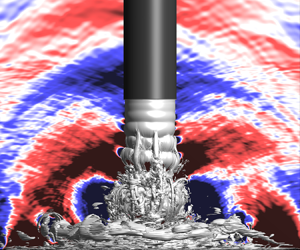
The influence of the boundary layer (BL) thickness on the tonal noise generated by subsonic impinging jets is investigated. For that, initially laminar jets at Mach numbers $0.6$ and $0.9$ with BL thicknesses $0.05r_0$, $0.1r_0$ and $0.2r_0$, where $r_0$ is the pipe-nozzle radius, impinging on a plate at $6r_0$ from the nozzle, are simulated. For Mach number $0.9$, acoustic tones due to feedback loops of axisymmetric nature between the nozzle and the plate are generated at frequencies that do not vary with the BL thickness. The two dominant tones are, however, $17$ and $26\ \mathrm {dB}$ stronger for the thickest BL compared with the thinnest one. For Mach number $0.6$, for the thinnest BL no acoustic peaks appear, as observed in the experiments of the literature, but narrow peaks resulting from axisymmetric feedback loops emerge for thicker BLs. Therefore, low subsonic impinging jets can be resonant for specific nozzle-exit conditions. The increase in tone amplitude for Mach number $0.9$, and the establishment of feedback loops for Mach number $0.6$ with increasing BL thickness, are found to result from two changes in the jet flow. The first change is that the shear-layer laminar–turbulent transition occurs farther downstream for a thicker BL, leading to a greater predominance of the axisymmetric aerodynamic fluctuations near the plate. The second change is that the amplification of the flow fluctuations between the nozzle and the plate at the tone frequencies is stronger for thicker BLs.


Regressing bubble cluster dynamics as a disordered many-body system
-
- Journal:
- Journal of Fluid Mechanics / Volume 985 / 25 April 2024
- Published online by Cambridge University Press:
- 22 April 2024, A23
-
- Article
-
- You have access
- Open access
- HTML
- Export citation
Dynamics and active mixing of a droplet in a Stokes trap
-
- Journal:
- Journal of Fluid Mechanics / Volume 985 / 25 April 2024
- Published online by Cambridge University Press:
- 22 April 2024, A15
-
- Article
-
- You have access
- Open access
- HTML
- Export citation
Relaminarization effects in hypersonic flow on a three-dimensional expansion–compression geometry
-
- Journal:
- Journal of Fluid Mechanics / Volume 985 / 25 April 2024
- Published online by Cambridge University Press:
- 22 April 2024, A25
-
- Article
- Export citation
-
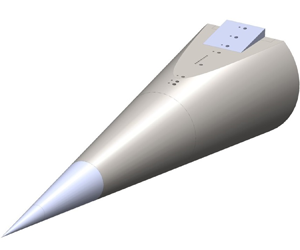
This experimental work explores the flow field around a three-dimensional expansion–compression geometry on a slender cone at Mach 8 using high-frequency pressure sensors, high-frame-rate schlieren, temperature-sensitive paint, shear-stress measurements and oil-flow visualizations. The $7^\circ$ cone geometry has a hyperbolic slice which acts as an expansion corner and suppresses the disturbances present in the upstream boundary layer. Downstream of the cone-slice corner, high-frequency boundary-layer disturbances attenuate in all cases. Under laminar conditions, second-mode instabilities from the cone diminish and lower-frequency second-mode waves develop on the slice at a frequency commensurate with the increased boundary layer thickness. For fully turbulent cases, the boundary layer over the slice shows evidence of a two-layered nature with a turbulent outer region and a near-wall region with strong attenuation of high-frequency disturbances and reappearance of lower-frequency instability waves. When a downstream compression ramp is added to the slice, the expanded boundary layer shows enhanced susceptibility to separation such that separation is observed at a $10^{\circ }$ deflection, which is smaller than expected for turbulent conditions. For a $30^{\circ }$ ramp, boundary-layer separation occurs further upstream where the heat flux contours show a decrease in heating that is characteristic of a transitional separation. These results demonstrate the effect of relaminarization caused by an upstream expansion on a subsequent shock-wave/boundary-layer interaction.


On the interaction of Taylor length-scale size droplets and homogeneous shear turbulence – CORRIGENDUM
-
- Journal:
- Journal of Fluid Mechanics / Volume 984 / 10 April 2024
- Published online by Cambridge University Press:
- 22 April 2024, E1
-
- Article
-
- You have access
- Open access
- HTML
- Export citation
Spectral proper orthogonal decomposition of time-resolved three-dimensional flow measurements in the turbulent wake of the Ahmed body
-
- Journal:
- Journal of Fluid Mechanics / Volume 985 / 25 April 2024
- Published online by Cambridge University Press:
- 19 April 2024, A19
-
- Article
-
- You have access
- Open access
- HTML
- Export citation
Growing indoor environmental infrastructure: designing for microbial diversity with implications for pollutant metabolism and human health
-
- Journal:
- Research Directions: Biotechnology Design / Volume 2 / 2024
- Published online by Cambridge University Press:
- 19 April 2024, e5
-
- Article
-
- You have access
- Open access
- HTML
- Export citation
Breast tumors detection using multistatic microwave imaging with antipodal Vivaldi antennas utilizing DMAS and it-DMAS techniques
-
- Journal:
- International Journal of Microwave and Wireless Technologies / Volume 16 / Issue 4 / May 2024
- Published online by Cambridge University Press:
- 19 April 2024, pp. 690-703
-
- Article
- Export citation
