Refine search
Actions for selected content:
212936 results in Engineering
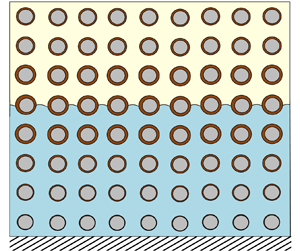
Mathematical modelling of impurity deposition during evaporation of dirty liquid in a porous material
-
- Journal:
- Journal of Fluid Mechanics / Volume 986 / 10 May 2024
- Published online by Cambridge University Press:
- 10 May 2024, A31
-
- Article
-
- You have access
- Open access
- HTML
- Export citation
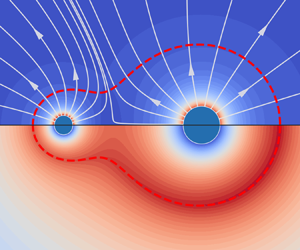
Analysis of two interactive burning droplets with different temperatures
-
- Journal:
- Journal of Fluid Mechanics / Volume 986 / 10 May 2024
- Published online by Cambridge University Press:
- 10 May 2024, A35
-
- Article
- Export citation
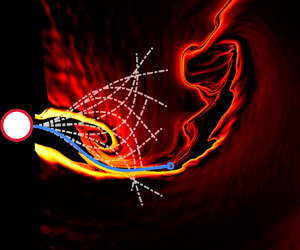
Passive bionic motion of a flexible film in the wake of a circular cylinder: chaos and periodicity, flow–structure interactions and energy evolution
-
- Journal:
- Journal of Fluid Mechanics / Volume 986 / 10 May 2024
- Published online by Cambridge University Press:
- 10 May 2024, A29
-
- Article
- Export citation
High-gain TM11 mode equilateral triangular patch antenna with shorting pins and triangular short horn
-
- Journal:
- International Journal of Microwave and Wireless Technologies / Volume 16 / Issue 6 / July 2024
- Published online by Cambridge University Press:
- 10 May 2024, pp. 1009-1023
-
- Article
- Export citation
-
Normally, the reported gain of the microstrip patch antenna is within 8 dBi. Using properly located three shorting pins on three bisectors, the present work reports a method to convert the non-radiating TM11 mode of equilateral triangular patch antennas (ETPAs) to a deformed TM11 radiating mode. The boresight gain of ETPA operating in TM11 mode is enhanced from −10.75 to 12.1 dBi at 5.43 GHz. The boresight measured gain is further enhanced to 14.2 dBi at 5.52 GHz by using a triangular surface-mounted short horn (SMSH) of about ${{\lambda }}/5$ height. The aperture efficiency of the ETPA with the shorting pins is 84.2%. The aperture efficiency is further improved to 94.2% using the SMSH. The measured boresight cross-polarization and side-lobe level are −40 and −29 dB, respectively. The nature of the electricfield and surface current distribution is analyzed, using both the characteristic mode analysis method and high-frequency structure simulator, to understand the role of shorting pin and coaxial feed in converting the non-radiating TM11 mode to the radiating mode. A systematic design process also is presented for a fast design of shorting pin-loaded ETPA on the suitable substrate at a specified frequency.

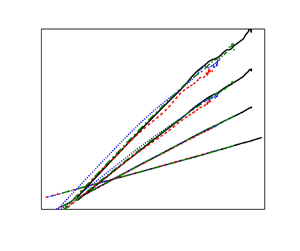
Small-scale turbulent characteristics in transcritical wall-bounded flows
-
- Journal:
- Journal of Fluid Mechanics / Volume 986 / 10 May 2024
- Published online by Cambridge University Press:
- 10 May 2024, A36
-
- Article
- Export citation

Zonal jets and eddy tilts in barotropic geostrophic turbulence
-
- Journal:
- Journal of Fluid Mechanics / Volume 986 / 10 May 2024
- Published online by Cambridge University Press:
- 10 May 2024, A38
-
- Article
-
- You have access
- Open access
- HTML
- Export citation
In-vacuum post-compression of optical probe pulses for relativistic plasma diagnostics
-
- Journal:
- High Power Laser Science and Engineering / Volume 12 / 2024
- Published online by Cambridge University Press:
- 10 May 2024, e53
-
- Article
-
- You have access
- Open access
- HTML
- Export citation
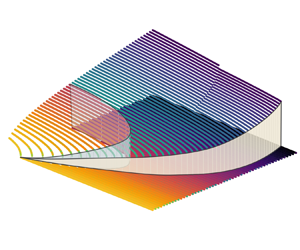
On the aeroelastic bifurcation of a flexible panel subjected to cavity pressure and inviscid oblique shock
-
- Journal:
- Journal of Fluid Mechanics / Volume 986 / 10 May 2024
- Published online by Cambridge University Press:
- 10 May 2024, A28
-
- Article
- Export citation
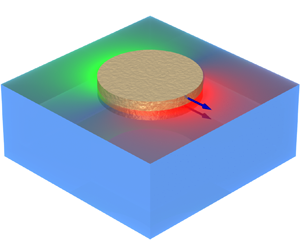
Hydrodynamic efficiency limit on a Marangoni surfer
-
- Journal:
- Journal of Fluid Mechanics / Volume 986 / 10 May 2024
- Published online by Cambridge University Press:
- 10 May 2024, A32
-
- Article
-
- You have access
- Open access
- HTML
- Export citation
-
A Marangoni surfer is an object embedded in a gas–liquid interface, propelled by gradients in surface tension. We derive an analytical theorem for the lower bound on the viscous dissipation by a Marangoni surfer in the limit of small Reynolds and capillary numbers. The minimum dissipation can be expressed with the reciprocal difference between drag coefficients of two passive bodies of the same shape as the Marangoni surfer, one in a force-free interface and the other in an interface with surface incompressibility. The distribution of surface tension that gives the optimal propulsion is given by the surface tension of the solution for the incompressible surface and the flow is a superposition of both solutions. For a surfer taking the form of a thin circular disk, the minimum dissipation is $16\mu a V^2$, giving a Lighthill efficiency of $1/3$. This places the Marangoni surfers among the hydrodynamically most efficient microswimmers.


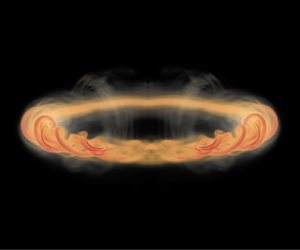
Vortex bursting and associated twist dynamics on helical vortex tubes and vortex rings
-
- Journal:
- Journal of Fluid Mechanics / Volume 986 / 10 May 2024
- Published online by Cambridge University Press:
- 10 May 2024, A34
-
- Article
- Export citation
-
The interaction of opposite-signed twist waves on vortex tubes can lead to vortex bursting, a process where the core expands into a double ring-like structure with strong swirling flows. Previous works have studied vortex bursting on rectilinear vortices by axially perturbing the initial core size to generate the twist waves, and observed largely axisymmetric bursting dynamics. In this work, we numerically study bursting on vortical structures with curved centrelines, analysing the interaction between the centreline dynamics, twist wave generation and propagation, and vortex bursting. We focus on axially perturbed helical vortex tubes with small radius-to-pitch ratios up to $0.0625$, as well as vortex rings with a large radius-to-core size ratio $10$, both at a circulation-based Reynolds number $5000$. The results show that though the initial twist wave propagation speeds are relatively unaffected by the curvature and torsion of the centreline, the bursting process is altered significantly compared with rectilinear vortices. The self-induced rotation of the centreline of the helical tube induces a non-axisymmetric distortion of the bursting structure, which rapidly breaks up the vortex core into small-scale helical structures. A similar destabilization of the bursting structure also occurs on vortex rings. The enstrophy increase and accelerated energy decay associated with bursting are predominantly determined by the twist wave strength, rather than the curvature and torsion of the centreline. Combined, our findings imply that bursting could play an important role in transferring and dissipating energy of vortical structures in wakes, and turbulent flows in general.


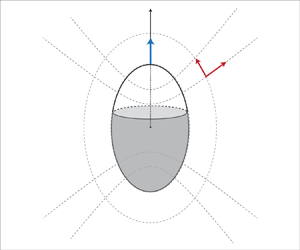
Self-diffusiophoretic propulsion of a spheroidal particle in a shear-thinning fluid
-
- Journal:
- Journal of Fluid Mechanics / Volume 986 / 10 May 2024
- Published online by Cambridge University Press:
- 10 May 2024, A39
-
- Article
-
- You have access
- Open access
- HTML
- Export citation
Water extraction in aero gas turbines for contrail mitigation
- Part of
-
- Journal:
- The Aeronautical Journal / Volume 128 / Issue 1325 / July 2024
- Published online by Cambridge University Press:
- 09 May 2024, pp. 1344-1361
-
- Article
-
- You have access
- Open access
- HTML
- Export citation
-
Water vapour and particles in aero engine exhaust can give rise to condensation trails (contrails) in the wake of aircrafts, and recent studies suggest that persistent contrails and contrail cirrus account for circa 50% of the total aviation-derived radiative forcing (RF). The Schmidt-Appleman criterion is widely used to qualitatively predict the formation of contrails. The criterion indicates that the formation of contrails is affected by both aero engine exhaust and ambient air conditions and can therefore provide the theoretical basis to devise contrail mitigation strategies and further allows quantitative assessment of these strategies. This work focuses on water extraction from the aircraft engine exhaust for contrail mitigation. The fuel water emission index ( ${\rm{E}}{{\rm{I}}_{{{\rm{H}}_2}{\rm{O}}}}$) is one of the key factors that determines whether persistent contrails form or not. It indicates the amount of water produced for every kg of fuel burnt. Research has indicated that water extraction from the exhaust of the aero engine has been considered for Nitrogen oxides (NOx) reduction, but not for contrail mitigation. Assuming that water extraction is indeed possible, the emphasis of this work will therefore be on understanding how much water is needed to be extracted for contrail mitigation depending on the altitude and the relative humidity (RH), with the aim to carry out a meaningful study on the mitigation of persistent contrails and contrail cirrus to enable a fast and considerable reduction in aviation-derived RF.
 $\beta$-wave-based exploration of sensitive EEG features and classification of situation awareness
-
- Journal:
- The Aeronautical Journal / Volume 128 / Issue 1329 / November 2024
- Published online by Cambridge University Press:
- 09 May 2024, pp. 2561-2576
-
- Article
- Export citation
-
The purpose of this study was to explore the electroencephalogram (EEG) features sensitive to situation awareness (SA) and then classify SA levels. Forty-eight participants were recruited to complete an SA standard test based on the multi-attribute task battery (MATB) II, and the corresponding EEG data and situation awareness global assessment technology (SAGAT) scores were recorded. The population with the top 25% of SAGAT scores was selected as the high-SA level (HSL) group, and the bottom 25% was the low-SA level (LSL) group. The results showed that (1) for the relative power of $\beta$1 (16–20Hz), $\beta$2 (20–24Hz) and $\beta$3 (24–30Hz), repeated measures analysis of variance (ANOVA) in three brain regions (Central Central-Parietal, and Parietal) × three brain lateralities (left, midline, and right) × two SA groups (HSL and LSL) showed a significant main effect for SA groups; post hoc comparisons revealed that compared with LSL, the above features of HSL were higher. (2) for most ratio features associated with $\beta$1 ∼ $\beta$3, ANOVA also revealed a main effect for SA groups. (3) EEG features sensitive to SA were selected to classify SA levels with small-sample data based on the general supervised machine learning classifiers. Five-fold cross-validation results showed that among the models with easy interpretability, logistic regression (LR) and decision tree (DT) presented the highest accuracy (both 92%), while among the models with hard interpretability, the accuracy of random forest (RF) was 88.8%, followed by an artificial neural network (ANN) of 84%. The above results suggested that (1) the relative power of $\beta$1 ∼ $\beta$3 and their associated ratios were sensitive to changes in SA levels; (2) the general supervised machine learning models all exhibited good accuracy (greater than 75%); and (3) furthermore, LR and DT are recommended by combining the interpretability and accuracy of the models.


Multiple model fault diagnosis and fault tolerant control for the launch vehicle’s attitude control system
-
- Journal:
- The Aeronautical Journal / Volume 128 / Issue 1326 / August 2024
- Published online by Cambridge University Press:
- 09 May 2024, pp. 1875-1894
-
- Article
- Export citation
TomoNet: A streamlined cryogenic electron tomography software pipeline with automatic particle picking on flexible lattices
-
- Journal:
- Biological Imaging / Volume 4 / 2024
- Published online by Cambridge University Press:
- 09 May 2024, e7
-
- Article
-
- You have access
- Open access
- HTML
- Export citation
Whole-body SAR measurements of millimeter-wave base station in reverberation chambers
-
- Journal:
- International Journal of Microwave and Wireless Technologies / Volume 16 / Issue 10 / December 2024
- Published online by Cambridge University Press:
- 09 May 2024, pp. 1659-1664
-
- Article
- Export citation
Effects of distortion on a BLI fan
- Part of
-
- Journal:
- The Aeronautical Journal / Volume 128 / Issue 1325 / July 2024
- Published online by Cambridge University Press:
- 09 May 2024, pp. 1362-1378
-
- Article
-
- You have access
- Open access
- HTML
- Export citation
Brightness enhancement on a narrow-linewidth fiber Bragg grating-based master oscillator power amplification fiber laser
-
- Journal:
- High Power Laser Science and Engineering / Volume 12 / 2024
- Published online by Cambridge University Press:
- 09 May 2024, e44
-
- Article
-
- You have access
- Open access
- HTML
- Export citation
Intraday residual transfer learning in minimally observed power distribution networks dynamic state estimation
-
- Journal:
- Data-Centric Engineering / Volume 5 / 2024
- Published online by Cambridge University Press:
- 08 May 2024, e13
-
- Article
-
- You have access
- Open access
- HTML
- Export citation
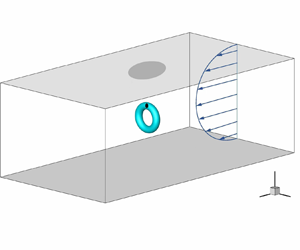
Transition induced by a bursting vortex ring in channel flow
-
- Journal:
- Journal of Fluid Mechanics / Volume 986 / 10 May 2024
- Published online by Cambridge University Press:
- 08 May 2024, A11
-
- Article
- Export citation
