Refine search
Actions for selected content:
212937 results in Engineering

Warship 4
- Frigate USS Clark
-
- Published by:
- Amsterdam University Press
- Published online:
- 03 April 2024
-
- Book
- Export citation

Warship 1
- Cruiser HNLMS Tromp
-
- Published by:
- Amsterdam University Press
- Published online:
- 03 April 2024
-
- Book
- Export citation
Direct numerical simulations of compressible turbulent channel flows with asymmetric thermal walls
-
- Journal:
- Journal of Fluid Mechanics / Volume 984 / 10 April 2024
- Published online by Cambridge University Press:
- 03 April 2024, A37
-
- Article
- Export citation
-
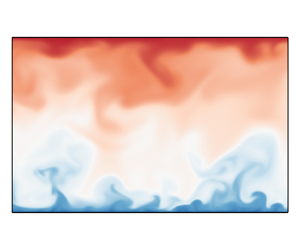
This paper extends the work of Tamano & Morinishi (J. Fluid Mech., vol. 548, 2006, pp. 361–373) by simulating supersonic turbulent channel flow with asymmetric thermal walls using a larger computational domain and a finer mesh. Direct numerical simulation is carried out for four cases with different thermal wall boundaries at the top wall at fixed $Ma=1.5$, $Re=6000$ and $Pr=0.72$, while the bottom wall is maintained at a constant temperature of $T_L$ equal to the reference temperature. These cases are referred to as the adiabatic case TAd, where the top wall is adiabatic; the pseudo-adiabatic case T32, where the top wall is isothermal with temperature $T_{w,t}=T_A$; the sub-adiabatic case T25, with $T_{w,t}=0.77T_A$; and the super-adiabatic case T40, with $T_{w,t}=1.24T_A$. Here, $T_A=3.234$ is the mean temperature at the adiabatic wall in the TAd case. The objective of this study is to compare and contrast the TAd case with its corresponding T32 case, and to investigate the effect of the wall temperature difference between the two isothermal walls. Comparisons of the basic turbulent statistics, the heat transfer between the Favre-averaged mean-flow kinetic energy, the Favre-averaged turbulent kinetic energy and the Favre-averaged mean internal energy, as well as the wall heat transfer properties, indicate that the TAd case and its corresponding T32 case are generally equivalent. The only discernible difference is in the region very close to the top wall for the temperature-fluctuation-related quantities. The analysis reveals that the asymmetry of the thermal walls causes asymmetry in the flow and thermal fields. In addition, the transfer of the heat generated by the pressure dilatation and the viscous stress is facilitated by the turbulent heat flux term and the mean molecular heat flux term.


Mode coupling between two different interfaces of a gas layer subject to a shock
-
- Journal:
- Journal of Fluid Mechanics / Volume 984 / 10 April 2024
- Published online by Cambridge University Press:
- 03 April 2024, A38
-
- Article
- Export citation
-
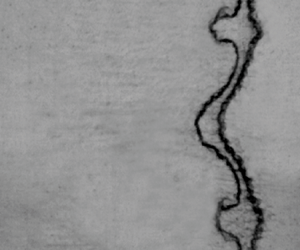
Shock-tube experiments and theoretical studies have been performed to highlight mode-coupling in an air–SF $_6$–air fluid layer. Initially, the two interfaces of the layer are designed as single mode with different basic modes. It is found that as the two perturbed interfaces become closer, interface coupling induces a different mode from the basic mode on each interface. Then mode coupling further generates new modes. Based on the linear model (Jacobs et al., J. Fluid Mech., vol. 295, 1995, pp. 23–42), a modified model is established by considering the different accelerations of two interfaces and the waves’ effects in the layer, and provides good predictions to the linear growth rates of the basic modes and the modes generated by interface coupling. It is observed that interface coupling behaves differently to the nonlinear growth of the basic modes, which can be characterized generally by the existing or modified nonlinear model. Moreover, a new modal model is established to quantify the mode-coupling effect in the layer. The mode-coupling effect on the amplitude growth is negligible for the basic modes, but is significant for the interface-coupling modes when the initial wavenumber of one interface is twice the wavenumber of the other interface. Finally, amplitude freeze-out of the second single-mode interface is achieved theoretically and experimentally through interface coupling. These findings may be helpful for designing the target in inertial confinement fusion to suppress the hydrodynamic instabilities.

Scale-by-scale non-equilibrium with Kolmogorov-like scalings in non-homogeneous stationary turbulence
-
- Journal:
- Journal of Fluid Mechanics / Volume 984 / 10 April 2024
- Published online by Cambridge University Press:
- 03 April 2024, A35
-
- Article
- Export citation
Introduction
-
- Book:
- Warship 6
- Published by:
- Amsterdam University Press
- Published online:
- 03 April 2024, pp 2-52
-
- Chapter
- Export citation
Data-driven model for Lagrangian evolution of velocity gradients in incompressible turbulent flows
-
- Journal:
- Journal of Fluid Mechanics / Volume 984 / 10 April 2024
- Published online by Cambridge University Press:
- 03 April 2024, A39
-
- Article
-
- You have access
- Open access
- HTML
- Export citation
-
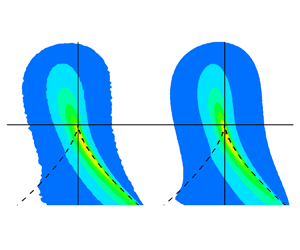
Velocity gradient tensor, $A_{ij}\equiv \partial u_i/\partial x_j$, in a turbulence flow field is modelled by separating the treatment of intermittent magnitude (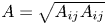 $A = \sqrt {A_{ij}A_{ij}}$) from that of the more universal normalised velocity gradient tensor, $b_{ij} \equiv A_{ij}/A$. The boundedness and compactness of the $b_{ij}$-space along with its universal dynamics allow for the development of models that are reasonably insensitive to Reynolds number. The near-lognormality of the magnitude $A$ is then exploited to derive a model based on a modified Ornstein–Uhlenbeck process. These models are developed using data-driven strategies employing high-fidelity forced isotropic turbulence data sets. A posteriori model results agree well with direct numerical simulation data over a wide range of velocity-gradient features and Reynolds numbers.


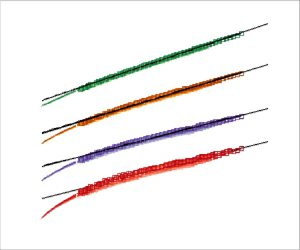
Self-similarity in over-tripped turbulent boundary-layer flows
-
- Journal:
- Journal of Fluid Mechanics / Volume 984 / 10 April 2024
- Published online by Cambridge University Press:
- 03 April 2024, A34
-
- Article
- Export citation
Frontmatter
-
- Book:
- Warship 6
- Published by:
- Amsterdam University Press
- Published online:
- 03 April 2024, pp 1-1
-
- Chapter
- Export citation
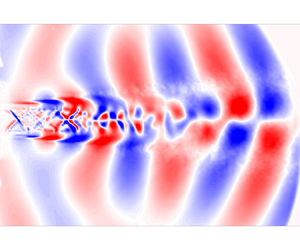
Active control of flow and near-field pressure fluctuations in heated supersonic rectangular twin jets
-
- Journal:
- Journal of Fluid Mechanics / Volume 984 / 10 April 2024
- Published online by Cambridge University Press:
- 03 April 2024, A36
-
- Article
-
- You have access
- Open access
- HTML
- Export citation
Frontmatter
-
- Book:
- Warship 1
- Published by:
- Amsterdam University Press
- Published online:
- 03 April 2024, pp 1-1
-
- Chapter
- Export citation
Frontmatter
-
- Book:
- Warship 4
- Published by:
- Amsterdam University Press
- Published online:
- 03 April 2024, pp 1-1
-
- Chapter
- Export citation
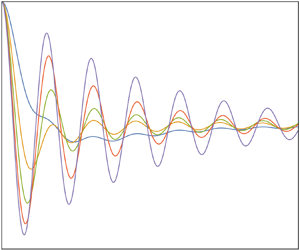
Buoyancy oscillations
-
- Journal:
- Journal of Fluid Mechanics / Volume 984 / 10 April 2024
- Published online by Cambridge University Press:
- 03 April 2024, A29
-
- Article
- Export citation
One Name, Two Ships and Two Admirals
-
- Book:
- Warship 4
- Published by:
- Amsterdam University Press
- Published online:
- 03 April 2024, pp 2-48
-
- Chapter
- Export citation
Introduction
-
- Book:
- Warship 1
- Published by:
- Amsterdam University Press
- Published online:
- 03 April 2024, pp 2-48
-
- Chapter
- Export citation
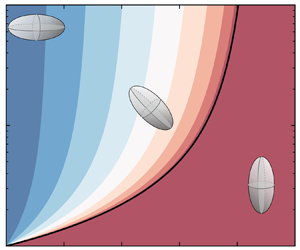
Settling and collision of spheroidal particles with an offset mass centre in a quiescent fluid
-
- Journal:
- Journal of Fluid Mechanics / Volume 984 / 10 April 2024
- Published online by Cambridge University Press:
- 03 April 2024, A40
-
- Article
-
- You have access
- Open access
- HTML
- Export citation
A 301 W narrow-linewidth in-band pumped Er:Yb co-doped fiber amplifier at 1585 nm and related modeling for dynamics study and optimization
-
- Journal:
- High Power Laser Science and Engineering / Volume 12 / 2024
- Published online by Cambridge University Press:
- 03 April 2024, e40
-
- Article
-
- You have access
- Open access
- HTML
- Export citation
-
To overcome Yb lasing, a kilowatt-level 1535 nm fiber laser is utilized to in-band pump an Er:Yb co-doped fiber (EYDF) amplifier. The output power of a 301 W narrow-linewidth EYDF amplifier operating at 1585 nm, with 3 dB bandwidth of 150 pm and ${M}^2$< 1.4, is experimentally demonstrated. To the best of our knowledge, it is the highest output power achieved in L-band narrow-linewidth fiber amplifiers with good beam quality. Theoretically, a new ion transition behavior among energy levels for in-band pumping EYDF is uncovered, and a spatial-mode-resolved nonlinearity-assisted theoretical model is developed to understand its internal dynamics. Numerical simulations reveal that the reduction in slope efficiency is significantly related to excited-state absorption (ESA). ESA has a nonlinear hindering effect on power scaling. It can drastically lower the pump absorption and slope efficiency with increasing pump power for in-band pumped EYDF amplifiers. Meanwhile, optimized approaches are proposed to improve its power to the kilowatt level via in-band pumping.


Fiat G.91
-
- Published by:
- Amsterdam University Press
- Published online:
- 02 April 2024
- Print publication:
- 28 November 2014
-
- Book
- Export citation
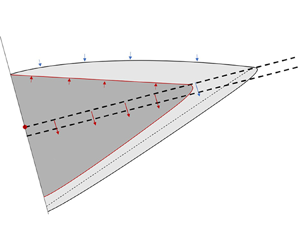
Porous media gravity current flow over an interbed layer: the impact of dispersion and distributed drainage
-
- Journal:
- Journal of Fluid Mechanics / Volume 984 / 10 April 2024
- Published online by Cambridge University Press:
- 02 April 2024, A33
-
- Article
-
- You have access
- Open access
- HTML
- Export citation
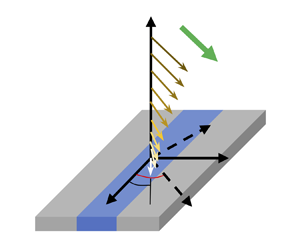
A comprehensive model for viscoplastic flows in channels with a patterned wall: longitudinal, transverse and oblique flows
-
- Journal:
- Journal of Fluid Mechanics / Volume 984 / 10 April 2024
- Published online by Cambridge University Press:
- 02 April 2024, A32
-
- Article
-
- You have access
- Open access
- HTML
- Export citation
-
We develop a comprehensive model for the creeping Poiseuille Bingham flow in channels equipped with a patterned wall, i.e. decorated with grooves or stripes that may represent a superhydrophobic (SH) or a chemically patterned (CP) surface, respectively, with longitudinal, transverse and oblique groove (stripe) orientations with respect to the applied pressure gradient. We rely on the Navier slip law to model the boundary condition on the slippery grooves. We develop semi-analytical, explicit-form and complementary computational fluid dynamics models, with solutions that have reasonable agreement. In contrast to its Newtonian analogue, a distinct solution for the oblique configuration, with an a priori unknown transform matrix, must be developed due to the viscoplastic nonlinear rheology. Our focus is to systematically analyse the effects of the Bingham number ( $B$), slip number ( $b$), groove periodicity length ( $\ell$), slip area fraction ( $\varphi$) and groove orientation angle ( $\theta$), on the slip velocities, effective slip length ( $\chi$), slip angle difference ( $\theta -s$), mixing index ( $I_M$), flow anisotropy and flow regimes. In particular, we demonstrate that, as $B$ increases, the maximum values of the shear component of $\chi$, $\theta -s$ and $I_M$ occur progressively at smaller values of $\theta$, compared with their Newtonian counterparts.


