Refine search
Actions for selected content:
212948 results in Engineering
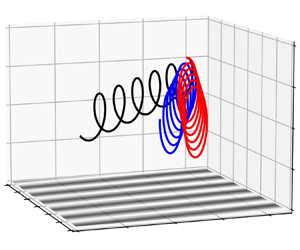
Surface corrugations induce helical near-surface flows and transport in microfluidic channels
-
- Journal:
- Journal of Fluid Mechanics / Volume 982 / 10 March 2024
- Published online by Cambridge University Press:
- 11 March 2024, A31
-
- Article
-
- You have access
- Open access
- HTML
- Export citation

Renewable Energy Engineering
-
- Published online:
- 08 March 2024
- Print publication:
- 28 March 2024
-
- Textbook
- Export citation

Essays on Coding Theory
-
- Published online:
- 08 March 2024
- Print publication:
- 14 March 2024
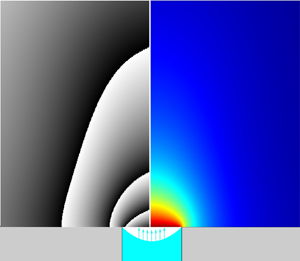
Evaporation from a cylindrical cavity: effect of gravity on the vapour cloud
-
- Journal:
- Journal of Fluid Mechanics / Volume 982 / 10 March 2024
- Published online by Cambridge University Press:
- 08 March 2024, A26
-
- Article
- Export citation
-
We examine the vapour cloud of a pure liquid evaporating from a millimetric cylindrical well/cavity/aperture. This is accomplished by injecting the liquid up a vertical pipe towards its outlet onto a horizontal substrate. The injection is halted before the liquid surpasses the substrate level. The resulting final state is a meniscus at or near the pipe's end. The analysis is realised by vapour interferometry (side view over the substrate) closely intertwined with simulations (including Stefan flow), which also help to fill up certain gaps in the measurements and provide computed evaporation rates. Comparison with experiment is facilitated by converting the computed vapour clouds into interferometric images, especially helpful when an inverse (Abel-type) conversion is difficult. Experiments are conducted in both microgravity (via parabolic flights) and ground conditions, thus enabling direct assessment of the role of gravity. The contrast is accentuated by a working liquid with heavy vapour (refrigerant HFE-7100), when instead of being flattened on ground the vapour cloud assumes a roughly hemispherical shape in microgravity. Furthermore, a non-trivial vapour-cloud response to the flight ${\rm g}$-jitter (residual gravity oscillations) is unveiled, ${\rm g}$-jitter vibrations posing a challenge for interferometry itself. A number of undesired but curious side issues are revealed. One concerns vapour formed deep inside the pipe during rapid injection and subsequently ejected into the field of view, which is detected experimentally and quantified in terms of vapour Taylor dispersion in the pipe. Others are an injection volume anomaly and parasitic postinjection specifically observed in microgravity conditions.


Developing a human rights compatible governance framework for quantum computing
-
- Journal:
- Research Directions: Quantum Technologies / Volume 2 / 2024
- Published online by Cambridge University Press:
- 08 March 2024, e1
-
- Article
-
- You have access
- Open access
- HTML
- Export citation
Brightness enhancement on random-distributed-feedback Raman fiber lasers pumped by multimode diodes
-
- Journal:
- High Power Laser Science and Engineering / Volume 12 / 2024
- Published online by Cambridge University Press:
- 08 March 2024, e29
-
- Article
-
- You have access
- Open access
- HTML
- Export citation
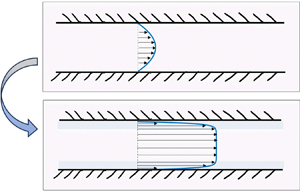
Electrolubrication in liquid mixtures between two parallel plates
-
- Journal:
- Journal of Fluid Mechanics / Volume 982 / 10 March 2024
- Published online by Cambridge University Press:
- 08 March 2024, A27
-
- Article
-
- You have access
- Open access
- HTML
- Export citation
-
We describe theoretically ‘electrolubrication’ in liquid mixtures: the phenomenon whereby an electric field applied transverse to the confining surfaces leads to concentration gradients that alter the flow profile significantly. When the more polar liquid is the less viscous one, the stress in the liquid falls on two electric-field-induced thin lubrication layers. The thickness of the lubrication layer depends on the Debye length and the mixture correlation length. For the simple case of two parallel and infinite plates, we calculate explicitly the liquid velocity profile and integrated flux. The maximum liquid velocity and flux can be increased by a factor $\alpha$, of order 10–100 or even more. For a binary mixture of water and a cosolvent, with viscosities $\eta _w$ and $\eta _{cs}$, respectively, $\alpha$ increases monotonically with inter-plate potential $V$ and average ion content, and is large if the ratio $\eta _{cs}/\eta _w$ is large.


Dual-port circularly polarized dielectric resonator–based antenna with reconfigurable integrated multifunctional filter for 5G cognitive radio applications
-
- Journal:
- International Journal of Microwave and Wireless Technologies / Volume 16 / Issue 7 / September 2024
- Published online by Cambridge University Press:
- 08 March 2024, pp. 1208-1217
-
- Article
- Export citation
Tunable microstrip bandpass filter with constant absolute bandwidth using BST varactors and digitally tunable capacitors
-
- Journal:
- International Journal of Microwave and Wireless Technologies / Volume 16 / Issue 7 / September 2024
- Published online by Cambridge University Press:
- 08 March 2024, pp. 1106-1112
-
- Article
- Export citation

Offshore Wind Energy
- Environmental Conditions and Dynamics of Fixed and Floating Turbines
-
- Published online:
- 07 March 2024
- Print publication:
- 14 March 2024
Multitask feature selection within structural datasets
-
- Journal:
- Data-Centric Engineering / Volume 5 / 2024
- Published online by Cambridge University Press:
- 07 March 2024, e4
-
- Article
-
- You have access
- Open access
- HTML
- Export citation
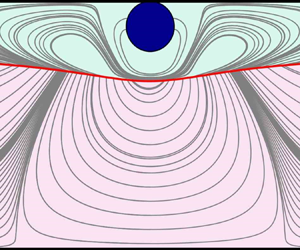
Influence of immersed particles on the stability of the liquid–liquid interface in a two-layer channel flow
-
- Journal:
- Journal of Fluid Mechanics / Volume 982 / 10 March 2024
- Published online by Cambridge University Press:
- 07 March 2024, A23
-
- Article
-
- You have access
- Open access
- HTML
- Export citation
Turbulent–turbulent transient concept in pulsating flows
-
- Journal:
- Journal of Fluid Mechanics / Volume 982 / 10 March 2024
- Published online by Cambridge University Press:
- 07 March 2024, A20
-
- Article
-
- You have access
- Open access
- HTML
- Export citation
-
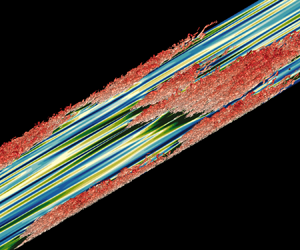
The turbulence behaviour of current-dominated pulsating flows has been investigated. Direct numerical simulations have been carried out for Stokes lengths over a range of $l_s^+=5\unicode{x2013}26$, and amplitudes spanning 90 % of the current-dominated regime, about a mean flow of $\overline {Re}=6275$. The results show that the turbulence response in intermediate and low-frequency pulsations is governed by a multistage turbulent–turbulent transition process, which bears a strong similarity to the multistage response of non-periodic acceleration. During the early acceleration period, the flow enters a pretransition stage, in which a new laminar perturbation boundary layer forms at the wall, and the streamwise velocity streaks are stretched. If the low-speed streaks destabilise prior to the deceleration period, then the flow enters a transition stage in which the perturbation boundary layer undergoes a bypass-like transition process. A unique feature of pulsating flows is the ongoing mechanism of turbulence decay, which initiates during the deceleration period and constitutes the main transient turbulence mechanism for much of the cycle. For high-frequency pulsations, the perturbation boundary layer fails to reach the pretransition stage prior to the deceleration period. Instead, the flow alternates between two inertial stages which are characterised by two layers of amplified viscous force; one growing at the wall, and one detached and moving towards the core.


The sub-microscale dynamics of double-diffusive convection
-
- Journal:
- Journal of Fluid Mechanics / Volume 982 / 10 March 2024
- Published online by Cambridge University Press:
- 07 March 2024, A25
-
- Article
- Export citation
Broadband packaging solution in embedded wafer level ball grid array technology for D-band PMCW radar
-
- Journal:
- International Journal of Microwave and Wireless Technologies / Volume 16 / Issue 5 / June 2024
- Published online by Cambridge University Press:
- 07 March 2024, pp. 771-782
-
- Article
-
- You have access
- Open access
- HTML
- Export citation

Detailed characterization of extreme clustering at near-contact scales in isotropic turbulence
-
- Journal:
- Journal of Fluid Mechanics / Volume 982 / 10 March 2024
- Published online by Cambridge University Press:
- 07 March 2024, A21
-
- Article
-
- You have access
- Open access
- HTML
- Export citation
-
Recent measurements of inertial particles in isotropic turbulence (Hammond & Meng, J. Fluid Mech., vol. 921, 2021, A16) revealed surprising extreme clustering of particles at near-contact separations $(r)$, whereby the radial distribution function, $g(r)$, grows from $O(10)$ to $O(10^3)$ with a $(r/a)^{-6}$ scaling (where $a$ is the particle radius), and a surprising upturn of the mean inward particle-pair relative velocity (MIRV). Hydrodynamic interactions (HIs) were proposed to explain the extreme clustering, but despite predicting the correct scaling $(r/a)^{-6}$, the HI theory underpredicted $g(r)$ by at least two orders of magnitude (Bragg et al., J. Fluid Mech., vol. 933, 2022, A31). To further understand the extreme clustering phenomenon and the relevance of HI, we characterize $g(r)$ and particle-pair kinematics for Stokes numbers $0.07 \leq St \leq 3.68$ in a homogeneous isotropic turbulence chamber using three-dimensional (3-D) particle tracking resolved to near–contact. A drift–diffusion equation governing $g(r)$ is presented to investigate the kinematic mechanisms of particle pairs. Measurements in all 24 conditions show that when $r/a\lessapprox 20$, extreme clustering consistently occurs, scaling as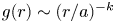 $g(r) \sim (r/a)^{-k}$ with $4.5 \leq k \leq 7.6$, which increases with $St$. Here $g(r)$ varies with $St$, particle size, density and polydispersity in ways that HI cannot explain. The extreme clustering region features an inward drift contributed by particle-pair turbophoresis and an inward radial relative acceleration. The latter indicates an interparticle attractive force at these separations that HI also cannot explain. The MIRV turns upward when approaching the extreme clustering region, opposite to direct numerical simulation predictions. These observations further support our previous assessment that extreme clustering arises from particle–particle interactions, but HI is not the main mechanism.


Combining 77–81 GHz MIMO FMCW radar with frequency-steered antennas: a case study for 3D target localization
-
- Journal:
- International Journal of Microwave and Wireless Technologies / Volume 16 / Issue 5 / June 2024
- Published online by Cambridge University Press:
- 07 March 2024, pp. 819-827
-
- Article
-
- You have access
- Open access
- HTML
- Export citation

Effect of bulk viscosity on the hypersonic compressible turbulent boundary layer
-
- Journal:
- Journal of Fluid Mechanics / Volume 982 / 10 March 2024
- Published online by Cambridge University Press:
- 07 March 2024, A24
-
- Article
- Export citation
-
The impact of bulk viscosity is unclear with considering the increased dilatational dissipation and compressibility effects in hypersonic turbulence flows. In this study, we employ direct numerical simulations to conduct comprehensive analysis of the effect of bulk viscosity on hypersonic turbulent boundary layer flow over a flat plate. The results demonstrate that the scaling relations remain valid even when accounting for large bulk viscosity. However, the wall-normal velocity fluctuations $v_{rms}^{\prime \prime }$ decrease significantly in the viscous sublayer due to the enhanced bulk dilatational dissipation. The intensity of travelling-wave-like alternating positive and negative structures of instantaneous pressure fluctuations $p_{rms}^{\prime }$ in the near-wall region decreases distinctly after considering the bulk viscosity, which is attributed mainly to the reduction of compressible pressure fluctuations $p_{c,rms}^{+}$. Furthermore, the velocity divergence $\partial u_{i} / \partial x_{i}$ undergoes a significant decrease by bulk viscosity. In short, our results indicate that bulk viscosity can weaken the compressibility of the hypersonic turbulent boundary layer and becomes more significant as the Mach number increases and the wall temperature decreases. Notably, when the bulk-to-shear viscosity ratio of the gas reaches a few hundred levels (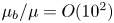 $\mu _b/\mu =O(10^2)$), and mechanical behaviour of the near-wall region ( $\kern 0.06em y^+\le 30$) is of greater interest, the impact of bulk viscosity on the hypersonic cold-wall turbulent boundary layer may not be negligible.


ICDD ECR Networking Group
-
- Journal:
- Powder Diffraction / Volume 39 / Issue 1 / March 2024
- Published online by Cambridge University Press:
- 06 March 2024, p. 36
-
- Article
- Export citation
Joint micrograph denoising and protein localization in cryo-electron microscopy
-
- Journal:
- Biological Imaging / Volume 4 / 2024
- Published online by Cambridge University Press:
- 06 March 2024, e4
-
- Article
-
- You have access
- Open access
- HTML
- Export citation
