To save content items to your account,
please confirm that you agree to abide by our usage policies.
If this is the first time you use this feature, you will be asked to authorise Cambridge Core to connect with your account.
Find out more about saving content to .
To save content items to your Kindle, first ensure no-reply@cambridge.org
is added to your Approved Personal Document E-mail List under your Personal Document Settings
on the Manage Your Content and Devices page of your Amazon account. Then enter the ‘name’ part
of your Kindle email address below.
Find out more about saving to your Kindle.
Note you can select to save to either the @free.kindle.com or @kindle.com variations.
‘@free.kindle.com’ emails are free but can only be saved to your device when it is connected to wi-fi.
‘@kindle.com’ emails can be delivered even when you are not connected to wi-fi, but note that service fees apply.
Can you put into words your experiences while you sit on a couch and move your eyes smoothly across a piece of paper or a screen, which – as the only sensory input your brain has to process – provides some ink blobs or pixels you have learned to identify as letters after years of training? The following two quotes nicely summarize what I think is essential about this, in terms of evolution, most unnatural daily activity of the mind. They reveal two different aspects or functions that you perhaps are also familiar with. One evokes experiences of immersing oneself in a textual world; the other stirs up emotions and feelings of beauty. Both, the immersive and the aesthetic experiences, so well described in these citations, emerge from an interaction between the contents of the texts they read and the associative semantic networks in their brains.
A) ‘It starts spontaneously, and it keeps on as long as I keep reading. […] I have to concentrate and get involved. […] I immediately immerse myself in the reading, and the problems I usually worry about disappear. […] It starts as soon as something attracts my attention particularly, something that interests me. […] It can start wherever there is a chance to read undisturbed. […] One feels well, quiet, peaceful. […] I feel as if I belonged completely in the situation described in the book. […] I identify with the characters, and take part in what I am reading. […] I feel like I have the book stored in my mind.’
B) ‘It is emotion put into measure. The emotion must come by nature, but the measure can be acquired by art. It should surprise by a fine excess and not by singularity – it should strike the reader as a wording of his own highest thoughts, and appear almost a remembrance. It lifts the veil from the hidden beauty of the world, and makes familiar objects be as if they were not familiar‘. I would define it as the rhythmical creation of beauty.’
Throughout this book, I will treat these two aspects apart: immersion, mainly associated with the reading of prose, and aesthetic feelings, most often associated with the reading of poetry. This does not mean, however, that people cannot have aesthetic feelings when reading a novel or immersive experiences during the reception of poetry.
To go one stage further, ‘consistency’ and ‘tendency’ are most naturally reduced to ‘frequency’, and so, it appears, the stylistician becomes a statistician
—Leech & Short (2007, p. 34).
What gets readers to be ‘on loan’ to an author, thinking, feeling, suffering and acting within them? Why did Sappho and Homer know so well how to move, surprise and please their readers so that they want to read on? The first step when trying to predict how readers’ thoughts and feelings are con-trolled by what they read is to analyze the tools of the trade. Since Aristotle's days, uncountable books and articles from numerous scientific disciplines have been devoted to the issue of revealing the secrets of the power of verbal art. My approach is a ‘from simple to complex’ one. In the previous chapter, I talked about textual back- and foreground features that co-determine reading acts. Here, I will show examples of such features, and in Chapters 5 and 6, I will explain how these features can be quantified via current methods of distant reading and computational stylistics. These include novel techniques of machine learning and attempt to answer questions that are of interest to literary scholars and critics, reading psychologists or people working in education or the book industry. Combining quantitative text and reader analyses with my NCPM will allow me to predict effects of these features on reader responses at all levels of psychological enquiry: neuronal, behavioural and experiential.
Simple Text Features, Tropologies, Close, Distant and Middle Reading
My Ph.D. advisor Kevin O’Regan always told me that reading is just visual perception and thus obeys basic laws of pattern recognition. With one crucial difference: unlike most other visual stimuli, such as visual scenes, texts have a clear advantage for quantitative analyses, because they represent highly structured material, just as with the rule-determined languages they are written in. In general, their elements – letters, words, sentences – are compositional: simple units are combined to form larger, more complex ones, thus allowing an ‘infinite use with finite means’ as Wilhelm von Humboldt put it. And many of these units can be quantitatively described and analyzed into even simpler basic features via statistical and computational methods.
In tackling the central question of how writers can act on my sweat glands, limbic system or feelings through stringing together syllables and words, it is useful to have a close look at their verbal toolbox.
The start of every act of reading a story, poem or book is a decision: the decision to go someplace else. This place can be a world we have not been to before and it can lead to forgotten memories or dreams, suppressed desires or emotions or to novel ideas that change one's life. There may be many hidden motivations or explicit reasons leading to this decision. The consequence is always the same: one abandons control of one's mind and lends it – for some time – to a writer. This is a risky business, for one is now loaned out to another who thinks, feels, suffers and acts within one. It is like a blend of two minds or consciousnesses. To a certain extent, reading removes the subject–object division that constitutes all perception. If the conditions are right, readers of verbal art will immerse into that other place, that other reality and forget the world around them. This immersive experience is one of two primary reasons why we buy and read stories and novels; the other being the aesthetic experience often reported when reading lyrics and poetry. A psychiatrist friend of mine once compared immersion with a psychopathological state. And indeed, reading can become an addiction. But even if engaged reading was a mild form of psychosomatic disease, the disease seems often better than the cure: being immune to the immersive and aesthetic effects of reading fiction, being indifferent to or unmoved by the actions or feelings of a protagonist would mean that one misses out on one of the greatest pleasures of the mind; but also, that one lacks empathy, which is fundamental for our social life. Indeed, moving your mind through the text worlds of fiction is good training for both cognitive and social-emotional skills. Both your IQ and EQ can only benefit – if you read the right stuff.
What makes literary reading such a captivating experience despite its rapidity is based on the fact that associative semantic networks are activated in the brain. These put in train thoughts and feelings as well as unconscious motion sequences. Semantic networks is a handy metaphor to describe how our brains organize information about the world in the form of a net of concept nodes linked by connections.
In the previous chapter, relatively simple computational analyses were discussed without any comparison to human response data. In this chapter, I compare the predictions of more sophisticated theoretical and computational models to human ratings collected during the reading of entire chapters, books and poem collections.
Story Analysis I: Plots
After having discussed the complexities of computational analyses of multiword expressions in the last chapter, it is now time for considering the biggest text units readers can process: stories, novels and poems. Two superfeatures playing a major role at this macrostructural level of the reading act are plots and characters, discussed in the first two sections of this chapter. Narratologists and literary critics still continue to debate on the exact definition of the term plot. For the present purposes, I adopt a structuralist position according to which plot is considered a pattern that yields coherence to the narrative by enchaining story events in a limited number of typical sequences. As we will see, such prototypical plotlines can well be identified via computational analyses.
Plot, Event Detection and Sentiment Analysis
Plot is about the causal and temporal patterns arranging the events in a story and how this arrangement in turn facilitates identification of their motivations and consequences. This ‘plot as global structure view’ facilitates the application of sentiment analysis to the identification of story plotlines and it is also closely linked to the psychological concept of situation model building. Abstractly, a story can be represented as a partially specified trajectory in situation-state space: a temporally ordered sequence of events. Story comprehension then can be seen as the problem of inferring the most probable missing features of this trajectory, a cognitive process which is driven by affective-aesthetic processes of suspense or surprise. If the incoming information from the text is consistent with the situation model currently under construction (e.g. shares characters and locations), it is mapped onto the current model. If it does not overlap with the current model, a reader will shift the focus of attention to begin building a new structure that satisfies the constraints of the current information.
As outlined in Chapter 2, readers’ brains code these in the form of situation models with the dimensions:
• Time. One event relative to another, and to the time of narration.
• Space. The spatial relations between events or protagonists in the situation model.
Having dedicated two chapters to the discussion of methods of computational poetics able to predict behavioural aspects of the reading act such as liking ratings or line choice, I now turn to Neurocomputational Poetics studies. In these, I combine computational with experiential, behavioural and neuronal analyses that inform about the validity of the NCPM 's hypotheses and predictions regarding reading acts for diverse materials from single words to multiword expressions, stories and poems.
The central hypothesis of the NCPM mesomodel discussed in Chapter 2 with regard to the upper route is this: texts that have clearly more background than foreground elements likely trigger immersive experiences through activation of the brain's automatic reading network and implicit processing leading to a fluent reading mode. In contrast, those with a low background/foreground elements ratio tend to evoke an aesthetic trajectory associated with the operation of larger neural network including more right-hemispheric regions and explicit processing resulting in a dysfluent reading mode, that is, they activate the lower route. Empirical studies can test this hypothesis by finding traces of the operation of the upper and lower routes assumed by the NCPM at the three levels of observation: the neuronal, experiential and behavioural. Chapters 7 and 8 discuss key studies that examined the NCPM's central and other key hypotheses over the last decade. The upper route studies of Chapter 7 deal with the reading of prose and mainly examine the first boon of reading, immersive processes. The lower route studies presented in the next chapter focus on the second boon, aesthetic processes, mostly examined in poetry reception.
A short recap concerning the other main assumptions of the NCPM seems in order here before we consider the empirical evidence. In the introductory Chapter 1, I discussed the likely neuronal bases of immersion expressed in the symbol grounding and neuronal recycling hypotheses. In short, the first hypoth-esis claims that the neuronal processes evoked by words and sentences are similar to those evoked by the objects they refer to. The second postulates that ‘exapted’ structures in the brain, like the visual word form area, enabled efficient reading and the countless fast inferential and figurative processes ‘running’ in other brain regions that underlie it. The neuronal recycling hypothesis is tightly linked with what I called the Panksepp–Jakobson hypothesis in honour of these two pioneers whose work inspired mine so much.
If asking the right questions is part of the art of science – those that, if answered, will make a difference and ideally can be answered during an academic career – and if you are engaged in a long-term scientific adventure like reading research, it is generally favourable to work with models in search of answers. They provide theoretical guidance and prevent you from straying in the dark. They put a spotlight on parts of the a priori infinite search space that hypercomplex research objects like language or reading confront you with. This limits your search to a few corners you can shed light on with a few shrewd, testable hypotheses. As a fallibilist, I believe that having to reject a hypothesis is more informative than confirming it, but I know that learning from errors requires more courage and frustration tolerance than enjoying the rewards of having been right again. Of course, in reality, both sides of the game – learning from erroneous predictions and being motivated by (partially) confirmed ones – complement each other just as is the case in life. What drives us always is a mixture of fear of failure and hope of success; with the right balance, you can go far in reaching your goals.
The Neurocomputational Poetics Model (NCPM) of Verbal Art Reception
How would we look for a new law? […]
First, we guess it. [
Then, we compute the consequences of the guess. […]
And then we compare these computation results to […] an experiment […]
If it disagrees with experiment, it's wrong.
And that simple statement is the key to science.
—Lecture by Richard Feynman
Although the first publication of my main theoretical torch, the NCPM, happened in 2011, my love story with cognitive and computational modelling started much earlier: during my undergraduate studies at the University of Würzburg in Bavaria when I first learned about Egon Brunswick's lens model.
The World Seen through a Lens or What Bananas and Books Have in Common
The lens model was an early attempt at modelling human perception as a process of correlating sensory cues like the colour of a banana with judgements (and resulting actions) regarding an object's useful properties, for example its degree of ripeness. In the 1930s Brunswick already understood that the brain is a correlation machine, long before the neural network models I use in my research were invented.
In this section, my focus is on studies that informed us about the workings of the lower route of the NCPM and the second boon of reading: affective-aesthetic processes. For the sake of clarity and simplicity, I divided the section into studies dealing mainly with effects of sound and those investigating effects of semantics, knowing all too well that sound and meaning are not as independent as has been assumed. The first study serves as an introduction on the role of syllables, shedding light on the internal structure of syllables. The remaining ‘sound’ studies then directly speak to affective-aesthetic processes. The first three semantic studies concern the affective-aesthetic processing of single words, followed by two studies looking at cognitive-affective effects in meaning making for multiword expressions (literal and metaphoric compounds and idioms). The last study examines affective-aesthetic effects in proverbs and anti-proverbs.
The Sound Studies
Music and language can be seen as forms of sound that are meaningful within a society and can express a certain degree of intentionality, that is, they can represent or stand for things or states of affairs. As a hobby musician and great fan of both the music and lyrics of jazz standards like ‘As Time Goes By’ or ‘Autumn Leaves’ – whose original text was written by one of my favourite French poets, Jaques Prévert – I was always interested in how the two play together to create stronger emotions than each on its own. In both media, the sound material is split up into two sections, pitch and rhythm, its continuum being divided into notes on the one side and syllables on the other. Music combines its tones to chords to arrange them into a syntagma of time units such as rhythm, tempo and beat. Similarly, language combines syllables into words to arrange them into a syntax with its own time units: stress or accents, lengths, shortenings and breaks. So, if the syllables are so important, where do they come from? The next paragraph gives us a tentative answer to that question.
Phonemic Jargon Aphasia or Why Mr. Tan Had a Secret Preferred Syllable
Imagine you wake up in the morning, see your wife and want to say some nice words to her. But then, only the monosyllable ‘tan’ comes out of your mouth.
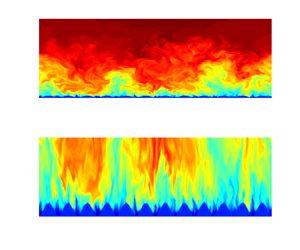
The sinusoidal roughness effect is investigated using a direct numerical simulation (DNS) of a spatially developing turbulent boundary layer (TBL) over three-dimensional sinusoidal roughness. The validity of Townsend's outer-layer similarity hypothesis is assessed based on comparisons of mean and second-order flow statistics, with a DNS of smooth-wall TBL data set at a similar Reynolds number. The total, Reynolds and dispersive stress tensors are calculated using the double-averaging procedure. The mean and second-order statistical similarities in the outer layer between rough-wall and smooth-wall TBLs are generally observed. The transport between total, turbulent and dispersive kinetic energy is investigated utilising triple-decomposed kinetic energy transports equations. The transport behaviour of turbulent kinetic energy (TKE) is significantly affected by the local mean shear induced by the surface roughness. However, the TKE transport shows good collapse with the smooth-wall case in the outer region of the flow. On the other hand, the transport of dispersive kinetic energy, including local production, redistribution and dissipation, are confined within the roughness sublayer. The intercomponent transfer between TKE and dispersive kinetic energy is quantified from the triple-decomposed kinetic energy transport equations. The intercomponent energy transfer is associated with the local spatial gradients of the turbulent momentum fluxes generated near the roughness canopy.
This book started with the central claim of the NCPM that typically prose and poetry texts are processed by partially separable neuronal circuits that underlie different mental operations of implicit vs. explicit processing and lead to distinct experiences of immersion vs. aesthetic feelings, as well as different observable behaviours, such as shorter vs. longer gaze durations. In reality, there can be cases where this necessary simplification that enormously facilitates formal modelling and empirical investigation does not apply, but the majority of empirical data discussed in this book suggest its validity. Let me recap how verbal art reception functions according to the NCPM and point out its limitations.
Literary Reading According to the NCPM
To sum up the large model section of Chapter 2 in a nutshell, an individual act of literary reading could proceed like this: Influenced by the significative network, cultural norms (the codes in the metamodel) will bias the reader's inclination to start the reading act, as will multiple previous reading episodes that left their traces in the readers’ semantic memory, her momentary mood and time budget, more permanent personality traits or the availability and richness of appropriate reading materials (an analogue or digital library). All this might contribute to creating (or not) a longing for the pleasures of ludic reading which can be biased in two directions. Either in favour of immersing oneself for longer periods of time (typically hours to days, with breaks in between) in enthralling text worlds inhabited by interesting characters entangled in suspenseful plots that activate the brain's affect and empathy networks and evoke emotions like joy, fear, hope, sympathy or anger. Although a minority, some personalities also might long for diving into conflicting inner monologues and rich inner life descriptions of his/her favourite character. Still others may favor more artful texts where suspenseful events are mingled with the occasional rhetorical device, most likely metaphor, hyperbole and idioms (cf. Chapter 5). Alternatively, the reader may be biased in the other direction and fancy some shorter ‘reading through the ear’ episodes (typically minutes to hours) due to a longing for rhythm and rhyme, amazing metaphors and puzzling figurative meaning in general, crazy syntax, multi-layered polysemy, feelings of interest, fascination, being moved, concernedness or extended (self-)reflective moments.
To draw concrete pictures of the hierarchy of multiscale coherent vortices in turbulence behind a cylinder and to reveal their sustaining mechanism, we conduct direct numerical simulations of the turbulence at the Reynolds number, which is defined by the uniform inflow velocity and the cylinder diameter, $5000$. The turbulence consists of three kinds of hierarchies of coherent vortices in three distinct regions: namely, the downstream region, the recirculation region just behind the cylinder and the separate shear layers. By tracking the temporal evolution of multiscale vortices in each of these regions, we demonstrate that, in all the three regions, smaller coherent vortices tend to align in the direction perpendicular to larger ones. This implies that smaller vortices are stretched and amplified in the strain-rate fields around larger ones. We also show the relevance of this observation to the energy cascade. Smaller-scale vortices receive the kinetic energy in the regions where they are stretched by larger-scale vortices; and, at the same time, they tend to compress larger ones, thus reducing larger-scale kinetic energy.
The large-aperture pulse compression grating (PCG) is a critical component in generating an ultra-high-intensity, ultra-short-pulse laser; however, the size of the PCG manufactured by transmission holographic exposure is limited to large-scale high-quality materials. The reflective method is a potential way for solving the size limitation, but there is still no successful precedent due to the lack of scientific specifications and advanced processing technology of exposure mirrors. In this paper, an analytical model is developed to clarify the specifications of components, and advanced processing technology is adopted to control the spatial frequency errors. Hereafter, we have successfully fabricated a multilayer dielectric grating of 200 mm × 150 mm by using an off-axis reflective exposure system with Φ300 mm. This demonstration proves that PCGs can be manufactured by using the reflection holographic exposure method and shows the potential for manufacturing the meter-level gratings used in 100 petawatt class high-power lasers.
The impact of radiation reaction and Breit–Wheeler pair production on the acceleration of fully ionized carbon ions driven by an intense linearly polarized laser pulse has been investigated in the ultra-relativistic transparency regime. Against initial expectations, the radiation reaction and pair production at ultra-high laser intensities are found to enhance the energy gained by the ions. The electrons lose most of their transverse momentum, and the additionally produced pair plasma of Breit–Wheeler electrons and positrons co-streams in the forward direction as opposed to the existing electrons streaming at an angle above zero degree. We discuss how these observations could be explained by the changes in the phase velocity of the Buneman instability, which is known to aid ion acceleration in the breakout afterburner regime, by tapping the free energy in the relative electron and ion streams. We present evidence that these non-classical effects can further improve the highest carbon ion energies in this transparency regime.