Refine search
Actions for selected content:
213073 results in Engineering
The influence of spectral bandwidth and shape on deep-water wave breaking onset
-
- Journal:
- Journal of Fluid Mechanics / Volume 974 / 10 November 2023
- Published online by Cambridge University Press:
- 31 October 2023, A14
-
- Article
-
- You have access
- Open access
- HTML
- Export citation
-
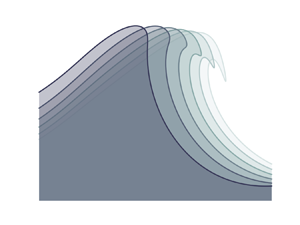
Deep-water surface wave breaking affects the transfer of mass, momentum, energy and heat between the air and sea. Understanding when and how the onset of wave breaking will occur remains a challenge. The mechanisms that form unforced steep waves, i.e. nonlinearity or dispersion, are thought to have a strong influence on the onset of wave breaking. In two dimensions and in deep water, spectral bandwidth is the main factor that affects the roles these mechanism play. Existing studies, in which the relationship between spectral bandwidth and wave breaking onset is investigated, present varied and sometimes conflicting results. We perform potential-flow simulations of two-dimensional focused wave groups on deep water to better understand this relationship, with the aim of reconciling existing studies. We show that the way in which steepness is defined may be the main source of confusion in the literature. Locally defined steepness at breaking onset reduces as a function of bandwidth, and globally defined (spectral) steepness increases. The relationship between global breaking onset steepness and spectral shape (using the parameters bandwidth and spectral skewness) is too complex to parameterise in a general way. However, we find that the local surface slope of maximally steep non-breaking waves, of all spectral bandwidths and shapes that we simulate, approaches a limit of $1/\tan ({\rm \pi} /3)\approx 0.5774$. This slope-based threshold is simple to measure and may be used as an alternative to existing kinematic breaking onset thresholds. There is a potential link between slope-based and kinematic breaking onset thresholds, which future work should seek to better understand.

Applied Quantum Mechanics
-
- Published online:
- 27 October 2023
- Print publication:
- 31 August 2023
-
- Textbook
- Export citation
Dynamics and proliferation of turbulent stripes in plane-Poiseuille and plane-Couette flows
-
- Journal:
- Journal of Fluid Mechanics / Volume 974 / 10 November 2023
- Published online by Cambridge University Press:
- 27 October 2023, A21
-
- Article
-
- You have access
- Open access
- HTML
- Export citation
Generalized Reynolds equation for microscale lubrication between eccentric circular cylinders based on kinetic theory
-
- Journal:
- Journal of Fluid Mechanics / Volume 974 / 10 November 2023
- Published online by Cambridge University Press:
- 27 October 2023, A13
-
- Article
-
- You have access
- Open access
- HTML
- Export citation
AI-assisted modeling of capillary-driven droplet dynamics
-
- Journal:
- Data-Centric Engineering / Volume 4 / 2023
- Published online by Cambridge University Press:
- 27 October 2023, e24
-
- Article
-
- You have access
- Open access
- HTML
- Export citation
Energy transfer and third-order law in forced anisotropic magneto-hydrodynamic turbulence with hyper-viscosity
-
- Journal:
- Journal of Fluid Mechanics / Volume 974 / 10 November 2023
- Published online by Cambridge University Press:
- 27 October 2023, A20
-
- Article
- Export citation
-
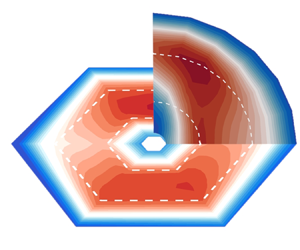
The third-order law links energy transfer rates in the inertial range of magneto- hydrodynamic (MHD) turbulence with third-order structure functions. Anisotropy, a typical property in the solar wind, challenges the applicability of the third-order law with the isotropic assumption. To shed light on the energy transfer process in the presence of anisotropy, we conducted direct numerical simulations of forced MHD turbulence with normal and hyper-viscosity under various strengths of the external magnetic field ( $B_0$), and calculated three forms of third-order structure function with or without averaging of the azimuthal or polar angles with respect to $B_0$ direction. Correspondingly, three estimated energy transfer rates were obtained. The result shows that the peak of normalized third-order structure function occurs at larger scales closer to the $B_0$ direction, and the maximum of longitudinal transfer rates shifts away from the $B_0$ direction at larger $B_0$. Compared with normal viscous cases, hyper-viscous cases can attain better separated inertial range, thus facilitating the estimation of the energy cascade rates. We find that the widespread use of the isotropic form of the third-order law in estimating the energy transfer rates is questionable in some cases, especially when the anisotropy arising from the mean magnetic field is inevitable. In contrast, the direction-averaged third-order structure function properly accounts for the effect of anisotropy and predicts the energy transfer rates and inertial range accurately, even at very high $B_0$. With limited statistics, the third-order structure function shows a stronger dependence on averaging of azimuthal angles than the time, especially for high $B_0$ cases. These findings provide insights into the anisotropic effect on the estimation of energy transfer rates.


A planar BPF for UWB communication systems with single/multiple interference rejection bands
-
- Journal:
- International Journal of Microwave and Wireless Technologies / Volume 16 / Issue 1 / February 2024
- Published online by Cambridge University Press:
- 27 October 2023, pp. 55-62
-
- Article
- Export citation
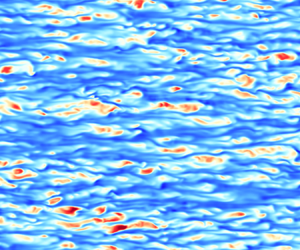
Assessment of heat transfer and Mach number effects on high-speed turbulent boundary layers
-
- Journal:
- Journal of Fluid Mechanics / Volume 974 / 10 November 2023
- Published online by Cambridge University Press:
- 27 October 2023, A10
-
- Article
-
- You have access
- Open access
- HTML
- Export citation
-
High-speed vehicles experience a highly challenging environment in which the freestream Mach number and surface temperature greatly influence aerodynamic drag and heat transfer. The interplay of these two parameters strongly affects the near-wall dynamics of high-speed turbulent boundary layers (TBLs) in a non-trivial way, breaking similarity arguments on velocity and temperature fields, typically derived for adiabatic cases. We present direct numerical simulations of flat-plate zero-pressure-gradient TBLs spanning three freestream Mach numbers $[2,4,6]$ and four wall temperature conditions (from adiabatic to very cold walls), emphasising the choice of the wall-cooling parameter to recover a similar flow organisation at different Mach numbers. We link qualitative observations on flow patterns to first- and second-order statistics to explain the decoupling of temperature–velocity fluctuations that occurs at reduced wall temperatures and high Mach numbers. For these cases, we discuss the formation of a secondary peak of thermal production in the viscous sublayer, which is in contrast with the monotonic behaviour of adiabatic profiles. We propose different physical mechanisms induced by wall-cooling and compressibility that result in apparently similar flow features, such as a higher peak in the streamwise velocity turbulence intensity, and distinct features, such as the separation of turbulent scales.

Crystal structure and X-ray powder diffraction data for Lumateperone tosylate
-
- Journal:
- Powder Diffraction / Volume 40 / Issue 1 / March 2025
- Published online by Cambridge University Press:
- 27 October 2023, pp. 94-98
-
- Article
- Export citation
Contents
-
- Book:
- Python for Chemists
- Published online:
- 12 October 2023
- Print publication:
- 26 October 2023, pp v-x
-
- Chapter
- Export citation
8 - Aerothermodynamic Testing and Hypersonic Physics
-
- Book:
- Theories and Technologies of Hypervelocity Shock Tunnels
- Published online:
- 12 October 2023
- Print publication:
- 26 October 2023, pp 236-297
-
- Chapter
- Export citation
34 - Nonlinear Fitting and Constrained Optimization
-
- Book:
- Python for Chemists
- Published online:
- 12 October 2023
- Print publication:
- 26 October 2023, pp 378-396
-
- Chapter
- Export citation
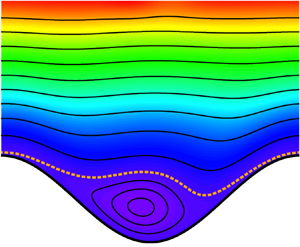
Hydrodynamic roughness induced by a multiscale topography
-
- Journal:
- Journal of Fluid Mechanics / Volume 974 / 10 November 2023
- Published online by Cambridge University Press:
- 26 October 2023, A16
-
- Article
- Export citation
23 - Vibrational Spectroscopy
-
- Book:
- Python for Chemists
- Published online:
- 12 October 2023
- Print publication:
- 26 October 2023, pp 260-266
-
- Chapter
- Export citation
14 - LaTeX
-
- Book:
- Python for Chemists
- Published online:
- 12 October 2023
- Print publication:
- 26 October 2023, pp 134-146
-
- Chapter
- Export citation
39 - Atomic Structure
-
- Book:
- Python for Chemists
- Published online:
- 12 October 2023
- Print publication:
- 26 October 2023, pp 457-478
-
- Chapter
- Export citation
31 - pandas
-
- Book:
- Python for Chemists
- Published online:
- 12 October 2023
- Print publication:
- 26 October 2023, pp 333-359
-
- Chapter
- Export citation

On the shapes of liquid curtains flowing from a non-vertical slot
-
- Journal:
- Journal of Fluid Mechanics / Volume 974 / 10 November 2023
- Published online by Cambridge University Press:
- 26 October 2023, A18
-
- Article
- Export citation
-
A theoretical and experimental investigation of two-dimensional (2-D) liquid curtains (gravitationally thinning liquid sheets) is provided under conditions where the curtain issues from a thin slot whose centreline is inclined with respect to the vertical. This analysis is motivated in part by recent works where it has been proposed that oblique liquid curtains (those exiting a non-vertical slot) may bend upwards against gravity when the relevant Weber number at the slot is less than unity ( $We <1$). By contrast, Weinstein et al. (J. Fluid Mech., vol. 876, 2019, R3) have proposed that such $We<1$ curtains must be vertical and downward falling regardless of the inclination of the slot. Under low-Reynolds-number ( $Re$) conditions typical of liquid film coating operations, our experiments show that the curtain shape follows the classic ballistic (parabolic) trajectory in the supercritical regime ( $We>1$). In subcritical conditions ( $We<1$), experiments show that the downward-falling curtain is vertical except in a relatively small region near the slot, where the combined effects of viscosity and surface tension induce the so-called teapot effect. These experimental results are confirmed by 2-D numerical simulations, which predict the curtain behaviour ranging from highly viscous ( $Re = O(1)$) to nearly inviscid conditions. The one-dimensional (1-D) inviscid model of Weinstein et al. is recast in a different form to facilitate comparisons with the 2-D model, and 1-D and 2-D results agree favourably for supercritical and subcritical conditions. Despite the large parameter range explored, we have found no evidence that upward-bending curtains exist in an oblique configuration.


11 - The Steady-State Approximation
-
- Book:
- Python for Chemists
- Published online:
- 12 October 2023
- Print publication:
- 26 October 2023, pp 114-117
-
- Chapter
- Export citation
24 - The Morse Oscillator
-
- Book:
- Python for Chemists
- Published online:
- 12 October 2023
- Print publication:
- 26 October 2023, pp 267-271
-
- Chapter
- Export citation
