To save content items to your account,
please confirm that you agree to abide by our usage policies.
If this is the first time you use this feature, you will be asked to authorise Cambridge Core to connect with your account.
Find out more about saving content to .
To save content items to your Kindle, first ensure no-reply@cambridge.org
is added to your Approved Personal Document E-mail List under your Personal Document Settings
on the Manage Your Content and Devices page of your Amazon account. Then enter the ‘name’ part
of your Kindle email address below.
Find out more about saving to your Kindle.
Note you can select to save to either the @free.kindle.com or @kindle.com variations.
‘@free.kindle.com’ emails are free but can only be saved to your device when it is connected to wi-fi.
‘@kindle.com’ emails can be delivered even when you are not connected to wi-fi, but note that service fees apply.
This systematic review aimed to explore the impact of food voucher schemes during pregnancy and early life on fruit and vegetable (F&V) consumption and explore experiences of schemes.
Design:
Six electronic databases and grey literature sources were searched. Interventional, observational, qualitative and mixed methods studies published from January 2000 to April 2024 in English were included.
Setting:
Food voucher interventions targeting F&V intake.
Participants:
Low-income pregnant women and families with young children (aged under 5 years).
Results:
7344 peer reviewed records and 103 grey literature documents were screened. Sixteen peer reviewed studies (across eighteen reports) and eight grey literature documents met the inclusion criteria. All studies took place in the UK or the USA. There was a lack of consistency across primary quantitative outcomes. Overall, F&V voucher schemes did appear to increase fruit and/or vegetable consumption, but confidence in this finding was low. Qualitative data were more consistent. F&V vouchers were used in three main ways; as a financial benefit to subsidise food already being purchased, to increase the quantity or variety of F&V purchased, or as a safety net, to be used to ensure that the family had something to eat.
Conclusions:
F&V vouchers may increase F&V intake and are positively received by recipients. This review also highlights some of the difficulties that researchers face in evaluating the impact of public health measures to improve population health. It is clear that more high-quality research is required to better understand the impacts of F&V vouchers on individual outcomes.
The Neptune Islands Group and Western Kangaroo Island Marine Parks were declared as part of South Australia’s representative system of Marine protected areas (MPAs) in 2009. Sanctuary zones, located within these MPAs, prohibited commercial fishing in the state’s Northern Zone Rock Lobster Fishery from 2014. In 2022, dedicated surveys were undertaken both inside and outside two of the sanctuary zones to estimate the relative abundance (catch per unit effort; CPUE) and size of southern rock lobster (Jasus edwardsii). Survey results were then compared to estimates of abundance obtained from long-term commercial fishery-dependent data within each area. The legal-size CPUE by weight of lobsters was 389% and 411% higher inside sanctuary zones of the Neptune Islands Group and Western Kangaroo Island, respectively, compared to outside, based on survey data. Survey catch rates inside the two sanctuary zones were also considerably higher than historical catch rates estimated from commercial fishing data. Lobsters inside both sanctuary zones were larger than those outside in terms of mean weight compared to historical estimates. However, surveys recorded similar mean size in lobsters both inside and outside the Neptune Islands Group sanctuary zone, indicating a possible spillover effect of MPA protection. The Northern Zone Rock Lobster Fishery is currently in a biomass rebuilding phase. The results highlight the productivity potential of temperate reef ecosystems within South Australia in terms of southern rock lobster abundances.
To present a tool and examine the minimum cost of a healthy and diverse diet that meets the daily requirements of essential nutrients for the people of India, using interactive web-based tools.
Design:
Linear-programming algorithms were adapted into two web-based tools: a Food Optimisation for Population (FOP) tool and a Diet Optimisation Tool (DOT). The FOP optimises daily food choices at a population level, considering local food consumption patterns. The DOT focuses on household or individual food selection.
Setting:
India, with consideration of locally produced and consumed foods.
Participants:
The two optimisation tools are demonstrated for the state of Bihar: the FOP tool at the population level, exemplified by diet optimisation for children aged 1–3 years, and DOT at the household level, demonstrated through diet optimisation for a household of four members.
Results:
Both tools provide cost-effective, optimised food plans, respecting cultural preferences. Based on food prices from June 2022, the FOP tool generated optimised diets for 1–3-year-old Bihari children priced at INR 26·8 (USD 0·32 converted as of January 2024 rate)/child/day. By applying a milk subsidy, this cost could drop to INR 23·7 (USD 0·28). The DOT was able to formulate a vegetarian diet for a family of four at INR 204 (USD 2·45)/day.
Conclusions:
These web-based tools offer diet plans optimised to meet macro- and micronutrient requirements at population and/or individual/household levels, at minimum cost. This tool can be used by policymakers to design food-focused strategies that can meet nutritional needs at local price points, while considering food preferences.
Plasmodium simium, a parasite of platyrrhine monkeys, is known to cause human malaria outbreaks in Southeast Brazil. It has been hypothesized that, upon the introduction of Plasmodium vivax into the Americas at the time of the European colonization, the human parasite adapted to neotropical anophelines of the Kerteszia subgenus and to local monkeys, along the Atlantic coast of Brazil, to give rise to a sister species, P. simium. Here, to obtain new insights into the origins and adaptation of P. simium to new hosts, we analysed whole-genome sequence (WGS) data from 31 P. simium isolates together with a global sequence dataset of 1086 P. vivax isolates. Population genomic analyses revealed that P. simium comprises a discrete parasite lineage with greatest genetic similarity to P. vivax populations from Latin America – especially those from the Amazon Basin of Brazil – and to ancient European P. vivax isolates, consistent with Brazil as the most likely birthplace of the species. We show that P. simium displays half the amount of nucleotide diversity of P. vivax from Latin America, as expected from its recent origin. We identified pairs of sympatric P. simium isolates from monkeys and from humans as closely related as meiotic half-siblings, revealing ongoing zoonotic transmission of P. simium. Most critically, we show that P. simium currently causes most, and possibly all, malarial infections usually attributed to P. vivax along the Serra do Mar Mountain Range of Southeast Brazil.
Megacities around the world are increasingly confronted with conservation and restoration bottlenecks due to the competing demands of urban expansion and environmental conservation. This study investigates conservation prioritization strategies for balancing biodiversity protection, ecosystem service (ES) supply and landscape connectivity in rapidly urbanizing Beijing. By employing spatially explicit modelling and prioritization scenario techniques, we identify spatially heterogeneous priority zones. We demonstrate that high-value areas for ES supply, particularly carbon storage and water regulation, concentrate primarily in Beijing’s north-western mountainous regions, covering c. 62% of the city’s area. Conversely, critical habitats for threatened species and key connectivity corridors are dispersed, with 22.89% of critical habitats located within urban built-up areas. Gap analysis reveals limited alignment between Beijing’s current ecological security patterns, with only 9.6% coverage of the identified top 10% conservation priority zones, especially within the metropolitan core. The study underscores significant trade-offs among different ecological objectives and multi-criteria conservation strategies. We propose an optimized conservation framework based on zonation analysis to guide targeted landscape planning decisions. This approach provides actionable insights for urban policymakers to achieve comprehensive sustainability, emphasizing the importance of protecting critical ecological areas in both urban and rural landscapes amid ongoing urban expansion.
Heath forests, or known locally as kerangas, in Indonesia and Malaysia form a distinct and understudied ecoregion. We document the distribution and ecological significance of the largest extent of kerangas in Kalimantan, Indonesian Borneo. We mapped 16,586 km2 of kerangas to the nearest one square kilometre across Kalimantan, showing a significant reduction from previous estimates. About 19% of this area exists as a poorly documented mosaic landscape in Central Kalimantan’s Rungan-Kahayan region. Here, peat-based forests transition to heath and dipterocarp forests, making it difficult to reliably classify these forests for conservation planning. Using remote sensing and tree plot data, we identified three forest types—kerangas, low pole, and mixed swamp. Vegetation structure is influenced by soil, topography, and hydrology, while peat depth and elevation affect species diversity. Our findings indicate that these forests are dynamic ecosystems with diverse vegetation communities adapted to peat as well as sandy soils. Lowland heath forests in Rungan-Kahayan exhibits higher tree densities compared to other Bornean heath forests, reflecting unique ecological adaptations to challenging environments. Despite covering just 3% of Kalimantan’s forest area, these ecosystems remain largely unprotected, facing threats from land conversion and fire. Our study highlights the ecological complexity of kerangas and underscores the urgent need for targeted conservation and further research on these forests.
Childless individuals have historically faced stigma with assumptions that they lack an interest in future generations because they do not directly contribute to genetic lineage. Individuals share approximately half of their genes with siblings, 12.5% with first cousins, and 6.25% with first cousins’ children. Norwegian census data (2005−2023), reflecting similar trends to the US, UK, and other European countries, indicates a moderate difference in the number of siblings (Parents: 2.03 [women and men]; Childless: 1.88 [women], 1.94 [men]) and nieces/nephews (Parents: 3.99 [women], 4.03 [men]; Childless: 3.32 [women], 3.42 [men]) for 514,777 women and 532,834 men, respectively. By linking four generations through grandmothers, both childless and childbearing women had a slightly higher number of biological extended family members (Parents: 9.63 cousins with 15.79 children; Childless: 8.66 cousins with 12.22 children). Linking four generations for men, numbers were similar: Parents: 9.68 cousins with 15.91 children, Childless: 8.83 cousins with 12.44 children. Based on the average number of children who are parents, the childless have an average genetic fitness that is 49% of that for parents for the next generation. Both parents and childless individuals have a stake in future generations through their biological extended family.
In recent years, Southern Thailand has witnessed an increase in surface planted with oil palm, driven primarily by smallholders who contribute over 90% of Thailand’s oil palm output. Despite their significant contribution, oil palm smallholders have consistently achieved lower yields compared to agro-industries, and limited research has been conducted to understand the limiting factors, such as management practices. Structured interviews were conducted to gather information about management practices and estimate the fresh fruit bunch yield in a network of 18 plantations in Krabi province, Thailand. A clustering approach, combining principal component analysis and hierarchical cluster analysis, was used to characterise the diversity of smallholder management practices. Four clusters of management practices were highlighted, characterised by varying intensities of fertiliser application (nitrogen, phosphorus, and potassium), mechanical versus chemical weeding, and harvest intervals. Notably, the farmers in our study applied less fertiliser, on average, than the recommendations of Thai Good Agricultural Practices. A significant portion of plots in the area (12 out of 18 plots) achieved good yields compared to attainable yields. A clear relationship between management practices and yield could however not be established. The large diversity of oil palm smallholders’ management practices and their performances highlighted in this study need to be better taken into account and understood in order to improve sustainability and foster certification schemes such as Roundtable on Sustainable Palm Oil (RSPO).
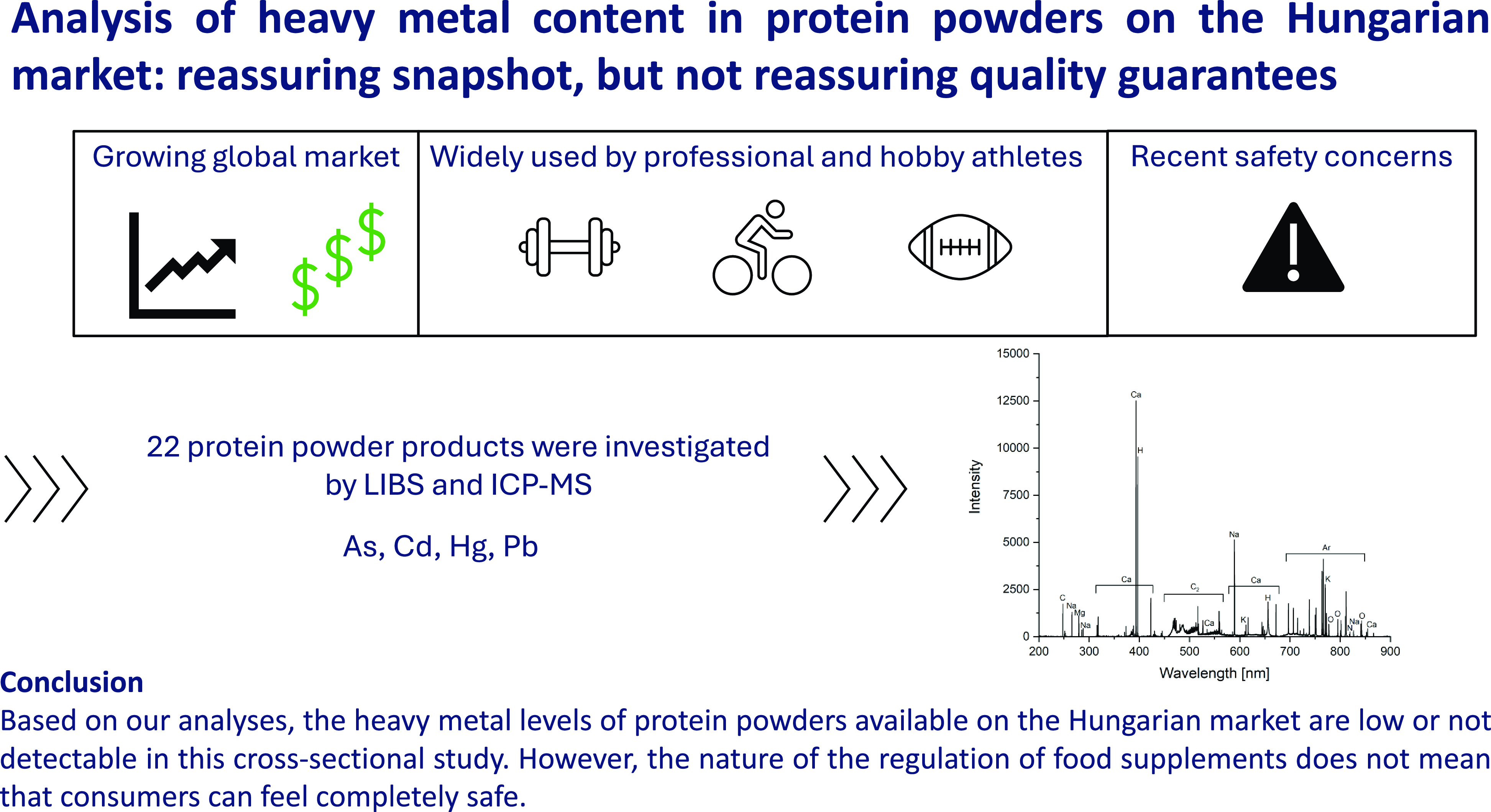
Amateur and professional athletes often consume protein supplements to accelerate muscle gain; however, it has been suggested that these products not only are associated with risks when consumed excessively. Several recent reports have indicated that certain products are contaminated with heavy metals. Therefore, in this study, we aimed to investigate protein powders in Hungary for heavy metal contamination. A total of 22 commercially available protein powders (including whey, vegan, and beef based) were purchased on the internet for testing. We analysed the samples using laser-induced breakdown spectroscopy (LIBS) and inductively coupled plasma mass spectrometry (ICP-MS) to assess heavy metal contamination. The products were analysed for the presence of 16 elements (Be, Al, Cr, Mn, Co, Ni, Cu, As, Se, Rb, Cd, Sb, Cs, Ba, Hg, and Pb). The LIBS spectral analysis revealed the characteristics of the protein elements (C, C2, H, N, and O) and alkaline metals (Ca, Na, K, and Mg), which were consistent with the previous results. Neither LIBS nor ICP-MS measurements detected significant heavy metal content in the investigated samples above the limit specified in the regulations. Heavy metal contamination of protein supplements can be a serious health threat. Based on the varied results of the previous studies, it is prudent to include testing for heavy metals as part of the routine and mandatory quality control of these products.
Overconsumption of unhealthy, discretionary, foods and beverages are associated with an increased risk of weight gain and non-communicable diseases, including diabetes, heart disease, and cancer. This cross-sectional study explored preferences for setting goals to reduce discretionary food and beverage consumption. The online survey included items about discretionary food and beverage intake, goal setting preferences to reduce intake, habit strength, personality traits, and demographic characteristics. A total of 2664 Australian adults completed the survey. The sample was mostly female (65.9%), half (52.8%) were aged between 30–49 years, and the median intake of discretionary food and beverages was 4.9 (IQR: 3.6 to 7.2) serves per day. Multinomial logistic regression and ordinal logistic regression models were used to explore demographic and psychological predictors of the helpfulness of long-term and short-term goals, elimination and gradual goals, specific food goals, specific eating occasion and food goals, self-set goals, collaboratively set goals, and assigned goals. The results showed participants with higher habit strength had greater odds of finding short-term (OR 1.40, 95% CI 1.06–1.86), gradual (OR 1.14, 95% CI 1.01–1.29), specific (OR 1.35, 95% CI 0.84–1.76), assigned (OR 1.38, 95% CI 1.14–1.66) and collaborative goals (OR 1.24, 95% CI 1.01–1.53) helpful. The results also indicated that age and gender were important predictors of goal setting preferences, particularly for long-term goals, elimination goals, broad goals, and collaborative goals. Interventions to reduce discretionary food and beverage intake are needed and consideration of goal setting preferences could be a novel way to developing more tailored and effective dietary interventions.
Tuberculosis (TB) remains a significant public health concern in China. Using data from the Global Burden of Disease (GBD) study 2021, we analyzed trends in age-standardized incidence rate (ASIR), prevalence rate (ASPR), mortality rate (ASMR), and disability-adjusted life years (DALYs) for TB from 1990 to 2021. Over this period, HIV-negative TB showed a marked decline in ASIR (AAPC = −2.34%, 95% CI: −2.39, −2.28) and ASMR (AAPC = −0.56%, 95% CI: −0.62, −0.59). Specifically, drug-susceptible TB (DS-TB) showed reductions in both ASIR and ASMR, while multidrug-resistant TB (MDR-TB) showed slight decreases. Conversely, extensively drug-resistant TB (XDR-TB) exhibited upward trends in both ASIR and ASMR. TB co-infected with HIV (HIV-DS-TB, HIV-MDR-TB, HIV-XDR-TB) showed increasing trends in recent years. The analysis also found an inverse correlation between ASIRs and ASMRs for HIV-negative TB and the Socio-Demographic Index (SDI). Projections from 2022 to 2035 suggest continued increases in ASIR and ASMR for XDR-TB, HIV-DS-TB, HIV-MDR-TB, and HIV-XDR-TB. The rising burden of XDR-TB and HIV-TB co-infections presents ongoing challenges for TB control in China. Targeted prevention and control strategies are urgently needed to mitigate this burden and further reduce TB-related morbidity and mortality.
Haemonchus contortus is a parasitic nematode that causes significant economic losses in ruminant livestock worldwide. In this study, we assessed the global genetic diversity and population structure of H. contortus using mitochondrial COX1 and ribosomal ITS2 sequences retrieved from the NCBI GenBank database. In total, 324 haplotypes of the COX1 and 72 haplotypes of the ITS2 were identified. The haplotype diversity values were all higher than 0.5, and the nucleotide diversity values were higher than 0.005. The Tajima’s D value for COX1 (−1.65634) was higher than that for ITS2 (−2.60400). Fu’s Fs, Fu and Li’s D (FLD), and Fu and Li’s F (FLF) values also showed high negative values, indicating a high probability of future population growth. In addition, the high fixation index (FST) value suggests significant genetic differentiation among populations. The haplotype networks of H. contortus populations based on COX1 sequences revealed clear geographic clustering, whereas ITS2 sequences showed more haplotype admixture across regions. The results of phylogenetic analyses were consistent with the haplotype networks. These findings highlighted that H. contortus populations exhibit significant genetic variation and are undergoing rapid population expansion, with clear genetic differences across geographic regions. This study established critical baseline data for future molecular epidemiology studies, which could guide region-specific parasite surveillance and targeted control strategies, thus helping to mitigate the risk of cross-border parasite transmission and drug resistance.
Irisin is a glycosylated polypeptide hormone derived from muscles that plays a crucial role in learning and memory by promoting the growth of hippocampal neurons, thereby influencing cognitive function.
Objective
Despite increasing evidence, a comprehensive understanding of the exact role of irisin remains elusive, necessitating further research to unravel the complex mechanisms through which irisin influences cognitive function and to explore therapeutic approaches targeting irisin.
Method
A literature review was performed by searching PubMed for articles published between 2012 and 2024, using the keywords ‘fibronectin type III domain-containing 5 (FNDC5)’, ‘irisin’, ‘cognitive impairment’, ‘Alzheimer’s disease’, ‘Age-related cognitive dysfunction’ and ‘Diabetes-associated cognitive dysfunction’, combined with Boolean operators (AND/OR).
Results
This review highlighted the potential impact of irisin on cognitive function in the context of ageing, diabetes and Alzheimer’s disease. The anti-cognitive impairment effects of irisin are associated with the regulation of energy metabolism, insulin resistance, inflammation, oxidative stress, amyloid-beta deposition, synaptogenesis and plasticity. The signalling pathways through which irisin improves cognitive impairment are complex and highly regulated processes, involving multiple signalling pathways such as the adenosine monophosphate-activated protein kinase (AMPK) signalling pathway, mitogen-activated protein kinase (MAPK) signalling pathway, nuclear factor-κB (NF-κB) signalling pathway, ERK-STAT3 signalling pathway, cAMP/PKA/CREB signalling pathway and Nrf2/HO-1 signalling pathway.
Conclusion
This review delves into the positive effects of irisin on cognitive impairment, examines the signalling pathways related to fibronectin type III domain-containing 5 (FNDC5)/irisin and provides future perspectives for research on the anti-cognitive impairment effects of irisin.
Nutrition education is crucial for improving nutritional knowledge. This study aims to evaluate the impact of healthy nutrition education on hedonic hunger, adherence to the Mediterranean diet and self-efficacy for healthy eating among early adolescence. This one-group, pre-test-post-test, quasi-experimental study included 202 middle-school students. Data were collected using a researcher-designed survey that included demographic variables, the Children’s Power of Food Scale, the Self-Efficacy for Healthy Eating Scale, the Mediterranean Diet Score and the Brief Nutritional Knowledge Assessment Form. Anthropometric measurements (weight, height, waist circumference, hip circumference and neck circumference) were also taken. After the pre-test, each student received 2 h of healthy nutrition education. A follow-up survey was administered 4 weeks later. The study revealed that most early adolescents exhibited unhealthy dietary habits, such as skipping main meals (15·3 % all the time and 60·2 % occasionally), snacking on sweet treats (33·3 %) and having irregular eating patterns (47·4 %). Additionally, the early adolescents had higher weights, BMI, neck circumferences and heights compared with reference values (P < 0·01). Significant changes were observed post-intervention: lower hedonic hunger scores (beginning: 2·90 (sd 0·68), follow-up: 2·70 (sd 0·76), P < 0·01), decreased self-efficacy for healthy eating (beginning: 5·41 (sd 3·50), follow-up: 4·33 (sd 3·61), P < 0·01) and increased knowledge about healthy nutrition (beginning: 67·23 (sd 14·39), follow-up: 80·00 (sd 17·22), P < 0·01). This study highlighted that healthy nutrition education enhances nutritional knowledge and decreases hedonic dietary tendencies among early adolescents. Continued nutrition education may further improve children’s preferences for healthy foods.
In this short narrative review, we would like to discuss the immunomodulatory effects of South African geranium (Pelargonium sidoides) root extract EPs7630 in treating acute rhinosinusitis. The plant has been used for centuries to treat respiratory tract inflammation, such as sinusitis, pharyngitis and bronchitis. South African geranium is rich in polyphenols, flavonoids, tannins, diterpenes and proanthocyanidins, but the main constituent is a type of coumarin called ‘umckalin’ (6–hydroxy–5,5–dimethoxy–coumarin). The substance is standardised as an aqueous-ethanolic extract from the root of this plant under the code name EPs7630.
Methods
The article presents the results of in vitro and in vivo studies of administering this herbal drug in acute viral, post-viral and bacterial rhinosinusitis. The focus is on the immunomodulatory effects of EPs7630 during the therapy of this acute inflammation of the nasal mucosa.
Results
According to the results of some studies, EPs7630 stimulates monocyte-dependent activity and inhibits neutrophil-dependent chemokine activity. However, given the small number of studies, the level of evidence is low, implying the need for new research.
Conclusion
Particular attention should be paid to the effect of EPs7630 on bradykinin, the mediator that triggers most inflammatory processes in acute rhinosinusitis.
This work analyses the genetic potential of Stevia rebaudiana beyond its sweetening properties, aiming to reassess its conservation and utilization in breeding programmes. This focus is justified by the growing global demand for natural sweeteners and the challenges posed by extreme weather events and diseases affecting crop yield and quality. The relationship between the species’ genetic diversity and its response to biotic and abiotic stresses is explored, as well as the limitations of current conservation and breeding strategies. Findings reveal underutilized genetic resources, limited integration of genomic tools in breeding efforts and a lack of robust in situ conservation initiatives. Genotypic variability has been observed in response to diseases such as Septoria leaf spot, while abiotic factors, including salinity and drought, can significantly influence steviol glycoside content. It is concluded that an integrated approach, combining dynamic conservation, photoperiod‐informed breeding strategies, improvements in seed viability, omics‐based tools and coherent public policies, is essential to ensure crop resilience and genetic sovereignty, especially in regions of origin such as Paraguay. The sustainable use of Stevia’s genetic diversity could foster more sustainable, healthier and fairer production systems.
Using a behavioural intervention to target nutrition during pregnancy may be key in meeting recommendations for healthy eating. The aim was to assess the use of a short-term dietary intake measurement tool (3-day food intake record) to infer long-term habitual dietary intake during pregnancy (using a short-form FFQ). A convenience sample (n 90) between 12- and 18-weeks’ gestation was recruited from a larger randomised controlled trial for cross-sectional analysis. Participants completed a forty-four-item FFQ and 3-day food intake record. Using the participant food intake record, the investigator blindly completed a second frequency questionnaire. The frequency questionnaires were scored using dietary quality scores (DQS) and compared. Aggregate data were evaluated using a Wilcoxon signed rank test, and individual-level data were evaluated using a Bland–Altman plot. No significant difference was observed in the scores (Z = –1·88, P = 0·06), with small effect size (r= 0·19). The Bland–Altman plot showed that comparing the DQS derived from the two different dietary assessments underestimated scores by a mean difference of 0·4 points (95 % limits of agreement: −3·50 to 4·26). The data points were evenly spread suggesting no systematic variation for over- or underestimation of scores. Minimal difference was observed between the functionality of the two assessment instruments. However, the food intake record can be completed by pregnant individuals to estimate short-term nutrient intake and then scored by the investigator to estimate long-term dietary quality. Combining these two instruments may best capture the most accurate representation of dietary habits over time.
A Rank Forum was convened to discuss the evidence around food insecurity (FIS), its impact on health, and interventions which could make a difference both at individual and societal level, with a focus on the UK. This paper summarises the proceedings and recommendations. Speakers highlighted the growing issue of FIS due to current economic and social pressures. The health implications of FIS vary geographically since food insecure women in higher income regions tend to be living with overweight or obesity, in contrast to those living in low-to-middle-income countries. This paradox could be due to stress and/or metabolic or behavioural responses to an unpredictable food supply. The gut microbiota may play a role given the negative effects of low fibre diets on bacterial diversity. Solutions to FIS involve individual behavioural change, targeted services and societal/policy change. Obesity-related services are currently difficult to access. Whilst poverty is the root cause of FIS, it cannot be solved solely by making healthy food cheaper due to ingrained beliefs, attitudes and behaviours in target groups. Person-centred models, such as Capability-Opportunity-Motivation Behavioural Change Techniques and Elicit-Provide-Elicit communication techniques, are recommended. Societal change or improved resilience through psychological support may be more equitable ways to address FIS. They can combine with fiscal or food environment policies to shift purchasing towards healthier foods. Policy implementation can be slow to enact due to the need for strong evidence, consultation and political will. Eradicating FIS must involve co-creation of interventions and policies to ensure a consensus on solutions.
Marine organisms account for more than half of the global biodiversity and have proven to be a rich source of pharmacologically active compounds. Turkey has an extensive coastline hosting a diverse marine ecosystem. This paper describes the phytochemical prospection based on chromatographic profiles of extracts, fractions, and sub-fractions from Turkish organisms. In addition, the samples were evaluated for their antioxidant, anticholinesterasic, and antibacterial activities. According to the chromatographic profiles, terpenes were identified in most samples, with the exception of Dictyonella incisa. Alkaloids were detected in Ascidiella aspersa, Eunicella cavolini, Halocynthia papillosa, Limaria hians, Microcosmus polymorphus, and D. incisa. The phenolic carboxylic acids were detected in all the samples, and the results for polyphenols were similar. The extract of P. clavata showed antioxidant activity in both models evaluated, whereas the remaining samples were positive only in the bioautographic assay. With regard to AChE inhibition, D. incisa fraction showed potent activity (%I ˃ 90%), while the sub- fractions were moderate (%I ˃ 45%). In the antibacterial assay, the same samples from D. incisa have shown activity against both Gram-negative and Gram-positive bacteria. On the other hand, the present study opens up avenues for future research on D. incisa by aligning alkaloids and neuroprotective effects, taking into account that inhibition of AChE is a therapeutic strategy in the treatment of Alzheimer’s disease.
The study investigated the effects of replacing maize with enzyme-supplemented Dried Date Fruit Pulp (DDFP) in the diets of broiler chickens. 576-day-old commercial broiler chicks (Arbor Acre Plus) were randomly selected and distributed into 8 treatment groups of 72 birds each. Each treatment was divided into six replicates of 12 birds on a weight-equalisation basis. The treatments consisted of 4 levels of DDFP (0, 100, 200 and 300 g/kg) and 2 levels of enzyme supplementation (with or without). The data obtained were subjected to an Analysis of Variance in a 4 × 2 factorial arrangement. Birds fed 300 g/kg DDFP recorded the least weight gain (971 g) and final weight (1013 g) across the treatments at the starter phase, while there were no significant (P > 0.05) differences in the final weight, weight gain, feed intake and feed conversion ratio of birds fed with DDFP and maize-based diets at the finisher phase. DDFP inclusion reduced the experimental birds’ feeding cost (NGN/kg) and cost/kg weight gain (NGN/kg WG). Enzyme supplementation increased serum protein and glucose concentrations. Reduced (P < 0.05) EE and CF digestibility coefficients were seen in birds fed 30% DDFP at the finisher phase. Carcass indices, ileal digesta viscosity and caecal total bacteria were not negatively influenced. It was concluded that DDFP could replace up to 200 g/kg maize in broiler chicken diets at the starter phase and up to 300 g/kg at the finisher phase without any deleterious effects on health and performance.