Refine listing
Actions for selected content:
205 results in 14Mxx
Pencils on Surfaces with Normal Crossings and the Kodaira Dimension of $\overline {\mathcal {M}}_{g,n}$
- Part of
-
- Journal:
- Forum of Mathematics, Sigma / Volume 9 / 2021
- Published online by Cambridge University Press:
- 12 April 2021, e31
-
- Article
-
- You have access
- Open access
- Export citation
-
We study smoothing of pencils of curves on surfaces with normal crossings. As a consequence we show that the canonical divisor of $\overline {\mathcal {M}}_{g,n}$ is not pseudoeffective in some range, implying that $\overline {\mathcal {M}}_{12,6}$, $\overline {\mathcal {M}}_{12,7}$,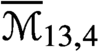 $\overline {\mathcal {M}}_{13,4}$ and $\overline {\mathcal {M}}_{14,3}$ are uniruled. We provide upper bounds for the Kodaira dimension of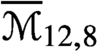 $\overline {\mathcal {M}}_{12,8}$ and $\overline {\mathcal {M}}_{16}$. We also show that the moduli space of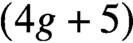 $(4g+5)$-pointed hyperelliptic curves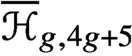 $\overline {\mathcal {H}}_{g,4g+5}$ is uniruled. Together with a recent result of Schwarz, this concludes the classification of moduli of pointed hyperelliptic curves with negative Kodaira dimension.


POWERS OF BINOMIAL EDGE IDEALS WITH QUADRATIC GRÖBNER BASES
- Part of
-
- Journal:
- Nagoya Mathematical Journal / Volume 246 / June 2022
- Published online by Cambridge University Press:
- 31 March 2021, pp. 233-255
-
- Article
- Export citation
UNIRATIONALITY AND GEOMETRIC UNIRATIONALITY FOR HYPERSURFACES IN POSITIVE CHARACTERISTICS
- Part of
-
- Journal:
- Journal of the Institute of Mathematics of Jussieu / Volume 21 / Issue 5 / September 2022
- Published online by Cambridge University Press:
- 08 March 2021, pp. 1831-1847
- Print publication:
- September 2022
-
- Article
- Export citation
-
Building on work of Segre and Kollár on cubic hypersurfaces, we construct over imperfect fields of characteristic $p\geq 3$ particular hypersurfaces of degree p, which show that geometrically rational schemes that are regular and whose rational points are Zariski dense are not necessarily unirational. A likewise behavior holds for certain cubic surfaces in characteristic $p=2$.


THÉORIE DE BRUHAT-TITS POUR LES GROUPES QUASI-RÉDUCTIFS
- Part of
-
- Journal:
- Journal of the Institute of Mathematics of Jussieu / Volume 21 / Issue 4 / July 2022
- Published online by Cambridge University Press:
- 25 January 2021, pp. 1331-1362
- Print publication:
- July 2022
-
- Article
- Export citation
-
Soient K un corps discrètement valué et hensélien, ${\mathcal {O}}$ son anneau d’entiers supposé excellent, $\kappa $ son corps résiduel supposé parfait et G un K-groupe quasi-réductif, c’est-à-dire lisse, affine, connexe et à radical unipotent déployé trivial. On construit l’immeuble de Bruhat-Tits ${\mathcal {I}}(G, K)$ pour $G(K)$ de façon canonique, améliorant les constructions moins canoniques de M. Solleveld sur les corps locaux, et l’on associe un ${\mathcal {O}}$-modèle en groupes ${\mathcal {G}}_{\Omega }$ de G à chaque partie non vide et bornée $\Omega $ contenue dans un appartement de ${\mathcal {I}}(G,K)$. On montre que les groupes parahoriques ${\mathcal {G}}_{\textbf {f}}$ attachés aux facettes peuvent être caractérisés en fonction de la géométrie de leurs grassmanniennes affines, ainsi que dans la thèse de T. Richarz. Ces résultats sont appliqués ailleurs à l’étude des grassmanniennes affines tordues entières.


Minimal rational curves on generalized Bott–Samelson varieties
- Part of
-
- Journal:
- Compositio Mathematica / Volume 157 / Issue 1 / January 2021
- Published online by Cambridge University Press:
- 15 February 2021, pp. 122-153
- Print publication:
- January 2021
-
- Article
- Export citation
Equivariant cohomology of torus orbifolds
- Part of
-
- Journal:
- Canadian Journal of Mathematics / Volume 74 / Issue 2 / April 2022
- Published online by Cambridge University Press:
- 20 November 2020, pp. 299-328
- Print publication:
- April 2022
-
- Article
- Export citation
Parity duality for the amplituhedron
- Part of
-
- Journal:
- Compositio Mathematica / Volume 156 / Issue 11 / November 2020
- Published online by Cambridge University Press:
- 09 December 2020, pp. 2207-2262
- Print publication:
- November 2020
-
- Article
- Export citation
-
The (tree) amplituhedron $\mathcal {A}_{n,k,m}(Z)$ is a certain subset of the Grassmannian introduced by Arkani-Hamed and Trnka in 2013 in order to study scattering amplitudes in $N=4$ supersymmetric Yang–Mills theory. Confirming a conjecture of the first author, we show that when $m$ is even, a collection of affine permutations yields a triangulation of $\mathcal {A}_{n,k,m}(Z)$ for any $Z\in \operatorname {Gr}_{>0}(k+m,n)$ if and only if the collection of their inverses yields a triangulation of $\mathcal {A}_{n,n-m-k,m}(Z)$ for any $Z\in \operatorname {Gr}_{>0}(n-k,n)$. We prove this duality using the twist map of Marsh and Scott. We also show that this map preserves the canonical differential forms associated with the corresponding positroid cells, and hence obtain a parity duality for amplituhedron differential forms.


Tropical geometry and Newton–Okounkov cones for Grassmannian of planes from compactifications
- Part of
-
- Journal:
- Canadian Journal of Mathematics / Volume 74 / Issue 1 / February 2022
- Published online by Cambridge University Press:
- 12 October 2020, pp. 199-231
- Print publication:
- February 2022
-
- Article
- Export citation
-
We construct a family of compactifications of the affine cone of the Grassmannian variety of $2$-planes. We show that both the tropical variety of the Plücker ideal and familiar valuations associated to the construction of Newton–Okounkov bodies for the Grassmannian variety can be recovered from these compactifications. In this way, we unite various perspectives for constructing toric degenerations of flag varieties.

Toric degenerations of cluster varieties and cluster duality
- Part of
-
- Journal:
- Compositio Mathematica / Volume 156 / Issue 10 / October 2020
- Published online by Cambridge University Press:
- 07 December 2020, pp. 2149-2206
- Print publication:
- October 2020
-
- Article
- Export citation
-
We introduce the notion of a $Y$-pattern with coefficients and its geometric counterpart: an $\mathcal {X}$-cluster variety with coefficients. We use these constructions to build a flat degeneration of every skew-symmetrizable specially completed $\mathcal {X}$-cluster variety $\widehat {\mathcal {X} }$ to the toric variety associated to its g-fan. Moreover, we show that the fibers of this family are stratified in a natural way, with strata the specially completed $\mathcal {X}$-varieties encoded by $\operatorname {Star}(\tau )$ for each cone $\tau$ of the $\mathbf {g}$-fan. These strata degenerate to the associated toric strata of the central fiber. We further show that the family is cluster dual to $\mathcal {A}_{\mathrm {prin}}$ of Gross, Hacking, Keel and Kontsevich [Canonical bases for cluster algebras, J. Amer. Math. Soc. 31 (2018), 497–608], and the fibers cluster dual to $\mathcal {A} _t$. Finally, we give two applications. First, we use our construction to identify the toric degeneration of Grassmannians from Rietsch and Williams [Newton-Okounkov bodies, cluster duality, and mirror symmetry for Grassmannians, Duke Math. J. 168 (2019), 3437–3527] with the Gross–Hacking–Keel–Kontsevich degeneration in the case of $\operatorname {Gr}_2(\mathbb {C} ^{5})$. Next, we use it to link cluster duality to Batyrev–Borisov duality of Gorenstein toric Fanos in the context of mirror symmetry.


On a rationality problem for fields of cross-ratios II
- Part of
-
- Journal:
- Canadian Mathematical Bulletin / Volume 64 / Issue 3 / September 2021
- Published online by Cambridge University Press:
- 04 September 2020, pp. 667-677
- Print publication:
- September 2021
-
- Article
- Export citation
-
Let k be a field, $x_1, \dots , x_n$ be independent variables and let $L_n = k(x_1, \dots , x_n)$. The symmetric group $\operatorname {\Sigma }_n$ acts on $L_n$ by permuting the variables, and the projective linear group $\operatorname {PGL}_2$ acts by $$ \begin{align*} \begin{pmatrix} a & b \\ c & d \end{pmatrix}\, \colon x_i \longmapsto \frac{a x_i + b}{c x_i + d} \end{align*} $$for each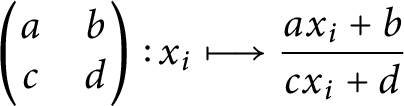 $i = 1, \dots , n$. The fixed field $L_n^{\operatorname {PGL}_2}$ is called “the field of cross-ratios”. Given a subgroup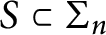 $S \subset \operatorname {\Sigma }_n$, H. Tsunogai asked whether $L_n^S$ rational over $K_n^S$. When $n \geqslant 5,$ the second author has shown that $L_n^S$ is rational over $K_n^S$ if and only if S has an orbit of odd order in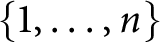 $\{ 1, \dots , n \}$. In this paper, we answer Tsunogai’s question for $n \leqslant 4$.


THE COMBINATORICS OF TENSOR PRODUCTS OF HIGHER AUSLANDER ALGEBRAS OF TYPE A
- Part of
-
- Journal:
- Glasgow Mathematical Journal / Volume 63 / Issue 3 / September 2021
- Published online by Cambridge University Press:
- 29 July 2020, pp. 526-546
-
- Article
- Export citation
Dynamical invariants of monomial correspondences
- Part of
-
- Journal:
- Ergodic Theory and Dynamical Systems / Volume 41 / Issue 7 / July 2021
- Published online by Cambridge University Press:
- 02 June 2020, pp. 2000-2015
- Print publication:
- July 2021
-
- Article
- Export citation
Categorification via blocks of modular representations for $\mathfrak {sl}_n$
- Part of
-
- Journal:
- Canadian Journal of Mathematics / Volume 73 / Issue 4 / August 2021
- Published online by Cambridge University Press:
- 19 May 2020, pp. 1095-1123
- Print publication:
- August 2021
-
- Article
-
- You have access
- Open access
- Export citation
-
Bernstein, Frenkel, and Khovanov have constructed a categorification of tensor products of the standard representation of $\mathfrak {sl}_2$, where they use singular blocks of category $\mathcal {O}$ for $\mathfrak {sl}_n$ and translation functors. Here we construct a positive characteristic analogue using blocks of representations of $\mathfrak {s}\mathfrak {l}_n$ over a field $\mathbf {k}$ of characteristic p with zero Frobenius character, and singular Harish-Chandra character. We show that the aforementioned categorification admits a Koszul graded lift, which is equivalent to a geometric categorification constructed by Cautis, Kamnitzer, and Licata using coherent sheaves on cotangent bundles to Grassmanians. In particular, the latter admits an abelian refinement. With respect to this abelian refinement, the stratified Mukai flop induces a perverse equivalence on the derived categories for complementary Grassmanians. This is part of a larger project to give a combinatorial approach to Lusztig’s conjectures for representations of Lie algebras in positive characteristic.


SYMBOLIC ANALYTIC SPREAD: UPPER BOUNDS AND APPLICATIONS
- Part of
-
- Journal:
- Journal of the Institute of Mathematics of Jussieu / Volume 20 / Issue 6 / November 2021
- Published online by Cambridge University Press:
- 07 May 2020, pp. 1969-1981
- Print publication:
- November 2021
-
- Article
- Export citation
-
The symbolic analytic spread of an ideal $I$ is defined in terms of the rate of growth of the minimal number of generators of its symbolic powers. In this article, we find upper bounds for the symbolic analytic spread under certain conditions in terms of other invariants of $I$. Our methods also work for more general systems of ideals. As applications, we provide bounds for the (local) Kodaira dimension of divisors, the arithmetic rank, and the Frobenius complexity. We also show sufficient conditions for an ideal to be a set-theoretic complete intersection.


An Application of Spherical Geometry to Hyperkähler Slices
- Part of
-
- Journal:
- Canadian Journal of Mathematics / Volume 73 / Issue 3 / June 2021
- Published online by Cambridge University Press:
- 24 February 2020, pp. 687-716
- Print publication:
- June 2021
-
- Article
- Export citation
-
This work is concerned with Bielawski’s hyperkähler slices in the cotangent bundles of homogeneous affine varieties. One can associate such a slice with the data of a complex semisimple Lie group $G$, a reductive subgroup $H\subseteq G$, and a Slodowy slice $S\subseteq \mathfrak{g}:=\text{Lie}(G)$, defining it to be the hyperkähler quotient of $T^{\ast }(G/H)\times (G\times S)$ by a maximal compact subgroup of $G$. This hyperkähler slice is empty in some of the most elementary cases (e.g., when $S$ is regular and $(G,H)=(\text{SL}_{n+1},\text{GL}_{n})$, $n\geqslant 3$), prompting us to seek necessary and sufficient conditions for non-emptiness.
We give a spherical-geometric characterization of the non-empty hyperkähler slices that arise when $S=S_{\text{reg}}$ is a regular Slodowy slice, proving that non-emptiness is equivalent to the so-called $\mathfrak{a}$-regularity of $(G,H)$. This $\mathfrak{a}$-regularity condition is formulated in several equivalent ways, one being a concrete condition on the rank and complexity of $G/H$. We also provide a classification of the $\mathfrak{a}$-regular pairs $(G,H)$ in which $H$ is a reductive spherical subgroup. Our arguments make essential use of Knop’s results on moment map images and Losev’s algorithm for computing Cartan spaces.


On the non-divisorial base locus of big and nef line bundles on K3[2]-type varieties
- Part of
-
- Journal:
- Proceedings of the Royal Society of Edinburgh. Section A: Mathematics / Volume 151 / Issue 1 / February 2021
- Published online by Cambridge University Press:
- 20 February 2020, pp. 52-78
- Print publication:
- February 2021
-
- Article
- Export citation
THE INTERSECTION MOTIVE OF THE MODULI STACK OF SHTUKAS
- Part of
-
- Journal:
- Forum of Mathematics, Sigma / Volume 8 / 2020
- Published online by Cambridge University Press:
- 03 February 2020, e8
-
- Article
-
- You have access
- Open access
- Export citation
-
For a split reductive group $G$ over a finite field, we show that the intersection (cohomology) motive of the moduli stack of iterated $G$-shtukas with bounded modification and level structure is defined independently of the standard conjectures on motivic $t$-structures on triangulated categories of motives. This is in accordance with general expectations on the independence of $\ell$ in the Langlands correspondence for function fields.


Relative Equivariant Motives and Modules
- Part of
-
- Journal:
- Canadian Journal of Mathematics / Volume 73 / Issue 1 / February 2021
- Published online by Cambridge University Press:
- 08 November 2019, pp. 131-159
- Print publication:
- February 2021
-
- Article
-
- You have access
- Export citation
ON TORUS ACTIONS OF HIGHER COMPLEXITY
- Part of
-
- Journal:
- Forum of Mathematics, Sigma / Volume 7 / 2019
- Published online by Cambridge University Press:
- 31 October 2019, e38
-
- Article
-
- You have access
- Open access
- Export citation
Residual intersections are Koszul–Fitting ideals
- Part of
-
- Journal:
- Compositio Mathematica / Volume 155 / Issue 11 / November 2019
- Published online by Cambridge University Press:
- 23 September 2019, pp. 2150-2179
- Print publication:
- November 2019
-
- Article
- Export citation
