Refine listing
Actions for selected content:
205 results in 14Mxx
Toric degenerations of low-degree hypersurfaces
- Part of
-
- Journal:
- Canadian Mathematical Bulletin / Volume 66 / Issue 4 / December 2023
- Published online by Cambridge University Press:
- 20 April 2023, pp. 1231-1236
- Print publication:
- December 2023
-
- Article
- Export citation
-
We show that a sufficiently general hypersurface of degree d in $\mathbb {P}^n$ admits a toric Gröbner degeneration after linear change of coordinates if and only if $d\leq 2n-1$.


Positive Ulrich sheaves
- Part of
-
- Journal:
- Canadian Journal of Mathematics / Volume 76 / Issue 3 / June 2024
- Published online by Cambridge University Press:
- 17 April 2023, pp. 881-914
- Print publication:
- June 2024
-
- Article
-
- You have access
- Open access
- HTML
- Export citation
A note on the smooth blowups of $\mathbb {P}(1,1,1,k)$ in torus-invariant subvarieties
- Part of
-
- Journal:
- Canadian Mathematical Bulletin / Volume 66 / Issue 4 / December 2023
- Published online by Cambridge University Press:
- 29 March 2023, pp. 1152-1163
- Print publication:
- December 2023
-
- Article
- Export citation
-
This papers classifies toric Fano threefolds with singular locus $\{ \frac {1}{k}(1,1,1) \}$ for $k \in \mathbb {Z}_{\geq 1}$ building on the work of Batyrev (1981, Nauk SSSR Ser. Mat. 45, 704–717) and Watanabe–Watanabe (1982, Tokyo J. Math. 5, 37–48). This is achieved by completing an equivalent problem in the language of Fano polytopes. Furthermore, we identify birational relationships between entries of the classification. For a fixed value $k \geq 4$, there are exactly two such toric Fano threefolds linked by a blowup in a torus-invariant line.


Grassmanniennes affines tordues sur les entiers
- Part of
-
- Journal:
- Forum of Mathematics, Sigma / Volume 11 / 2023
- Published online by Cambridge University Press:
- 23 February 2023, e12
-
- Article
-
- You have access
- Open access
- HTML
- Export citation
-
We generalize the works of Pappas–Rapoport–Zhu on twisted affine Grassmannians to the wildly ramified case under mild assumptions. This rests on a construction of certain smooth affine $\mathbb {Z}[t]$-groups with connected fibers of parahoric type, motivated by previous work of Tits. The resulting $\mathbb {F}_p(t)$-groups are pseudo-reductive and sometimes non-standard in the sense of Conrad–Gabber–Prasad, and their $\mathbb {F}_p [\hspace {-0,5mm}[ {t} ]\hspace {-0,5mm}] $-models are parahoric in a generalized sense. We study their affine Grassmannians, proving normality of Schubert varieties and Zhu’s coherence theorem.


Relative Richardson varieties
- Part of
-
- Journal:
- Mathematical Proceedings of the Cambridge Philosophical Society / Volume 175 / Issue 1 / July 2023
- Published online by Cambridge University Press:
- 14 February 2023, pp. 161-186
- Print publication:
- July 2023
-
- Article
-
- You have access
- Open access
- HTML
- Export citation
Virasoro constraints for moduli spaces of sheaves on surfaces
- Part of
-
- Journal:
- Forum of Mathematics, Sigma / Volume 11 / 2023
- Published online by Cambridge University Press:
- 23 January 2023, e4
-
- Article
-
- You have access
- Open access
- HTML
- Export citation
A generalized Sylvester–Gallai-type theorem for quadratic polynomials
- Part of
-
- Journal:
- Forum of Mathematics, Sigma / Volume 10 / 2022
- Published online by Cambridge University Press:
- 15 December 2022, e112
-
- Article
-
- You have access
- Open access
- HTML
- Export citation
-
In this work, we prove a version of the Sylvester–Gallai theorem for quadratic polynomials that takes us one step closer to obtaining a deterministic polynomial time algorithm for testing zeroness of $\Sigma ^{[3]}\Pi \Sigma \Pi ^{[2]}$ circuits. Specifically, we prove that, if a finite set of irreducible quadratic polynomials ${\mathcal {Q}}$ satisfies that for every two polynomials $Q_1,Q_2\in {\mathcal {Q}}$ there is a subset ${\mathcal {K}}\subset {\mathcal {Q}}$ such that $Q_1,Q_2 \notin {\mathcal {K}}$ and whenever $Q_1$ and $Q_2$ vanish, then $\prod _{i\in {\mathcal {K}}} Q_i$ vanishes, then the linear span of the polynomials in ${\mathcal {Q}}$ has dimension $O(1)$. This extends the earlier result [21] that holds for the case $|{\mathcal {K}}| = 1$.


Unwinding Toric Degenerations and Mirror Symmetry for Grassmannians
- Part of
-
- Journal:
- Forum of Mathematics, Sigma / Volume 10 / 2022
- Published online by Cambridge University Press:
- 14 December 2022, e111
-
- Article
-
- You have access
- Open access
- HTML
- Export citation
-
The most fundamental example of mirror symmetry compares the Fermat hypersurfaces in $\mathbb {P}^n$ and $\mathbb {P}^n/G$, where G is a finite group that acts on $\mathbb {P}^n$ and preserves the Fermat hypersurface. We generalize this to hypersurfaces in Grassmannians, where the picture is richer and more complex. There is a finite group G that acts on the Grassmannian $\operatorname {{\mathrm {Gr}}}(n,r)$ and preserves an appropriate Calabi–Yau hypersurface. We establish how mirror symmetry, toric degenerations, blow-ups and variation of GIT relate the Calabi–Yau hypersurfaces inside $\operatorname {{\mathrm {Gr}}}(n,r)$ and $\operatorname {{\mathrm {Gr}}}(n,r)/G$. This allows us to describe a compactification of the Eguchi–Hori–Xiong mirror to the Grassmannian, inside a blow-up of the quotient of the Grassmannian by G.


On the maximum dual volume of a canonical Fano polytope
- Part of
-
- Journal:
- Forum of Mathematics, Sigma / Volume 10 / 2022
- Published online by Cambridge University Press:
- 13 December 2022, e109
-
- Article
-
- You have access
- Open access
- HTML
- Export citation
-
We give an upper bound on the volume $\operatorname {vol}(P^*)$ of a polytope $P^*$ dual to a d-dimensional lattice polytope P with exactly one interior lattice point in each dimension d. This bound, expressed in terms of the Sylvester sequence, is sharp and achieved by the dual to a particular reflexive simplex. Our result implies a sharp upper bound on the volume of a d-dimensional reflexive polytope. Translated into toric geometry, this gives a sharp upper bound on the anti-canonical degree $(-K_X)^d$ of a d-dimensional Fano toric variety X with at worst canonical singularities.


ON THE MILNOR FIBRATION OF CERTAIN NEWTON DEGENERATE FUNCTIONS
- Part of
-
- Journal:
- Nagoya Mathematical Journal / Volume 250 / June 2023
- Published online by Cambridge University Press:
- 01 December 2022, pp. 410-433
-
- Article
- Export citation
-
It is well known that the diffeomorphism type of the Milnor fibration of a (Newton) nondegenerate polynomial function f is uniquely determined by the Newton boundary of f. In the present paper, we generalize this result to certain degenerate functions, namely we show that the diffeomorphism type of the Milnor fibration of a (possibly degenerate) polynomial function of the form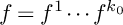 $f=f^1\cdots f^{k_0}$ is uniquely determined by the Newton boundaries of $f^1,\ldots , f^{k_0}$ if $\{f^{k_1}=\cdots =f^{k_m}=0\}$ is a nondegenerate complete intersection variety for any $k_1,\ldots ,k_m\in \{1,\ldots , k_0\}$.

Higher index Fano varieties with finitely many birational automorphisms
- Part of
-
- Journal:
- Compositio Mathematica / Volume 158 / Issue 11 / November 2022
- Published online by Cambridge University Press:
- 02 December 2022, pp. 2033-2045
- Print publication:
- November 2022
-
- Article
- Export citation
-
A famous problem in birational geometry is to determine when the birational automorphism group of a Fano variety is finite. The Noether–Fano method has been the main approach to this problem. The purpose of this paper is to give a new approach to the problem by showing that in every positive characteristic, there are Fano varieties of arbitrarily large index with finite (or even trivial) birational automorphism group. To do this, we prove that these varieties admit ample and birationally equivariant line bundles. Our result applies the differential forms that Kollár produces on $p$-cyclic covers in characteristic $p > 0$.


Open-closed Gromov-Witten invariants of 3-dimensional Calabi-Yau smooth toric DM stacks
- Part of
-
- Journal:
- Forum of Mathematics, Sigma / Volume 10 / 2022
- Published online by Cambridge University Press:
- 28 July 2022, e58
-
- Article
-
- You have access
- Open access
- HTML
- Export citation
-
We study open-closed orbifold Gromov-Witten invariants of 3-dimensional Calabi-Yau smooth toric Deligne-Mumford stacks (with possibly nontrivial generic stabilisers K and semi-projective coarse moduli spaces) relative to Lagrangian branes of Aganagic-Vafa type. An Aganagic-Vafa brane in this paper is a possibly ineffective $C^\infty $ orbifold that admits a presentation $[(S^1\times \mathbb {R} ^2)/G_\tau ]$, where $G_\tau $ is a finite abelian group containing K and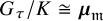 $G_\tau /K \cong \boldsymbol {\mu }_{\mathfrak {m}}$ is cyclic of some order $\mathfrak {m}\in \mathbb {Z} _{>0}$.
 1. We present foundational materials of enumerative geometry of stable holomorphic maps from bordered orbifold Riemann surfaces to a 3-dimensional Calabi-Yau smooth toric DM stack $\mathcal {X}$ with boundaries mapped into an Aganagic-Vafa brane $\mathcal {L}$. All genus open-closed Gromov-Witten invariants of $\mathcal {X}$ relative to $\mathcal {L}$ are defined by torus localisation and depend on the choice of a framing $f\in \mathbb {Z} $ of $\mathcal {L}$.
2. We provide another definition of all genus open-closed Gromov-Witten invariants in (1) based on algebraic relative orbifold Gromov-Witten theory, which agrees with the definition in (1) up to a sign depending on the choice of orientation on moduli of maps in (1). This generalises the definition in [57] for smooth toric Calabi-Yau 3-folds and specifies an orientation on moduli of maps in (1) compatible with the canonical orientation on moduli of relative stable maps determined by the complex structure.
3. When $\mathcal {X}$ is a toric Calabi-Yau 3-orbifold (i.e., when the generic stabiliser K is trivial), so that $G_\tau =\boldsymbol {\mu }_{\mathfrak {m}}$, we define generating functions $F_{g,h}^{\mathcal {X},(\mathcal {L},f)}$ of open-closed Gromov-Witten invariants of arbitrary genus g and number h of boundary circles; it takes values in $H^*_{ {\mathrm {CR}} }(\mathcal {B} \boldsymbol {\mu }_{\mathfrak {m}}; \mathbb {C} )^{\otimes h}$, where $H^*_{ {\mathrm {CR}} }(\mathcal {B} \boldsymbol {\mu }_{\mathfrak {m}}; \mathbb {C} )\cong \mathbb {C} ^{\mathfrak {m}}$ is the Chen-Ruan orbifold cohomology of the classifying space $\mathcal {B} \boldsymbol {\mu }_{\mathfrak {m}}$ of $\boldsymbol {\mu }_{\mathfrak {m}}$.
4. We prove an open mirror theorem that relates the generating function $F_{0,1}^{\mathcal {X},(\mathcal {L},f)}$ of orbifold disk invariants to Abel-Jacobi maps of the mirror curve of $\mathcal {X}$. This generalises a conjecture by Aganagic-Vafa [6] and Aganagic-Klemm-Vafa [5] (proved in full generality by the first and the second authors in [33]) on the disk potential of a smooth semi-projective toric Calabi-Yau 3-fold.


Calabi–Yau properties of Postnikov diagrams
- Part of
-
- Journal:
- Forum of Mathematics, Sigma / Volume 10 / 2022
- Published online by Cambridge University Press:
- 21 July 2022, e56
-
- Article
-
- You have access
- Open access
- HTML
- Export citation
-
We show that the dimer algebra of a connected Postnikov diagram in the disc is bimodule internally $3$-Calabi–Yau in the sense of the author’s earlier work [43]. As a consequence, we obtain an additive categorification of the cluster algebra associated to the diagram, which (after inverting frozen variables) is isomorphic to the homogeneous coordinate ring of a positroid variety in the Grassmannian by a recent result of Galashin and Lam [18]. We show that our categorification can be realised as a full extension closed subcategory of Jensen–King–Su’s Grassmannian cluster category [28], in a way compatible with their bijection between rank $1$ modules and Plücker coordinates.


NORMALISED TANGENT BUNDLE, VARIETIES WITH SMALL CODEGREE AND PSEUDOEFFECTIVE THRESHOLD
- Part of
-
- Journal:
- Journal of the Institute of Mathematics of Jussieu / Volume 23 / Issue 1 / January 2024
- Published online by Cambridge University Press:
- 15 July 2022, pp. 149-206
- Print publication:
- January 2024
-
- Article
- Export citation
-
We propose a conjectural list of Fano manifolds of Picard number $1$ with pseudoeffective normalised tangent bundles, which we prove in various situations by relating it to the complete divisibility conjecture of Francesco Russo and Fyodor L. Zak on varieties with small codegree. Furthermore, the pseudoeffective thresholds and, hence, the pseudoeffective cones of the projectivised tangent bundles of rational homogeneous spaces of Picard number $1$ are explicitly determined by studying the total dual variety of minimal rational tangents (VMRTs) and the geometry of stratified Mukai flops. As a by-product, we obtain sharp vanishing theorems on the global twisted symmetric holomorphic vector fields on rational homogeneous spaces of Picard number $1$.
$1$.


On the topological complexity and zero-divisor cup-length of real Grassmannians
- Part of
-
- Journal:
- Proceedings of the Royal Society of Edinburgh. Section A: Mathematics / Volume 153 / Issue 2 / April 2023
- Published online by Cambridge University Press:
- 31 March 2022, pp. 702-717
- Print publication:
- April 2023
-
- Article
-
- You have access
- Open access
- HTML
- Export citation
-
Topological complexity naturally appears in the motion planning in robotics. In this paper we consider the problem of finding topological complexity of real Grassmann manifolds $G_k(\mathbb {R}^{n})$
 . We use cohomology methods to give estimates on the zero-divisor cup-length of $G_k(\mathbb {R}^{n})$
 for various $2\leqslant k< n$
 , which in turn give us lower bounds on topological complexity. Our results correct and improve several results from Pavešić (Proc. Roy. Soc. Edinb. A 151 (2021), 2013–2029).


Grothendieck–Serre in the quasi-split unramified case
- Part of
-
- Journal:
- Forum of Mathematics, Pi / Volume 10 / 2022
- Published online by Cambridge University Press:
- 29 March 2022, e9
-
- Article
-
- You have access
- Open access
- HTML
- Export citation
Unramified logarithmic Hodge–Witt cohomology and $\mathbb {P}^1$-invariance
- Part of
-
- Journal:
- Forum of Mathematics, Sigma / Volume 10 / 2022
- Published online by Cambridge University Press:
- 16 March 2022, e19
-
- Article
-
- You have access
- Open access
- HTML
- Export citation
-
Let X be a smooth proper variety over a field k and suppose that the degree map ${\mathrm {CH}}_0(X \otimes _k K) \to \mathbb {Z}$ is isomorphic for any field extension $K/k$. We show that $G(\operatorname {Spec} k) \to G(X)$ is an isomorphism for any $\mathbb {P}^1$-invariant Nisnevich sheaf with transfers G. This generalises a result of Binda, Rülling and Saito that proves the same conclusion for reciprocity sheaves. We also give a direct proof of the fact that the unramified logarithmic Hodge–Witt cohomology is a $\mathbb {P}^1$-invariant Nisnevich sheaf with transfers.


Stringy invariants and toric Artin stacks
- Part of
-
- Journal:
- Forum of Mathematics, Sigma / Volume 10 / 2022
- Published online by Cambridge University Press:
- 07 February 2022, e9
-
- Article
-
- You have access
- Open access
- HTML
- Export citation
-
We propose a conjectural framework for computing Gorenstein measures and stringy Hodge numbers in terms of motivic integration over arcs of smooth Artin stacks, and we verify this framework in the case of fantastacks, which are certain toric Artin stacks that provide (nonseparated) resolutions of singularities for toric varieties. Specifically, let $\mathcal {X}$ be a smooth Artin stack admitting a good moduli space $\pi : \mathcal {X} \to X$, and assume that X is a variety with log-terminal singularities, $\pi $ induces an isomorphism over a nonempty open subset of X and the exceptional locus of $\pi $ has codimension at least $2$. We conjecture a change-of-variables formula relating the motivic measure for $\mathcal {X}$ to the Gorenstein measure for X and functions measuring the degree to which $\pi $ is nonseparated. We also conjecture that if the stabilisers of $\mathcal {X}$ are special groups in the sense of Serre, then almost all arcs of X lift to arcs of $\mathcal {X}$, and we explain how in this case (assuming a finiteness hypothesis satisfied by fantastacks) our conjectures imply a formula for the stringy Hodge numbers of X in terms of a certain motivic integral over the arcs of $\mathcal {X}$. We prove these conjectures in the case where $\mathcal {X}$ is a fantastack.


On combinatorics of the Arthur trace formula, convex polytopes, and toric varieties
- Part of
-
- Journal:
- Canadian Journal of Mathematics / Volume 75 / Issue 2 / April 2023
- Published online by Cambridge University Press:
- 27 January 2022, pp. 375-420
- Print publication:
- April 2023
-
- Article
-
- You have access
- Open access
- HTML
- Export citation
On the multiplication of spherical functions of reductive spherical pairs of type A
- Part of
-
- Journal:
- Canadian Journal of Mathematics / Volume 75 / Issue 2 / April 2023
- Published online by Cambridge University Press:
- 09 December 2021, pp. 341-374
- Print publication:
- April 2023
-
- Article
-
- You have access
- Open access
- HTML
- Export citation
-
Let G be a simple complex algebraic group, and let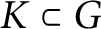 $K \subset G$ be a reductive subgroup such that the coordinate ring of $G/K$ is a multiplicity-free G-module. We consider the G-algebra structure of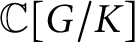 $\mathbb C[G/K]$ and study the decomposition into irreducible summands of the product of irreducible G-submodules in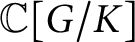 $\mathbb C[G/K]$. When the spherical roots of $G/K$ generate a root system of type $\mathsf A$, we propose a conjectural decomposition rule, which relies on a conjecture of Stanley on the multiplication of Jack symmetric functions. With the exception of one case, we show that the rule holds true whenever the root system generated by the spherical roots of $G/K$ is a direct sum of subsystems of rank 1.


