Refine listing
Actions for selected content:
163 results in 14Nxx
Floor diagrams and enumerative invariants of line bundles over an elliptic curve
- Part of
-
- Journal:
- Compositio Mathematica / Volume 159 / Issue 8 / August 2023
- Published online by Cambridge University Press:
- 07 July 2023, pp. 1741-1790
- Print publication:
- August 2023
-
- Article
-
- You have access
- Open access
- HTML
- Export citation
-
We use the tropical geometry approach to compute absolute and relative enumerative invariants of complex surfaces which are $\mathbb {C} P^1$-bundles over an elliptic curve. We also show that the tropical multiplicity used to count curves can be refined by the standard Block–Göttsche refined multiplicity to give tropical refined invariants. We then give a concrete algorithm using floor diagrams to compute these invariants along with the associated interpretation as operators acting on some Fock space. The floor diagram algorithm allows one to prove the piecewise polynomiality of the relative invariants, and the quasi-modularity of their generating series.

TANGENT-FILLING PLANE CURVES OVER FINITE FIELDS
- Part of
-
- Journal:
- Bulletin of the Australian Mathematical Society / Volume 109 / Issue 2 / April 2024
- Published online by Cambridge University Press:
- 02 May 2023, pp. 301-315
- Print publication:
- April 2024
-
- Article
- Export citation
-
We study plane curves over finite fields whose tangent lines at smooth $\mathbb {F}_q$-points together cover all the points of $\mathbb {P}^2(\mathbb {F}_q)$.


INTRINSIC STABILIZER REDUCTION AND GENERALIZED DONALDSON–THOMAS INVARIANTS
- Part of
-
- Journal:
- Journal of the Institute of Mathematics of Jussieu / Volume 22 / Issue 4 / July 2023
- Published online by Cambridge University Press:
- 02 May 2023, pp. 1987-2025
- Print publication:
- July 2023
-
- Article
-
- You have access
- Open access
- HTML
- Export citation
-
Let $\sigma $ be a stability condition on the bounded derived category $D^b({\mathop{\mathrm {Coh}}\nolimits } W)$ of a Calabi–Yau threefold W and $\mathcal {M}$ a moduli stack parametrizing $\sigma $-semistable objects of fixed topological type. We define generalized Donaldson–Thomas invariants which act as virtual counts of objects in $\mathcal {M}$, fully generalizing the approach introduced by Kiem, Li and the author in the case of semistable sheaves. We construct an associated proper Deligne–Mumford stack $\widetilde {\mathcal {M}}^{\mathbb {C}^{\ast }}$, called the $\mathbb {C}^{\ast }$-rigidified intrinsic stabilizer reduction of $\mathcal {M}$, with an induced semiperfect obstruction theory of virtual dimension zero, and define the generalized Donaldson–Thomas invariant via Kirwan blowups to be the degree of the associated virtual cycle $[\widetilde {\mathcal {M}}]^{\mathrm {vir}} \in A_0(\widetilde {\mathcal {M}})$. This stays invariant under deformations of the complex structure of W. Applications include Bridgeland stability, polynomial stability, Gieseker and slope stability.


Equations of mirrors to log Calabi–Yau pairs via the heart of canonical wall structures
- Part of
-
- Journal:
- Mathematical Proceedings of the Cambridge Philosophical Society / Volume 175 / Issue 2 / September 2023
- Published online by Cambridge University Press:
- 11 April 2023, pp. 381-421
- Print publication:
- September 2023
-
- Article
-
- You have access
- Open access
- HTML
- Export citation
The Log Product Formula in Quantum K-theory
- Part of
-
- Journal:
- Mathematical Proceedings of the Cambridge Philosophical Society / Volume 175 / Issue 2 / September 2023
- Published online by Cambridge University Press:
- 11 April 2023, pp. 225-252
- Print publication:
- September 2023
-
- Article
- Export citation
-
We prove a formula expressing the K-theoretic log Gromov-Witten invariants of a product of log smooth varieties $V \times W$ in terms of the invariants of V and W. The proof requires introducing log virtual fundamental classes in K-theory and verifying their various functorial properties. We introduce a log version of K-theory and prove the formula there as well.

Wonderful compactifications and rational curves with cyclic action
- Part of
-
- Journal:
- Forum of Mathematics, Sigma / Volume 11 / 2023
- Published online by Cambridge University Press:
- 11 April 2023, e29
-
- Article
-
- You have access
- Open access
- HTML
- Export citation
Extremal Gromov-Witten invariants of the Hilbert scheme of $3$ Points
- Part of
-
- Journal:
- Forum of Mathematics, Sigma / Volume 11 / 2023
- Published online by Cambridge University Press:
- 24 March 2023, e21
-
- Article
-
- You have access
- Open access
- HTML
- Export citation
-
We determine all the extremal Gromov-Witten invariants of the Hilbert scheme of $3$ points on a smooth projective complex surface. Our result for the genus- $1$ case verifies a conjecture that we propose for the genus- $1$ extremal Gromov-Witten invariant of the Hilbert scheme of n points with n being arbitrary. The main ideas in the proofs are to use geometric arguments involving the cosection localization theory of Kiem and J. Li [17, 23], algebraic manipulations related to the Heisenberg operators of Grojnowski [13] and Nakajima [34], and the virtual localization formulas of Gromov-Witten theory [12, 20, 30].


Motivic zeta functions of hyperplane arrangements
- Part of
-
- Journal:
- Mathematical Proceedings of the Cambridge Philosophical Society / Volume 175 / Issue 1 / July 2023
- Published online by Cambridge University Press:
- 07 March 2023, pp. 187-215
- Print publication:
- July 2023
-
- Article
-
- You have access
- Open access
- HTML
- Export citation
-
For each central essential hyperplane arrangement $\mathcal{A}$ over an algebraically closed field, let $Z_\mathcal{A}^{\hat\mu}(T)$ denote the Denef–Loeser motivic zeta function of $\mathcal{A}$. We prove a formula expressing $Z_\mathcal{A}^{\hat\mu}(T)$ in terms of the Milnor fibers of related hyperplane arrangements. This formula shows that, in a precise sense, the degree to which $Z_{\mathcal{A}}^{\hat\mu}(T)$ fails to be a combinatorial invariant is completely controlled by these Milnor fibers. As one application, we use this formula to show that the map taking each complex arrangement $\mathcal{A}$ to the Hodge–Deligne specialization of $Z_{\mathcal{A}}^{\hat\mu}(T)$ is locally constant on the realization space of any loop-free matroid. We also prove a combinatorial formula expressing the motivic Igusa zeta function of $\mathcal{A}$ in terms of the characteristic polynomials of related arrangements.


On some hyperelliptic Hurwitz–Hodge integrals
- Part of
-
- Journal:
- Mathematical Proceedings of the Cambridge Philosophical Society / Volume 175 / Issue 2 / September 2023
- Published online by Cambridge University Press:
- 23 February 2023, pp. 271-284
- Print publication:
- September 2023
-
- Article
-
- You have access
- Open access
- HTML
- Export citation
Virasoro constraints for moduli spaces of sheaves on surfaces
- Part of
-
- Journal:
- Forum of Mathematics, Sigma / Volume 11 / 2023
- Published online by Cambridge University Press:
- 23 January 2023, e4
-
- Article
-
- You have access
- Open access
- HTML
- Export citation
GENERIC LINES IN PROJECTIVE SPACE AND THE KOSZUL PROPERTY
- Part of
-
- Journal:
- Nagoya Mathematical Journal / Volume 251 / September 2023
- Published online by Cambridge University Press:
- 06 January 2023, pp. 576-605
-
- Article
-
- You have access
- Open access
- HTML
- Export citation
-
In this paper, we study the Koszul property of the homogeneous coordinate ring of a generic collection of lines in $\mathbb {P}^n$ and the homogeneous coordinate ring of a collection of lines in general linear position in $\mathbb {P}^n.$ We show that if $\mathcal {M}$ is a collection of m lines in general linear position in $\mathbb {P}^n$ with $2m \leq n+1$ and R is the coordinate ring of $\mathcal {M},$ then R is Koszul. Furthermore, if $\mathcal {M}$ is a generic collection of m lines in $\mathbb {P}^n$ and R is the coordinate ring of $\mathcal {M}$ with m even and $m +1\leq n$ or m is odd and $m +2\leq n,$ then R is Koszul. Lastly, we show that if $\mathcal {M}$ is a generic collection of m lines such that then R is not Koszul. We give a complete characterization of the Koszul property of the coordinate ring of a generic collection of lines for
 $$ \begin{align*} m> \frac{1}{72}\left(3(n^2+10n+13)+\sqrt{3(n-1)^3(3n+5)}\right),\end{align*} $$ $n \leq 6$ or $m \leq 6$. We also determine the Castelnuovo–Mumford regularity of the coordinate ring for a generic collection of lines and the projective dimension of the coordinate ring of collection of lines in general linear position.


The flow tree formula for Donaldson–Thomas invariants of quivers with potentials
- Part of
-
- Journal:
- Compositio Mathematica / Volume 158 / Issue 12 / December 2022
- Published online by Cambridge University Press:
- 19 December 2022, pp. 2206-2249
- Print publication:
- December 2022
-
- Article
- Export citation
Virasoro constraints for stable pairs on toric threefolds
- Part of
-
- Journal:
- Forum of Mathematics, Pi / Volume 10 / 2022
- Published online by Cambridge University Press:
- 06 September 2022, e20
-
- Article
-
- You have access
- Open access
- HTML
- Export citation
-
Using new explicit formulas for the stationary Gromov–Witten/Pandharipande–Thomas ( $\mathrm {GW}/{\mathrm {PT}}$) descendent correspondence for nonsingular projective toric threefolds, we show that the correspondence intertwines the Virasoro constraints in Gromov–Witten theory for stable maps with the Virasoro constraints for stable pairs proposed in [18]. Since the Virasoro constraints in Gromov–Witten theory are known to hold in the toric case, we establish the stationary Virasoro constraints for the theory of stable pairs on toric threefolds. As a consequence, new Virasoro constraints for tautological integrals over Hilbert schemes of points on surfaces are also obtained.

ADJUNCTION AND INVERSION OF ADJUNCTION
- Part of
-
- Journal:
- Nagoya Mathematical Journal / Volume 249 / March 2023
- Published online by Cambridge University Press:
- 05 September 2022, pp. 119-147
-
- Article
- Export citation
Double nested Hilbert schemes and the local stable pairs theory of curves
- Part of
-
- Journal:
- Compositio Mathematica / Volume 158 / Issue 9 / September 2022
- Published online by Cambridge University Press:
- 11 October 2022, pp. 1799-1849
- Print publication:
- September 2022
-
- Article
-
- You have access
- Open access
- HTML
- Export citation
-
We propose a variation of the classical Hilbert scheme of points, the double nested Hilbert scheme of points, which parametrizes flags of zero-dimensional subschemes whose nesting is dictated by a Young diagram. Over a smooth quasi-projective curve, we compute the generating series of topological Euler characteristic of these spaces, by exploiting the combinatorics of reversed plane partitions. Moreover, we realize this moduli space as the zero locus of a section of a vector bundle over a smooth ambient space, which therefore admits a virtual fundamental class. We apply this construction to the stable pair theory of a local curve, that is the total space of the direct sum of two line bundles over a curve. We show that the invariants localize to virtual intersection numbers on double nested Hilbert scheme of points on the curve, and that the localized contributions to the invariants are controlled by three universal series for every Young diagram, which can be explicitly determined after the anti-diagonal restriction of the equivariant parameters. Under the anti-diagonal restriction, the invariants are matched with the Gromov–Witten invariants of local curves of Bryan–Pandharipande, as predicted by the Maulik–Nekrasov–Okounkov–Pandharipande (MNOP) correspondence. Finally, we discuss $K$-theoretic refinements à la Nekrasov–Okounkov.

SMOOTHNESS IN PENCILS OF HYPERSURFACES OVER FINITE FIELDS
- Part of
-
- Journal:
- Bulletin of the Australian Mathematical Society / Volume 107 / Issue 1 / February 2023
- Published online by Cambridge University Press:
- 25 August 2022, pp. 85-94
- Print publication:
- February 2023
-
- Article
- Export citation
-
We study pencils of hypersurfaces over finite fields $\mathbb {F}_q$ such that each of the $q+1$ members defined over $\mathbb {F}_q$ is smooth.


The Abelian/Nonabelian Correspondence and Gromov–Witten Invariants of Blow-Ups
- Part of
-
- Journal:
- Forum of Mathematics, Sigma / Volume 10 / 2022
- Published online by Cambridge University Press:
- 24 August 2022, e67
-
- Article
-
- You have access
- Open access
- HTML
- Export citation
Open-closed Gromov-Witten invariants of 3-dimensional Calabi-Yau smooth toric DM stacks
- Part of
-
- Journal:
- Forum of Mathematics, Sigma / Volume 10 / 2022
- Published online by Cambridge University Press:
- 28 July 2022, e58
-
- Article
-
- You have access
- Open access
- HTML
- Export citation
-
We study open-closed orbifold Gromov-Witten invariants of 3-dimensional Calabi-Yau smooth toric Deligne-Mumford stacks (with possibly nontrivial generic stabilisers K and semi-projective coarse moduli spaces) relative to Lagrangian branes of Aganagic-Vafa type. An Aganagic-Vafa brane in this paper is a possibly ineffective $C^\infty $ orbifold that admits a presentation $[(S^1\times \mathbb {R} ^2)/G_\tau ]$, where $G_\tau $ is a finite abelian group containing K and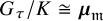 $G_\tau /K \cong \boldsymbol {\mu }_{\mathfrak {m}}$ is cyclic of some order $\mathfrak {m}\in \mathbb {Z} _{>0}$.
 1. We present foundational materials of enumerative geometry of stable holomorphic maps from bordered orbifold Riemann surfaces to a 3-dimensional Calabi-Yau smooth toric DM stack $\mathcal {X}$ with boundaries mapped into an Aganagic-Vafa brane $\mathcal {L}$. All genus open-closed Gromov-Witten invariants of $\mathcal {X}$ relative to $\mathcal {L}$ are defined by torus localisation and depend on the choice of a framing $f\in \mathbb {Z} $ of $\mathcal {L}$.
2. We provide another definition of all genus open-closed Gromov-Witten invariants in (1) based on algebraic relative orbifold Gromov-Witten theory, which agrees with the definition in (1) up to a sign depending on the choice of orientation on moduli of maps in (1). This generalises the definition in [57] for smooth toric Calabi-Yau 3-folds and specifies an orientation on moduli of maps in (1) compatible with the canonical orientation on moduli of relative stable maps determined by the complex structure.
3. When $\mathcal {X}$ is a toric Calabi-Yau 3-orbifold (i.e., when the generic stabiliser K is trivial), so that $G_\tau =\boldsymbol {\mu }_{\mathfrak {m}}$, we define generating functions $F_{g,h}^{\mathcal {X},(\mathcal {L},f)}$ of open-closed Gromov-Witten invariants of arbitrary genus g and number h of boundary circles; it takes values in $H^*_{ {\mathrm {CR}} }(\mathcal {B} \boldsymbol {\mu }_{\mathfrak {m}}; \mathbb {C} )^{\otimes h}$, where $H^*_{ {\mathrm {CR}} }(\mathcal {B} \boldsymbol {\mu }_{\mathfrak {m}}; \mathbb {C} )\cong \mathbb {C} ^{\mathfrak {m}}$ is the Chen-Ruan orbifold cohomology of the classifying space $\mathcal {B} \boldsymbol {\mu }_{\mathfrak {m}}$ of $\boldsymbol {\mu }_{\mathfrak {m}}$.
4. We prove an open mirror theorem that relates the generating function $F_{0,1}^{\mathcal {X},(\mathcal {L},f)}$ of orbifold disk invariants to Abel-Jacobi maps of the mirror curve of $\mathcal {X}$. This generalises a conjecture by Aganagic-Vafa [6] and Aganagic-Klemm-Vafa [5] (proved in full generality by the first and the second authors in [33]) on the disk potential of a smooth semi-projective toric Calabi-Yau 3-fold.


NORMALISED TANGENT BUNDLE, VARIETIES WITH SMALL CODEGREE AND PSEUDOEFFECTIVE THRESHOLD
- Part of
-
- Journal:
- Journal of the Institute of Mathematics of Jussieu / Volume 23 / Issue 1 / January 2024
- Published online by Cambridge University Press:
- 15 July 2022, pp. 149-206
- Print publication:
- January 2024
-
- Article
- Export citation
-
We propose a conjectural list of Fano manifolds of Picard number $1$ with pseudoeffective normalised tangent bundles, which we prove in various situations by relating it to the complete divisibility conjecture of Francesco Russo and Fyodor L. Zak on varieties with small codegree. Furthermore, the pseudoeffective thresholds and, hence, the pseudoeffective cones of the projectivised tangent bundles of rational homogeneous spaces of Picard number $1$ are explicitly determined by studying the total dual variety of minimal rational tangents (VMRTs) and the geometry of stratified Mukai flops. As a by-product, we obtain sharp vanishing theorems on the global twisted symmetric holomorphic vector fields on rational homogeneous spaces of Picard number $1$.
$1$.


Level correspondence of the K-theoretic I-function in Grassmann duality
- Part of
-
- Journal:
- Forum of Mathematics, Sigma / Volume 10 / 2022
- Published online by Cambridge University Press:
- 15 June 2022, e44
-
- Article
-
- You have access
- Open access
- HTML
- Export citation
