Refine listing
Actions for selected content:
176 results in 03DXX
BOREL WADGE CLASSES AND SELIVANOV’S FINE HIERARCHY I: EXTENDING TO THE HYPERARITHMETIC
- Part of
-
- Journal:
- The Journal of Symbolic Logic , First View
- Published online by Cambridge University Press:
- 16 April 2026, pp. 1-34
-
- Article
-
- You have access
- Open access
- HTML
- Export citation
THE FAILURE OF SELMAN’S THEOREM FOR HYPERENUMERATION REDUCIBILITY
- Part of
-
- Journal:
- The Journal of Symbolic Logic , First View
- Published online by Cambridge University Press:
- 14 April 2026, pp. 1-19
-
- Article
-
- You have access
- Open access
- HTML
- Export citation
-
Hyperenumeration reducibility was first introduced by Sanchis [11]. The relationship between hyperenumeration and hyperarithmetic reducibility shares many parallels with the relationship between enumeration and Turing reducibility. We ask if this relationship can be pushed to prove and analog of Selman’s Theorem for hyperenumeration reducibility. By studying e-pointed trees in Baire space we are able to get a counter example. An e-pointed tree T is a tree with no dead ends and the property that every path in T enumerates T. We prove that if T is an e-pointed tree then for all X if T is $\Pi ^1_1$ in X then $\overline {T}$ is $\Pi ^1_1$ in X. We build an e-pointed tree T such that $\overline {T}$ is not hyperenumeration reducible to T.


Feasibility of primality in bounded arithmetic
- Part of
-
- Journal:
- Forum of Mathematics, Sigma / Volume 14 / 2026
- Published online by Cambridge University Press:
- 01 April 2026, e49
-
- Article
-
- You have access
- Open access
- HTML
- Export citation
-
We prove the correctness of the AKS algorithm [1] within the bounded arithmetic theory $T^{\text {count}}_2$ or, equivalently, the first-order consequences of the theory $\text {VTC}^0$ expanded by the smash function, which we denote by $\text {VTC}^0_2$. Our approach initially demonstrates the correctness within the theory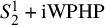 $S^1_2 + \mathrm {iWPHP}$ augmented by two algebraic axioms and then shows that they are provable in $\text {VTC}^0_2$. The two axioms are: a generalized version of Fermat’s Little Theorem and an axiom adding a new function symbol which injectively maps roots of polynomials over a definable finite field to numbers bounded by the degree of the given polynomial. To obtain our main result, we also give new formalizations of parts of number theory and algebra:
 • In $\mathrm {PV}_1$: We formalize Legendre’s Formula on the prime factorization of $n!$, key properties of the Combinatorial Number System and the existence of cyclotomic polynomials over the finite fields $\mathbb {Z}/p$.
• In $S^1_2$: We prove the inequality $\text {lcm}(1,\dots , 2n) \geq 2^n$.
• In $\text {VTC}^0$: We verify the correctness of the Kung–Sieveking algorithm for polynomial division.


QUANTUM MEASUREMENTS AND ALGORITHMIC RANDOMNESS
- Part of
-
- Journal:
- The Journal of Symbolic Logic , First View
- Published online by Cambridge University Press:
- 23 February 2026, pp. 1-21
-
- Article
-
- You have access
- Open access
- HTML
- Export citation
COMPUTABLE TOPOLOGICAL PRESENTATIONS
- Part of
-
- Journal:
- The Journal of Symbolic Logic , First View
- Published online by Cambridge University Press:
- 18 February 2026, pp. 1-20
-
- Article
-
- You have access
- Open access
- HTML
- Export citation
-
A computable topological presentation of a space is given by an effective list of a countable basis of non-empty open sets so that the intersection of the basic sets is uniformly effectively enumerable. We show that every countably-based $T_0$-space has a computable topological presentation, and that, conversely, every (formal) computable topological presentation represents some Polish space. In the compact case, we give a computable uniform list of computable topological presentations such that every compact Polish space is represented by exactly one presentation from the list. Note that none of these results assume that the Polish (or $T_0$) spaces are effective. Quite surprisingly, the effectively compact topological presentations turn out to be rather well behaved. Not only do such presentations allow one to construct a $\Delta ^0_2$ (complete) metric compatible with the topology, but also, under a mild extra condition, they can be turned into a computably compact Polish presentation of the space.


The subTuring degrees
- Part of
-
- Journal:
- Canadian Journal of Mathematics , First View
- Published online by Cambridge University Press:
- 17 December 2025, pp. 1-26
-
- Article
- Export citation
A SHORT NOTE ON THE SIGNIFICANCE OF THE PENROSE-HALTING THEOREM
- Part of
-
- Journal:
- Bulletin of Symbolic Logic , First View
- Published online by Cambridge University Press:
- 03 December 2025, pp. 1-8
-
- Article
-
- You have access
- Open access
- HTML
- Export citation
A RELATION ON
 OF INTERMEDIATE DEGREE SPECTRUM ON A CONE
- Part of
-
- Journal:
- The Journal of Symbolic Logic , First View
- Published online by Cambridge University Press:
- 01 December 2025, pp. 1-39
-
- Article
-
- You have access
- Open access
- HTML
- Export citation
-
We examine the degree spectra of relations on ${(\omega , <)}$. Given an additional relation R on ${(\omega ,<)}$, such as the successor relation, the degree spectrum of R is the set of Turing degrees of R in computable copies of ${(\omega ,<)}$. It is known that all degree spectra of relations on ${(\omega ,<)}$ fall into one of four categories: the computable degree, all of the c.e. degrees, all of the $\Delta ^0_2$ degrees, or intermediate between the c.e. degrees and the $\Delta ^0_2$ degrees. Examples of the first three degree spectra are easy to construct and well-known, but until recently it was open whether there is a relation with intermediate degree spectrum on a cone. Bazhenov, Kalociński, and Wroclawski constructed an example of an intermediate degree spectrum, but their example is unnatural in the sense that it is constructed by diagonalization and thus not canonical, that is, which relation you obtain from their construction depends on which Gödel encoding (and hence order of enumeration) of the partial computable functions/programs you choose. In this article, we use the “on-a-cone” paradigm to restrict our attention to “natural” relations R. Our main result is a construction of a natural relation on ${(\omega ,<)}$ which has intermediate degree spectrum. This relation has intermediate degree spectrum because of structural reasons.


DECOMPOSITION OF GÖDEL NUMBERINGS INTO MINIMAL NUMBERINGS
- Part of
-
- Journal:
- The Journal of Symbolic Logic , First View
- Published online by Cambridge University Press:
- 24 November 2025, pp. 1-19
-
- Article
- Export citation
Computability of Brjuno-like functions
- Part of
-
- Journal:
- Canadian Journal of Mathematics , First View
- Published online by Cambridge University Press:
- 12 November 2025, pp. 1-41
-
- Article
-
- You have access
- Open access
- HTML
- Export citation
THE WEAKNESS OF FINDING DESCENDING SEQUENCES IN ILL-FOUNDED LINEAR ORDERS
- Part of
-
- Journal:
- The Journal of Symbolic Logic , First View
- Published online by Cambridge University Press:
- 29 October 2025, pp. 1-35
-
- Article
-
- You have access
- Open access
- HTML
- Export citation
-
We explore the Weihrauch degree of the problems “find a bad sequence in a non-well quasi order” ( $\mathsf {BS}$) and “find a descending sequence in an ill-founded linear order” ( $\mathsf {DS}$). We prove that $\mathsf {DS}$ is strictly Weihrauch reducible to $\mathsf {BS}$, correcting our mistaken claim in [18]. This is done by separating their respective first-order parts. On the other hand, we show that $\mathsf {BS}$ and $\mathsf {DS}$ have the same finitary and deterministic parts, confirming that $\mathsf {BS}$ and $\mathsf {DS}$ have very similar uniform computational strength. We prove that König’s lemma $\mathsf {KL}$ and the problem $\mathsf {wList}_{{2^{\mathbb {N}}},\leq \omega }$ of enumerating a given non-empty countable closed subset of ${2^{\mathbb {N}}}$ are not Weihrauch reducible to $\mathsf {DS}$ or $\mathsf {BS}$, resolving two main open questions raised in [18]. We also answer the question, raised in [12], on the existence of a “parallel quotient” operator, and study the behavior of $\mathsf {BS}$ and $\mathsf {DS}$ under the quotient with some known problems.


EXTENDING THE BARMPALIAS–LEWIS-PYE LIMIT THEOREM TO ALL REALS
- Part of
-
- Journal:
- The Journal of Symbolic Logic , First View
- Published online by Cambridge University Press:
- 28 October 2025, pp. 1-34
-
- Article
-
- You have access
- Open access
- HTML
- Export citation
-
By a celebrated result of Kučera and Slaman [5], the Martin-Löf random left-c.e. reals form the highest left-c.e. Solovay degree. Barmpalias and Lewis-Pye [1] strengthened this result by showing that, for all left-c.e. reals $\alpha $ and $\beta $ such that $\beta $ is Martin-Löf random and all left-c.e. approximations $a_0,a_1,\dots $ and $b_0,b_1,\dots $ of $\alpha $ and $\beta $, respectively, the limit exists and does not depend on the choice of the left-c.e. approximations to
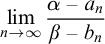 $$ \begin{align*} \lim\limits_{n\to\infty}\frac{\alpha - a_n}{\beta - b_n} \end{align*} $$ $\alpha $ and $\beta $.
Here we give an equivalent formulation of the result of Barmpalias and Lewis-Pye in terms of nondecreasing translation functions and generalize their result to the set of all (i.e., not necessarily left-c.e.) reals.


RATE OF CONVERGENCE OF COMPUTABLE PREDICTIONS
- Part of
-
- Journal:
- The Journal of Symbolic Logic , First View
- Published online by Cambridge University Press:
- 15 October 2025, pp. 1-19
-
- Article
-
- You have access
- Open access
- HTML
- Export citation
ON THE ARITHMETICAL COMPLEXITY OF MODELS
- Part of
-
- Journal:
- Bulletin of Symbolic Logic , First View
- Published online by Cambridge University Press:
- 10 October 2025, pp. 1-10
-
- Article
- Export citation
ON EFFECTIVE CONSTRUCTIONS OF EXISTENTIALLY CLOSED GROUPS
- Part of
-
- Journal:
- The Journal of Symbolic Logic , First View
- Published online by Cambridge University Press:
- 25 September 2025, pp. 1-29
-
- Article
-
- You have access
- Open access
- HTML
- Export citation
LOW $_2$ COMPUTABLY ENUMERABLE SETS HAVE HYPERHYPERSIMPLE SUPERSETS
- Part of
-
- Journal:
- The Journal of Symbolic Logic , First View
- Published online by Cambridge University Press:
- 23 September 2025, pp. 1-35
-
- Article
-
- You have access
- Open access
- HTML
- Export citation
-
A longstanding question is to characterize the lattice of supersets (modulo finite sets), $\mathcal {L}^*(A)$, of a low $_2$ computably enumerable (c.e.) set. The conjecture is that $\mathcal {L}^*(A)\cong {\mathcal E}^*$. In spite of claims in the literature, this longstanding question/conjecture remains open. We contribute to this problem by solving one of the main test cases. We show that if c.e. A is low $_2$ then A has an atomless hyperhypersimple superset. In fact, if A is c.e. and low $_2$, then for any $\Sigma _3$-Boolean algebra B there is some c.e. $H\supseteq A$ such that $\mathcal {L}^*(H)\cong B$.


ON THE COMPUTABILITY OF OPTIMAL SCOTT SENTENCES
- Part of
-
- Journal:
- The Journal of Symbolic Logic , First View
- Published online by Cambridge University Press:
- 17 September 2025, pp. 1-20
-
- Article
-
- You have access
- Open access
- HTML
- Export citation
-
Given a countable mathematical structure, its Scott sentence is a sentence of the infinitary logic $\mathcal {L}_{\omega _1 \omega }$ that characterizes it among all countable structures. We can measure the complexity of a structure by the least complexity of a Scott sentence for that structure. It is known that there can be a difference between the least complexity of a Scott sentence and the least complexity of a computable Scott sentence; for example, Alvir, Knight, and McCoy showed that there is a computable structure with a $\Pi _2$ Scott sentence but no computable $\Pi _2$ Scott sentence. It is well known that a structure with a $\Pi _2$ Scott sentence must have a computable $\Pi _4$ Scott sentence. We show that this is best possible: there is a computable structure with a $\Pi _2$ Scott sentence but no computable $\Sigma _4$ Scott sentence. We also show that there is no reasonable characterization of the computable structures with a computable $\Pi _n$ Scott sentence by showing that the index set of such structures is $\Pi ^1_1$-m-complete.


ALGORITHMICALLY FINITE, UNIVERSAL, AND $*$-UNIVERSAL GROUPS
- Part of
-
- Journal:
- The Journal of Symbolic Logic , First View
- Published online by Cambridge University Press:
- 03 September 2025, pp. 1-19
-
- Article
-
- You have access
- Open access
- HTML
- Export citation
-
The study of the word problems of groups dates back to Dehn in 1911, and has been a central topic of study in both group theory and computability theory. As most naturally occurring presentations of groups are recursive, their word problems can be thought of as a computably enumerable equivalence relation (ceer). In this article, we study the word problem of groups in the framework of ceer degrees, introducing a new metric with which to study word problems. This metric is more refined than the classical context of Turing degrees.
Classically, every Turing degree is realized as the word problem of some c.e. group, but this is not true for ceer degrees. This motivates us to look at the classical constructions and show that there is a group whose word problem is not universal, but becomes universal after taking any nontrivial free product, which we call $*$-universal. This shows that existing constructions of the Higman embedding theorem do not preserve ceer degrees. We also study the index set of various classes of groups defined by their properties as a ceer: groups whose word problems are dark (equivalently, algorithmically finite as defined by Miasnikov and Osin), universal, and $*$-universal groups.


LATTICE EMBEDDINGS AND PUNCTUAL LINEAR ORDERS
- Part of
-
- Journal:
- The Journal of Symbolic Logic , First View
- Published online by Cambridge University Press:
- 01 August 2025, pp. 1-29
-
- Article
-
- You have access
- Open access
- HTML
- Export citation
-
We investigate the primitive recursive content of linear orders. We prove that the punctual degrees of rigid linear orders, the order of the integers $\mathbb {Z}$, and the order of the rationals $\mathbb {Q}$ embed the diamond (preserving supremum and infimum). In the cases of rigid orders and the order $\mathbb {Z}$, we further extend the result to embed the atomless Boolean algebra; we leave the case of $\mathbb {Q}$ as an open problem. We also show that our results for the rigid orders, in fact, work for orders having a computable infinite invariant rigid sub-order.


RAMSEY-LIKE THEOREMS FOR THE SCHREIER BARRIER
- Part of
-
- Journal:
- The Journal of Symbolic Logic , First View
- Published online by Cambridge University Press:
- 17 July 2025, pp. 1-29
-
- Article
- Export citation
-
The family of finite subsets s of the natural numbers such that $|s|=1+\min s$ is known as the Schreier barrier in combinatorics and Banach Space theory, and as the family of exactly $\omega $-large sets in Logic. We formulate and prove the generalizations of Friedman’s Free Set and Thin Set theorems and of Rainbow Ramsey’s theorem to colorings of the Schreier barrier. We analyze the strength of these theorems from the point of view of Computability Theory and Reverse Mathematics. Surprisingly, the exactly $\omega $-large counterparts of the Thin Set and Free Set theorems can code $\emptyset ^{(\omega )}$, while the exactly $\omega $-large Rainbow Ramsey theorem does not code the halting set.


