Refine listing
Actions for selected content:
337 results in 60Hxx
Zipf’s law for atlas models
- Part of
-
- Journal:
- Journal of Applied Probability / Volume 57 / Issue 4 / December 2020
- Published online by Cambridge University Press:
- 23 November 2020, pp. 1276-1297
- Print publication:
- December 2020
-
- Article
- Export citation
-
A set of data with positive values follows a Pareto distribution if the log–log plot of value versus rank is approximately a straight line. A Pareto distribution satisfies Zipf’s law if the log–log plot has a slope of $-1$. Since many types of ranked data follow Zipf’s law, it is considered a form of universality. We propose a mathematical explanation for this phenomenon based on Atlas models and first-order models, systems of strictly positive continuous semimartingales with parameters that depend only on rank. We show that the stationary distribution of an Atlas model will follow Zipf’s law if and only if two natural conditions, conservation and completeness, are satisfied. Since Atlas models and first-order models can be constructed to approximate systems of time-dependent rank-based data, our results can explain the universality of Zipf’s law for such systems. However, ranked data generated by other means may follow non-Zipfian Pareto distributions. Hence, our results explain why Zipf’s law holds for word frequency, firm size, household wealth, and city size, while it does not hold for earthquake magnitude, cumulative book sales, and the intensity of wars, all of which follow non-Zipfian Pareto distributions.

Skeletal stochastic differential equations for superprocesses
- Part of
-
- Journal:
- Journal of Applied Probability / Volume 57 / Issue 4 / December 2020
- Published online by Cambridge University Press:
- 23 November 2020, pp. 1111-1134
- Print publication:
- December 2020
-
- Article
- Export citation
Solving the 4NLS with white noise initial data
- Part of
-
- Journal:
- Forum of Mathematics, Sigma / Volume 8 / 2020
- Published online by Cambridge University Press:
- 18 November 2020, e48
-
- Article
-
- You have access
- Open access
- Export citation
ASYMPTOTIC BEHAVIOUR OF THE STOCHASTIC MAKI–THOMPSON MODEL WITH A FORGETTING MECHANISM ON OPEN POPULATIONS
- Part of
-
- Journal:
- The ANZIAM Journal / Volume 62 / Issue 2 / April 2020
- Published online by Cambridge University Press:
- 06 November 2020, pp. 185-208
-
- Article
-
- You have access
- Export citation
Invariant Gibbs dynamics for the dynamical sine-Gordon model
- Part of
-
- Journal:
- Proceedings of the Royal Society of Edinburgh. Section A: Mathematics / Volume 151 / Issue 5 / October 2021
- Published online by Cambridge University Press:
- 16 September 2020, pp. 1450-1466
- Print publication:
- October 2021
-
- Article
- Export citation
Stochastic differential equations driven by fractional Brownian motion with locally Lipschitz drift and their implicit Euler approximation
- Part of
-
- Journal:
- Proceedings of the Royal Society of Edinburgh. Section A: Mathematics / Volume 151 / Issue 4 / August 2021
- Published online by Cambridge University Press:
- 02 September 2020, pp. 1278-1304
- Print publication:
- August 2021
-
- Article
- Export citation
-
In this paper, we study a class of one-dimensional stochastic differential equations driven by fractional Brownian motion with Hurst parameter $ H \gt \frac{1}{2}$. The drift term of the equation is locally Lipschitz and unbounded in the neighbourhood of the origin. We show the existence, uniqueness and positivity of the solutions. The estimates of moments, including the negative power moments, are given. We also develop the implicit Euler scheme, proved that the scheme is positivity preserving and strong convergent, and obtain rate of convergence. Furthermore, by using Lamperti transformation, we show that our results can be applied to stochastic interest rate models such as mean-reverting stochastic volatility model and strongly nonlinear Aït-Sahalia type model.

Mean square rate of convergence for random walk approximation of forward-backward SDEs
- Part of
-
- Journal:
- Advances in Applied Probability / Volume 52 / Issue 3 / September 2020
- Published online by Cambridge University Press:
- 24 September 2020, pp. 735-771
- Print publication:
- September 2020
-
- Article
- Export citation
-
Let (Y, Z) denote the solution to a forward-backward stochastic differential equation (FBSDE). If one constructs a random walk $B^n$ from the underlying Brownian motion B by Skorokhod embedding, one can show $L_2$-convergence of the corresponding solutions $(Y^n,Z^n)$ to $(Y, Z).$ We estimate the rate of convergence based on smoothness properties, especially for a terminal condition function in $C^{2,\alpha}$. The proof relies on an approximative representation of $Z^n$ and uses the concept of discretized Malliavin calculus. Moreover, we use growth and smoothness properties of the partial differential equation associated to the FBSDE, as well as of the finite difference equations associated to the approximating stochastic equations. We derive these properties by probabilistic methods.


Regularity theory of Kolmogorov operator revisited
- Part of
-
- Journal:
- Canadian Mathematical Bulletin / Volume 64 / Issue 4 / December 2021
- Published online by Cambridge University Press:
- 24 August 2020, pp. 725-736
- Print publication:
- December 2021
-
- Article
- Export citation
-
We consider Kolmorogov operator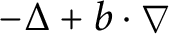 $-\Delta +b \cdot \nabla $ with drift b in the class of form-bounded vector fields (containing vector fields having critical-order singularities). We characterize quantitative dependence of the Sobolev and Hölder regularity of solutions to the corresponding elliptic equation on the value of the form-bound of b.
Analysis of a spatially inhomogeneous stochastic partial differential equation epidemic model
- Part of
-
- Journal:
- Journal of Applied Probability / Volume 57 / Issue 2 / June 2020
- Published online by Cambridge University Press:
- 16 July 2020, pp. 613-636
- Print publication:
- June 2020
-
- Article
- Export citation
Tails of exit times from unstable equilibria on the line
- Part of
-
- Journal:
- Journal of Applied Probability / Volume 57 / Issue 2 / June 2020
- Published online by Cambridge University Press:
- 16 July 2020, pp. 477-496
- Print publication:
- June 2020
-
- Article
- Export citation
Two results on dynamic extensions of deviation measures
- Part of
-
- Journal:
- Journal of Applied Probability / Volume 57 / Issue 2 / June 2020
- Published online by Cambridge University Press:
- 16 July 2020, pp. 531-540
- Print publication:
- June 2020
-
- Article
- Export citation
Mean reflected stochastic differential equations with jumps
- Part of
-
- Journal:
- Advances in Applied Probability / Volume 52 / Issue 2 / June 2020
- Published online by Cambridge University Press:
- 15 July 2020, pp. 523-562
- Print publication:
- June 2020
-
- Article
- Export citation
Well-posedness for nonlinear SPDEs with strongly continuous perturbation
- Part of
-
- Journal:
- Proceedings of the Royal Society of Edinburgh. Section A: Mathematics / Volume 151 / Issue 1 / February 2021
- Published online by Cambridge University Press:
- 11 March 2020, pp. 265-295
- Print publication:
- February 2021
-
- Article
-
- You have access
- Open access
- Export citation
HIGH ORDER PARACONTROLLED CALCULUS
- Part of
-
- Journal:
- Forum of Mathematics, Sigma / Volume 7 / 2019
- Published online by Cambridge University Press:
- 02 December 2019, e44
-
- Article
-
- You have access
- Open access
- Export citation
-
We develop in this work a general version of paracontrolled calculus that allows to treat analytically within this paradigm a whole class of singular partial differential equations with the same efficiency as regularity structures. This work deals with the analytic side of the story and offers a toolkit for the study of such equations, under the form of a number of continuity results for some operators, while emphasizing the simple and systematic mechanics of computations within paracontrolled calculus, via the introduction of two model operations $\mathsf{E}$ and $\mathsf{F}$. We illustrate the efficiency of this elementary approach on the example of the generalized parabolic Anderson model equation on a 3-dimensional closed manifold, and the generalized KPZ equation
 $$\begin{eqnarray}(\unicode[STIX]{x2202}_{t}+L)u=f(u)\unicode[STIX]{x1D701},\end{eqnarray}$$driven by a
 $$\begin{eqnarray}(\unicode[STIX]{x2202}_{t}+L)u=f(u)\unicode[STIX]{x1D701}+g(u)(\unicode[STIX]{x2202}u)^{2},\end{eqnarray}$$ $(1+1)$-dimensional space/time white noise.


Discrete-type approximations for non-Markovian optimal stopping problems: Part I
- Part of
-
- Journal:
- Journal of Applied Probability / Volume 56 / Issue 4 / December 2019
- Published online by Cambridge University Press:
- 11 December 2019, pp. 981-1005
- Print publication:
- December 2019
-
- Article
- Export citation
-
We present a discrete-type approximation scheme to solve continuous-time optimal stopping problems based on fully non-Markovian continuous processes adapted to the Brownian motion filtration. The approximations satisfy suitable variational inequalities which allow us to construct $\varepsilon$-optimal stopping times and optimal values in full generality. Explicit rates of convergence are presented for optimal values based on reward functionals of path-dependent stochastic differential equations driven by fractional Brownian motion. In particular, the methodology allows us to design concrete Monte Carlo schemes for non-Markovian optimal stopping time problems as demonstrated in the companion paper by Bezerra et al.

Exponential convergence rate of ruin probabilities for level-dependent Lévy-driven risk processes
- Part of
-
- Journal:
- Journal of Applied Probability / Volume 56 / Issue 4 / December 2019
- Published online by Cambridge University Press:
- 11 December 2019, pp. 1244-1268
- Print publication:
- December 2019
-
- Article
- Export citation
Skeletal stochastic differential equations for continuous-state branching processes
- Part of
-
- Journal:
- Journal of Applied Probability / Volume 56 / Issue 4 / December 2019
- Published online by Cambridge University Press:
- 11 December 2019, pp. 1122-1150
- Print publication:
- December 2019
-
- Article
- Export citation
ASYMPTOTIC EXPANSION OF THE DENSITY FOR HYPOELLIPTIC ROUGH DIFFERENTIAL EQUATION
- Part of
-
- Journal:
- Nagoya Mathematical Journal / Volume 243 / September 2021
- Published online by Cambridge University Press:
- 04 November 2019, pp. 11-41
- Print publication:
- September 2021
-
- Article
- Export citation
-
We study a rough differential equation driven by fractional Brownian motion with Hurst parameter $H$
$H$ $(1/4<H\leqslant 1/2)$. Under Hörmander’s condition on the coefficient vector fields, the solution has a smooth density for each fixed time. Using Watanabe’s distributional Malliavin calculus, we obtain a short time full asymptotic expansion of the density under quite natural assumptions. Our main result can be regarded as a “fractional version” of Ben Arous’ famous work on the off-diagonal asymptotics.


Semi-static variance-optimal hedging in stochastic volatility models with Fourier representation
- Part of
-
- Journal:
- Journal of Applied Probability / Volume 56 / Issue 3 / September 2019
- Published online by Cambridge University Press:
- 01 October 2019, pp. 787-809
- Print publication:
- September 2019
-
- Article
- Export citation
A martingale approach for asset allocation with derivative security and hidden economic risk
- Part of
-
- Journal:
- Journal of Applied Probability / Volume 56 / Issue 3 / September 2019
- Published online by Cambridge University Press:
- 01 October 2019, pp. 723-749
- Print publication:
- September 2019
-
- Article
- Export citation
