To save this undefined to your undefined account, please select one or more formats and confirm that you agree to abide by our usage policies. If this is the first time you used this feature, you will be asked to authorise Cambridge Core to connect with your undefined account.
Find out more about saving content to .
To send this article to your Kindle, first ensure no-reply@cambridge.org is added to your Approved Personal Document E-mail List under your Personal Document Settings on the Manage Your Content and Devices page of your Amazon account. Then enter the ‘name’ part of your Kindle email address below. Find out more about sending to your Kindle.
Find out more about saving to your Kindle.
Note you can select to save to either the @free.kindle.com or @kindle.com variations. ‘@free.kindle.com’ emails are free but can only be saved to your device when it is connected to wi-fi. ‘@kindle.com’ emails can be delivered even when you are not connected to wi-fi, but note that service fees apply.
Blue pigments are absent in Palaeolithic art. This has been ascribed to a lack of naturally occurring blue pigments or low visual salience of these hues. Using a suite of archaeometric approaches, the authors identify traces of azurite on a concave stone artefact from the Final Palaeolithic site of Mühlheim-Dietesheim, Germany. This represents the earliest use of blue pigment in Europe. The scarcity of blue in Palaeolithic art, along with later prehistoric uses of azurite, may indicate that azurite was used for archaeologically invisible activities (e.g. body decoration) implying intentional selectivity over the pigments used for different Palaeolithic artistic activities.
Increasing interdisciplinary analysis of geoarchaeological records, including sediment and ice cores, permits finer-scale contextual interpretation of the history of anthropogenic environmental impacts. In an interdisciplinary approach to economic history, the authors examine metal pollutants in a sediment core from the Roman metal-producing centre of Aldborough, North Yorkshire, combining this record with textual and archaeological evidence from the region. Finding that fluctuations in pollution correspond with sociopolitical events, pandemics and recorded trends in British metal production c. AD 1100–1700, the authors extend the analysis to earlier periods that lack written records, providing a new post-Roman economic narrative for northern England.
There are no known written records pertaining to the origins of the enigmatic bronze ‘Lion’ that stands atop one of the two large columns of the Piazzetta in St Mark’s Square, Venice (Italy). Representing the Venetian Winged Lion, a powerful symbol of statehood, the sculpture was installed during a time of political uncertainty in medieval Mediterranean Europe, yet its features do not reflect local artistic conventions. Here, the authors argue that stylistic parallels are found in Tang Dynasty China (AD 618–907); employing lead isotope analysis, they further show that the figure was cast with copper isotopically consistent with ore from the Lower Yangzi River basin.
Archaeogenetics, the study of ancient DNA, can reveal powerful insights into kinship and the movement of individuals in (pre)history. Here, the authors report on the identification of two individuals with genetic profiles consistent with recent sub-Saharan African ancestry, both of whom were buried in early-medieval cemeteries in southern Britain. Focusing primarily on a sub-adult female from Updown in Kent, the authors explore the societal and cultural contexts in which these individuals lived and died, and the widening geographic links indicated by their presence, pointing back to the Byzantine reconquest of North Africa in AD 533–534.
The tattoos of the Pazyryk ice mummies are of paramount importance for the archaeology of Iron Age Siberia and are often discussed from a broad stylistic and symbolic perspective. However, deeper investigations into this cultural practice were hindered by the inaccessibility of quality data. Here, the authors use high-resolution, near-infrared data in conjunction with experimental evidence to re-examine the tools and techniques employed in Early Iron Age tattooing. The high-quality data allow for the previously unfeasible distinction of artist hands and enable us to put the individual back into the picture of a widespread but rarely preserved prehistoric practice.
The Romans were among the first societies to extensively exploit fish resources, establishing large-scale salting and preservation plants where small pelagic fish were fermented to produce sauces such as garum. Here, the authors demonstrate that, despite being crushed and exposed to acidic conditions, usable DNA can be recovered from ichthyological residues at the bottom of fish-salting vats. At third-century AD Adro Vello (O Grove), Galicia, they confirm the use of European sardines (Sardina pilchardus) and move beyond morphology to explore population range and admixture and reveal the potential of this overlooked archaeological resource.
Since 2015, four non-invasive campaigns have surveyed the San José Galleon shipwreck in the Colombian Caribbean, providing valuable insights into the age and provenance of artefacts found on the seabed. Numismatic, archaeological and historical approaches have been employed to analyse a collection of gold coins recorded within this underwater context.
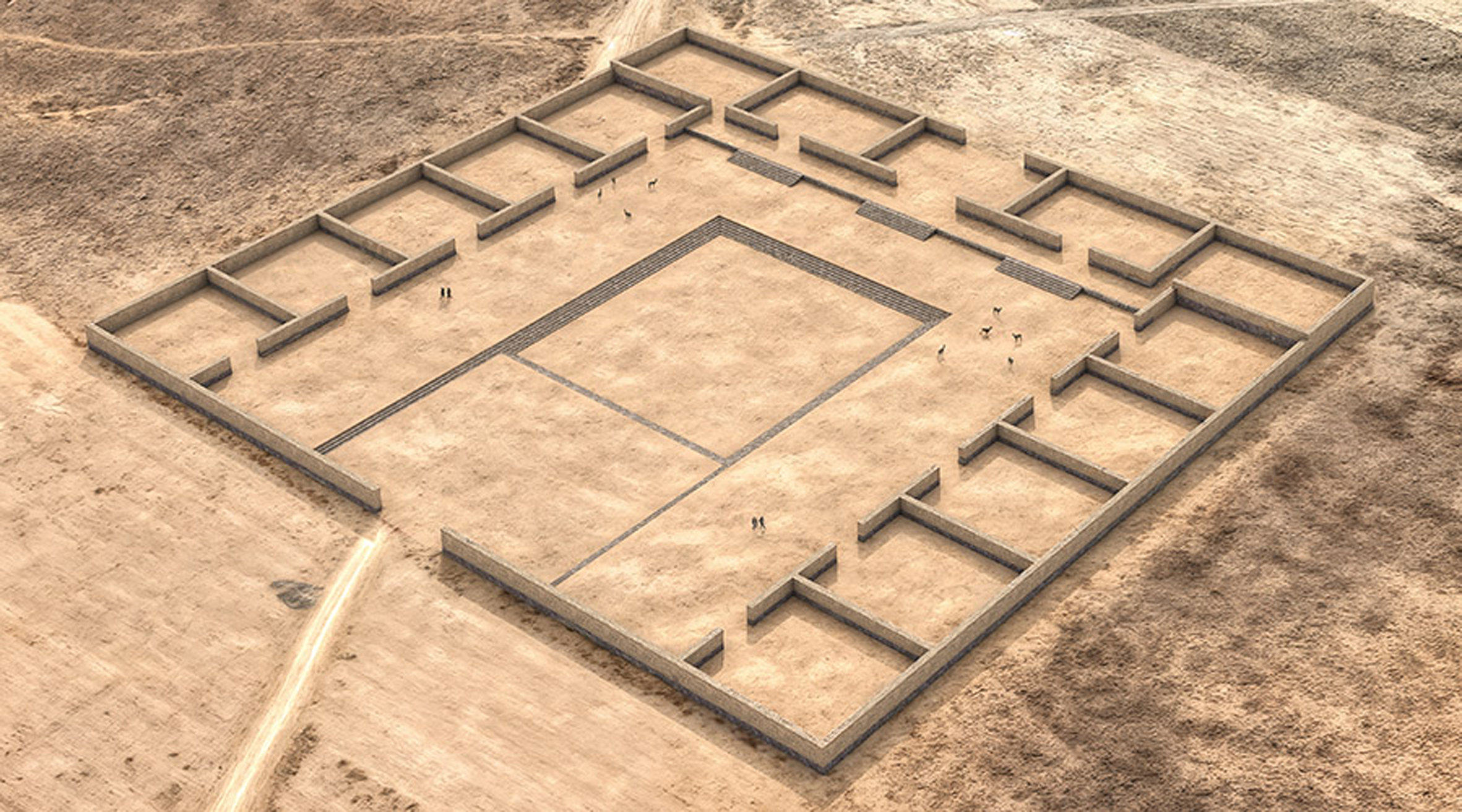
The nature and extent of the Tiwanaku state expansion in the Andes during the second half of the first millennium AD continues to be debated. Here, the authors report on the recent discovery of an archaeological complex 215km south-east of Tiwanaku, where a large, modular building with an integrated, sunken courtyard strongly resembles a Tiwanaku terraced platform temple and demonstrates substantial state investment. Constructed, the authors argue, to directly control inter-regional traffic and trade between the highlands and the eastern valleys of Cochabamba, the complex represents a gateway node that effectively materialised the power and influence of the Tiwanaku state.
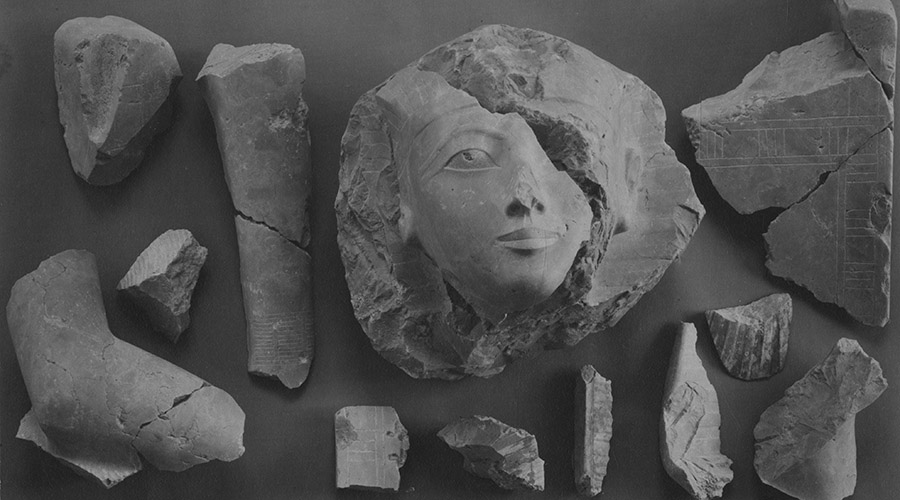
The statuary of Hatshepsut, who ruled Egypt during the Eighteenth Dynasty, is believed to have been targeted for violent destruction by Thutmose III, her successor. Yet the condition of the statues recovered in the vicinity of Hatshepsut’s mortuary temple at Deir el-Bahri varies considerably and many survive with their faces virtually intact. Through the examination of archival material from the original excavations, the author offers an alternative, more utilitarian, explanation of the treatment of these statues. Rather than outright hostility, much of the damage may instead derive from the ‘deactivation’ of the statues and their reuse as raw material.
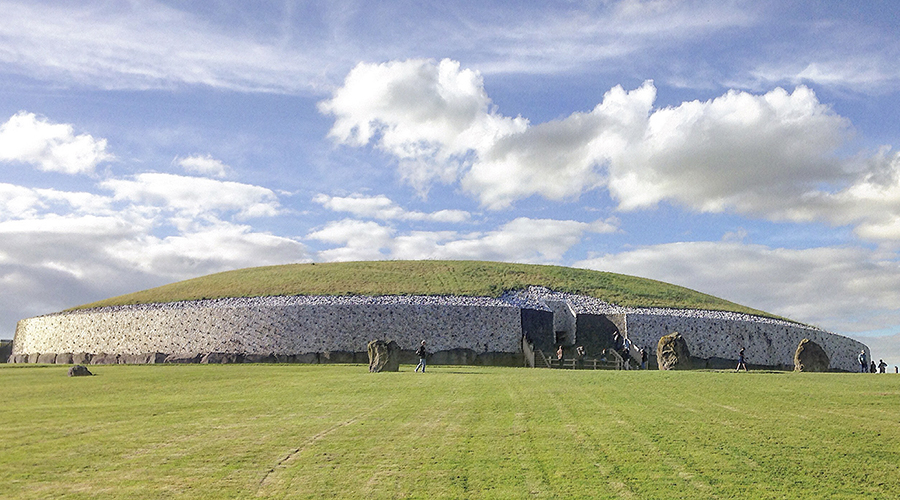
Recent genomic analysis of a skull fragment from Newgrange, Ireland, revealed a rare case of incest. Together with a wider network of distantly related passage tomb interments, this has bolstered claims of a social elite in later Neolithic Ireland. Here, the authors evaluate this social evolutionary interpretation, drawing on insecurities in context and the relative rarity of engendered status or resource restrictions in the archaeological record of prehistoric Ireland to argue that the status of individuals during this period is better understood through unstable identity negotiations. Inclusion in a passage tomb, while ‘special’, need not equate to a perpetual elite.
Bronze Age–Early Iron Age tin ingots recovered from four Mediterranean shipwrecks off the coasts of Israel and southern France can now be provenanced to tin ores in south-west Britain. These exceptionally rich and accessible ores played a fundamental role in the transition from copper to full tin-bronze metallurgy across Europe and the Mediterranean during the second millennium BC. The authors’ application of a novel combination of three independent analyses (trace element, lead and tin isotopes) to tin ores and artefacts from Western and Central Europe also provides the foundation for future analyses of the pan-continental tin trade in later periods.
The nature and extent of interactions between the distant regions and cultures of Mesoamerica remain open to much debate. Close economic and political ties developed between Teotihuacan and the lowland Maya during the Early Classic period (AD 250–550), yet the relationship between these cultures continues to perplex scholars. This article presents an elaborately painted altar from an elite residential group at the lowland Maya centre of Tikal, Guatemala. Dating to the fifth century AD, the altar is unique in its display of Teotihuacan architectural and artistic forms, adding to evidence not only for cultural influence during this period, but also for an active Teotihuacan presence at Tikal.
A shift towards constructing large circular monuments, including henges, during the Middle Neolithic of Britain and Ireland is exemplified in the monumental landscape of south-west England. Seventeen new radiocarbon dates for the Flagstones circular enclosure and the adjacent long enclosure of Alington Avenue, presented here, provide a chronology that is earlier than expected. Comparison with similar sites demonstrates that Flagstones was part of a broader tradition of round enclosures but was also distinctly innovative, particularly in terms of its size. These findings reinforce the value in developing precise chronologies for refining understanding of monument forms and associated practices.
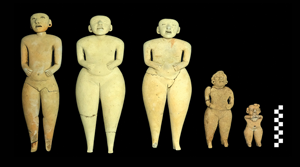
Representations of the human body are ubiquitous in cultures across the world. Beyond the aesthetic, figurines transmit deeper meanings that were readily decodable by their intended audience and may still offer sociocultural insights despite the loss of this coding through time. The discovery of a rare tableau of ‘Bolinas’-type clay figurines dating to 410–380 BC at San Isidro, El Salvador, now permits the theoretical reconstruction of a less stratified Preclassic society in south-east Mesoamerica and the exploration of its spheres of interaction, which may have stretched along the coast from Guatemala to Costa Rica.
The European shores of the Mediterranean are characterised by well-known sociocultural and economic dynamics during the Bronze and Early Iron Ages (2200–550 BC), but our understanding of the African shores is comparatively vague. Here, the authors present results from excavations at Kach Kouch, Morocco, revealing an occupation phase from 2200–2000 cal BC, followed by a stable settlement from c. 1300–600 BC characterised by wattle and daub architecture, a farming economy, distinctive cultural practices and extensive connections. Kach Kouch underscores the agency of local communities, challenging the notion of north-western Africa as terra nullius prior to Phoenician arrival.
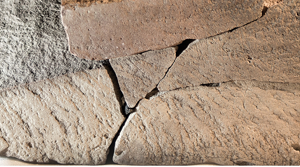
The development of runic writing (the early Germanic alphabetic script) and the practice of inscribing runes on stone are difficult to trace, particularly as rune-stone inscriptions are rarely found in original and/or datable contexts. The discovery of several inscribed sandstone fragments at the grave field at Svingerud, Norway, with associated radiocarbon dates of 50 BC–AD 275, now provide the earliest known context for a runestone. An unusual mixture of runes and other markings are revealed as the fragments are reconstructed into a single standing stone, suggesting multiple episodes of inscription and providing insight into early runic writing practices in Iron Age Scandinavia.
The discovery of more than 600 whole and fragmentary engraved stone plaques in the early third millennium BC infill from the ditches of a causewayed enclosure at Vasagård, on the Danish island of Bornholm, represents a unique find in Neolithic miniature art. Termed ‘sun stones’ in reference to the rayed images that characterise many of the plaques, the stones were deposited en masse over a short period. This article offers a fundamental classification of the rich imagery captured in the engravings and examines its potential function at a time of possible climatic crisis that impacted not just Bornholm but the wider northern hemisphere.
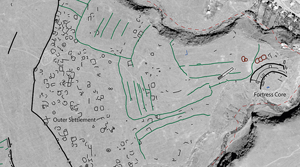
Recent research on the organisation and growth of large settlements (both urban and non-urban) has prompted a reassessment of factors driving population aggregation. Systematic aerial and ground survey of the South Caucasus mega-fortress Dmanisis Gora, described here, contributes to the understanding of large fortress settlements in the South Caucasus (c. 1500–500 BC) as part of this wider debate. Substantial defensive walls and stone architecture in the outer settlement contrast with low-intensity occupation, possibly by a seasonally mobile segment of the population. The exceptional size of Dmanisis Gora helps add new dimensions to population aggregation models in Eurasia and beyond.
Direct physical evidence for violent interpersonal conflict is seen only sporadically in the archaeological record for prehistoric Britain. Human remains from Charterhouse Warren, south-west England, therefore present a unique opportunity for the study of mass violence in the Early Bronze Age. At least 37 men, women and children were killed and butchered, their disarticulated remains thrown into a 15m-deep natural shaft in what is, most plausibly, interpreted as a single event. The authors examine the physical remains and debate the societal tensions that could motivate a level and scale of violence that is unprecedented in British prehistory.
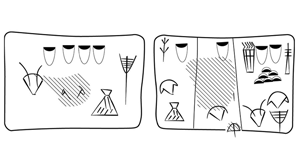
Administrative innovations in South-west Asia during the fourth millennium BC, including the cylinder seals that were rolled on the earliest clay tablets, laid the foundations for proto-cuneiform script, one of the first writing systems. Seals were rich in iconography, but little research has focused on the potential influence of specific motifs on the development of the sign-based proto-cuneiform script. Here, the authors identify symbolic precursors to fundamental proto-cuneiform signs among late pre-literate seal motifs that describe the transportation of vessels and textiles, highlighting the synergy of early systems of clay-based communication.
Recommend this
Email your librarian or administrator to recommend adding this to your organisation's collection.