To save content items to your account,
please confirm that you agree to abide by our usage policies.
If this is the first time you use this feature, you will be asked to authorise Cambridge Core to connect with your account.
Find out more about saving content to .
To save content items to your Kindle, first ensure no-reply@cambridge.org
is added to your Approved Personal Document E-mail List under your Personal Document Settings
on the Manage Your Content and Devices page of your Amazon account. Then enter the ‘name’ part
of your Kindle email address below.
Find out more about saving to your Kindle.
Note you can select to save to either the @free.kindle.com or @kindle.com variations.
‘@free.kindle.com’ emails are free but can only be saved to your device when it is connected to wi-fi.
‘@kindle.com’ emails can be delivered even when you are not connected to wi-fi, but note that service fees apply.
Climbing aroids, despite their abundance in tropical forests, remain underexplored. This study is focused on species richness, abundance, density, and distribution patterns of climbing aroid community in a lowland rainforest in Los Tuxtlas, Veracruz, Mexico. Over two years, two censuses were conducted across 14 plots, recording 12 aroid species from five genera and their potential hosts. Ontogenetic classes were defined and validated, showing a positive correlation between total plant length/apex height and ontogenetic stage, indicating distinct growth phases. Host size (DBH) was significant predictor of the establishment probability across ontogenetic classes. Vertical distribution varied significantly among species, ranging from Philodendron hederaceum (7 m) to Anthurium flexile (0.88 m), with some species predominantly distributed on specific host sizes. Tree falls impacted specific species. Although limitations, including a short study period, restrict broader generalizations, this research establishes a foundational understanding of climbing aroid ecology and underscores the need for standardized methods and long-term monitoring to elucidate their population dynamics and ecological strategies.
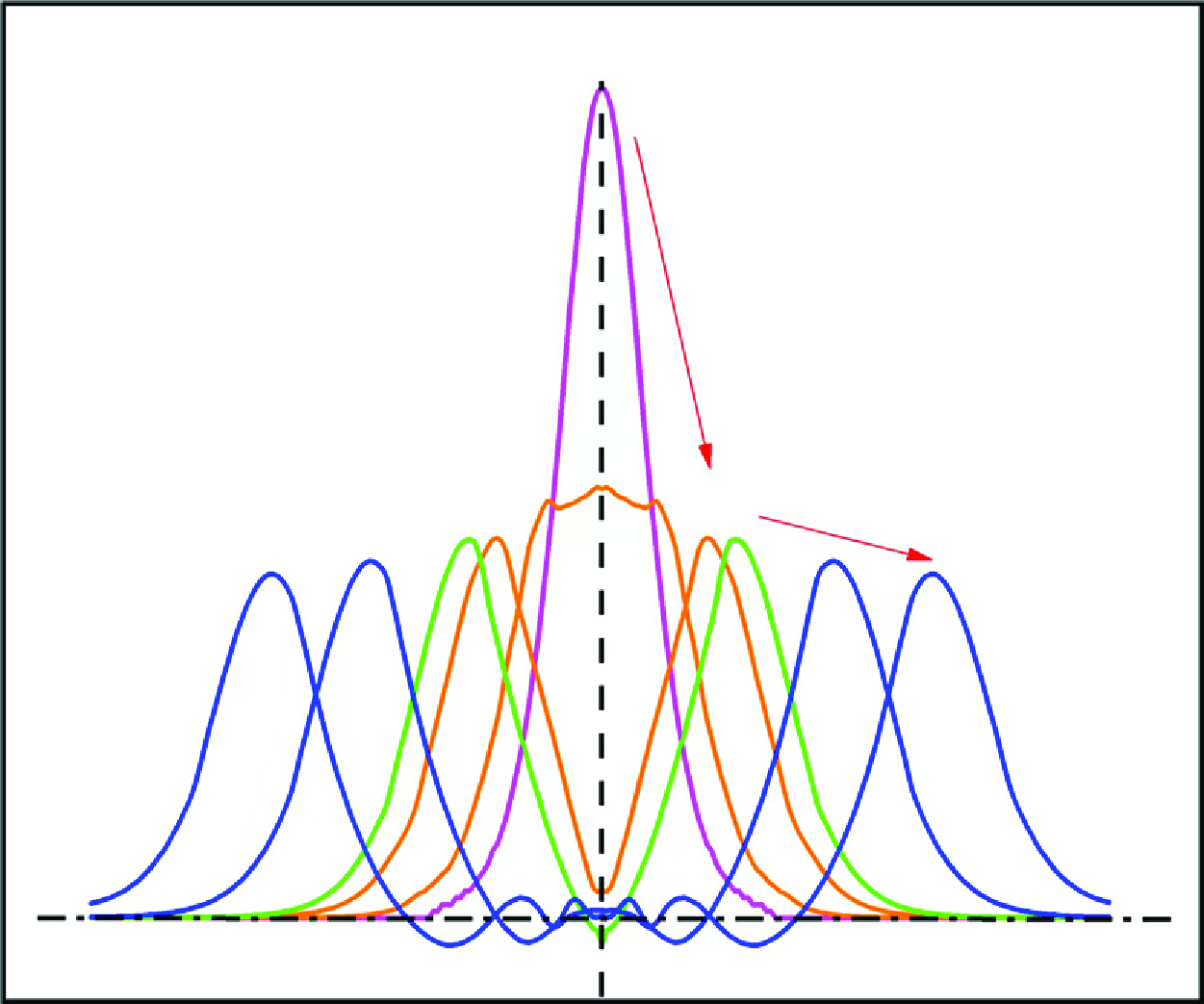
The phenomenon of bulge evolution under the action of gravity on shallow water is prevalent both in natural occurrences and engineering industries. However, despite its ubiquity, its physical process remains largely unexplored. The evolution of bulge contains two fundamental physical processes: collapse and propagation. The collapse process can be further divided into two sub-processes: squeezing process and diffusion process. Based on the weakly nonlinear shallow water assumption with the classical perturbation method, the governing equations controlling the surface elevations in the diffusion process and the propagation process have been theoretically derived, where a bulge-induced surface pressure is modeled for the propagation process. Moreover, their scaling laws for the decay of wave height are also established, which have been validated by direct numerical simulation results. The derived scaling laws for wave height attenuation of bulge evolution provide profound insights, which hold the potential to applications in the engineering industry.
Attention-deficit/hyperactivity disorder (ADHD) is a neurodevelopmental disorder characterized by inattention and/or hyperactivity-impulsivity, accompanied by deficits in executive function (EF). However, how the two core symptoms of ADHD are affected by EF deficits remains unclear. 649 children with ADHD were recruited. Data were collected from ADHD rating scales, the Behavior Rating Inventory of EF (BRIEF), and other demographic questionnaires. Regression and path analyses were conducted to explore how deficits in cool and hot EF influence different ADHD core symptoms. Latent class analysis and logistic regression were employed to further examine whether classification of ADHD subtypes is associated with specific EF deficits. EF deficits significantly predicted the severity of ADHD core symptoms, with cool EF being a greater predictor of inattention and hot EF having a more significant effect on hyperactivity/impulsivity. Moreover, person-centered analyses revealed higher EF deficits in subtypes of ADHD with more severe symptoms, and both cool and hot EF deficits could predict the classification of ADHD subtypes. Our findings identify distinct roles for cool and hot EF deficits in the two core symptoms of ADHD, which provide scientific support for the development of ADHD diagnostic tools and personalized intervention from the perspective of specific EF deficits.
Intensive longitudinal data (ILD) collected in mobile health (mHealth) studies contain rich information on the dynamics of multiple outcomes measured frequently over time. Motivated by an mHealth study in which participants self-report the intensity of many emotions multiple times per day, we describe a dynamic factor model that summarizes ILD as a low-dimensional, interpretable latent process. This model consists of (i) a measurement submodel—a factor model—that summarizes the multivariate longitudinal outcome as lower-dimensional latent variables and (ii) a structural submodel—an Ornstein–Uhlenbeck (OU) stochastic process—that captures the dynamics of the multivariate latent process in continuous time. We derive a closed-form likelihood for the marginal distribution of the outcome and the computationally-simpler sparse precision matrix for the OU process. We propose a block coordinate descent algorithm for estimation and use simulation studies to show that it has good statistical properties with ILD. Then, we use our method to analyze data from the mHealth study. We summarize the dynamics of 18 emotions using models with one, two, and three time-varying latent factors, which correspond to different behavioral science theories of emotions. We demonstrate how results can be interpreted to help improve behavioral science theories of momentary emotions, latent psychological states, and their dynamics.
Latin American countries have pioneered innovations in social protection, but their welfare institutions suffer from large and persistent gaps and inequalities in access and provision. This article reviews the substantive body of research addressing this anomaly. A focus on social protection offers a window on what is distinctive about social policy in the region. The social protection matrix in Latin America combines three core institutions: occupational insurance funds, personal pensions and social assistance. The article highlights the role of political realignments shaping current institutions. The critical review yields several pointers for a ‘general’ theory of welfare institutions.
The purpose of the South African Competition Act is to resolve the present problems of inequality by emphasizing its multiple goals, which differ from those of other countries. Its objectives broadly contain efficiency, state economic development and consumer welfare. In addition, the ideas of providing opportunities for small businesses and promoting a greater spread of ownership among different groups indicate its goal of favouring or protecting weak trading parties or certain groups of people. To achieve the aim of equity and fairness, South African competition law should be vigorously applied, but the existing substantive provisions may not fulfil the task of moving towards an equal and fair society. A comparative study of competition law may help to discover a proper model and a better solution for the problems of unequal economic power in South Africa.
Neuroimaging studies, such as the Human Connectome Project (HCP), often collect multifaceted data to study the human brain. However, these data are often analyzed in a pairwise fashion, which can hinder our understanding of how different brain-related measures interact. In this study, we analyze the multi-block HCP data using data integration via analysis of subspaces (DIVAS). We integrate structural and functional brain connectivity, substance use, cognition, and genetics in an exhaustive five-block analysis. This gives rise to the important finding that genetics is the single data modality most predictive of brain connectivity, outside of brain connectivity itself. Nearly 14% of the variation in functional connectivity (FC) and roughly 12% of the variation in structural connectivity (SC) is attributed to shared spaces with genetics. Moreover, investigations of shared space loadings provide interpretable associations between particular brain regions and drivers of variability. Novel Jackstraw hypothesis tests are developed for the DIVAS framework to establish statistically significant loadings. For example, in the (FC, SC, and substance use) subspace, these novel hypothesis tests highlight largely negative functional and structural connections suggesting the brain’s role in physiological responses to increased substance use. Our findings are validated on genetically relevant subjects not studied in the main analysis.
Factor score indeterminacy is a characteristic property of factor analysis (FA) models. This research introduces a novel procedure, regression-based factor score exploration (RFE), which uniquely determines factor scores and simultaneously estimates other parameters of the FA model. RFE uniquely determines factor scores by minimizing a loss function that balances FA and multivariate regression, regulated by a tuning parameter. Theoretical aspects of RFE, including the uniqueness of factor scores, the relationship between observed and latent variables, and rotational indeterminacy, are examined. Additionally, clustering-based factor exploration (CFE) is presented as a variant of RFE, derived by generalizing the penalty term to enable the clustering of factor scores. It is demonstrated that CFE creates cluster structures more accurately than the existing method. A simulation study shows that the proposed procedures accurately recover true parameter matrices even in the presence of error-contaminated data, with lower computational demand compared to existing methods. Real data examples illustrate that the proposed procedures provide interpretable results, demonstrating high relevance to the factor scores obtained by existing methods.
We analyse seismic time series collected during experimental campaigns in the area of the David Glacier, Victoria Land, Antarctica, between 2003 and 2016. We observe hundreds of repeating seismic events, characterized by highly correlated waveforms (cross-correlation > 0.95), which mainly occur in the grounding zone, i.e. the region where the ice transitions from grounded ice sheet to freely floating ice shelf. The joint analysis of seismic events and observed local tidal measurements suggests that seismicity is not only triggered by a regular, periodic driver such as the ocean tides but also more likely by transient pulses. We consider potential environmental processes and their impact on the coupling between the glacier flow and the bedrock brittle failure. Among the environmental variables examined, our findings suggest that clustered and repeated seismic events may be related to transient episodes of ice-mass discharge correlated to a change in the subglacial hydrographic system that originates upstream of the glacier, lubricating the interface with the bedrock. This hypothesis is supported by the gravity variation observations provided by the GRACE satellite mission, which observed mass variations during periods characterized by seismic clustering.
We present a new corpus of child and child-directed speech (CDS) in Palestinian Arabic. It includes transcriptions following the CHILDES guidelines and features recordings of 16 monolingual Palestinian Arabic-speaking children with an age range of 19–58 months and their adult interlocutors. We analyse the children’s morphosyntactic development and identify a variety of target word orders (45 in child speech, 50 in CDS), with prevalent SV(O) structures; we also found high rates of null subjects in both populations, marginal errors in children’s verbal agreement morphology, and early emergence of serial verb constructions, observed from 23 months of age.
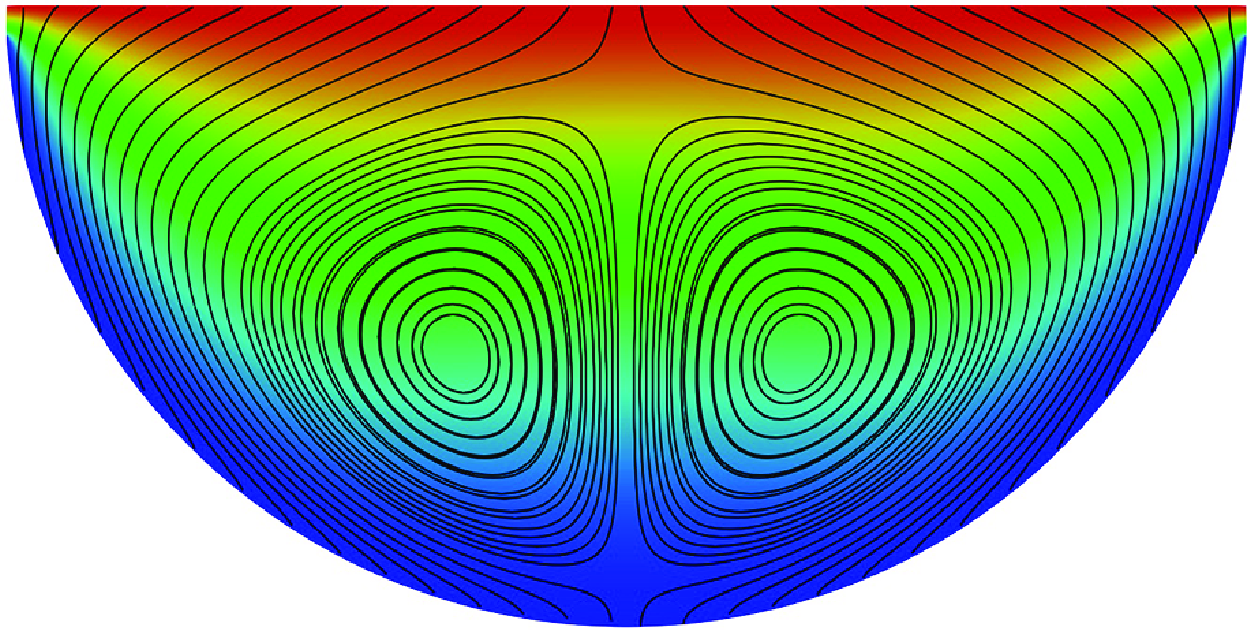
This paper presents a method to stabilise oscillations occurring in a mixed convective flow in a nearly hemispherical cavity, using actuation based on the receptivity map of the unstable mode. This configuration models the continuous casting of metallic alloys, where hot liquid metal is poured at the top of a hot sump with cold walls pulled in a solid phase at the bottom. The model focuses on the underlying fundamental thermohydrodynamic processes without dealing with the complexity inherent to the real configuration. This flow exhibits three branches of instability. The solution of the adjoint eigenvalue problem for the convective flow equations reveals that the regions of highest receptivity for unstable modes of each branch concentrate near the inflow upper surface. Simulations of the linearised governing equations show that a thermomechanical actuation modelled on the adjoint eigenmode asymptotically suppresses the unstable mode. If the actuation’s amplitude is kept constant in time, which is easier to implement in an industrial environment, the suppression is still effective but only over a finite time, after which it becomes destabilising. Based on this phenomenology, we apply the same actuation during the stabilising phase only in the nonlinear evolution of the unstable mode. It turns out stabilisation persists, even when the unstable mode is left to evolve freely after the actuation period. These results not only demonstrate the effectiveness of receptivity-informed actuation in stabilising convective oscillations but also suggest a simple strategy for their long-term control.
With numerous applications of coilable masts in high-precision space application scenarios, there are also greater demands on the accuracy of their dynamic modelling and analysis. The modelling of hinges is a critical issue in the dynamic modelling of coilable masts, which significantly affects the accuracy of the dynamic response analysis. For coilable masts, the rotational effect is the most important problem in hinge modelling. However, few studies have focused on this topic. To address this problem, the concept of hinge equivalent rotational stiffness is proposed in this paper to describe the rotational effect of the coilable mast hinges. After that, a new coilable mast dynamic model containing the undetermined hinge equivalent rotational stiffness is introduced, and an identification method for the hinge equivalent rotational stiffness based on the hammer test is proposed. Finally, the dynamic modelling method is validated through an actual coilable mast example, and the analysis and test results show that the accuracy of the dynamic model established by the proposed method in this paper is greater than that of the traditional model.
We construct moduli spaces of framed logarithmic connections and also moduli spaces of framed parabolic connections. It is shown that these moduli spaces possess a natural algebraic symplectic structure. We also give an upper bound of the transcendence degree of the algebra of regular functions on the moduli space of parabolic connections.
Resource partitioning remains a central ecological issue for understanding the structures of animal communities. As members of the generalist New World Thraupidae bird family, tanagers can help reinforce knowledge of animal communities. Thus, to study bird trophic ecology and relationships, I followed six tanager species (Schistochlamys ruficapillus, Tangara desmaresti, Stilpnia cayana, Stephanophorus diadematus, Thraupis sayaca and Dacnis cayana) from the Ibitipoca State Park, south-eastern Brazil, for 12 months. I expected 1) more similarities among frugivorous behaviours when compared to the similarities in the frugivorous diet, 2) no differences between the predation behaviours on arthropods against the use of substrates to capture them, 3) no specialisation in the bird–fruit seed dispersal network and 4) similarities of frugivorous diet and substrate use equal those expected by chance due to the absence of specialisation in frugivory and limited use of substrates. Several ecological and behavioural factors seemed to determine the ways in which Ibitipoca tanagers consumed fruits to reduce similarities in diets and reveal network specialisation. On the other hand, the analysis of predation behaviour indicated that tanager species used similar tactics to reach arthropods randomly on substrates. In general, frugivory seems to be more relevant in trophic partitioning than foraging on arthropods in Ibitipoca tanagers.